In 1997, Brazilian soccer player Roberto Carlos took a free kick from 35 meters against France that seemed to defy the laws of physics as it curved around a wall of defenders at an angle that seemed impossible.
This “miracle goal” led a team of French physicists to publish a study in the journal New Journal of Physics, in which they explained that the extreme spin and speed created a “spinning spiral of the ball” that overcame gravity and air resistance.
My wife and I didnt invent parenting but we have 3 boys. 5.5yo, 3.5yo and 6 mo. old and not only have we never had an iPad in the house, we keep those adorable nut bags (oldest 2, the baby is an angel) active enough that they’ve never asked for it. Despite seein friends with them
This MRI study on young kids just exposed something terrifying:
They scanned the brains of 60 children aged 3–5 — including 5-year-old Rose — and found interactive screen time is causing measurable loss of white matter in their developing brains. Even just 2 hours a day is linked to impaired neural connectivity, language, and literacy development.
Professor Mike Nagel (neuroscientist and father) said his first reaction was simply: “Wow… I was not anticipating seeing anything like that.”
We’re physically changing children’s brains before they even start school — and the damage is visible on scans.
This one actually unsettled me. I’ve always suspected too much screen time was bad, but seeing real white matter loss in toddlers hits different.
Parents of little ones — has this kind of research changed how much screen time you allow?
Only one chance in this lifetime…
Like watching sunset at the beach from the most foreign seat in the cosmos, I couldn’t resist a cell phone video of Earthset. You can hear the shutter on the Nikon as @Astro_Christina is hammering away on 3-shot brackets and capturing those exceptional Earthset photos through the 400mm lens. @AstroVicGlover was in window 3 watching with @Astro_Jeremy next to him.
I could barely see the Moon through the docking hatch window but the iPhone was the perfect size to catch the view…this is uncropped, uncut with 8x zoom which is quite comparable to the view of the human eye. Enjoy.
Even if we assume life is fairly common in the universe, that doesn't mean intelligence is. Life on Earth was strictly microbial for the first three billion years that it existed, then it took another 600 million years for something smart enough to make fire to emerge. And keep in mind that intelligence simply isn't necessary to survive in most ecological niches. Actually, a large brain can be a hindrance due to high calorie demands, which is why most animals are only smart enough to survive long enough to reproduce. Evolution doesn't care about the survival of the individual, which is why so many species persist by reproducing really fast. It doesn't matter if 90% of your babies die before adulthood if two members of your species can produce hundreds of offspring, and you don't need to be smart to do this. Intelligence just doesn't provide much benefit to a species until it crosses a certain threshold, and until it does, the large brain it requires is a liability for an investment that may not pay off.
And even if intelligence is fairly common, that doesn't mean technology is. What a species can accomplish is limited by their biology and biome. A purely aquatic species with no ability to manipulate tools will never discover fire, and so will never master metallurgy or any other technology fire is a prerequisite to. Being land-dwelling (or at least being able to survive outside of water for long stretches of time) is a minimum requirement to becoming technological.
And even if an intelligent species discovers fire, that doesn't mean they will advance beyond stone age technology. That species has to be social and cooperative. If you're forced to spend every waking moment looking for food and avoiding predators, then it doesn't matter how smart you are, you will never develop space travel on your own.
And even if that species is cooperative, that doesn't mean they will advance. Humans had to decide to give up a nomadic hunter-gather lifestyle and form permanent settlements and start farming despite the obvious disadvantages, such as crowding and proximity to animals enabling the spread of disease, putting themselves at the mercy of the weather, making themselves an obvious target for raiders, and so on, before the first cities could develop. This is what led to organized warfare and the precipitating technological arms races that eventually gave rise to the bronze and iron ages. An intelligent and cooperative species that never settles down won't accomplish this.
Then even if an intelligent, cooperative species manages to develop technology, they have to survive long enough to figure out space travel.
Now, consider how long it took life on Earth to go from microbial to something capable of building rockets, and realize how long of a lucky stretch we needed to last for billions of years without some natural disaster resetting the clock on evolution. All it would have taken was one gamma ray burst, one nearby supernova, or one really big asteroid impact (I'm talking much bigger than the one that killed the dinosaurs) to set everything back to square one.
And then, after all that, even if an intelligent, cooperative, technological species manages to get into space, there's no guarantee they will explore outside of their own solar system. It takes an extremely long time to travel between stars, so any interstellar journey would take decades or centuries, and would cost a huge amount of resources and concerted effort, and would come at a huge risk to the explorers who most likely wouldn't be able to make it back home. Unless their species happens to live a really long time, they would need multiple generations to be born, grow up, and die on a voyage of questionable profitability.
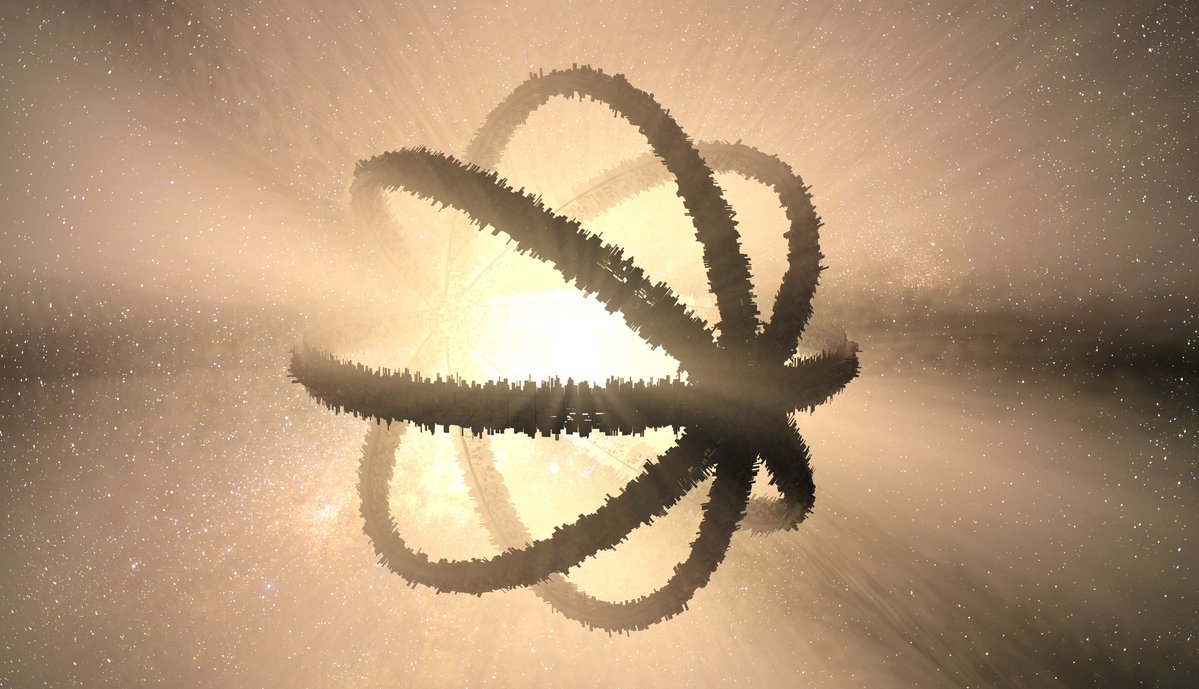
By the time a species is able to attempt an interstellar journey, they might lose any interest in doing so because they will have mastered using materials from local asteroids to construct artificial habitats in orbit around their parent star. Why go through the effort and risk of colonizing other solar systems when you can just build a Dyson swarm around your own sun and support quadrillions of people indefinitely? They might even figure out how to digitize their minds and live in a virtual paradise, and forsake reality altogether.
Lastly, consider the fact that the universe is only about fourteen billion years old. That sounds like a long time to us, but the Earth has been around for about a third of that time, and it took nearly all that time for us to evolve. Also consider that the star-forming era of the universe is expected to last another hundred trillion years. We probably live at the earliest time that it's even possible for a technological civilization to exist. The reason we don't see aliens might simply be because we're too early. There may come a time in the distant future when every star and every galaxy has been claimed by some galactic or intergalactic empire, and we will be the ancient forerunners to them, but that won't happen anytime soon.