In 2005, almost everyone on Wall Street believed the housing market could only go up. Almost everyone except Michael Burry.
Burry, a little-known investor running Scion Capital, spent years studying mortgage data. He noticed something terrifying: millions of mortgages were being given to borrowers who couldn’t realistically afford them.
He started betting against the housing market.
His investors hated it. They demanded their money back. Banks laughed at him. Some even questioned whether he understood the market.
But Burry refused to change his position.
Then 2008 arrived.
The housing bubble burst. Lehman Brothers collapsed. Financial markets panicked.
Burry’s bet paid off enormously — Scion made roughly $700 million for investors.
One guy made over $300,000 from memes.
No fancy startup. No investors. No huge team.
He started a meme page as a joke, posting 5–10 memes every day. After a few months, one post went viral and brought him millions of views.
Instead of stopping there, he doubled down.
He built an audience, started selling meme-themed digital products, took sponsorships, launched a paid community, and eventually turned the page into a real business.
Within a year, the meme account had generated more than $300K.
The wildest part?
His first posts made $0.
He simply figured out how to turn attention into money.
Memes might look like entertainment, but behind the biggest ones is often a business model.
Binance just launched Agent OS.
The interesting part isn’t AI trading.
It’s this:
AI → wallet → payment → market → execution
All becoming one stack.
We’re slowly moving from:
humans using financial apps
to
agents using financial infrastructure.
That’s a much bigger shift. 👀
Visual: Binance / AI agent concept
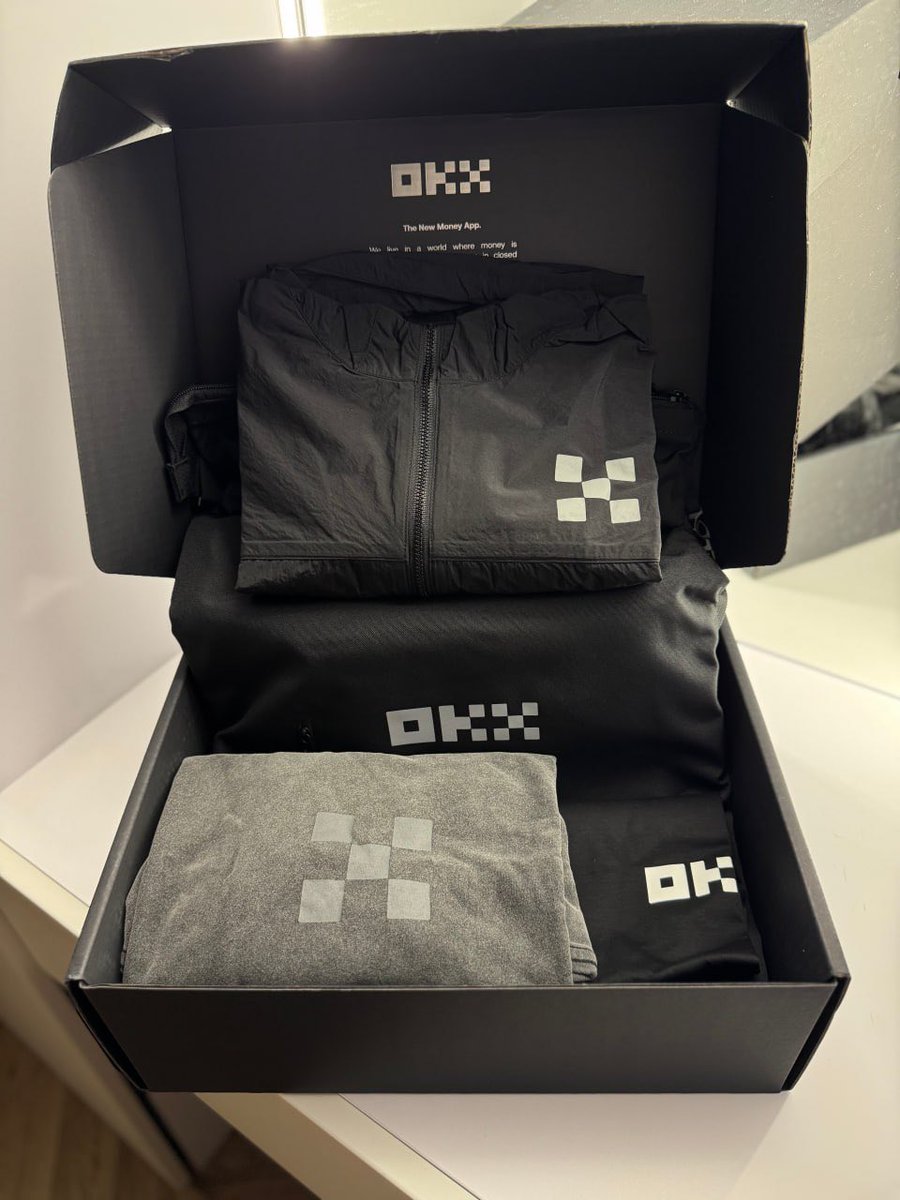
OKX really knows how to treat the community 🎁
Got my hands on this awesome OKX merch box — everything from jackets to tees, all with that clean signature look.
Love seeing OKX giving back to the community and making people feel appreciated. 🖤💚
Big W from OKX 👏
#OKX #OKXCommunity #Crypto #Web3
What are we seeing on BTC? 💰
Price moved above the highs and swept the liquidity, and now we’re seeing a test of the 4H imbalance. We got an immediate reaction to the downside at first.
For now, I’m interested in continuing with shorts, targeting the lows below at $76,652, with the liquidity fractal at $75,590 as the next target further down.
What are we seeing on BTC? 💰
Price moved above the highs and swept the liquidity, and now we’re seeing a test of the 4H imbalance. We got an immediate reaction to the downside at first.
For now, I’m interested in continuing with shorts, targeting the lows below at $76,652, with the liquidity fractal at $75,590 as the next target further down.
OKX really knows how to treat the community 🎁
Got my hands on this awesome OKX merch box — everything from jackets to tees, all with that clean signature look.
Love seeing OKX giving back to the community and making people feel appreciated. 🖤💚
Big W from OKX 👏
#OKX #OKXCommunity #Crypto #Web3
bitcoin:native IS ONE BREAK AWAY FROM A MUCH DEEPER MOVE
Look at the structure forming on the 4H chart
Classic Head & Shoulders
Now there's only one thing left:
The $77K neckline
Lose it -> $70K
Lose $70K -> $63K
Until then, the pattern remains unconfirmed
But this is the level I wouldn't take my eyes off
FOLLOW + NOTIFS ON!
AI agents don’t need crypto.
They need money that software can use.
Stablecoins are interesting because they give agents:
→ 24/7 settlement
→ programmable payments
→ global access
→ tiny transaction sizes
The real AI × crypto narrative might not be tokens.
It might be machine-to-machine money. 🤖💸
AI agents don’t need crypto.
They need money that software can use.
Stablecoins are interesting because they give agents:
→ 24/7 settlement
→ programmable payments
→ global access
→ tiny transaction sizes
The real AI × crypto narrative might not be tokens.
It might be machine-to-machine money. 🤖💸
🟠 Strategy: Selling BTC at $60K and buying at $80K was the right decision
Strategy CEO Phong Le said the company makes Bitcoin buy/sell decisions based not on BTC’s market price, but on its cost of capital.
According to Le, selling around 7,000 BTC at $60K–65K to fund preferred-stock dividends was justified at the time.
Over the past two months, Strategy reduced its net debt from roughly $7B to zero and built about $7B in dollar reserves, strengthening its balance sheet.
Now, Strategy can sell MSTR shares at a premium and use the proceeds to buy more Bitcoin. Le added that the company is ready to keep accumulating BTC at $90K, $100K, or even $130K if it remains economically attractive.