Talked to 40 funded traders this month about their workflow.
Every single one said the same thing: “I have too many browser tabs open.”
TradingView. Broker platform. Firm rules page. Spreadsheet journal. Discord. News feed.
Building the tool that owns the part nobody else does well — your trades, your rules, your edge in one place.
Read this before the market opens.
What I'm watching:
S&P 500: Closed at all time high 7,209 yesterday
Nasdaq: New closing record
Brent crude: $114 pulling back from $126 highs
April performance: Best month since November 2020
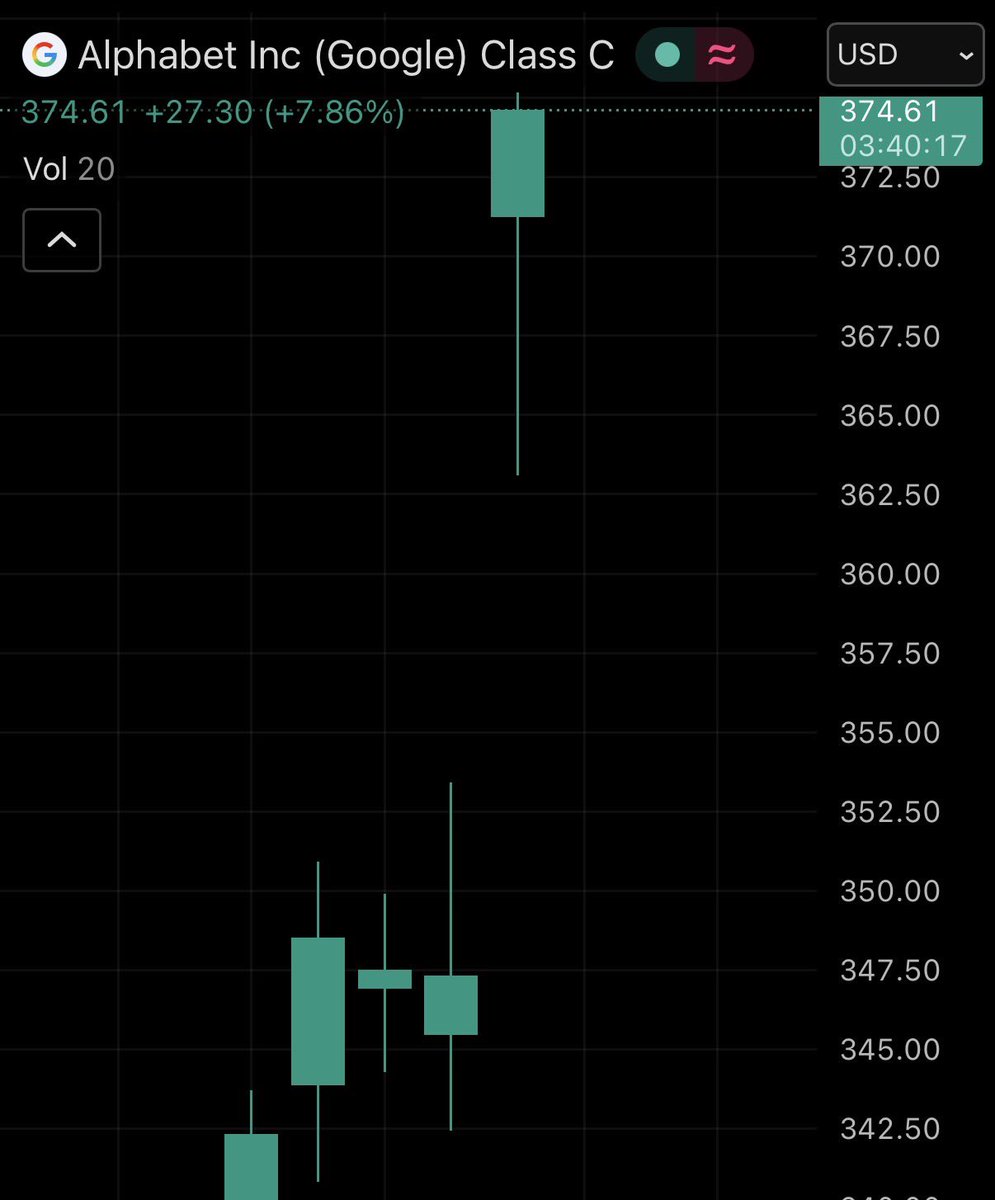
April is done. Best month for the S&P in five years. Mag 7 earnings delivered across the board. AI revenue thesis survived its biggest test. Google added $300 billion in a single session. The market closed the month at record highs despite $120 oil, stagflation confirmed, and a trapped Fed.
Today the UAE officially exits OPEC. 3.5 million barrels per day of Gulf production leaving the cartel. The fracturing of Gulf state unity under the pressure of the Strait closure and the US blockade is a structural oil market event most people are not paying attention to.
Iran exports down 80%. Blockade confirmed indefinite until nuclear terms met. Well shutdown clock ticking. Trump-Xi summit in Beijing upcoming. Kevin Warsh takes the Fed chair May 15.
Apple reports tonight. Last Mag 7 print of the cycle. iPhone 18 guidance and Apple Intelligence monetization are the numbers that matter. Tim Cook to John Ternus CEO transition September 1 adds another layer to every word on the call.
May opens with the best April in decades behind it and every macro risk from April still unresolved in front of it.
Let the tape show you direction before committing.
Thirty years in real estate means you have seen this play out before better than most.
The honest answer is there is no clean fix. The problem has three separate causes that each require a different solution and those solutions work against each other.
Supply needs to increase dramatically. But zoning reform is fought at the local level by existing homeowners who benefit from scarcity. Builders cannot build affordably at 6.3% construction loan rates. And lumber, labor, and land costs have not corrected meaningfully.
Rates need to come down. But the Fed cannot cut into 3.5% PCE with commodity prices heading to 2022 highs. That equation does not improve until Iran resolves and oil pulls back.
Prices need to correct. But the lock-in effect of existing homeowners sitting on 3% mortgages means supply stays historically low. People do not sell into a 6.3% rate environment when their current payment is half of what the new one would be.
Something has to give is right. The most likely release valve is time. Rates eventually normalize. Supply gradually increases. A generation rents longer and buys later. The market thaws slowly rather than corrects sharply.
Not a satisfying answer. But probably the honest one after 30 years of watching these cycles.
All time highs on the last trading day of April.
The second best April in 90 years closes at a record. Google added $300 billion in a session. Amazon beat by $4 billion in revenue. Mag 7 AI revenue proved the thesis is real. The earnings cycle that was supposed to crack under the weight of $120 oil and a trapped Fed instead delivered the strongest quarterly beats in years.
And Brent is still at $116. PCE is still at 3.5%. Japan's bond market is still at a 27 year high. The BOJ just conducted its largest yen intervention. Iran's 80% export reduction is the lever pulling toward a deal faster than anyone expected.
The market is not ignoring the risks. It is betting AI productivity growth outpaces geopolitical and inflationary headwinds.
May decides who is right.
All time highs on the last trading day of April.
The second best April in 90 years closes at a record. Google added $300 billion in a session. Amazon beat by $4 billion in revenue. Mag 7 AI revenue proved the thesis is real. The earnings cycle that was supposed to crack under the weight of $120 oil and a trapped Fed instead delivered the strongest quarterly beats in years.
And Brent is still at $116. PCE is still at 3.5%. Japan's bond market is still at a 27 year high. The BOJ just conducted its largest yen intervention. Iran's 80% export reduction is the lever pulling toward a deal faster than anyone expected.
The market is not ignoring the risks. It is betting AI productivity growth outpaces geopolitical and inflationary headwinds.
May decides who is right.
All time highs on the last trading day of April.
The second best April in 90 years closes at a record. Google added $300 billion in a session. Amazon beat by $4 billion in revenue. Mag 7 AI revenue proved the thesis is real. The earnings cycle that was supposed to crack under the weight of $120 oil and a trapped Fed instead delivered the strongest quarterly beats in years.
And Brent is still at $116. PCE is still at 3.5%. Japan's bond market is still at a 27 year high. The BOJ just conducted its largest yen intervention. Iran's 80% export reduction is the lever pulling toward a deal faster than anyone expected.
The market is not ignoring the risks. It is betting AI productivity growth outpaces geopolitical and inflationary headwinds.
May decides who is right.
All time highs on the last trading day of April.
The second best April in 90 years closes at a record. Google added $300 billion in a session. Amazon beat by $4 billion in revenue. Mag 7 AI revenue proved the thesis is real. The earnings cycle that was supposed to crack under the weight of $120 oil and a trapped Fed instead delivered the strongest quarterly beats in years.
And Brent is still at $116. PCE is still at 3.5%. Japan's bond market is still at a 27 year high. The BOJ just conducted its largest yen intervention. Iran's 80% export reduction is the lever pulling toward a deal faster than anyone expected.
The market is not ignoring the risks. It is betting AI productivity growth outpaces geopolitical and inflationary headwinds.
May decides who is right.
All time highs on the last trading day of April.
The second best April in 90 years closes at a record. Google added $300 billion in a session. Amazon beat by $4 billion in revenue. Mag 7 AI revenue proved the thesis is real. The earnings cycle that was supposed to crack under the weight of $120 oil and a trapped Fed instead delivered the strongest quarterly beats in years.
And Brent is still at $116. PCE is still at 3.5%. Japan's bond market is still at a 27 year high. The BOJ just conducted its largest yen intervention. Iran's 80% export reduction is the lever pulling toward a deal faster than anyone expected.
The market is not ignoring the risks. It is betting AI productivity growth outpaces geopolitical and inflationary headwinds.
May decides who is right.
All time highs on the last trading day of April.
The second best April in 90 years closes at a record. Google added $300 billion in a session. Amazon beat by $4 billion in revenue. Mag 7 AI revenue proved the thesis is real. The earnings cycle that was supposed to crack under the weight of $120 oil and a trapped Fed instead delivered the strongest quarterly beats in years.
And Brent is still at $116. PCE is still at 3.5%. Japan's bond market is still at a 27 year high. The BOJ just conducted its largest yen intervention. Iran's 80% export reduction is the lever pulling toward a deal faster than anyone expected.
The market is not ignoring the risks. It is betting AI productivity growth outpaces geopolitical and inflationary headwinds.
May decides who is right.
You are right that 3% was historically anomalous and that 6% is not extreme by historical standards.
But the comparison to the 15% era misses the other half of the equation. When rates were 15% in the early 1980s the median US home price was roughly $65,000. The average household income was around $22,000. The price to income ratio was approximately 3x.
Today the median home price is $420,000. Median household income is $78,000. The price to income ratio is 5.4x before you factor in a 6.3% mortgage rate on top of that.
The rate is not the only variable. The rate applied to a price that has never been higher relative to income is what creates the freeze. 6% on a $65,000 house is a different affordability calculation than 6% on a $420,000 house.
You can have historically normal rates and historically unaffordable housing at the same time. That is exactly where we are.
The numbers are real and the agentic AI angle is the most important part of this post.
Traditional AI marketing tools automate tasks. Agentic AI runs entire campaigns autonomously. It writes the copy, designs the creative, selects the audience, places the bid, analyzes the result, and iterates without a human in the loop. That is not a productivity improvement. That is a workforce replacement at the marketing department level.
Meta just printed $10.44 EPS against a $6.82 estimate with advertising revenue accelerating 16% year over year. That beat is partly AI-driven ad targeting getting meaningfully better. The $82 billion industry projection is what happens when every company on earth upgrades from AI-assisted to AI-autonomous marketing.
88% of executives raising AI budgets into an environment where Brent is at $120 and consumer spending is under pressure tells you AI marketing ROI is already proven. Companies do not raise budgets in a stagflation environment unless the returns are there.
India has 1.4 billion people, the fastest growing major economy on earth, a space program, a nuclear arsenal, and centuries of civilization.
Google has Sundar Pichai, 180,000 employees, and a very good search algorithm.
And yet here we are.
What this number actually tells you is not that Google is overvalued. It is that the productivity and value creation unlocked by information technology compounds in ways that nation state GDP calculations were never designed to capture.
India will still be here in 100 years. Google at $4.2 trillion is a real time vote on what the next 10 years of human productivity looks like. The market just voted loudly.
Trump traveling to Beijing while running a naval blockade that China is quietly benefiting from is the most consequential diplomatic moment of the year.
China has been buying Iranian oil at a steep discount through the blockade. That discount is worth billions monthly to Beijing. At the same time China needs the Strait to reopen to protect its own Gulf oil imports from Saudi Arabia, UAE, and Iraq which are trapped behind the same chokepoint.
Bessent stressing extraterritorial regulations is the semiconductor export restriction fight dressed up in diplomatic language. Beijing's recent rules targeting rare earth exports and tech licensing are direct retaliation for US chip controls.
The summit between Trump and Xi could be the most important variable for markets in May. A deal framework that includes Iran, semiconductors, and trade simultaneously would reprice oil, equities, and the yen carry trade in a single press conference.
Watch what comes out of Beijing. That meeting matters more than any Fed decision this quarter.
Banned from prediction markets. Still allowed to trade stocks.
US Senators have access to classified briefings on geopolitical events, economic data, regulatory decisions, and corporate policy that no retail investor will ever see. The STOCK Act was supposed to address insider trading in equities. It has been largely toothless for over a decade.
Banning them from prediction markets while leaving equity trading intact is the regulatory equivalent of taking away one weapon while leaving the arsenal fully loaded.
The conflict of interest is not the instrument. It is the information asymmetry. A Senator who knows the Iran deal timeline before it is announced does not need prediction markets to profit from that knowledge. They just need a brokerage account.
The right headline would be banning all individual stock trading by elected officials. This is not that.
Concerning is the right word and here is the specific mechanism that makes it dangerous.
Japan holds approximately $1.1 trillion in US Treasuries. When Japanese bond yields rise domestic investors who previously had no yield at home now have an incentive to sell US Treasuries and repatriate capital back into Japanese bonds. That is the carry trade reversing not just in the yen but in the bond market simultaneously.
Japanese investors selling US Treasuries adds supply to the US bond market at exactly the moment the Fed is holding rates, US deficits are expanding, and the 30-year mortgage rate just hit 6.3%. More Treasury supply means higher US yields means higher mortgage rates means more housing affordability pressure means more consumer stress.
The Japan 10-year at a 30 year high is not just a Japan story. It is a US Treasury supply story. It is a US mortgage rate story. It is a global liquidity story.
Every basis point Japan's yield rises makes the entire global financial system a little tighter. And the BOJ has five problems and no clean tools to stop it.
The thesis is not wrong but the risk is binary and most people underestimate it.
Both names trade at significant discounts to US tech peers on every fundamental metric. Alibaba at 10x earnings and Baidu with net cash exceeding market cap at certain points this year are genuinely cheap if you believe the China growth story and the geopolitical relationship stabilizes.
The problem is both risks got larger this week not smaller. The Iran conflict has strengthened the US-China tensions underpinning the tech war. China buying Iranian oil at a discount through the blockade keeps it strategically aligned against US interests. Any escalation in Taiwan risk or semiconductor export restrictions reprices both names 20-30% overnight regardless of fundamentals.
Cheap Chinese tech is a value trap or a generational buy depending entirely on one variable. The geopolitical trajectory between Washington and Beijing. That is not a fundamental call. It is a macro call with binary outcomes.
Know what you are actually buying before sizing in.
This is the most complete framing of the Japan situation I have seen today and the Warsh detail at the end is the one nobody is talking about.
In 2024 the BOJ had one problem and one tool. Today they have five problems and no clean tools. The self-reinforcing loop you described — yen weakens, oil imports cost more, inflation rises, BOJ needs to hike, hiking slows growth already damaged by the Iran war — is not a theoretical risk. It is the current operating condition of the world's third largest economy.
The largest short yen position since July 2024 unwinding simultaneously into bond yields at 27 year highs with oil at $120 is the conditions that produce a liquidity event not a correction.
But the Warsh angle is the real sleeper. If the new Fed Chair signals any dovish lean on May 15 the interest rate differential that has been holding USD/JPY at 160 collapses without BOJ spending a single dollar. A Fed pivot and a BOJ trapped between inflation and growth would produce the most violent yen short squeeze in years.
The BOJ does not need to fix all five problems. It just needs one of them to break the wrong way at the wrong time.
The bond market just told you something the stock market missed today.
Meta's stock is down 10% on capex fear while institutional fixed income investors are fighting over $96 billion worth of Meta debt. Peak demand nearly double the deal size at a company the equity market is treating like it is financially reckless.
Credit markets and equity markets are pricing two different companies right now. Bond investors see a company generating $10.44 EPS with $56 billion in revenue and 33% growth that has no problem servicing any debt it issues. Equity investors see a company spending $145 billion in capex in a higher for longer environment.
Bond markets are usually right about credit quality. Equity markets are usually right about growth multiples. Both can be simultaneously correct.
The $96 billion in demand is the credit market saying Meta is not a distressed borrower. The 10% stock drop is the equity market saying the multiple is too high at this rate environment. Those are compatible conclusions.
For context on what $4.5 trillion means.
Google is now worth more than the entire GDP of Japan. More than Germany and France combined. A single American technology company built on search and advertising has accumulated more value than most of the world's largest economies.
And it got here by being the only Mag 7 name this earnings week that did not terrify investors with its spending plans. Google Cloud up 63%. Conservative capex guidance. Clean beat across every line.
While Meta lost $175 billion and Microsoft sold off Google added $300 billion in a single session.
The market does not reward size. It rewards discipline. $4.5 trillion is what disciplined AI monetization looks like when the rest of the sector is still figuring out the formula.
At $500 you are paying roughly 20x forward earnings on a business growing 33% with 53% EPS beats and the largest social media network on earth.
That is not irresponsible. That is a value trade hiding inside a growth stock that just got punished for spending aggressively to stay ahead of the AI curve.
The $125-145B capex that scared the market today is the same capex that built the ad targeting infrastructure that generated $10.44 EPS this quarter against a $6.82 estimate. Zuckerberg has run this playbook before. Spend aggressively. Get punished. Deliver the revenue. Get rewarded.
$500 with a 3 year horizon and the AI monetization thesis intact is not irresponsible. It is the trade everyone will wish they made when it is at $800.