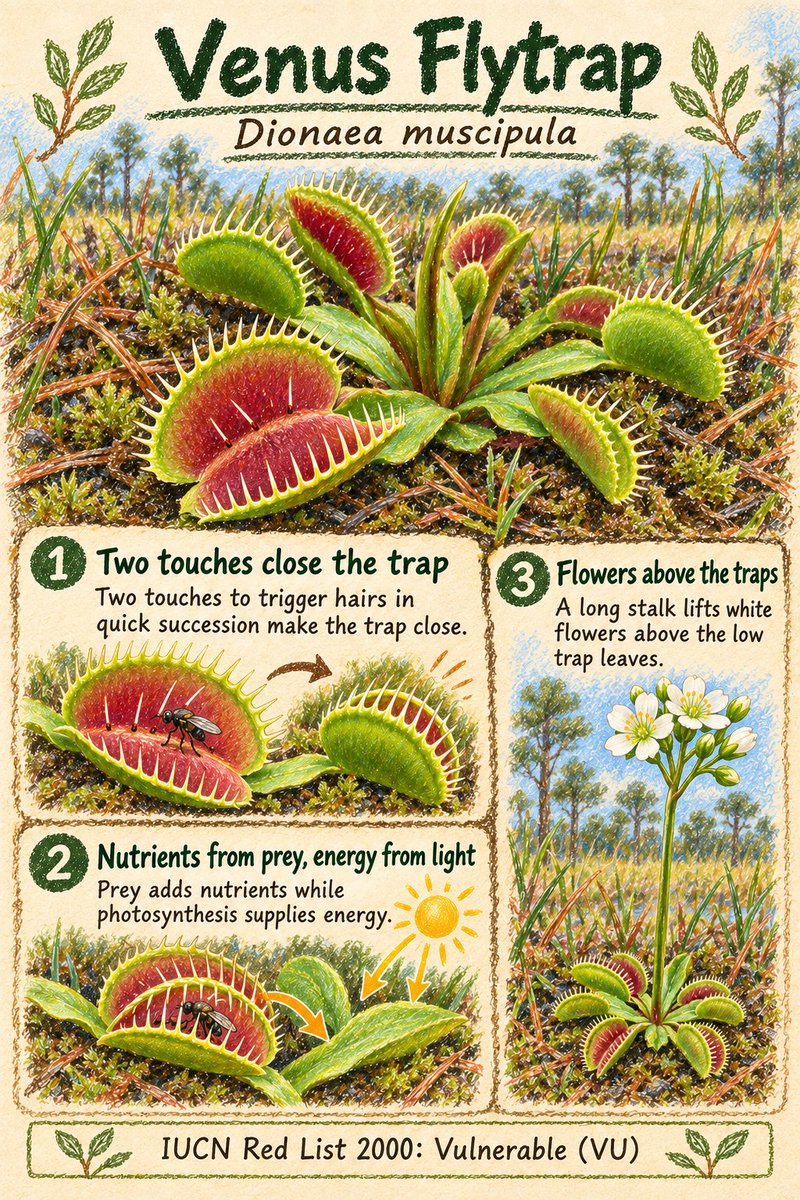
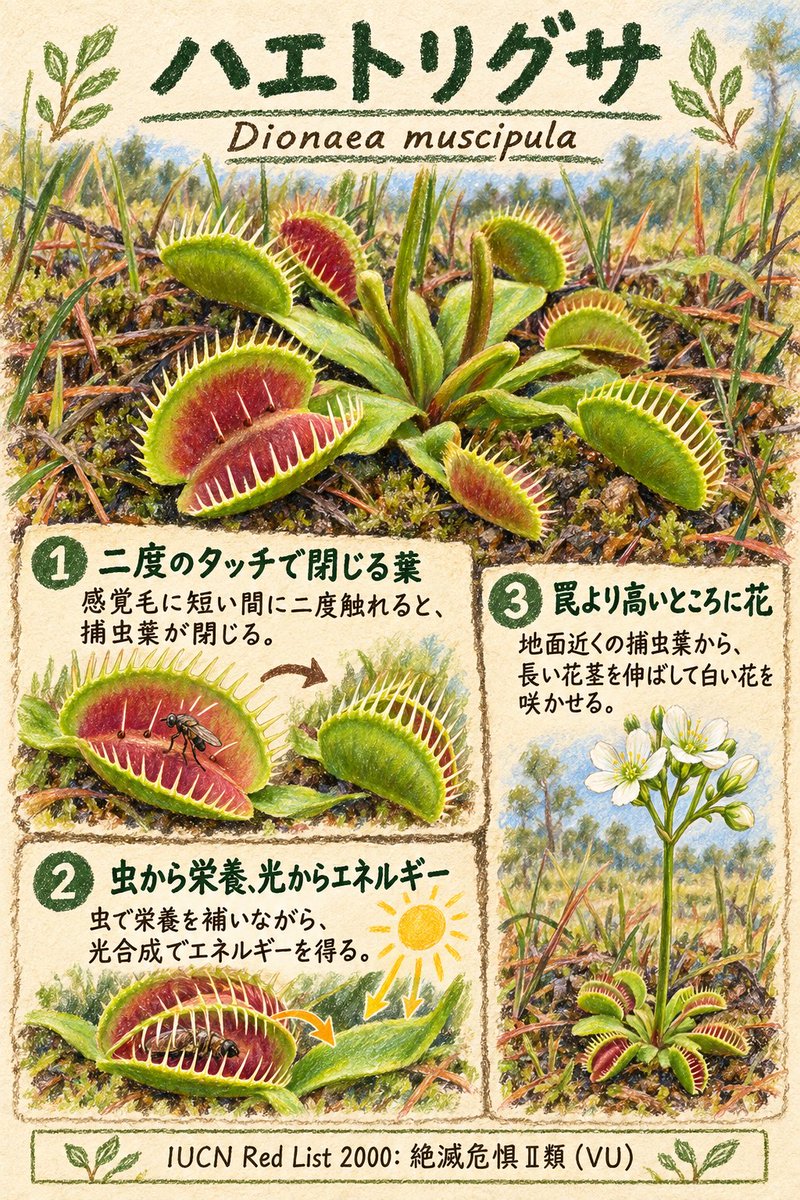
In wet Carolina pine savannas, leaf traps spread near the soil. Prey supplements nutrients, but photosynthesis still supplies energy. In spring, a long stalk raises white flowers above the low traps.
In an old British pasture, a pink cone rises between the grasses. As its cap spreads, the edge splits above a smooth white stem. A tiny change in the turf becomes a different silhouette.
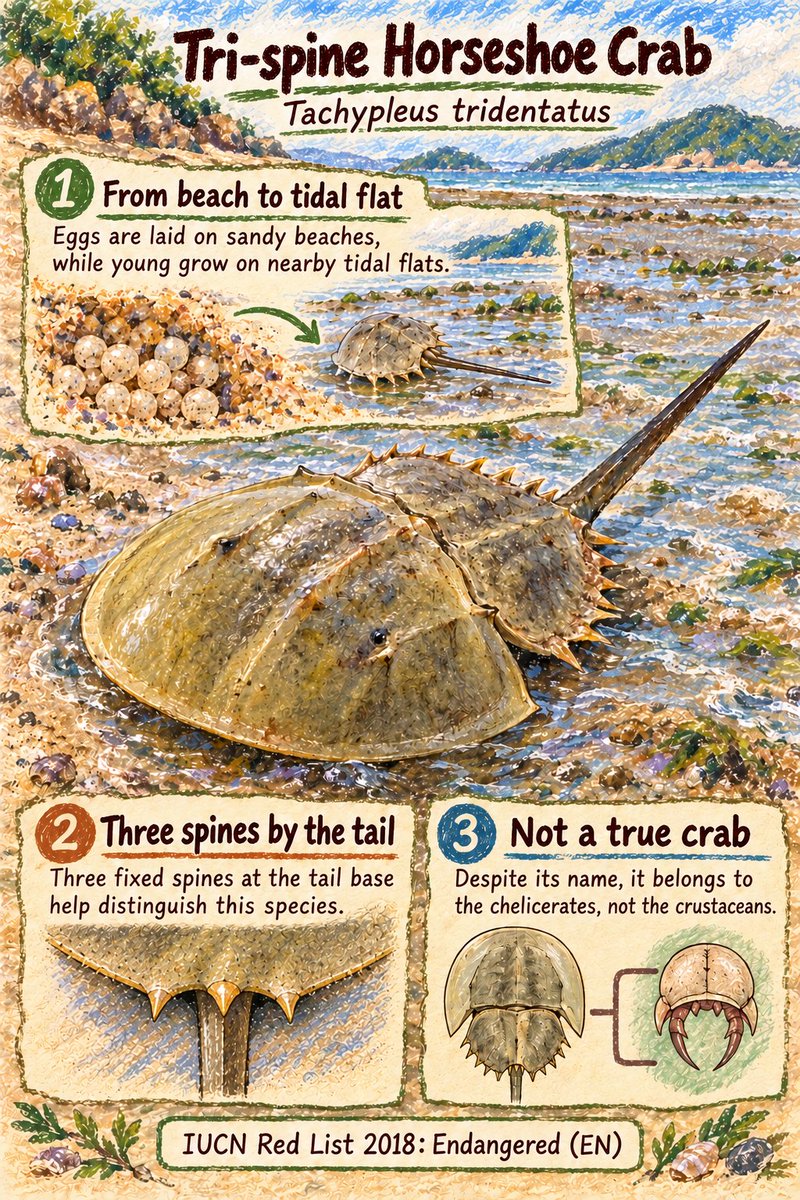
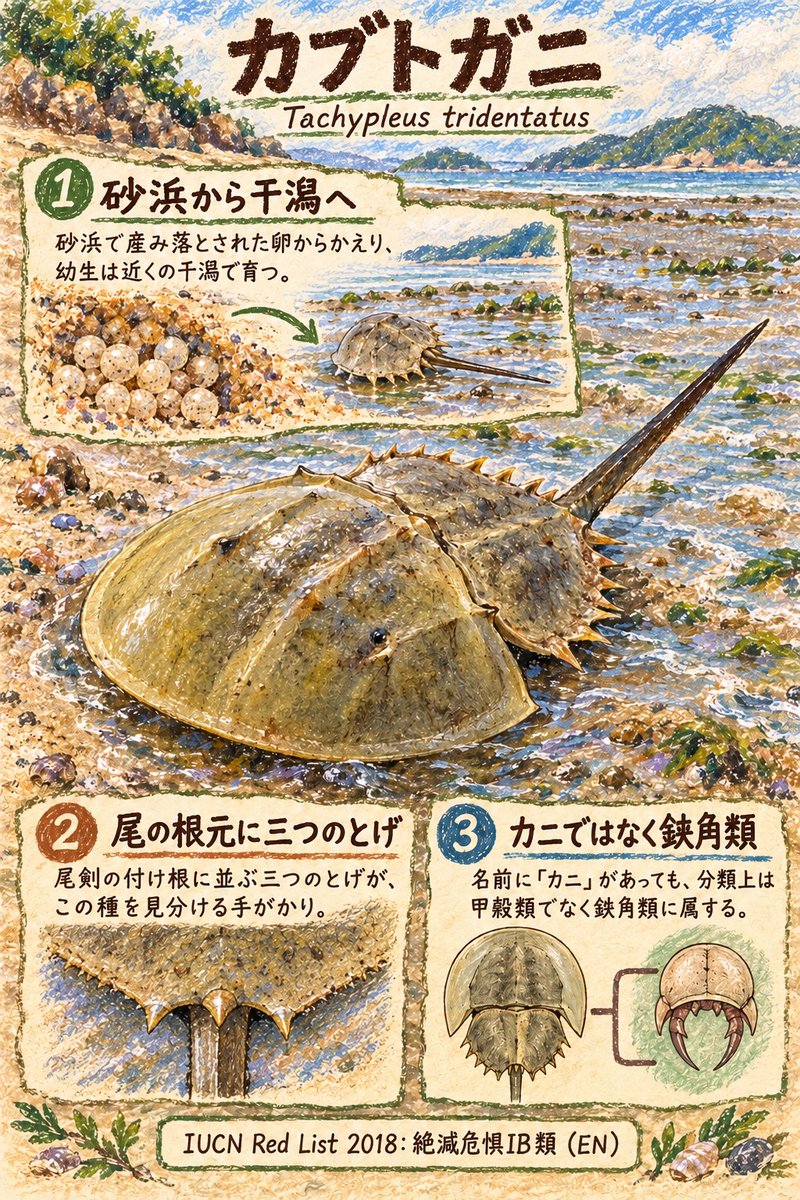
In a sheltered bay, eggs are buried in sand near the high tide line. The young grow on neighboring tidal flats. Later, the broad shell carries a clue to this species: three fixed spines beside the tail. And the “crab” in its name is a chelicerate, not a true crab.
Eggs on a sandy beach; young growing on the tidal flat beside it.
Tri-spine Horseshoe Crab
Tachypleus tridentatus
IUCN Red List 2018: Endangered (EN)
#TrispineHorseshoeCrab
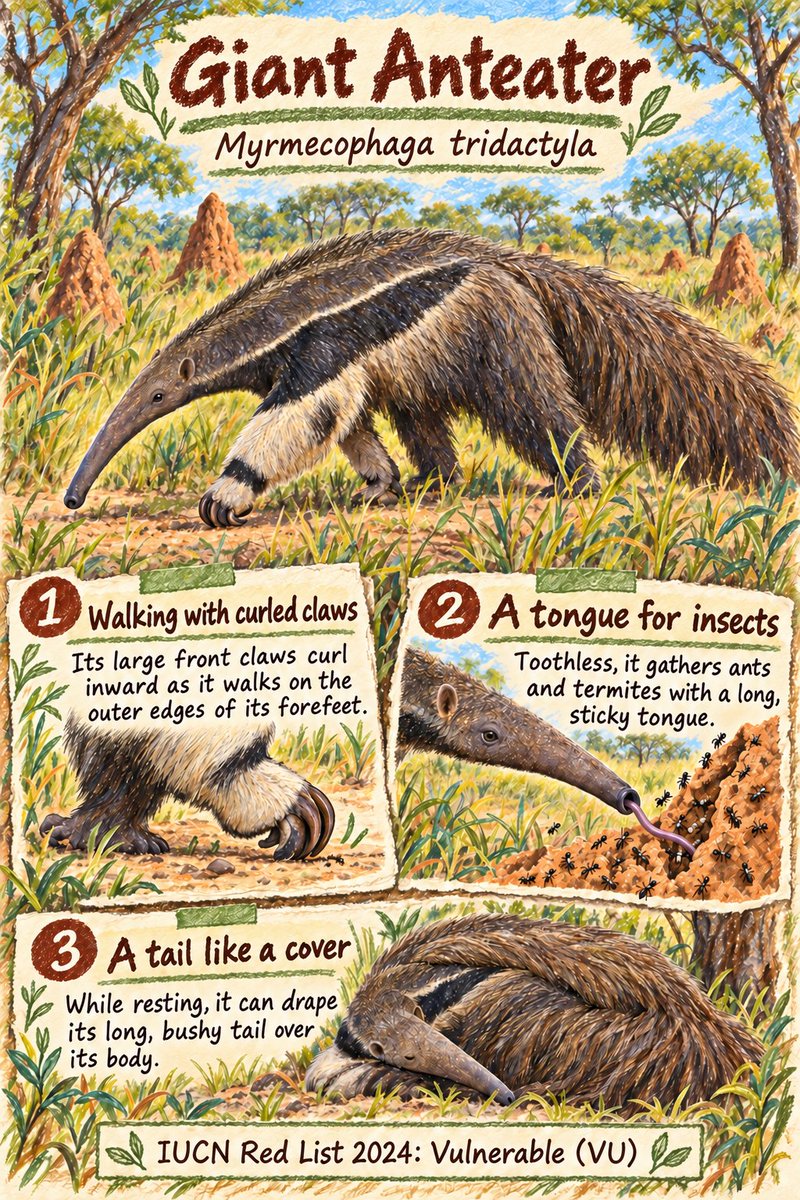
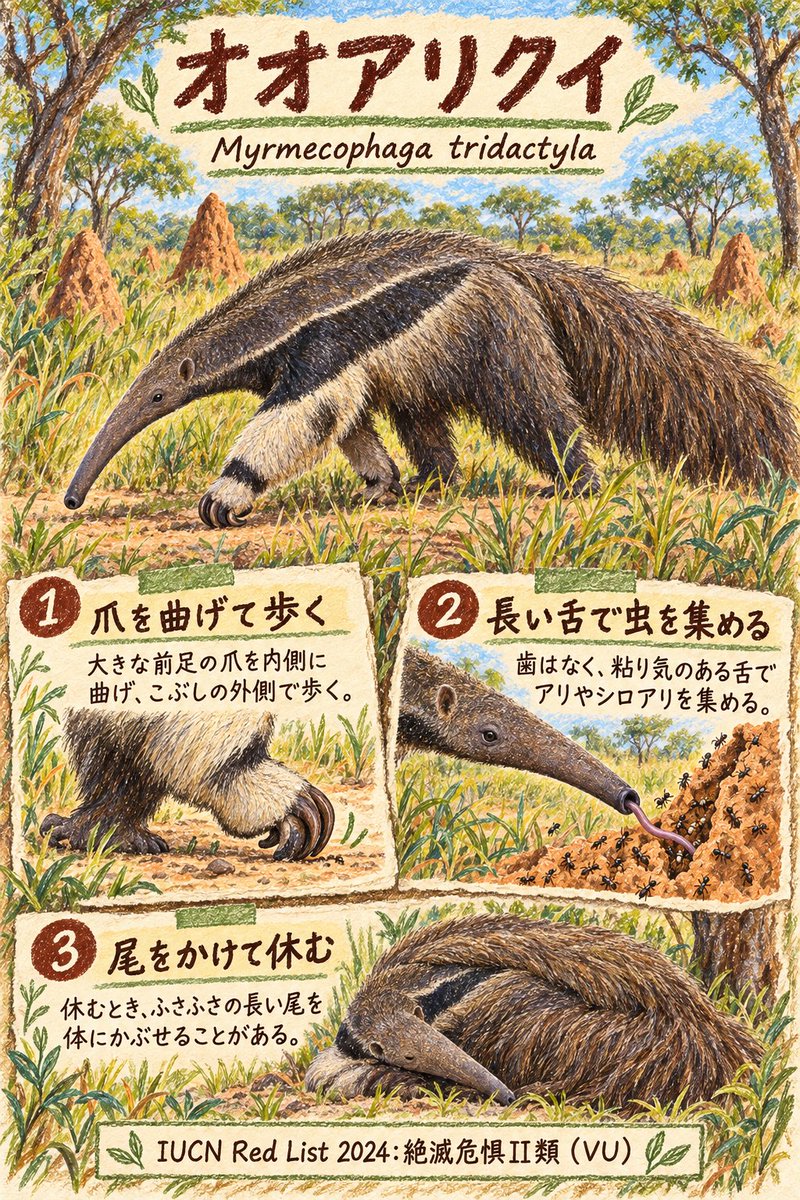
Across South American grassland, a narrow snout sweeps near the ground. The anteater keeps its digging claws curled as it walks; at an insect nest, its sticky tongue does the collecting. Later, its shaggy tail can fold over the resting body like a cover.
Those huge foreclaws curl inward as it walks on the edges of its forefeet.
Giant Anteater
Myrmecophaga tridactyla
IUCN Red List 2024: Vulnerable (VU)
#GiantAnteater
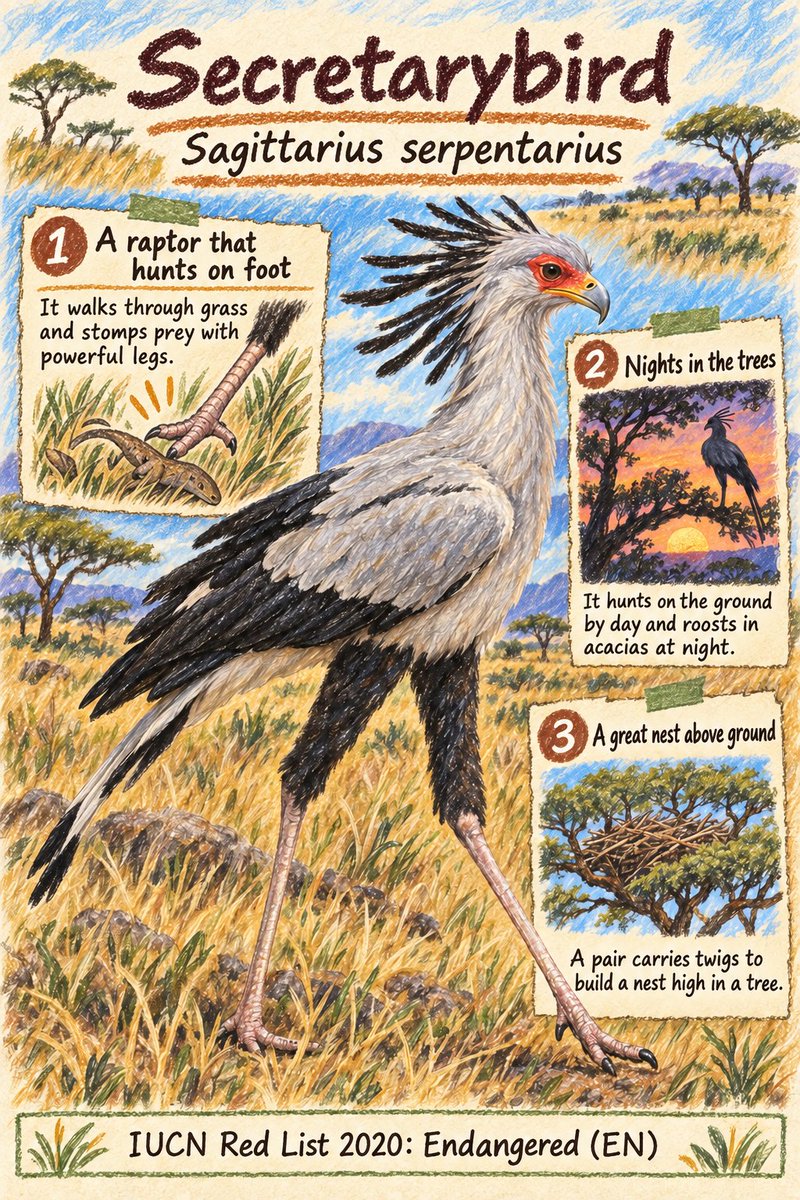
At dawn, the secretarybird leaves its acacia roost for open grass. It walks with wings folded, searching for prey to strike with its legs. By night it returns to the trees, where a pair also builds a broad nest of twigs.
A bird of prey that hunts on foot, striking with its long legs.
Secretarybird
Sagittarius serpentarius
IUCN Red List 2020: Endangered (EN)
#Secretarybird