محترمہ وزیر صاحبہ،
اگر یہ بل مکمل، متوازن اور عوامی مفاد کے مطابق تھا، تو پھر سینیٹ پہنچنے کے بعد اس میں ترامیم کی ضرورت کیوں پیش آئی؟
اس سے بھی اہم سوال یہ ہے کہ قومی اسمبلی کی متعلقہ پارلیمانی کمیٹی نے ان متنازع شقوں کا مکمل جائزہ کیوں نہیں لیا؟ اگر جائزہ لیا گیا تھا تو وہ شقیں، جن پر آج وضاحتیں دی جا رہی ہیں، ایوان سے منظور ہو کر سینیٹ تک کیسے پہنچ گئیں؟
یہ سوال صرف وزارتِ آئی ٹی سے نہیں بلکہ قومی اسمبلی کے تمام 336 اراکین سے بھی ہے۔ پارلیمان کی اولین ذمہ داری عوامی مفاد، آئینی حقوق اور نجی ملکیت کا تحفظ ہے، نہ کہ بعد میں یہ وضاحت دینا کہ قانون کا مقصد کچھ اور تھا۔
قانون سازی میں نیت سے زیادہ اہم قانون کا متن اور اس کے ممکنہ اثرات ہوتے ہیں۔ اگر کسی شق سے غلط تشریح، اختیارات کے ناجائز استعمال یا بنیادی حقوق پر اثر پڑنے کا امکان موجود تھا، تو اس کی ذمہ داری قانون سازوں پر عائد ہوتی ہے کہ اسے قومی اسمبلی ہی میں درست کرتے، نہ کہ سینیٹ پہنچنے کے بعد۔
عوام کے خدشات کو پروپیگنڈا قرار دینے کے بجائے ان کا جواب شفاف پارلیمانی کارروائی، واضح قانونی تحفظات اور مؤثر احتساب سے دیا جانا چاہیے۔ یہی جمہوریت ہے، اور یہی قانون سازی کا معیار ہونا چاہیے۔
@Parizaad_reborn The real tragedy is that the elite at the top exploit public officers to serve their interests, pressuring them to cross the line, only to later discredit them and leave them to bear the consequences alone.
It is deeply concerning that someone of your stature would appear to downplay a case involving serious allegations of rape, ransom, and the victimization of foreign guests, as though it were merely a youthful mistake.
Do you truly appreciate the impact such remarks can have? This case is about the confidence people have in Pakistan’s justice system and the message we send to the world about the safety of women and foreign visitors.
At a time when the allegations have already drawn widespread public attention, every statement from those in positions of influence carries weight.
Justice requires due process, but public leadership also requires restraint, empathy for the complainants, and an unequivocal commitment to accountability. Pakistan deserves nothing less.
اسحٰق ڈار اور علی ڈار بہت شریف النفس اور اچھے لوگ ہیں انھیں ایک رشتہ دار کی کریمنل اور بیوقوفانہ حرکت کی وجہ سے چیلنج کا سامنا ہے، دیکھتے ہیں یہ مقدمہ کیسے آگے چلتا ہے! لاہور پولیس کی لڑکیوں کی برآمدگی کی جھوٹی کہانی اور دیگر عوامل نے اس کیس کو زیادہ پیچیدہ بنا دیا۔
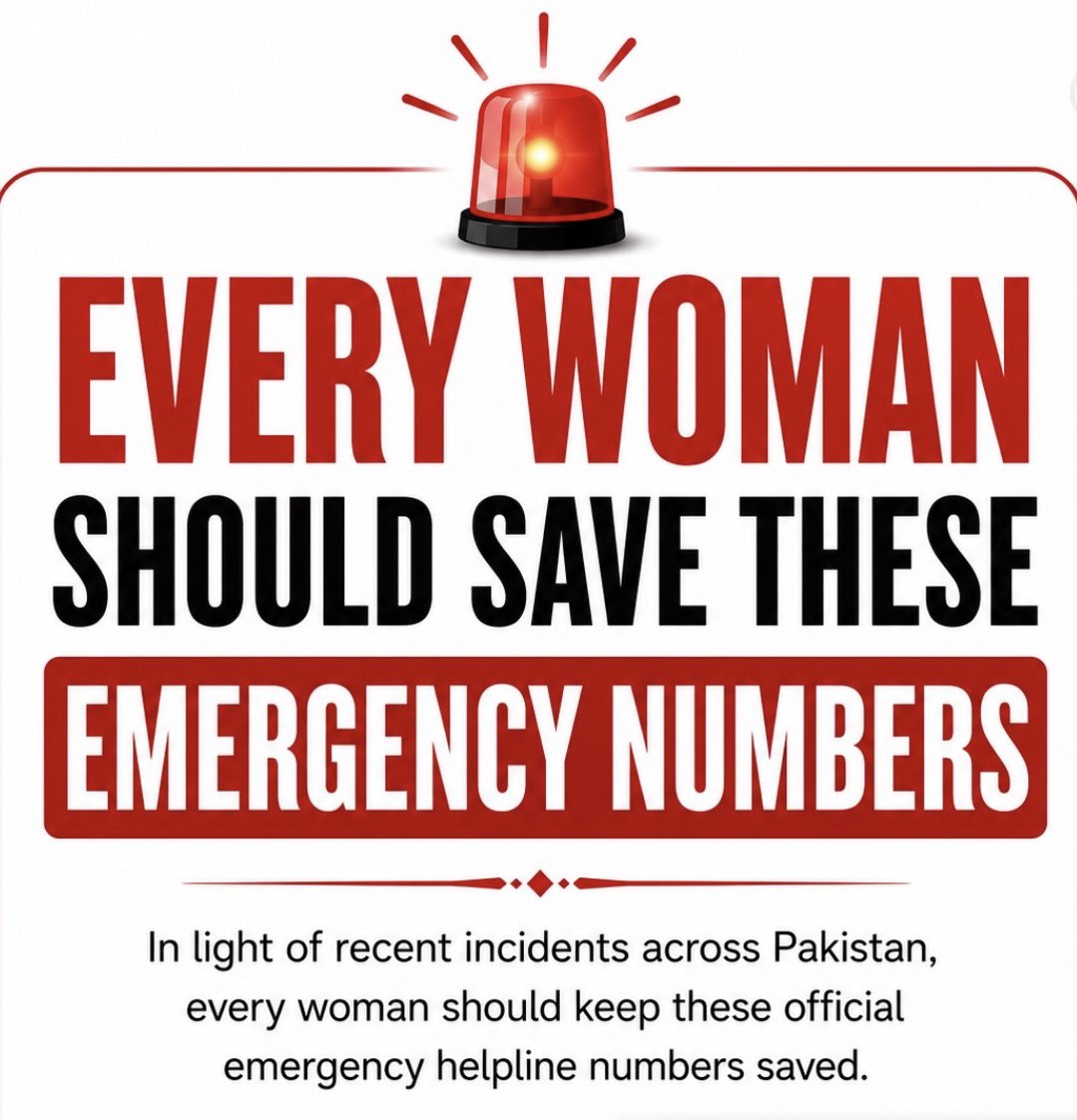
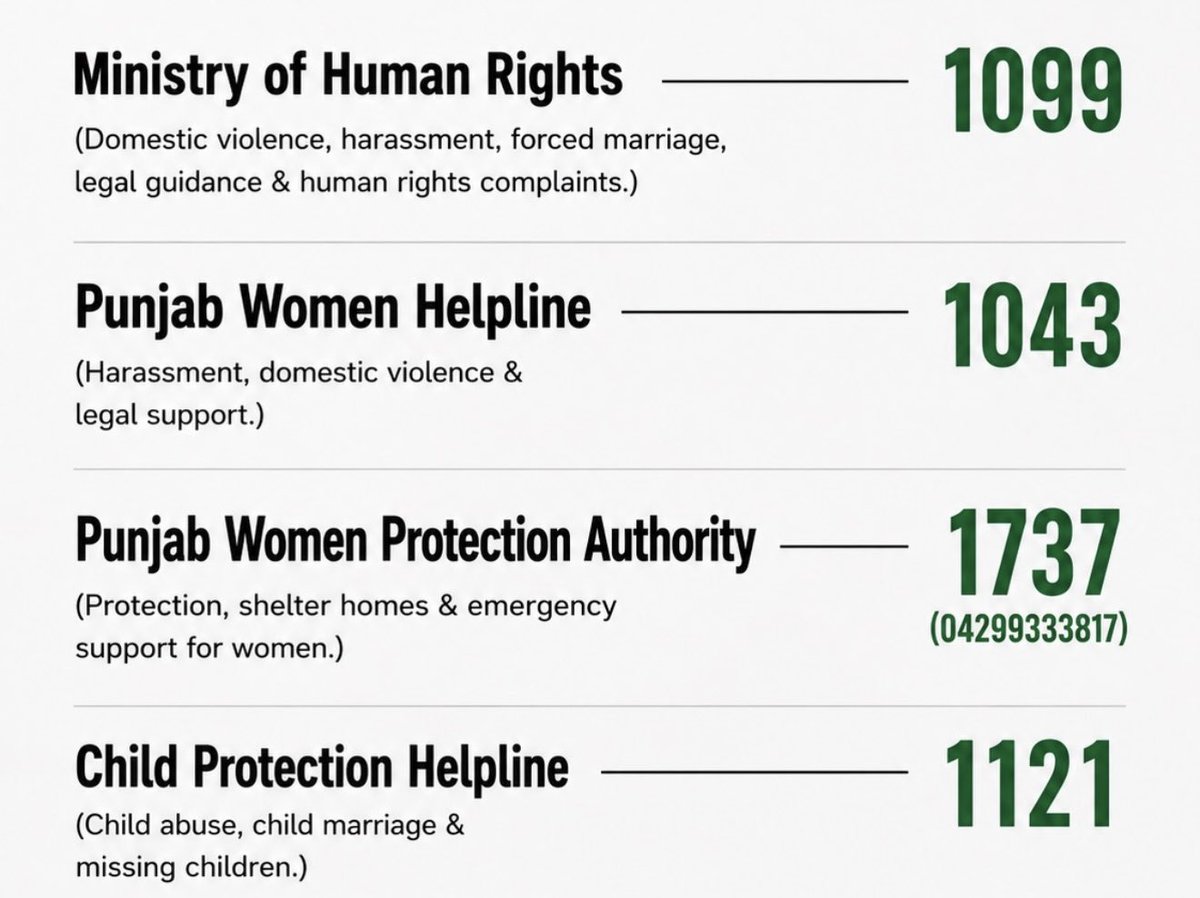
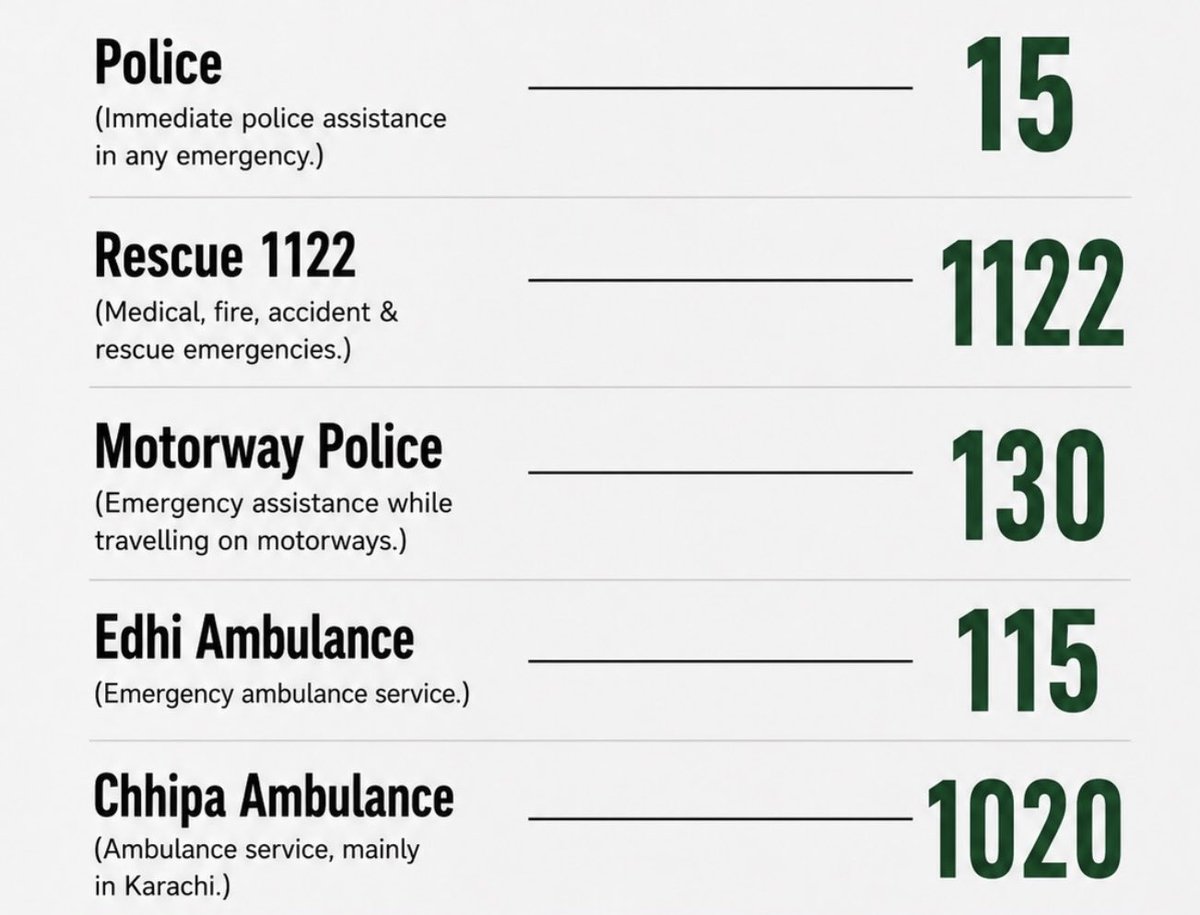
EVERY WOMAN SHOULD SAVE THESE EMERGENCY NUMBERS
Every second matters in an emergency.
The right helpline at the right time can save lives, provide legal assistance, and ensure immediate support.
In light of recent incidents across Pakistan, every woman should keep these official emergency helpline numbers saved on her phone.
Whether it's harassment, domestic violence, cybercrime, blackmail, child protection, legal guidance, women protection, or emergency assistance, knowing where to seek help is essential.
This awareness post includes official government helpline numbers that every woman, student, parent, and family should know.
Save this post for future reference.
Share it with your mother, sister, wife, daughter, friends, classmates, and colleagues.
Keep these numbers saved on your mobile phone.
Your one share may help someone in an emergencv.
Another year, another Auditor General's report. Another cycle of missing records, unreconciled accounts, unauthorized expenditure and weak financial controls.
The reported case of an unaccounted UNICEF grant is not the real problem—it is merely another symptom of a much deeper institutional failure.
Over the past several years, I have been highlighting in my articles (Auditing the Auditors, PFM Act: A Missed Opportunity, Rebuilding Parliamentary Accountability, and Accountability Reform) the fundamental and structural weaknesses in Pakistan's accountability system:
https://t.co/jlLo3SbxgO
https://t.co/sCNcUsTSZ2
https://t.co/Ys9dZtinMe
https://t.co/xzG0BH194n
The problem is not that the AGP fails to identify irregularities. The problem is that almost no one is held accountable for wrongdoing and ensuring that those irregularities are corrected & they do not recur.
The recurring weaknesses are well known:
• Audit remains largely retrospective instead of providing timely assurance and pointing out cause of the issue.
• Principal Accounting Officers face no personal accountability for repeated control failures & major irregularities.
• Internal controls and internal audit remain weak across government.
• Departmental Accounts Committees are procedural exercises rather than drivers of corrective action.
• Public Accounts Committees are ineffective - measure success by the number of meetings and audit paras discussed—not by implementation, recoveries, stronger controls or reduction in repeat observations.
• Parliament receives audit reports but seldom demands measurable improvements in public financial management.
• The Executive has no interest in implementing effective system of internal control, as it will reduce their arbitrary powers.
In my articles, I proposed reforms including:
• Time-bound implementation of audit recommendations with public reporting.
• Clear personal accountability of Principal Accounting Officers.
• Stronger internal audit and modern financial management systems.
• Outcome-based performance indicators for the AGP and PAC, focusing on implementation rather than volume of observations.
• Timely preparation and audit of government financial statements.
• Greater use of technology, data analytics and risk-based auditing.
• A shift from fault-finding to preventing recurrence through stronger governance.
Unfortunately, the reforms required are neither new nor technically difficult. They have been debated for years. Yet neither Parliament, the Public Accounts Committee nor the Executive has shown willingness to address the structural weaknesses that allow the same failures to recur year after year.
Until that changes, Pakistan will continue to have an audit system that records failures—but an accountability system that rarely corrects them.
LAWS RELATED TO CHILDREN in Pakistan
• The Juvenile Justice System Act 2018
• The National Commission on the rights of child Act 2017
• The protection of Breastfeeding and Child Nutrition Ordinance, 2002.
• The Islamabad Capital Territory Child Protection Act 2018.
• The Zainab Alert, Response and Recovery Act 2018 (Act 2020) correct
• The employment of Children Act 1991
• The probation of offender’s ordinance 1960
• The West Pakistan Probation of offenders Rules 1961
• The Child Marriage Restraint Act 1929
• The guardians and ward Act 1890
• The Punjab Juvenile smoking ordinance 1959
• The Punjab Prohibition of Child Labour at Brick Klins Act 2016
• The Punjab restrictions on employment of Children Act 2016
• The Punjab domestic workers Act 2019
• The Punjab free and compulsory education Act 2014
• The Sindh Prohibition of employment of Children Act 2017.
• The Sindh Prohibition of corporal punishment Act 2017
• The Sindh Child Marriages Restraint Act 2013
• The Sindh Child Protection Authority Act 2011
• The Sindh Children Act 1955
• The KPK Prohibition of employment of children Act 2015
• The KPK Child Protection and Welfare Act 2010
• The Baluchistan Child Protection Act 2016
• The Convention on the Rights of the Child
Pakistan does not suffer from a lack of child protection laws
it suffers from a lack of implementation.
On paper, there are dozens of laws meant to protect children, including:
• Juvenile Justice System Act 2018 • National Commission on the Rights of Child Act 2017 • ICT Child Protection Act 2018 • Zainab Alert, Response and Recovery Act 2020 • Employment of Children Act 1991 • Child Marriage Restraint laws • Provincial child protection, child labour, education, and domestic workers laws • And Pakistan is also a signatory to the UN Convention on the Rights of the Child.
The question is:
If these laws exist, why are children still being raped, abused, trafficked, forced into labour, and murdered with such alarming frequency?
The answer is simple:
laws without implementation are only words on paper.
Weak enforcement, poor investigations, inadequate child protection institutions, lack of accountability, delays in justice, and insufficient political will mean these laws often fail the very children they were created to protect.
Pakistan does not need more legislation
it needs the laws it already has to be fully implemented, adequately funded, and rigorously enforced.
Every child deserves safety, justice, and protection not just promises written in legislation.
@NCRC_Pakistan@nchrofficial@mohrpakistan
#ImplementZARRAbill
this was the neighbourhood case I was referring to, unfortunately NCRC oversight will remain on papers, ZARRA will remain in Assembly Library, children will continue to will continue to suffer. #ImplementZARRA or dissolve @NCR@NCRC_Pakistan why do we have to waste money on dysfunctional oversight bodies
The Zainab Alert, Response and Recovery Act (commonly known as the Zainab Bill) . The law mandates the creation of the Zainab Alert, Response and Recovery Agency (ZARRA) #implementationZARRA to protect child abuse cases . Why it’s implementation is delay ?
Pakistan’s children deserve functioning institutions, not ceremonial ones.
Every time a child is abused, abducted or murdered, the nation mourns. Every time, we promise “never again and accountability” And every time, another child becomes the next headline.
Four horrific cases in just four days. This is no longer a series of isolated crimes. It is evidence of a child protection system that is failing.
The Zainab Alert, Response and Recovery Act was enacted in 2020 to establish ZARRA with a clear purpose: create a coordinated national mechanism for rapid response, recovery, alerts, data sharing and coordination to protect missing and abducted children across Pakistan. (https://t.co/lgSyWUtpeS)
We also have the National Commission on the Rights of Child @NCRegister established under the 2017 Act, with the mandate to monitor child rights, investigate violations, review implementation of laws and hold institutions accountable. (Children’s Rights Commission)
Why are taxpayers funding offices, salaries, vehicles, staff and perks if the outcome on the ground is repeated institutional failure?
Where are the annual accountability reports?
Where are the public audits?
Where are the measurable outcomes?
Where are the emergency interventions after every tragedy?
A law that exists only on paper does not protect a child.
An institution without accountability is not oversight.
Silence from those entrusted with protecting children is not governance.
The Government cannot continue treating child protection as a press statement after every tragedy. Every preventable death demands accountability not only from perpetrators, but also from every institution created to prevent these crimes.
Pakistan’s children deserve functioning institutions, not ceremonial ones.
#ChildProtection #ZARRA #NCRC #JusticeForChildren #Pakistan #Accountability #ChildRights
A controversial new Telecom bill in Pakistan is sparking major outrage by giving companies the power to install 5G towers and fiber-optic cables on public spaces and private property without the owner’s consent or environmental checks. If a property owner refuses access, they could be slapped with a massive fine of up to 50 million rupees. While the National Assembly already passed it, heavy public backlash has forced the Senate to hit pause and defer the bill for closer scrutiny.
A bill affecting the property rights of over 240 million Pakistanis passed through a 336 member National Assembly, yet fundamental concerns now acknowledged by the government are only being addressed after Senate intervention. This raises serious questions about the quality of legislative scrutiny in the elected house called National Assembly
The Telecom Amendment Bill 2026 has exposed a disturbing weakness in Pakistan’s legislative process.
A bill drafted by the Ministry of IT, passed by a 336 member National Assembly, and now under review by the Senate contains a flaw so fundamental that it should have been identified at the earliest stages of scrutiny.
Right-of-Way for underground fiber infrastructure is not the same as granting powers related to above-ground telecom infrastructure such as towers, rooftop installations, and access to private property. They raise entirely different legal, technical, and property rights considerations.
Yet somehow this distinction appears to have escaped a Ministry, a Standing Committee, and a National Assembly comprising 336 elected lawmakers.
The Minister of IT has reportedly acknowledged that the wording requires correction. If that is the case, then the obvious question is: why was the bill passed by the National Assembly before these issues were debated or resved?
What is most concerning is that these concerns were not discovered after passage. They were being discussed publicly by industry experts, policy analysts, legal commentators, and citizens long before the Senate intervened.
If a basic distinction between underground fiber Right-of-Way and above-ground tower infrastructure required Senate intervention to be recognized, what does that say about the quality of legislative review in the first elected house of Parliament?
The Senate may correct the drafting. But correcting the drafting does not answer the larger question of accountability.
A democracy cannot function effectively if Parliament’s role is reduced to voting on legislation rather than rigorously examining it. Citizens have a right to expect that laws affecting property rights, infrastructure, and public interest are subjected to thorough technical and legal scrutiny before not after they are passed.
The issue is no longer telecom. The issue is whether legislative oversight in Pakistan is becoming a formality rather than a safeguard. #LegislativeAccountability #RightOfWayBill #Telecombill2026
#ParliamentaryScrutiny
#MinisterialResponsibility
A nation’s tax policy should prioritize education over non-essential imports, yet reducing taxes on imported used cars while continuing to tax basic educational supplies suggests the opposite.
Taxing pencils, notebooks, and other learning materials while lowering the cost of imported used vehicles highlights a contrast in policy priorities.
Maintaining taxes on educational materials is to increase the financial burden on struggling families to afford resources for their children’s education.
Government and the IMF deserve strong criticism when tax policies appear to favor the interests of economic elites rather than expanding opportunities for ordinary citizens.
With millions of children still out of school and many families struggling to meet basic educational expenses, tax policy should focus on removing barriers to education rather than facilitating advantages for the elite.
#RightToEducation @IMFNews@EduMinistryPK
Australian girl killed in Pakistan after reportedly being shot by Punjab Police. The institution under PML-N has turned into an execution unit with horrific stories. We covered this topic a few months ago. https://t.co/5MgBApbCVr
This budget should make your blood boil. Let me show you why.
Pakistan's interest payments this year: Rs. 8,054 billion.
Pakistan's entire development budget, roads, dams, hospitals, schools, everything: Rs. 1,000 billion.
Eight rupees go to debt service for every one rupee invested in this country. This is not a budget. This is a confession.
Understand what this debt is. It was not borrowed to build Pakistan. Over the years, it was borrowed by corrupt politicians who were simultaneously busy building their own empires, inside and outside of Pakistan.
Now you and I are paying interest on their corruption.
Government will borrow another Rs. 7,000 billion on top of everything that already exists.
Borrow to pay interest on previous borrowing.
This is a debt trap and we are in it.
And they took out full page newspaper adverts at your expense to celebrate it.
Now let's look at Bangladesh. Same region. Same starting point. Very different choices.
Bangladesh total budget: $76 billion. Pakistan: $60 billion.
Bangladesh development spending: $24 billion. Pakistan: $3.6 billion.
Bangladesh interest payments: $10.4 billion. Pakistan: $29 billion.
Bangladesh education budget: $6.9 billion. Pakistan, federal and all four provinces combined: $3.5 billion.
They have 83 million fewer people than us and still spend twice as much educating them.
Bangladesh defence: $3.5 billion. Pakistan defence: $10.8 billion.
We spend 3 times more on defence than Bangladesh and our interest bill is 8 times their entire defence budget.
They are spending 6.5 times more on building their country than we are. And they are paying a third of what we pay in interest.
Now look at what this has done to our people.
Pakistan's GDP and Bangladesh's GDP are almost identical, around $450 billion each.
But Pakistan has 83 million more people.
Bangladesh's income/person: $2,621.
Pakistan: $1,901.
There taka is 122/dollar
Our Rs is 278/dollar
Poverty in Pakistan: 44.7%.
Poverty in Bangladesh: 5.9%.
Literacy in Pakistan: 60% (doubtful)
Literacy in Bangladesh: 77%
Once again our interest payments:
Rs. 8,054 billion.
Our defence budget: Rs. 3,000 billion. Interest payments are 2.7 times the defence budget.
This is far more damning than anything else!
I want to say something clearly. If this trajectory is not broken in the next two to three years, the security of this country will become unaffordable.
This is not a political statement.
This is basic maths.
These numbers are not accidental.
This is what elite capture looks like.
Wake up.
#Budget2026
#Corruption
Three wings. Same birds.
A new operating model won't fix an institution captured by the same networks it's meant to police.
The three-wing FBR reform seems architecturally sound — but architecture is not culture.
Pakistan's tax bureaucracy — and those who control it — runs on patronage, discretion, and collusion.
These aren't aberrations; they are the operating system. Structural separation of audit, assessment, and enforcement means little when the same political networks control postings, transfers, and promotions across all three wings.
Every major FBR reform of the past three decades came with diagnostic reports, international benchmarks, and phased roadmaps. Most quietly died in implementation.
The missing piece is governance, not design. Without an independent Policy & Oversight Board — with real teeth, merit-based appointments, and insulation from political interference — this risks becoming a more sophisticated facade for the same old game.
The data is damning: Rs750 billion in deposits, zero declared income. The signals have always been there. What's always been missing is institutional will, not a better org chart.
Pakistan cannot afford to be a consumer in the AI era. We must become a creator.
A consumer nation imports technology, pays licensing fees, exports talent, and remains dependent on decisions made elsewhere. A creator nation builds intellectual property, develops platforms, exports services, attracts investment, and shapes the future rather than waiting for it.
The AI economy is creating a historic opportunity for countries that can move quickly. Unlike previous industrial revolutions, success is not determined solely by natural resources or manufacturing capacity. It is increasingly determined by talent, data, compute infrastructure, research capability, and the ability to commercialize innovation at scale.
Pakistan has one of the largest youth populations in the world, a growing technology sector, and a globally recognized pool of engineers and entrepreneurs. These are strategic assets. Yet talent alone is not enough. Without a national commitment to AI infrastructure, skills development, research, and adoption, we risk becoming perpetual users of technologies designed, owned, and monetized elsewhere.
The countries that lead in AI will not simply enjoy economic advantages. They will influence standards, shape industries, strengthen national competitiveness, and create the high value jobs of the future.
The choice before Pakistan is straightforward: import the future or build it.
Pakistan has developed an extraordinarily efficient system for managing its education crisis.
Examination leaks, collapsing public schools, and 26 million out-of-school children are no longer just a social crisis, they are weakening Pakistan’s human capital, shrinking its future workforce, and undermining long-term economic competitiveness.
Committees are formed. Investigations are announced. Donor funded reform programmes are launched. Press conferences are held. Reports are published. The one thing consistently missing is actual educational transformation for national objectives.
The country does not need more symbolic commitments or headline driven programmes. It needs measurable learning outcomes, credible examination systems, independent accountability, investment in public education quality, and long-term policy continuity.
Most importantly, it requires acknowledging an uncomfortable truth: education is not welfare spending or political branding.
It is economic infrastructure.
And no country can build a competitive future on a collapsing foundation. @NuktaPakistan@raftardotcom@adeel_azhar@maverika@SABKAPak@WaqasAalam@ZunairaAzhar10@AzharAbbas3
https://t.co/zQrDOj9WzM