"At Your Job Today... Don't Bunt When the U.S. Needs Home Runs." Created by the War Production Board during World War II, c. 1942-1943. From U.S. National Archives and Records Administration. Unknown artist.
Frank Lloyd Wright didn’t design many sporting facilities, and apart from a rendering of a racing grandstand, this looks like the only attempt on record: a baseball field in the proposed Broadacre City. Never built. #flw#franklloydwright
The Winchester Herald publication was the company's mail-order catalogue. Alas, can't make out the artist signature (not identified in the McCracken Research Library catalogue entry), but there are plenty of smart folks in this group. (Center of the West.) 3/3
Yes, this is the same Winchester as the Winchester Repeating Arms Company, creator of guns and rifles. Winchester perfected the design of the Winchester rifle out of its New Haven, Connecticut plant and was a major arms supplier to the U.S. in World War I. 1/3
After the war, however, the firm was in debt and looked to diversify its offerings. Arms plants were converted to manufacturing plants, and a line of baseball gear--among other consumer items--was sold at Winchester stores. 2/3
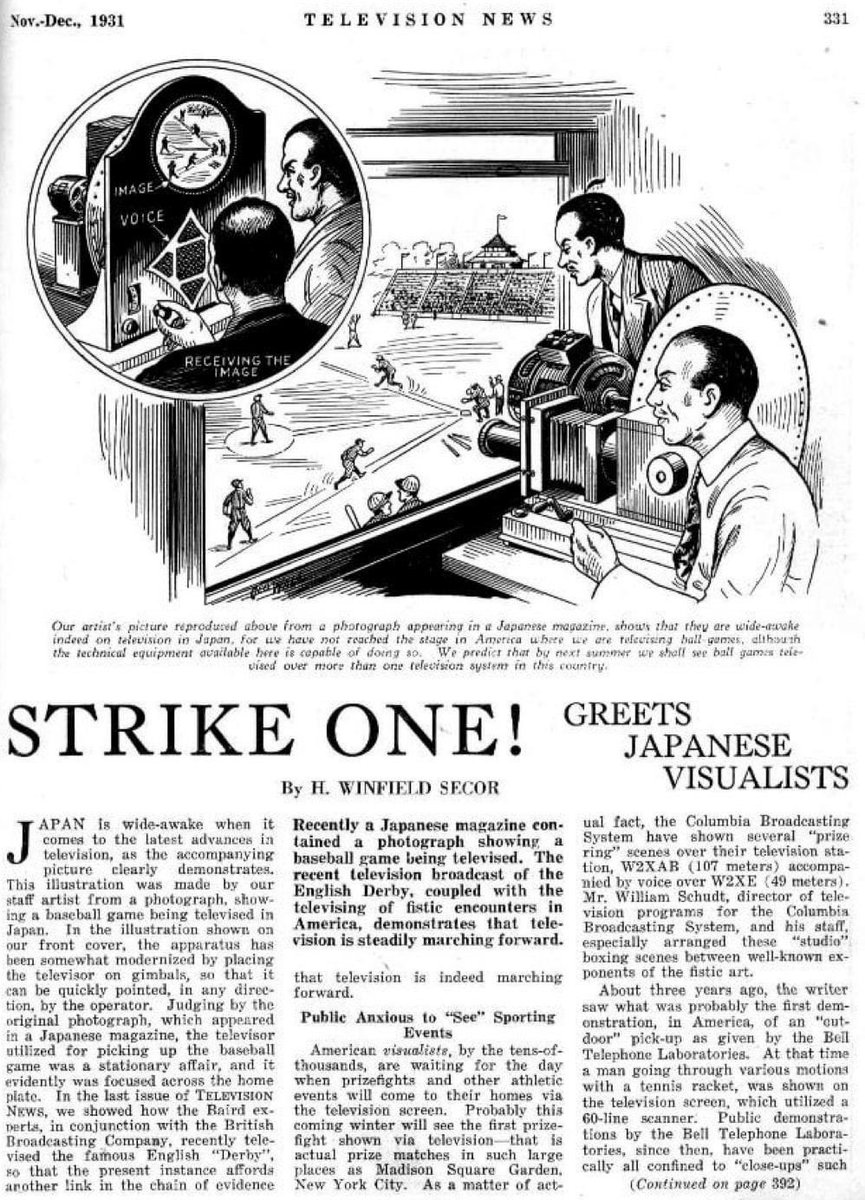
televised solely to the New York City market. The first MLB TV broadcast didn't come until August 26, 1939, when Red Barber called a Reds-Dodgers game from Ebbets Field.
Television News, November-December 1931. Owned and edited by Hugo Gernsback (founder of Amazing Stories and an early champion of science fiction; the Hugo Awards are named for him), Television News carried an alarmist story on the fact 1/3
that the Japanese were far ahead of Americans when it came to televised baseball games. Apparently quite true: the first U.S. televised game came much later, on May 17, 1939, when Priceton took on Columbia at Baker Field. The game was 2/3
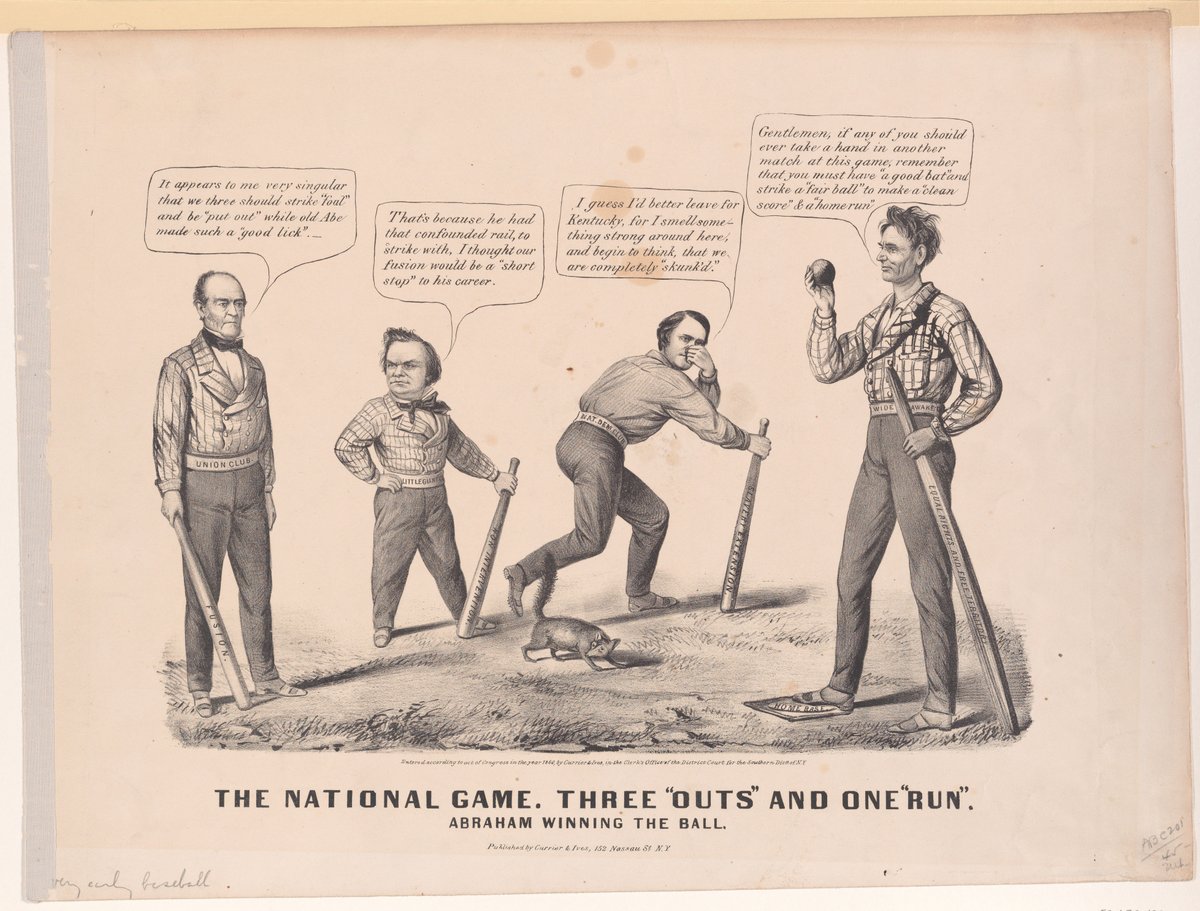
Lincoln's bat is engraved, "Equal Rights and Free Territory," and he exhorts his competitors to "strike a fair ball to make a clean score and a home run." The presence of a skunk does, in fact, indicate that his opponents were skunk'd. (Met Museum) #baseballart#baseball
Baseball as political metaphor. Published before the 1860 presidential election, Abraham Lincoln is the victor in this lithograph published by Currier & Ives, controlling home plate and the ballpark against the linkes of Stephen Douglas and John C. Breckinridge. 1/2
@tinejch@thorn_john Yes, the torch hand was on tour for fundraising. Lady Liberty was created in Paris and shipped to the US, displayed in various locales (Madison Square for five years). Came up short until Joseph Pulitzer headed fundraising.
We've posted a lot of J.C. Leyendecker artwork in this group, but here's a fuller accounting of the artist and his work. Worth a read; worth a visit if you're in New York City, https://t.co/Qp9D6QcJNT
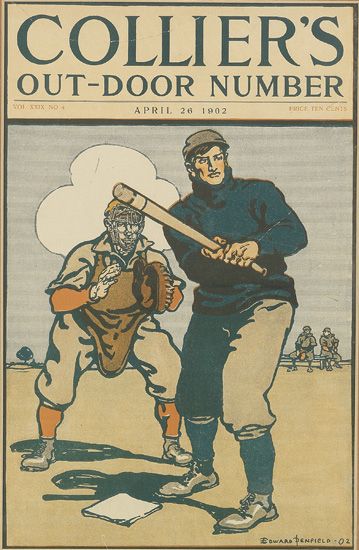
adapting his work to the printing limitations of the time while also pushing that technology to its limits--and was widely published in the larger, successful national magazines like Collier's and Harper's Weekly. This cover is from April 26, 1902.
Edward Penfield (1866-1925) was a pioneer of modern illustration, an early creator of the American poster and a prolific . He was known for stripping down an illustration to its basics both on posters and magazine covers-- 1/2
Don't think this was based on a real ballpark (clearly not the square Longines Polo Grounds clock in center field), but there seems to be elements of the Polo Grounds here.
“Umpire with Cinder in his Eye,” Stevan Dohanos, watercolor and gouache on board, 25 ½” x 19 ½”. The Lorain, Ohio native's work appeared in magazines of the era, including The Saturday Evening Post, Esquire McCall’s and Colliers. 1/2
Times have always been rough on umps, even before the dawn of the pitch clock. Unknown artist, All Baseball Stories, Interstate Publishing, October 1947. #baseball
Annual baseball cover from The New Yorker, April 3, 2023 issue. Mainstay Mark Ulriksen contributed this year's cover, with the subject this year's rule changes.