Thanks to all participants of our IV meeting last week! It was a great sample of molecular simulation in the south. 🙂🥂 Check below the videos for all talks and discussions:
Session 1 - https://t.co/Pg01l4iWS0
Session 2 - https://t.co/1dfo4IyJdj
O LNCC soltou nota de divulgação sobre nosso recente trabalho, veja aqui: 🤓
Supercomputador do LNCC/MCTI ajuda pesquisadores a desvendar mistério da "usina de energia" das células
https://t.co/eetpo84Fjt
Interested in a 12-month postdoc in Brazil? 🇧🇷 Join us in vibrant São Paulo for cutting-edge research in biomolecular simulation and design.🤓
Check out the details here: https://t.co/bmtGWXm4AP
Boltz-ABFE: Free Energy Perturbation without Crystal Structures
1. A groundbreaking study introduces Boltz-ABFE, a novel pipeline that combines Boltz-2 structure prediction models with absolute free energy perturbation (ABFE) protocols to estimate small molecule binding affinity without relying on experimental crystal structures. This innovation significantly expands the applicability of FEP in early-stage drug discovery, where suitable crystal structures are often unavailable.
2. The study investigates the quality of protein-ligand complex structures predicted by Boltz-2 and proposes automated approaches to improve these structures for use in molecular dynamics simulations. The researchers demonstrate the effectiveness of Boltz-ABFE on four protein targets from the FEP+ benchmark set, achieving satisfactory results with mean unsigned errors (MUE) less than 1 kcal/mol on average.
3. A key innovation is the use of a coupled co-folding and re-docking approach to correct chemical inaccuracies in the predicted ligand structures. The researchers found that while Boltz-2 significantly reduces errors compared to Boltz-1, issues with stereochemistry still persist. They address this by re-docking the ligand into the predicted receptor using traditional docking software, which improves the accuracy of the ligand pose.
4. The study also explores the use of classical scoring functions for target deconvolution, finding that while these methods can be effective for targets with low sequence similarity, they are insufficient for more challenging cases with similar structures and ligand affinities. This highlights the importance of using Boltz-ABFE for accurate binding affinity predictions in complex scenarios.
5. The researchers emphasize the importance of careful sequence and biological assembly tailoring when generating co-folded structures for MD simulations. They demonstrate that truncating low-confidence regions and including binding partners can significantly improve model confidence scores and structural validity, leading to more accurate ABFE predictions.
6. The Boltz-ABFE pipeline is shown to be competitive with the Boltz-2 Affinity module, which is trained on experimental binding affinity data. However, the authors argue that Boltz-ABFE is more robust across different targets due to its physical foundation and bottom-up parametrization. Future improvements could include incorporating co-factors and optimizing the ABFE protocol to reduce the offset effect in early-stage drug discovery applications.
📜Paper: https://t.co/7agmiy1NkK
#BoltzABFE #FreeEnergyPerturbation #DrugDiscovery #MolecularDynamics #StructurePrediction
Coordenado pelo bioquímico Guilherme Menegon Arantes quando participou do Programa Ano Sabático do IEA, videocast discute como a inteligência artificial pode transformar a biologia e a medicina e o que ela já possibilita para melhorar a qualidade de vida: https://t.co/MOqr8Jb3gW.
🚀 Benchmark paper out!
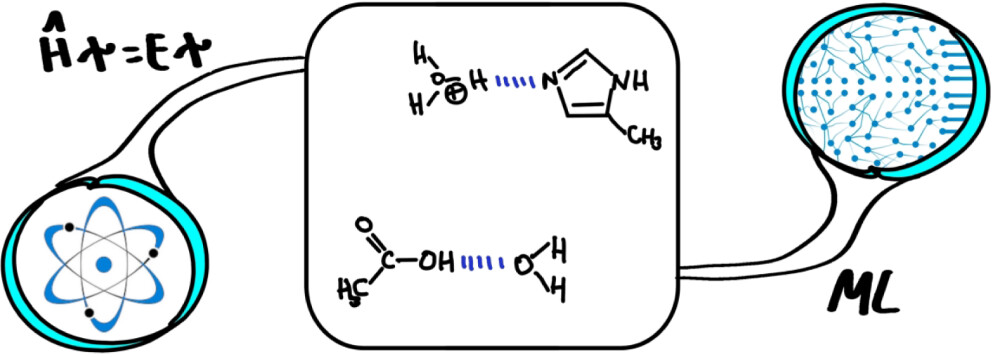
How well do DFT, semiempirical & ML methods model proton transfer?
✅ DFT performs well, except with N-groups
❌ Pure ML struggles (though ORB v3 shows big gains)
🔥 PM6-ML Δ-learning excels, even in QM/MM setups!
Check it out:
https://t.co/x1NjuuY8M2
Finally published! 😀📜🚨
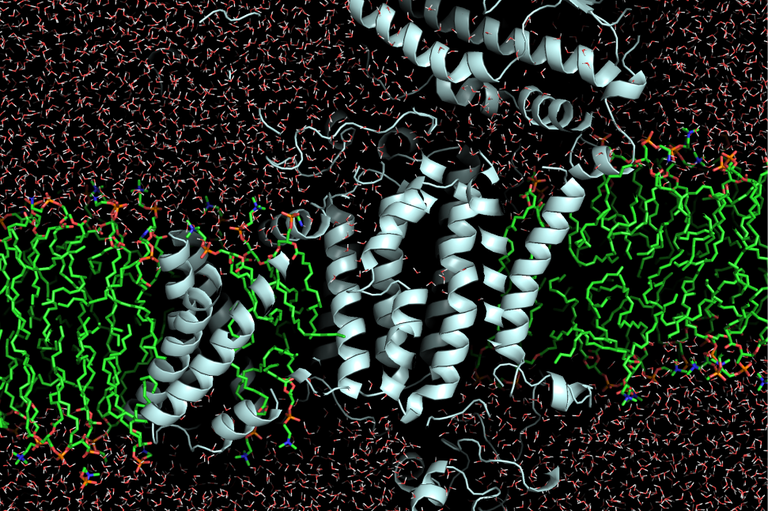
We used MD simulations to explore flexibility and hydration of the coenzyme-Q binding site in respiratory Complex III. Check it out:
https://t.co/GuCwSCK2Km
New preprint on the molecular mechanism of proton transport and coenzyme-Q reactivity catalyzed by the respiratory complex III. Check it out if you are into #bioenergetics, #enzymes or #compchem 🧬🧪 😀
https://t.co/aAGUrC5aMr
Preprint out just in time for @ebec2024 ! It describes our simulations on cytochrome bc1 and proton wires involved in the oxidation of coenzyme Q, which I'll be talking about on Tuesday. See you in Innsbruck! 🇦🇹!!🤓💃 #EBEC2024#bioenergetics
https://t.co/GY23NgifsG
Check this out❗ @squabls2024 will be held at the Charles Darwin Conference Center in the Galápagos Archipelago.
The goal of the conference is an overview of state-of-the-art research that is exploring the importance of quantum theory in biology and the life sciences.
The Symposium on Quantum Applications in Biology and the Life Sciences (SQUABLS24) will be held at the Charles Darwin Conference Center on San Cristóbal Island in the Galápagos Archipelago (Ecuador) during the first week of December 2024:
https://t.co/3EXluXVghR
BREAKING NEWS
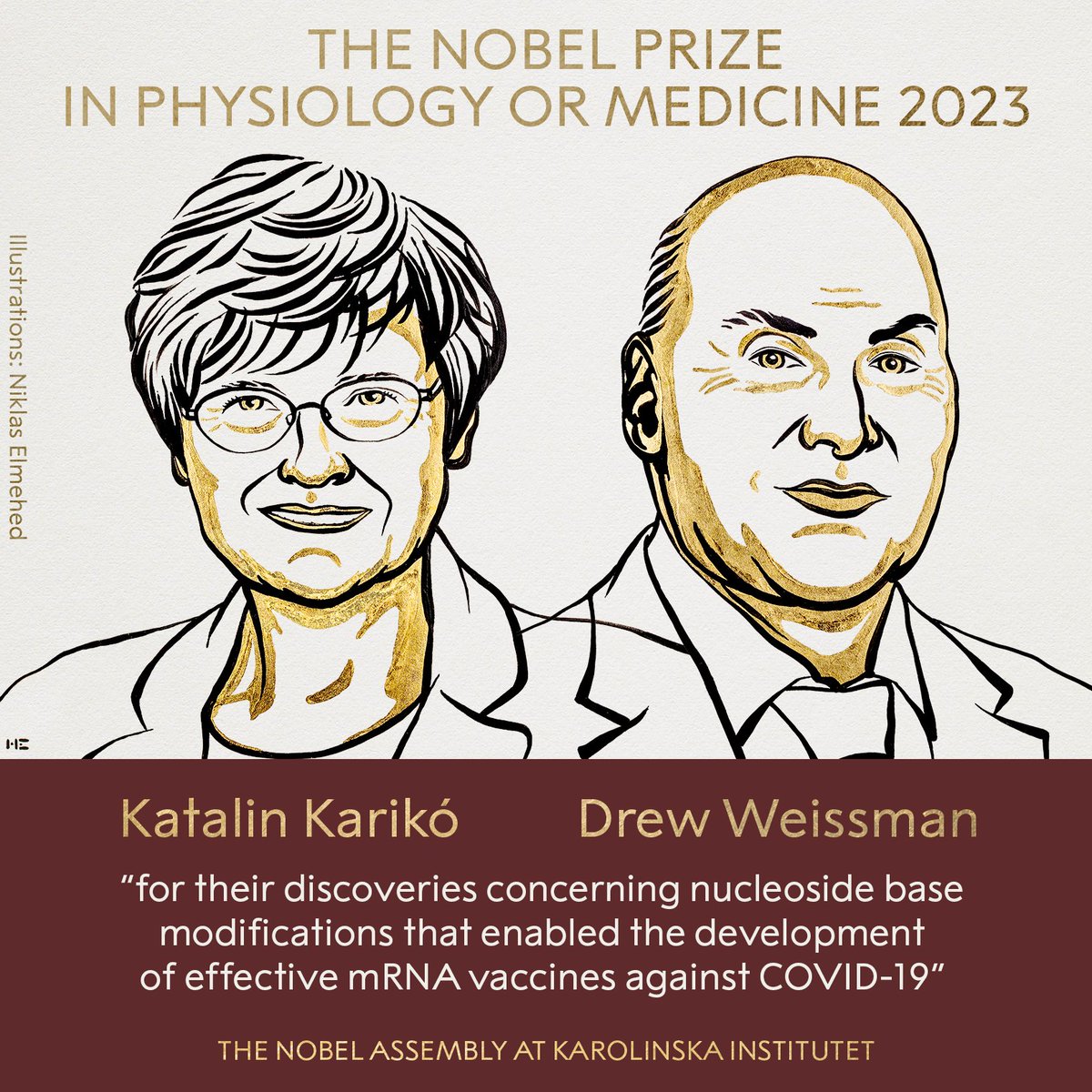
The 2023 #NobelPrize in Physiology or Medicine has been awarded to Katalin Karikó and Drew Weissman for their discoveries concerning nucleoside base modifications that enabled the development of effective mRNA vaccines against COVID-19.
Happy again to share this time the last paper of @fcurtolo1's thesis on the mechanism of fumarate reduction catalyzed by the flavo-#enzyme Fcc3, homologous to respiratory complex II 😀😎
Check it out: https://t.co/IKpmSfG228
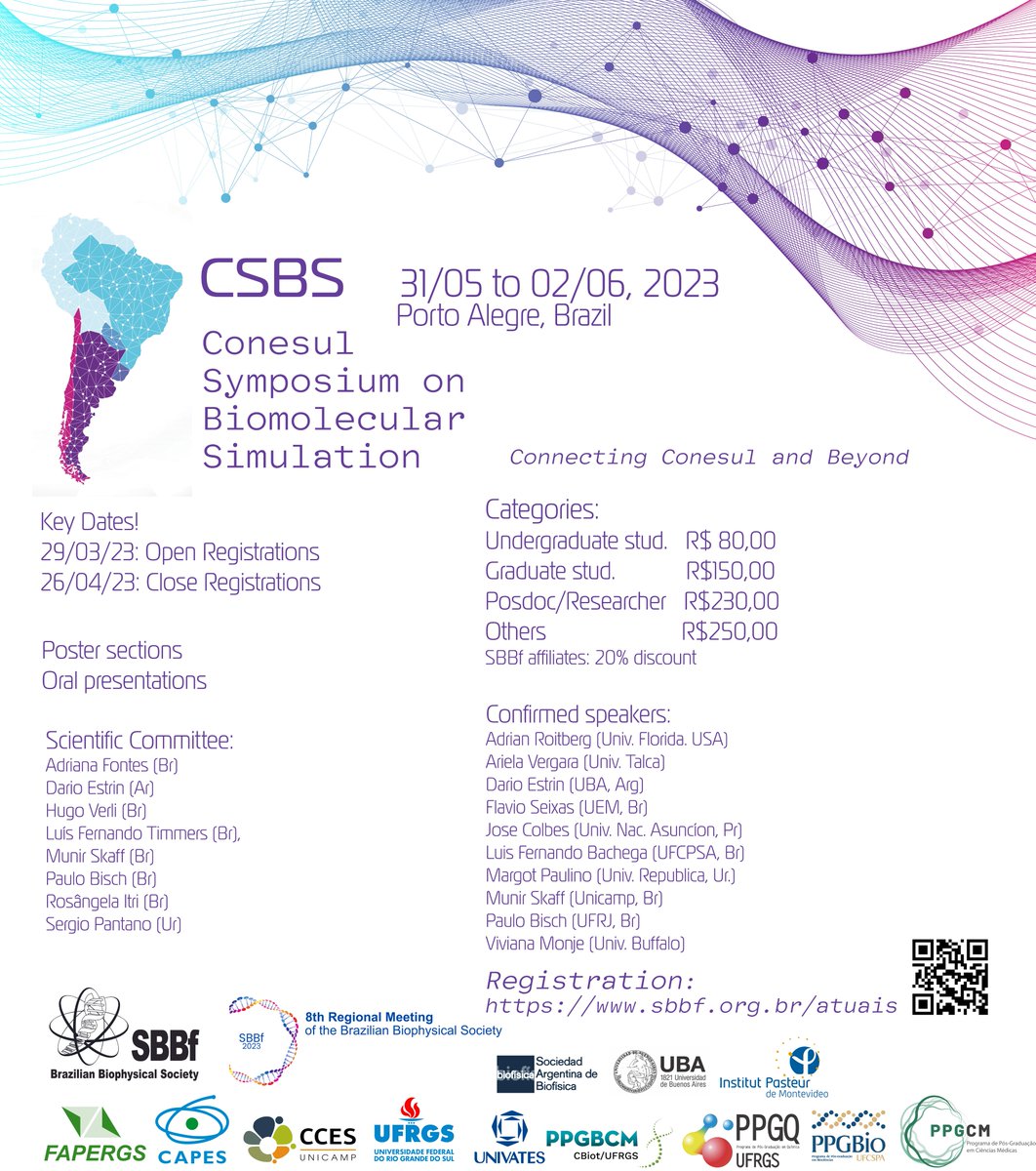
We’re organizing the first Conesul Symposium on Biomolecular Simulations! A great space for people doing molecular simulations to exchange ideas, expertise and build collaborations! Registrations open!