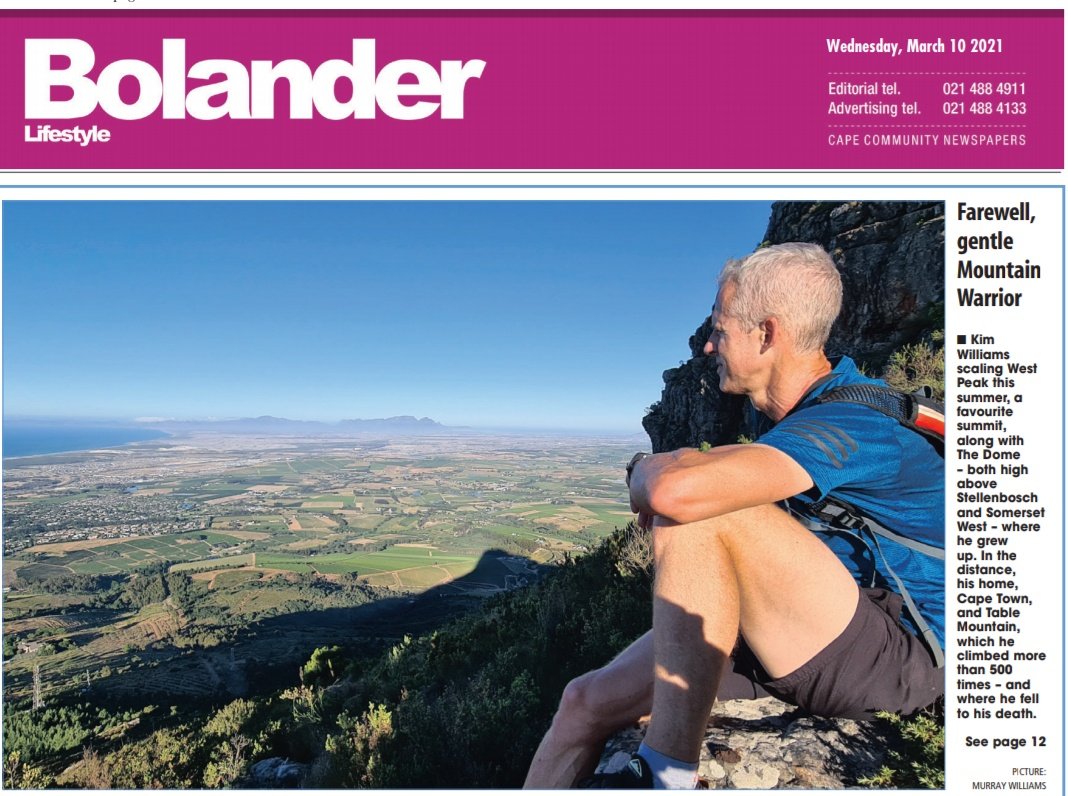
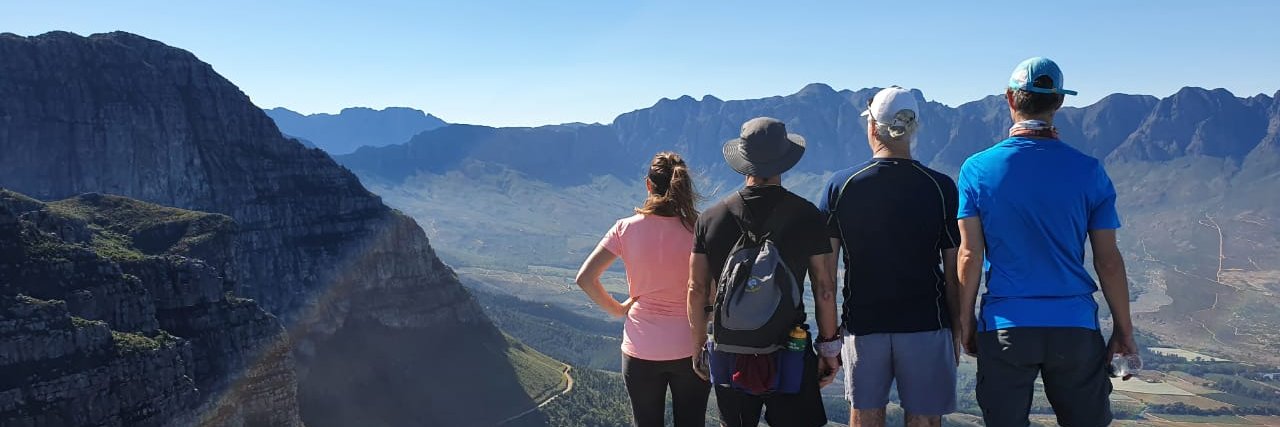
15 days ago we lost our beautiful brother, Kim.
He was doing what he loved most in the world: climbing the mountain.
I will miss him forever. My brother, my hero and one of my best friends.
WATCH | Some of the items previously owned by Shaun “Mamkhize” Mkhize are being auctioned off by Bidders Choice in Pretoria to recoup some of the money she owes SARS. Mkhize owes the tax agency more than R129m. More than a thousand items are up for sale, with bidding having started on Friday, 13 November.
Video: Koena Mashale
JUST IN: The Madlanga Commission will resume its public hearings on Monday with two days of evidence from criminally accused tenderpreneur Vusimusi “Cat” Matlala.
What caused the mysterious crash that killed UN Secretary-General Dag Hammarskjöld near Ndola in 1961?
New report: "It is almost certain that material information exists that has not been disclosed, principally by South Africa, the UK and the US."
Lindiwe Hani, daughter of the late Chris Hani, says her healing only began after she met the man who killed her father - Janusz Waluś. #CarteBlanche@clairemawisa
A full-blown taxi war is unfolding in Cape Town, with taxi drivers and owners seemingly targeting one another. The violence is so unpredictable that telling commuters to be careful hardly seems enough. Gunmen strike without warning, opening fire in public spaces.
A commuter was among those killed during an attack on taxi operators in Delft this morning. Now, another active crime scene in Maitland, where two taxi operators have been shot.
MADLANGA COMMISSION | Adv Ben Winks says Dr Ntandazo Sifolo has spurned the offer to amend his testimony by identifying which portions are confidential and explaining why they should remain protected.
MADLANGA COMMISSION | Adv Ben Winks says it cannot be acceptable for an intelligence agency to dictate what a commission of inquiry can and cannot hear.
Today, amaBhungane, Daily Maverick and Media24 will oppose an application to hear the entire testimony of a senior intelligence official at the Madlanga Commission behind closed doors.
Dr N Sifolo, acting coordinator of the National Intelligence Co-ordinating Committee (NICOC), is expected to give evidence about intelligence reports concerning the infiltration of South Africa's criminal justice system by organised crime syndicates.
He will have to explain why the country’s intelligence apparatus did not manage to counter this infiltration.
His testimony is expected to draw on four National Intelligence Estimates issued between 2022 and 2025, as well as 11 intelligence briefs and a special report issued between January and July 2025.
These documents were declassified for use by the commission, but not for public release.
The commission's evidence leaders argue that, because of these restrictions, Sifolo's testimony should be heard entirely in camera. They contend that the commission does not have the power to change the terms of declassification.
We are opposing that application.
In our heads of argument, we make four central points.
First, the evidence leaders have not provided sufficient evidence to show what specific harm to national security would result from public testimony.
Second, the fact that information has been classified does not, on its own, justify withholding it from the public. Our submissions draw on Constitutional Court judgments affirming the importance of open justice and the need to justify restrictions on public access.
Third, the Constitutional Court has opened the way for the Commission to make its own assessment and not be bound by the classifications imposed because it is granted the powers of a high court under the Commissions Act.
Fourth, even where there are legitimate security concerns, those concerns do not necessarily justify excluding the public from an entire hearing.
We are proposing a less restrictive approach: Sifolo should testify publicly wherever possible, with closed sessions limited to genuinely sensitive evidence. Information that could compromise national security, ongoing operations or individuals' safety could be protected through redactions and the use of codenames.
This is particularly important given the subject of the commission's investigation.
The commission is examining allegations of criminality, political interference and corruption within South Africa's criminal justice system. Among the questions it must confront are how organised crime syndicates were able to infiltrate these institutions, what the country's intelligence structures knew about those threats, and how that information was reported and acted upon.
These are matters of considerable public interest.
We recognise that some intelligence information may require protection. But the starting point must be open proceedings, with secrecy justified where it is genuinely necessary.
The public should not be excluded from hearing evidence about the conduct and accountability of state institutions without compelling reasons.
Tomorrow, amaBhungane, Daily Maverick and Media24 will oppose an application to hear the entire testimony of a senior intelligence official at the Madlanga Commission behind closed doors.
Dr N Sifolo, acting coordinator of the National Intelligence Co-ordinating Committee (NICOC), is expected to give evidence about intelligence reports concerning the infiltration of South Africa's criminal justice system by organised crime syndicates.
He will have to explain why the country’s intelligence apparatus did not manage to counter this infiltration.
His testimony is expected to draw on four National Intelligence Estimates issued between 2022 and 2025, as well as 11 intelligence briefs and a special report issued between January and July 2025.
These documents were declassified for use by the commission, but not for public release.
The commission's evidence leaders argue that, because of these restrictions, Sifolo's testimony should be heard entirely in camera. They contend that the commission does not have the power to change the terms of declassification.
We are opposing that application.
In our heads of argument, we make four central points.
First, the evidence leaders have not provided sufficient evidence to show what specific harm to national security would result from public testimony.
Second, the fact that information has been classified does not, on its own, justify withholding it from the public. Our submissions draw on Constitutional Court judgments affirming the importance of open justice and the need to justify restrictions on public access.
Third, the Constitutional Court has opened the way for the Commission to make its own assessment and not be bound by the classifications imposed because it is granted the powers of a high court under the Commissions Act.
Fourth, even where there are legitimate security concerns, those concerns do not necessarily justify excluding the public from an entire hearing.
We are proposing a less restrictive approach: Sifolo should testify publicly wherever possible, with closed sessions limited to genuinely sensitive evidence. Information that could compromise national security, ongoing operations or individuals' safety could be protected through redactions and the use of codenames.
This is particularly important given the subject of the commission's investigation.
The commission is examining allegations of criminality, political interference and corruption within South Africa's criminal justice system. Among the questions it must confront are how organised crime syndicates were able to infiltrate these institutions, what the country's intelligence structures knew about those threats, and how that information was reported and acted upon.
These are matters of considerable public interest.
We recognise that some intelligence information may require protection. But the starting point must be open proceedings, with secrecy justified where it is genuinely necessary.
The public should not be excluded from hearing evidence about the conduct and accountability of state institutions without compelling reasons.
BREAKING NEWS | A lot has been shifting quietly over the past few weeks.
But now I get to share it with you.
I’ve recently been appointed Investigations Editor at @eNCA.
As you know, the bulk of my twenty-year career has been spent here as a field reporter.
Now, I have the privilege of leading a team that includes trusted and experienced journalists like @pule_jones and @Nabeelah_Shaikh.
Our newly launched unit - which covers both digital and TV platforms - will go beyond the breaking news and delve deeper into the issues that matter across South Africa.
We look forward to partnering with you, the law-abiding citizens of our beautiful country.
More details to follow soon…
#DStv403
D-Day looms for alleged 28s gang boss Ralph Stanfield and his co-accused wife, Nicole Johnson, with the couple to appear in the Western Cape High Court for their organised crime trial.
The stakes are high for the State. Over the course of the investigation, witnesses having been murdered, injured and intimidated. Stanfield and Johnson have also emerged unscathed from previous efforts to put them behind bars.
https://t.co/SSN88tFJTg
The group are charged under the Prevention of Organised Crime Act and are accused of operating a criminal enterprise which unleashed a four-year wave of terror across Cape Town.
Ralph Stanfield and his wife Nicole Johnson will appear in Western Cape High Court this week alongside 12 of their co-accused on charges of murder, attempted murder, robbery and illegal possession of firearms and ammunition.
On 19 October 1977, the apartheid government banned The World and Weekend World newspapers and detained their editor, Percy Qoboza, and his deputy, Aggrey Klaaste. Just over a month earlier, Black Consciousness leader Steve Biko had died in police custody. The crackdown on 19 October also saw Black Consciousness organisations outlawed and scores of activists detained.
The day became known as Black Wednesday.