We are a group of metal detectorists and amateur historians operating all over Scotland. Dedicated Survey Support Unit All insured email [email protected]
Перша зустріч військового Володимира Колбасова та його сина Рената 🥹❤️🩹
Хлопчик народився вже після того, як тато потрапив до російського полону. І лише через чотири роки зміг вперше побачити й обійняти свого татка-захисника 🫂🥹
🎥: inna_brigantina/Instagram
This Scottish silver testoon was minted in 1558 during the joint reign of Mary Queen of Scots & Dauphin Francis of France. It depicts the royal couple’s ‘FM’ monogram. The Dauphin ascended the French throne as Francis II in the following year. From the Hunterian collection.
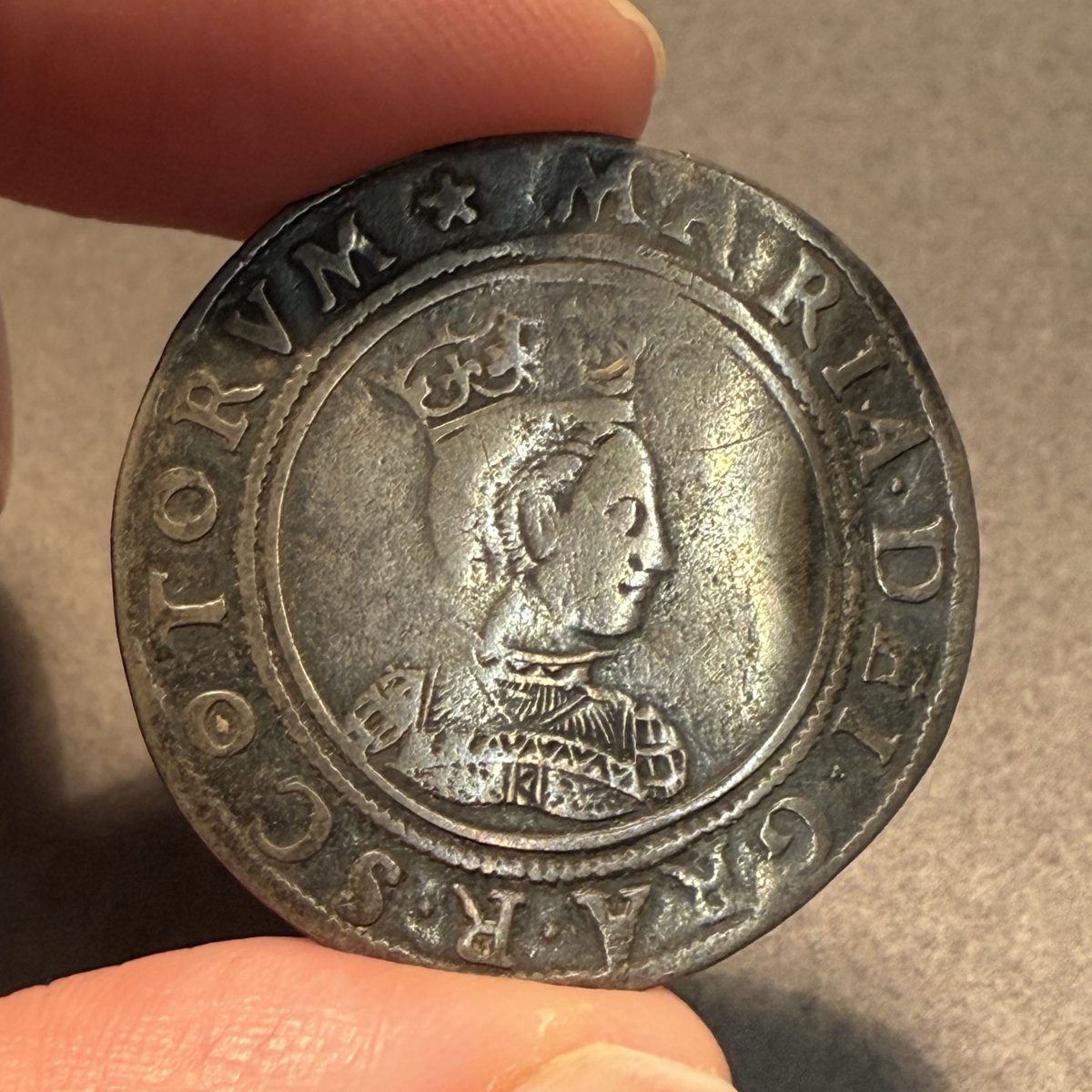
This testoon is the earliest silver coin to depict Mary Queen of Scots. It was struck at the Edinburgh mint in 1553, when Mary was just 10 years old. This example from the Hunterian collection is one of around twenty surviving specimens.
The royal coat of arms of Charles I are supported by the English lion and Scottish unicorn on this extremely rare silver halfcrown. The coin, which dates to 1645, is the oldest to depict the lion & unicorn together. This specimen is from the Hunterian collection.
The Lenham Stater Hoard:
A Remarkable Discovery of Iron Age Gold in Kent
In the rolling fields of Lenham, a village nestled in the Kent countryside southeast of Maidstone, a group of metal detectorists unearthed a treasure that bridges the gap between modern hobbyists and ancient history.
On August 26, 2022, during the Joan Allen Rally—a popular event for detector enthusiasts—a hoard of 35 Iron Age gold staters was discovered, concealed within a hollow flint nodule.
This find, now known as the Lenham Stater Hoard, not only captivated the archaeological community but also fetched a staggering £103,500 at auction, far exceeding its pre-sale estimate of £20,000.
The story begins with Tony Asquith, a retired metal detectorist with over 45 years of experience.
While scanning a field just 35 miles from Pegwell Bay—where Julius Caesar is believed to have landed during his invasion of Britain in 55 BC—Asquith’s detector signaled a promising hit. What emerged were scattered gold coins, initially mistaken by some for chocolate buttons due to their brownish patina. Further excavation revealed fragments of a flint nodule, which experts later reconstructed into a spherical container that had once housed the coins.
The site was part of a rally organized by Joan Allen, a well-known supplier in the detecting world, drawing enthusiasts from across the UK. Asquith’s find was reported promptly, adhering to the UK’s Treasure Act, which requires such discoveries to be declared to authorities.
The hoard was scattered over a small area, suggesting it had been disturbed by plowing or natural erosion over the centuries. The flint container, a rare feature, added to the hoard’s uniqueness—only a handful of similar prehistoric hoards have been found using natural stone vessels for concealment.
The Coins: Echoes of the Iron Age and Gallo-Belgic Trade
The Lenham Stater Hoard consists primarily of gold staters from the Gallo-Belgic series, minted by tribes in what is now Belgium and northern France during the late Iron Age (circa 1st century BC). These coins, often associated with the Ambiani tribe, feature stylized designs: one side typically shows a abstracted head of Apollo, while the reverse depicts a horse and charioteer, symbols of power and mobility in Celtic art.
These staters were part of the “Gallic War” uniface types, produced around the time of Caesar’s campaigns. They represent cross-Channel trade and migration, as similar coins have been found in hoards across southeast England.
The Lenham examples are in varying conditions, with some showing wear from circulation, hinting at their use in pre-Roman Britain. The hoard’s composition suggests it was buried for safekeeping, possibly during a period of unrest, and never retrieved by its owner.
Archaeologists note that the distribution of such hoards in Kent aligns with known Iron Age settlements and trade routes, providing insights into the region’s economy before the Roman conquest.
The British Museum has recorded similar finds, including earlier hoards from Lenham Heath, underscoring the area’s historical richness.
After official evaluation and disclamation by the Crown (as the hoard qualified as treasure), the coins and flint fragments were offered for sale at Noonans Mayfair in London on September 18, 2024. Bidders, including collectors and institutions, drove the hammer price to £103,500—five times the estimate. Individual highlights included a particularly fine Gallo-Belgic stater that sold for £6,500. Asquith expressed his astonishment at the outcome, describing the moment of discovery as “speechless” and the auction result as beyond his wildest expectations.
The proceeds were split between the finder and the landowner, as per UK treasure laws, highlighting the collaborative spirit of responsible detecting. This sale not only rewarded the discovery but also ensured the hoard could be studied or displayed by new owners.
A crowned thistle is depicted on this bawbee (sixpence Scots) of King James V that was minted in Edinburgh sometime between 1538 & 1542. Bawbees were struck by later Scottish monarchs, the last being issued by William II in 1697. From the Hunterian.
This testoon is the earliest silver coin to depict Mary Queen of Scots. It was struck at the Edinburgh mint in 1553, when Mary was just 10 years old. This example from the Hunterian collection is one of around twenty surviving specimens.
5th September 2024
A very rare penny of Edward III, mint of Reading.
Escallop in one quarter
The escallop is taken from the heraldic arms of Reading Abbey founded in 1125. The patron saint of the Abbey, St James, is often depicted carrying a scallop shell, the sign of a pilgrim
Mary Queen of Scots returned to Scotland on this day in 1561 after spending 13 years in France. This silver testoon coin was minted soon after her return home. This specimen from the Hunterian collection is one of the best preserved in existence.
Sceats or Sceatta’s! These tiny medieval coins are from the 7 and 8th century! They were made of silver, bronze and silvered bronze. These were used in Western Europe, in the North Sea area. #metaldetecting
Prince Bohemond III, the ruler of the crusader Principality of Antioch, is depicted wearing a helmet adorned with a cross and chainmail on this coin. It was minted sometime between c.1163 & 1188.
In contrast to the Renaissance portrait, the reverse adheres to medieval conventions. It depicts a two-lined inscription surrounding a long cross with pellets & crowns in its quarters. Similar designs had appeared on Scottish coins since the 1350s.
This silver groat of James III of Scotland that dates to sometime between 1484 & 1488 is one of the 1st coins struck in Northern Europe with a realistic portrait in the Renaissance style. This example is from the Lord Stewartby Collection at the Hunterian
King James V is depicted wearing an elaborate bonnet on this Scottish ducat that is dated to 1540. Some of these coins were made from gold mined at Crawford Moor. The same source of gold was used to make the Scottish crown. From the Hunterian collection.
The Norse raven, which was associated with Odin, appears on this silver penny of the Viking Olaf Guthfrithsson that was minted during his short reign as King of York (939-941). This is example is from the Hunterian collection.