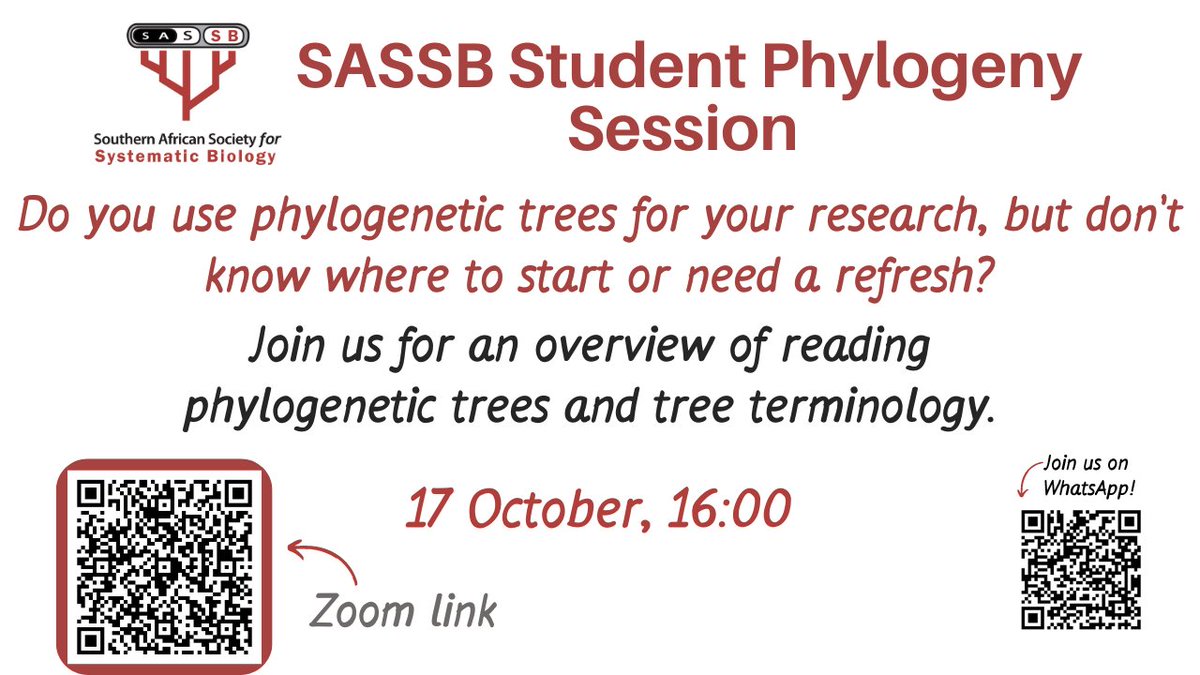
Are you a student working with phylogenetic trees but unsure where to start? Join Prof. Martin Coetzee as he covers the basics of reading phylogenetic trees! You can submit questions ahead of time here: https://t.co/KoToqEF6j0
A possible solution is explored in this article that employs naming novel diversity according to the Code of Nomenclature of Prokaryotes described from Sequence Data (SeqCode) that uses genome sequences as nomenclatural types instead of cultures. (3/3)
This is because the rules of the International Code of Nomenclature of Prokaryotes are at odds with South Africa's National Environmental Management: Biodiversity Act and its associated regulations. (2/3)
This is because the rules of the International Code of Nomenclature of Prokaryotes are at odds with South Africa's National Environmental Management: Biodiversity Act and its associated regulations. (2/3)
South Africa is well-known for the diversity of its legumes and their nitrogen-fixing bacterial symbionts (rhizobia). However, in contrast to their plant partners, remarkably few of these microbes from South Africa have been characterised and formally described. (1/3)
South Africa is well-known for the diversity of its legumes and their nitrogen-fixing bacterial symbionts (rhizobia). However, in contrast to their plant partners, remarkably few of these microbes from South Africa have been characterised and formally described. (1/3)
Are you a student working in Systematics or and Genetics?
We are starting a new informal monthly meeting for students to discuss their work and seek help!
Our first meeting will be the 19th June, at 5:30pm.
Looking forward to seeing you there (Link below)
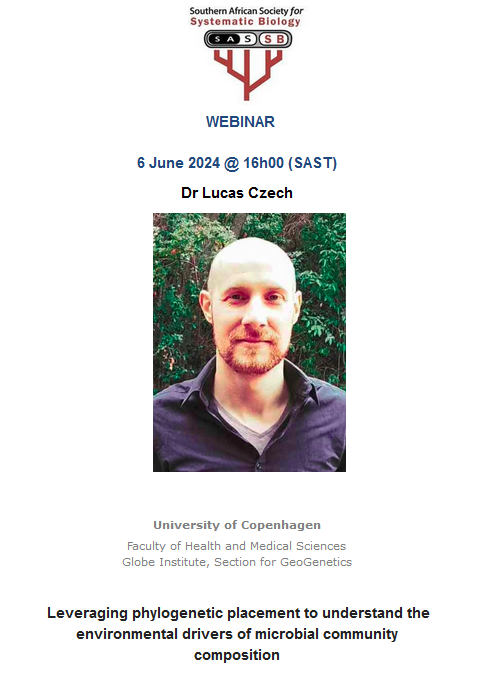
Join us tomorrow, the 6th of June, for a seminar by Dr. Lucas Czech, where they will be presenting: "Leveraging phylogenetic placement to understand the environmental drivers of microbial community composition"
https://t.co/CCpRs5RT5p
The recording of our last SASSB seminar, "Polyploidy and the evolution of plant diversity" with Dr. Mike Barker, Ruan van Mazijk and Hendrik Niemann is up on YouTube!
https://t.co/C12ChhFrSZ
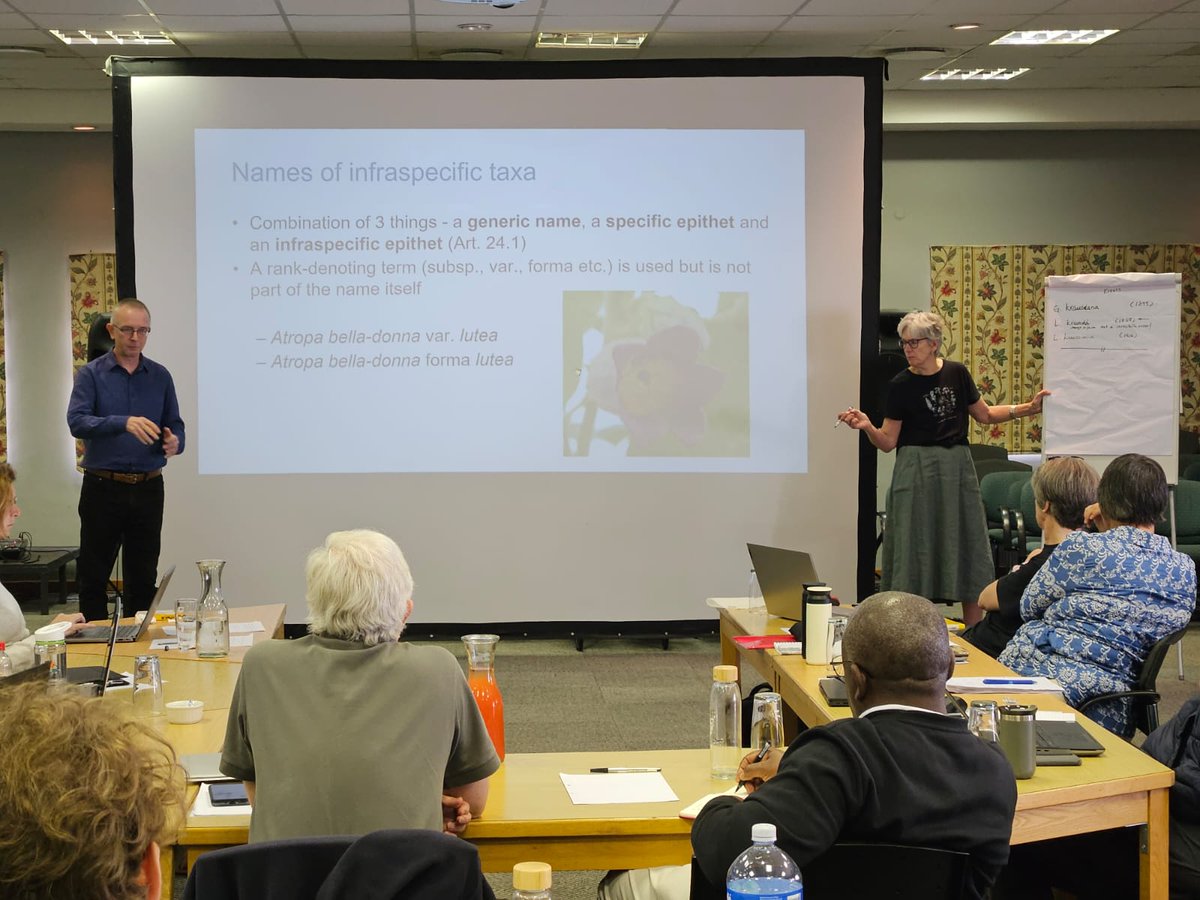
"We are here with the experts to co-create and co-learn" Muthama Muasya, outgoing SASSB president, set the tone for the weekend.
Set in Tulbagh's tranquility mountains, we were delighted to be immersed in the intricacies of the Code of Nomenclature for algae, fungi, and plants
We are extremely grateful to Sandra Knapp of the Natural History Museum, London and Nicholas Turland of the Botanic Garden and Botanical Museum, Berlin for leading Africa's first IAPT nomenclature Workshop!
Registration for the South African Association of Botanists (SAAB) conference in the University of Zululand (7-11 January 2024) has been extended to the 19th of November!
Register:
https://t.co/PCMXZ7Ftr7
Submit an abstract via this link:
https://t.co/X5UbKo6LEx
Join SASSB tomorrow, the 2nd of November 2023 at 16:00, for the newest session in our Webinar series! Our Plenary speaker, Dr. Mike Barker from the University of Arizona, will be speaking about Polyploid systematics & evolution. (1/4)
Mike is interested in how polyploidy, chromosomal evolution, and hybridization contribute to the diversity of life. He has published over 100 papers in his career and was awarded the Emerging Leader Award from the Botanical Society of America in 2016. (4/5)
Before starting his career at UA, he earned a Master’s in Botany from Miami University, a PhD in Evolutionary Biology from Indiana University, and he was a NSERC BRITE Biodiversity Postdoctoral Fellow at the University of British Columbia. (3/5)
Mike Barker is an Associate Professor and the Associate Department Head of the Department of Ecology & Evolutionary Biology at the University of Arizona. (2/4)
Join SASSB tomorrow, the 2nd of November 2023 at 16:00, for the newest session in our Webinar series! This will include a presentation by Ruan van Mazijk on the Genome size variation in Cape schoenoid sedges (Cyperaceae: Schoeneae) and its ecophysiological consequences!
Ruan is an early-career botanist currently working as Research, Publishing & Training Officer at C4 EcoSolutions. He holds BSc, Honours and MSc degrees, investigating plant ecology and evolutionary biology, from the University of Cape Town.
Ruan will look at how the changes in genome size can affect aspects of plant ecophysiological and hydraulic function. The morphological traits and carbon/nitrogen concentrations present in Schoenus and Tetraria were compared, to see how these factors changed with genome size!
Passionate and skilled in data wrangling, visualisation and statistical analysis, Ruan contributes to ongoing research projects on the savanna, grassland, and spekboom thicket soil ecology.