On this day in 1854, Sam Houston, former president of the Republic of Texas and then a United States senator, was baptized by Rufus C. Burleson in Rocky Creek near Independence Baptist Church, Texas.
Houston had made a profession of faith and joined Independence Baptist Church, recognized as the oldest continuously active Baptist church in Texas.
According to a popular account, when Houston was told that his sins had been washed away, he replied, “I pity the fish downstream.”
Houston also wanted his wallet baptized along with him, demonstrating that his commitment to Christ included his finances.
On this day in 1525, Conrad Grebel, Felix Manz, and George Blaurock were sentenced to imprisonment on a diet of bread and water in the tower at Zurich, Switzerland, because of their Anabaptist beliefs.
The three men were leaders of the early Anabaptist movement, which had begun earlier that year when they rejected infant baptism and began baptizing professing believers.
Although they had initially worked alongside Protestant reformer Ulrich Zwingli, their insistence on believers' baptism and a church separate from government authority brought them into conflict with Zurich's religious and civil leaders.
The authorities attempted to suppress the movement through imprisonment and other punishments. Grebel died the following year, while Manz was executed by drowning in 1527. Blaurock continued preaching and was eventually executed in 1529.
Though the Anabaptists were not Baptists in the modern denominational sense, their commitment to believers' baptism and religious liberty anticipated convictions later championed by Baptists.
In 1771, Baptist preacher Daniel Marshall was arrested near Augusta, Georgia, for preaching contrary to the practices of the established Church of England.
Marshall was kneeling in prayer when constable Samuel Cartledge approached him and declared, “You are my prisoner.”
Marshall submitted peacefully, but his wife, Martha, confronted Cartledge and warned him to flee from the wrath to come.
Her words apparently made a lasting impression. In 1777, Cartledge was baptized by the very preacher he had arrested six years earlier.
Cartledge later became a deacon at Kiokee Baptist Church and was ordained to the ministry in 1789. He went on to serve as a Baptist pastor for decades.
The man who once arrested a Baptist preacher eventually became one himself.
Pictured is a marker and the building of Kiokee Church from 1808.
"If God today told us what he is doing in the world, we wouldn't believe it. Don't you think God has given up and he's abdicated and he's left the throne. He hasn't! He is still on the throne. And those of us who know him put our trust in Him and Him alone." Bill Graham
On this day in 2005, Adrian Rogers, longtime pastor of Bellevue Baptist Church in Memphis, Tennessee, and three-time president of the Southern Baptist Convention, died at the age of 74.
Rogers became pastor of Bellevue in 1972, serving for 33 years. Through his preaching ministry, "Love Worth Finding," his sermons reached millions of people through radio and television.
In 1979, Rogers was elected president of the Southern Baptist Convention, an election widely regarded as the beginning of the Conservative Resurgence. He would serve as SBC president from 1979–1980 and again from 1986–1988.
Rogers was one of the most influential Southern Baptist pastors of the twentieth century, remembered for his preaching, leadership, and commitment to the authority of Scripture.
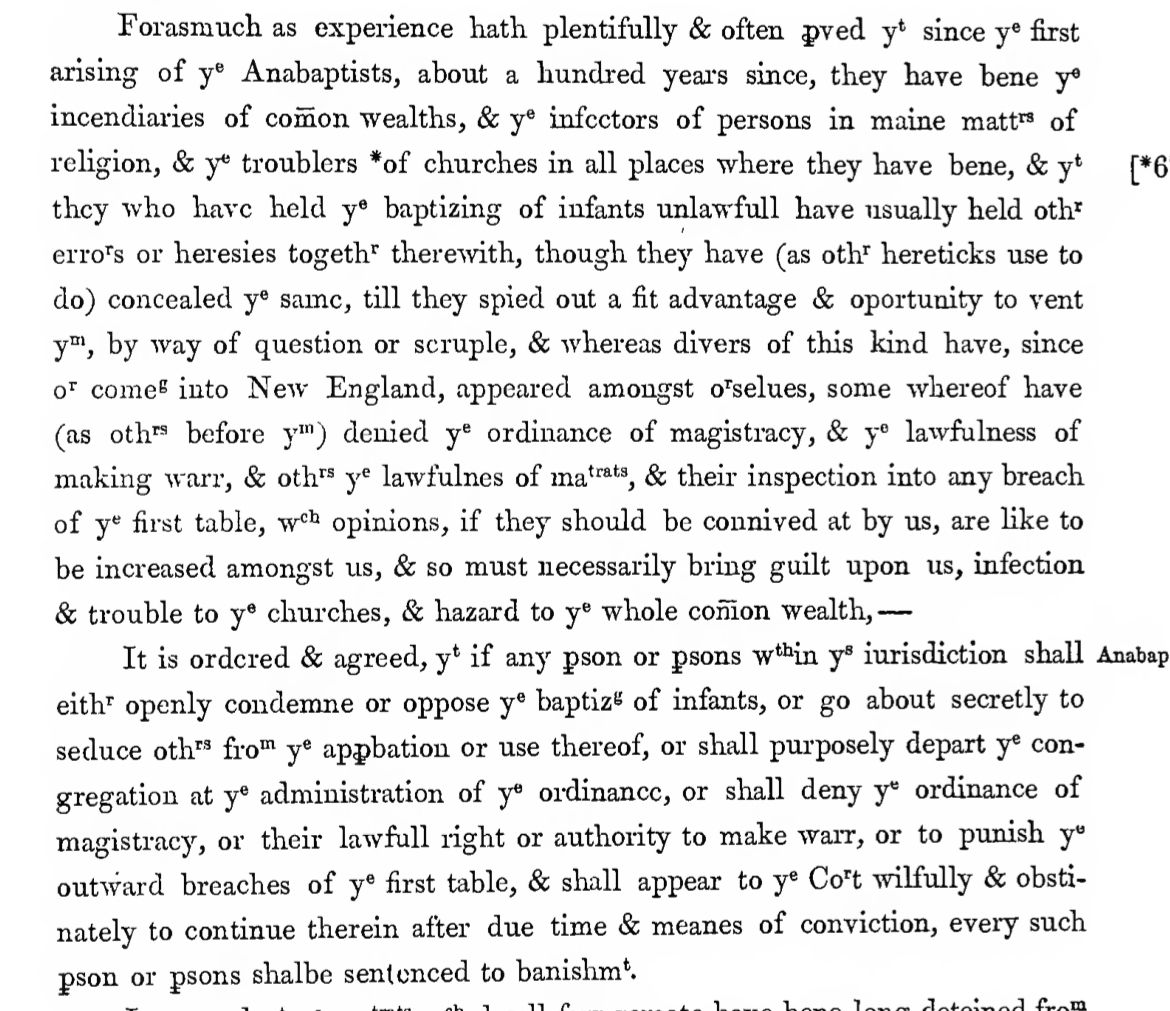
On this day in 1644, the Massachusetts Bay Colony passed a law specifically targeting Baptists, describing them as “incendiaries of commonwealths” and “troublers of churches.”
The law declared that anyone who openly opposed infant baptism, attempted to persuade others against it, or deliberately separated from the established churches could be sentenced to banishment from the colony.
This law was part of a long struggle for religious liberty in colonial America, a cause that Baptists would champion for generations.
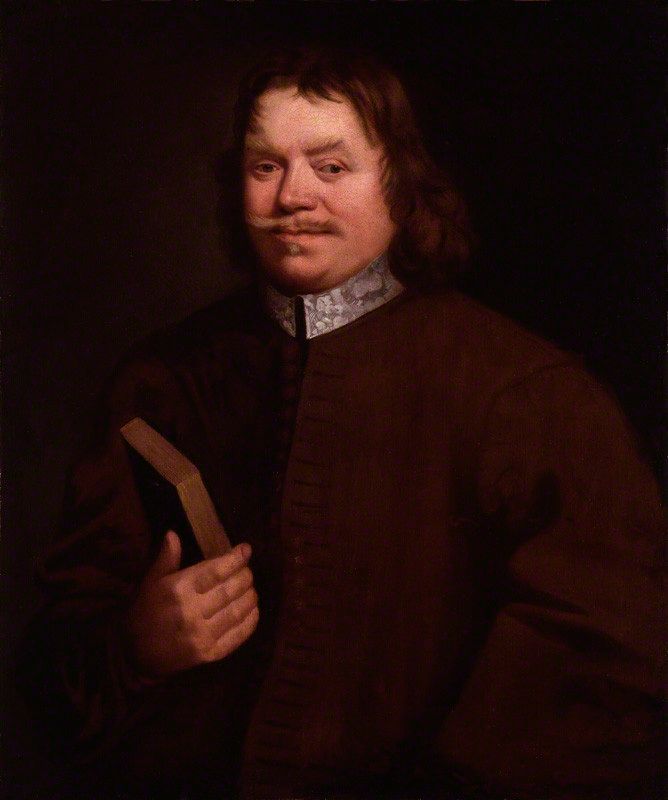
On this day in 1660, John Bunyan was arrested as he prepared to preach at Lower Samsell, England. Bunyan, a Baptist preacher, had refused to stop preaching without the approval of the Church of England.
Bunyan would spend much of the next 12 years in prison for his refusal to stop preaching. During his imprisonment, he wrote several works, including Grace Abounding to the Chief of Sinners, his spiritual autobiography.
Bunyan is best remembered for The Pilgrim's Progress, which he began writing during a later imprisonment. It would become one of the most widely read Christian books in history.
Bunyan's imprisonment did not silence his ministry, and his writings have continued to influence Christians for more than 350 years.
You can find a copy of Grace Abounding to the Chief of Sinners here:
https://t.co/YGCxrP0cRA
On this day in 1825, Isaac Taylor Tichenor was born in Kentucky.
Tichenor served as a Baptist pastor in Mississippi, Kentucky, and Alabama. In 1872, he became the first president of the Agricultural and Mechanical College of Alabama, now @AuburnU.
In 1882, Tichenor became the corresponding secretary of the Southern Baptist Convention's Home Mission Board (now @NAMB_SBC), a position he held for 17 years. During his leadership, the Board expanded its missionary work, including efforts in Cuba and throughout the American South.
Tichenor played an important role in shaping Southern Baptist home missions during the late nineteenth century.
For more on his life and work, check out "Isaac Taylor Tichenor: The Home Mission Statesman" by J. S. Dill.
Book: https://t.co/IcxTv0vErT
OTD in 1918 Billy Graham was born on a North Carolina dairy farm in 1918. He went on to be described as having preached the gospel in person to more people than anyone in history.
W. Terry Whalin's biography covers the whole arc in one volume — Kindle or audiobook (audiobook free with an Audible trial, new members).
https://t.co/NJa0t4LdFd
(paid link)
Henrietta Hall Shuck was one of the earliest American Baptist women to serve as a foreign missionary.
In 1835, at just 17 years old, she married missionary J. Lewis Shuck and sailed for China. She spent the remainder of her short life serving alongside her husband, working particularly with women and children and helping establish a school for Chinese girls.
Henrietta died in Hong Kong in 1844 at the age of 27.
Following her death, her husband published "A Memoir of Mrs. Henrietta Shuck", preserving her letters, experiences, and account of missionary life in China.
I've restored and reformatted this nineteenth-century Baptist biography as part of my Baptist Bookshelf project, and I'm making it available as a FREE download.
It's an opportunity to read the story of an early Baptist missionary whose life and work deserve to be remembered.
Download your free copy at https://t.co/HspDVr8ohE
Feel free to share this with anyone interested in Baptist history or missions.
OTD in 1635, Roger Williams was banished from the Massachusetts Bay Colony for promoting what authorities considered “new and dangerous opinions.”
Williams, a Puritan minister, challenged the colony's close relationship between church and government. He argued that civil authorities had no right to interfere in matters of religious conscience and that individuals should not be compelled to participate in religious worship.
His views brought him into conflict with the colony's religious and political leaders, who ordered his banishment. In 1636, Williams fled Massachusetts and established Providence, in what became Rhode Island. The settlement became known for its commitment to religious liberty and freedom of conscience.
Williams later became associated with the beginnings of Baptist life in America, helping establish a Baptist congregation in Providence in 1638 or 1639.
His defense of religious liberty and the separation of church and state became an important part of the Baptist tradition.
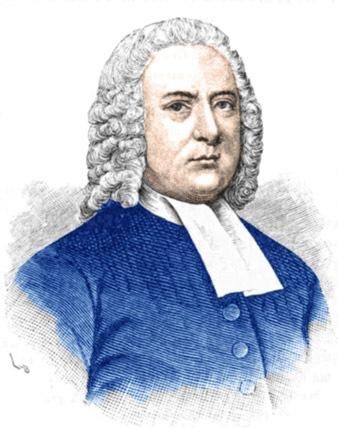
OTD in 1716, John Gill made a public profession of faith and was baptized.
Gill was a gifted scholar who had studied Latin and Greek by the age of 11. He went on to become one of the most influential Baptist theologians of the 18th century, particularly known for his defense of Calvinistic Baptist theology and his extensive writings on Scripture.
In 1719, Gill became pastor of a Baptist congregation in London, where he served for more than 50 years until his death in 1771.
Among his best-known works were "An Exposition of the Old and New Testaments" and "A Body of Doctrinal Divinity."
The church had previously been pastored by Benjamin Keach, and one of Gill's later successors was Charles Haddon Spurgeon.
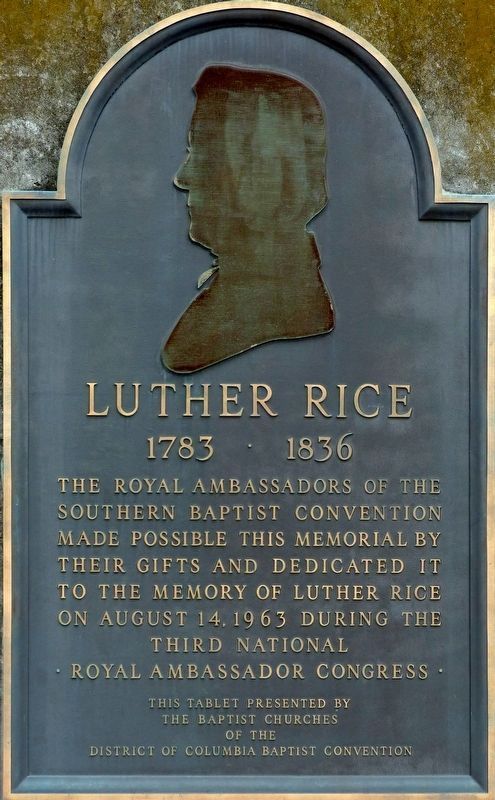
OTD in 1812, Luther Rice was baptized in Calcutta, India.
Rice had been ordained and sailed for India as a Congregationalist missionary, along with Adoniram Judson and other missionaries. During the voyage, both Rice and Judson independently became convinced that the New Testament taught believers' baptism rather than infant baptism.
After arriving in India, both men were baptized by immersion and became Baptists.
While Judson continued his missionary work overseas, Rice returned to the United States to raise financial support and awareness for foreign missions.
Rice traveled extensively, encouraging Baptist churches to cooperate in supporting missionaries. His efforts helped lead to the formation of the General Missionary Convention of the Baptist Denomination in the United States in 1814, commonly known as the Triennial Convention.
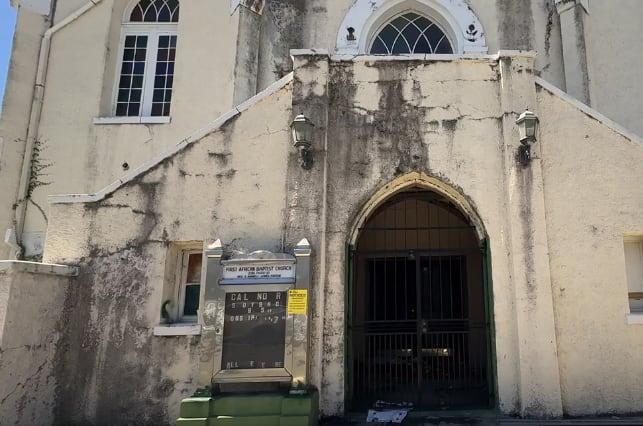
OTD in 1826, Asa Cruger Goldsbury, a free African American Baptist preacher, organized First African Baptist Church in New Orleans, Louisiana.
Established on October 31, the congregation became the oldest continuously operating Black Baptist church in New Orleans. Goldsbury served as its first pastor, and the church eventually grew to 87 members under his leadership.
The congregation faced considerable persecution. Laws restricted African Americans from preaching and gathering for worship, and Goldsbury himself was ordered to stop preaching for six months or face imprisonment. In later years, police frequently interrupted worship services and arrested members of the congregation.
Despite these restrictions, the church continued its ministry and remains an important part of Baptist history in Louisiana nearly 200 years later. Pictured is the building of First African Baptist Church in New Orleans, founded in the early nineteenth century.
@turner_emi65255 Yes you can be on an iPad or any device you have really. Some of them are on Kindle, though Amazon only lets me put up two per week. All the rest of them can be downloaded from Gumroad and read on any iPad
Baptist history deserves to be read—not left buried in old scans and out-of-print books.
Through "The Baptist Bookshelf", I’m bringing public-domain Baptist books back into circulation in clean, readable editions. These works tell the stories of missionaries, pastors, churches, and ordinary believers whose lives helped shape Baptist history. The work includes correcting scanning errors, restoring readable formatting, and carefully checking the text while preserving the authors’ historical language.
Recent additions include:
📚 **Fifty Years in China** — the story of Tarleton Perry Crawford and a half century of missionary work, hardship, and debate over how missions should be supported.
📚 **Flowers and Fruits in the Wilderness** — Z. N. Morrell’s firsthand account of pioneer Baptist life in Texas, from frontier preaching to the growth of churches and associations.
📚 **John Gano’s memoirs** — the recollections of a Baptist pastor whose ministry stretched from colonial America through service as a Revolutionary War chaplain and his later years in Kentucky.
📚 **Hair-breadth Escapes from Slavery to Freedom** — Baptist minister William Troy’s account of his own life and the journeys of people who escaped slavery.
You can find Kindle and paperback options on Amazon through the Bookshelf page, or browse 35 digital titles on Gumroad, most with both a PDF and an EPUB for your preferred reading app.
Want to sample the collection? The Baptist Bookshelf offers free PDF downloads of C. H. Spurgeon’s All of Grace*and J. B. Jeter’s A Memoir of Mrs. Henrietta Shuck. No purchase is needed for those two downloads.
Whether you’re studying Baptist history, researching a church, preparing to teach, or simply looking for a worthwhile older book, I hope these editions help you hear the voices of earlier generations.
Visit The Baptist Bookshelf for free downloads and Amazon links:
https://t.co/ZQmk7kYe33
Browse the full digital collection on Gumroad:
https://t.co/fckMJhXolF
OTD in 1887, Charles Haddon Spurgeon resigned from the Baptist Union of Great Britain following months of controversy over theological liberalism among Baptist ministers.
The dispute, known as the “Down Grade Controversy,” had played out in the pages of Spurgeon's magazine, "The Sword and the Trowel." Spurgeon argued that some ministers were abandoning historic Christian doctrines, including the inspiration of Scripture, Christ's substitutionary atonement, and salvation through faith.
Spurgeon called for the Union to adopt a clear statement of doctrinal beliefs, but acknowledged that its constitution did not provide a way to enforce such a standard. Rather than remain in an association he believed was compromising essential doctrines, he withdrew.
Spurgeon did not intend to establish a new denomination. His resignation, however, became one of the defining controversies of his later ministry and raised questions about doctrinal accountability and cooperation among Baptist churches.
OTD in 1836, seven Baptist churches—six in Maryland and one in Washington, D.C.—organized the Maryland Baptist Union Association to cooperate in missions and strengthen Baptist work in the region.
The association brought together churches seeking to expand Baptist ministry through evangelism, church planting, and cooperation.
Over the years, the organization grew and evolved, eventually becoming the Baptist Convention of Maryland/Delaware in 1984.
Today, @bcmd continues the cooperative work begun by those seven churches nearly two centuries ago.
Pictured: Mettam Memorial Baptist Church in Pikesville, Maryland. Built in 1835, just one year before the formation of the Maryland Baptist Union Association, the church was among the seven founding congregations that organized the association in 1836. Read more at this link https://t.co/Ze8lGCWJGM
Screaming Demon changed his handle to Lamplighter after he modulated with Friar Tuck.
Friar Tuck is more orthodoxly known as Wayne Nelson, pastorI First Baptist Church, Englewood. The title adopted from the tales of Robin Hood, howeverI is the handle (or name) by which he is acknowledged on CB radio.
Screaming Demon is one of seven persons Friar Tuck has led to a saving faith in Christ
after meeting them on the air waves. Following his encounter with Christ, Screaming Demon felt the handle, Lamplighter, would be more appropriate.
Six of the seven converts have been baptized in the Englewood Church. Another baker's
dozen have joined the church as an indirect result of the CB ministry of Friar Tuck. Most of them were members of converts families.
Baptist Press September 30, 1976
We know about so many heroes of the faith, but we have forgotten many too. Let me tell you about some of them.
One of the frustrations of studying Baptist history is discovering books that have been out of print for decades, sometimes more than a century. Many are available as old scanned PDFs, but they can be difficult to read, poorly formatted, and nearly impossible to use on a Kindle or other device.
So I've started bringing some of these books back to life.
I've taken original public domain Baptist books, cleaned up the text, corrected scanning errors, and reformatted them into readable modern editions. My goal is to make important works of Baptist history, missions, biography, and theology more accessible to today's readers.
The collection includes books about early Baptist missionaries such as Lott Cary, Henrietta Shuck, and Luther Rice; Baptist history in Louisiana and the American South; and classic works by Charles Spurgeon, John Bunyan, and others.
I've called the project "The Baptist Book Shelf."
There are currently 20 books in the collection, with more on the way. Two are available as free PDF downloads, and the others are available at a modest price. Several are also available in Kindle and paperback editions on Amazon. I can only add two books a week on Amazon, but have almost 30 ready to go live as soon as I can. No matter what format you need, you can find it.
This has been a labor of love. I enjoy Baptist history, and I believe these books deserve to be read rather than forgotten.
I'd invite you to take a look, download one of the free books, and browse the collection. And if you know someone who enjoys Baptist history, I'd appreciate you sharing it with them.
https://t.co/ZQmk7kYe33