I'm starting something new: a monthly roundup of the psychology studies that genuinely made me stop and think, along with summaries of the findings. First roundup is now live: https://t.co/2DcywGdNKX
“You’re only given a little spark of madness. If you lose that, you’re nothing.”
Robin Williams often repeated that line in his stand-up and interviews, reflecting his belief that creativity, individuality, and a little weirdness are worth holding on to.
Giftedness Isn’t a Lie. It’s Just Much Broader Than We Realize. A response to “The Mirage of the Gifted Child” (New York magazine) https://t.co/6vjvlTOJHH
Giftedness Isn’t a Lie. It’s Just Much Broader Than We Realize. A response to “The Mirage of the Gifted Child” (New York magazine) https://t.co/6vjvlTOJHH
Do you think there will ever be an AI Olympics, and would humans be interested in watching such a thing? As an undergrad at Carnegie Mellon in the 90s we had robotic competitions, I wonder what such a competition could look like in the near future.
It seems the people freaking out most about AI are the ones most obsessed with productivity. Makes sense: if your whole worth is in doing, a machine that does it faster is terrifying. But nobody asks ChatGPT for a peak experience. Being isn't going anywhere.
I think the medical establishment has ADHD all wrong. They call ADHD an "attention deficit." But for a lot of us, it was never a shortage of attention. It's the tuning! There are deep implications here for ADHD and the creative mind. Read article here: https://t.co/yWBtB9Zgno
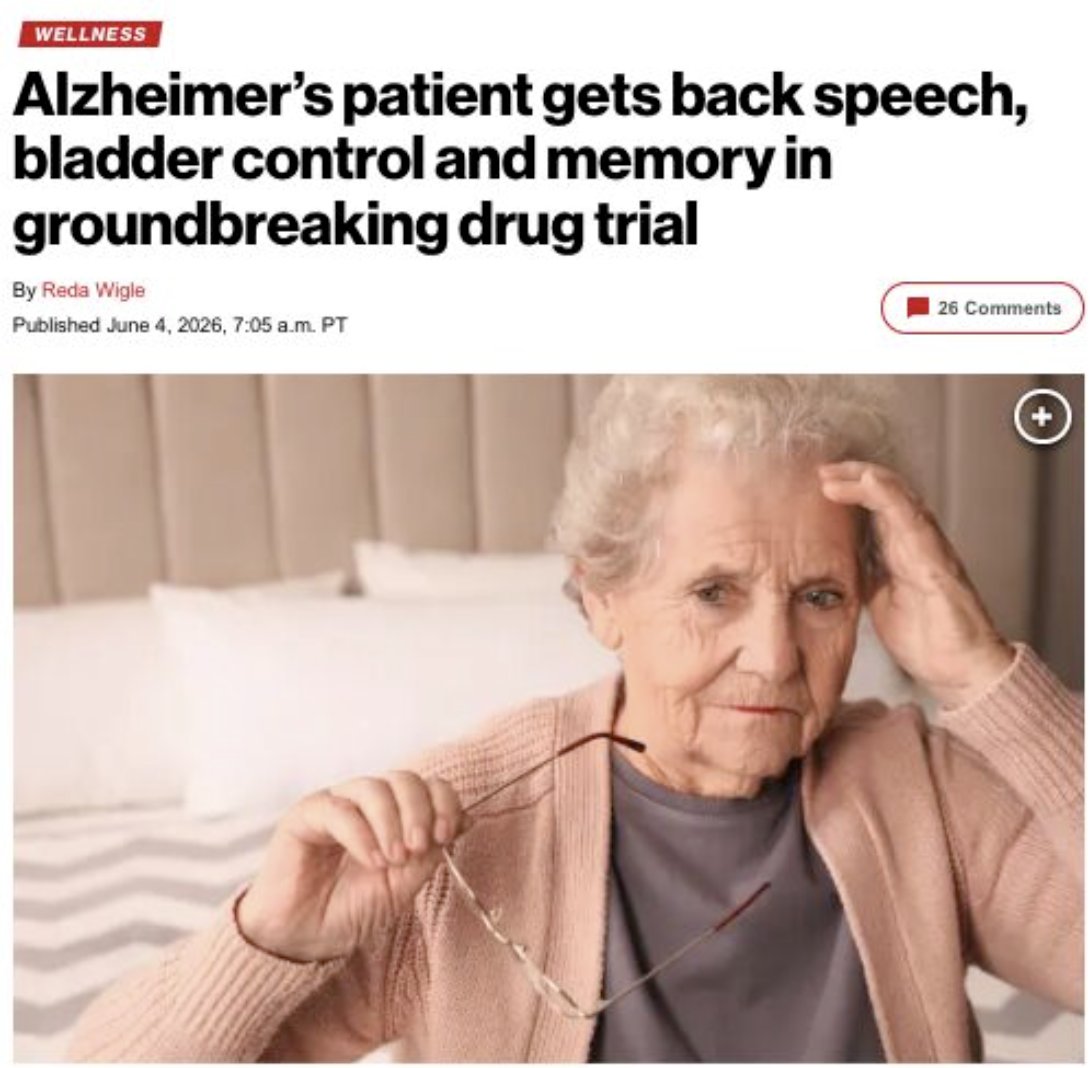
An 80-year-old woman with advanced Alzheimer's, all but silent for five years, took 5 grams of psilocybin and woke up the next day telling stories about her life.
This case study was published just a few days ago in Frontiers in Neuroscience, and I can't stop thinking about it.
She had lived with Alzheimer's for a decade. The last five of those years she spent in the state we are all taught to dread: she was incontinent, could barely walk, and couldn't dress herself.
Her speech had collapsed into single syllables, and her family had come to a painful acceptance that the woman they remembered was no longer reachable.
Then she took five grams of psilocybin mushrooms in a single supervised session in Brazil. The first hours of her journey were hard, with heavy sweating and a long, deep sleep-like state. Then, roughly nineteen hours later, she woke and spoke about her own life for close to four hours, pulling up real memories and events from her past.
Over the following days, the changes kept coming.
She regained bladder control after five years. She started dressing herself and walked with far less help than before. She started meeting people's eyes again. She recognized her family and remembered who had visited her and what they had said.
A month later, with the improvements still holding, the clinicians gave her a second, smaller dose of 3 grams. In that session, she described surfing with her son on a peaceful island, her whole face lighting up as she spoke. At one point, she looked at the people caring for her and said, simply, "It is pleasant to come here."
Her neurodegeneration is still there, and many of these improvements lasted for only weeks. Psilocybin did not completely reverse her Alzheimer's.
But it forces a new potential to the surface, one that would stop any family that has lived through this in its tracks.
We have treated the silence of late-stage dementia as a direct readout of dead tissue. We assumed the lost functions were gone, erased along with the neurons. This case suggests those functions may never have been destroyed at all, only locked away, and that a powerful enough shake-up of the brain's networks can briefly make them accessible again.
I wrote recently about a 92-year-old woman with advanced Alzheimer's who had slipped into a near-vegetative state after eleven years with the disease.
Once her caregiver began giving her microdoses of LSD, she started talking, reading, and recognizing the people she loved, and her wit and personality came back with her.
Both psychedelics produced the same result no one thought was possible: a person their family had already grieved, back in the room with them for a while. If this much can come back, even briefly, then the question worth asking is what else we could reach through responsible psychedelic therapy.
Which neurological condition would you most want to see psilocybin studied for next?