Excited and proud to have that monumental team effort published today in Lancet Psychiatry. @gao_yidian and @MStaginnus were partners in crime to lead it, but also had the generous support and contribution from 104 international collaborators from Europe, the US, India, & China.
🚨Thrilled to share our first paper from the ENIGMA-Antisocial Behaviour working group, published in Lancet Psychiatry! Co-led with @MStaginnus, this study took four years of work by 104 international collaborators, and used @enigmabrains' standardized protocol. We compared brain structures of 1185 youth with conduct disorder to 1253 typically developing youth across 15 international cohorts. Funded by @acmedsci.
https://t.co/aS2WngJA2c
💡Results below: 1/8
Expressions of interest now open for (free) places at our symposium on potential for OPM-MEG for research in clinical populations.
Friday Sept 19th @InstituteMH, funded by
@BritishNeuro
Further details here:
https://t.co/6iowqHwhU3
@NottsHealthcare@MedicineUoN@SCAN_Lab
Final call to UK and international candidates (Closing date: 2nd March 2025)! Join us as Full Professor in Human/Cognitive/Translational Neuroscience with the opportunity to step in as (Co-)Director at the
@TheCHBH
👇 https://t.co/h1Gh37XS7w
please share
🎆It's launch day! Check out our brand new @wellcometrust funded platform to explore over 1,600 datasets from across the world. Find the Atlas of Longitudinal Datasets here -> https://t.co/sTBE7WbncW
#AtlasLongitudinalDatasets
🚨Job Alert 🚨
Chair in Human/Cognitive/Translational Neuroscience
This is a unique opportunity to join a world-class research community on a beautiful campus located in a very nice city!
Deadline is 2nd March 2025.
Please retweet. Thank you.
🚨2 fully-funded PhD studentships🚨
1. Antisocial brains via @enigmabrains
2. Neuroimaging genetics and epigenetics of threat and reward circuitry
Open to international students. Deadline 16/01/25
https://t.co/8HzKxXmg2V
Please RT. @TheCHBH@UoB_SoP@MIBTP_BBSRC@BBSRC
🚨2 fully-funded PhD studentships🚨
1. Antisocial brains via @enigmabrains
2. Neuroimaging genetics and epigenetics of threat and reward circuitry
Open to international students. Deadline 16/01/25
https://t.co/8HzKxXmg2V
Please RT. @TheCHBH@UoB_SoP@MIBTP_BBSRC@BBSRC
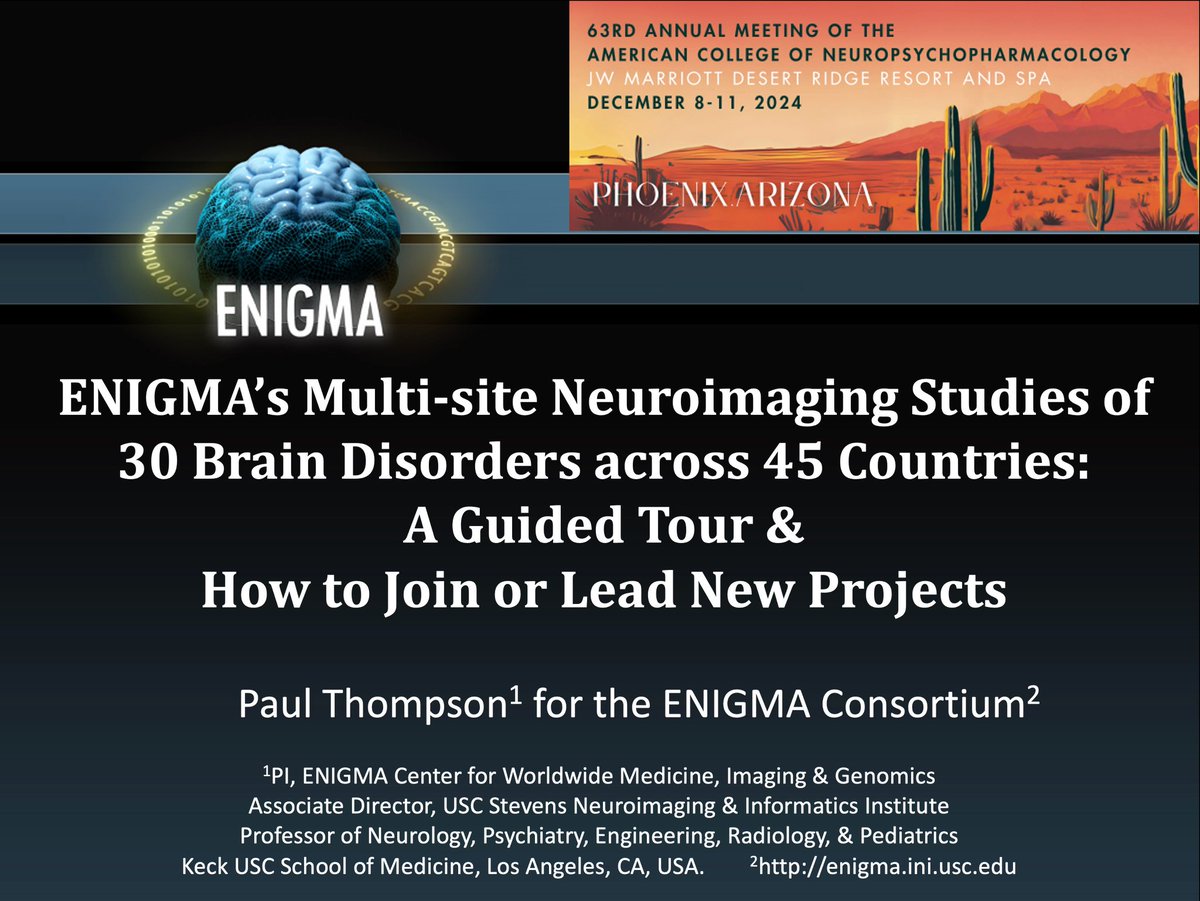
COME JOIN US in Phoenix tomorrow @ 1pm for ACNP’s “Teaching Day - Big Data: Access, Tools, Applications” #ACNP2024 featuring Damien Fair + Helen Mayberg (+me if I get to Phoenix in time !!!)
Hi #ACNP2024 !
👋 - I'm Paul Thompson, attending ACNP on+off since 1998 (ikr?!), ENIGMA consortium PI since 2009. We study human 🧠 disorders w/ imaging. Happy to chat science, careers, frustrations, team projects, anything really ;) Come say hi @ our session Wed w/ Damien Fair+Helen Mayberg.
Thank you @PTenigma It was an absolute pleasure hosting you and thank you for the terrific talk! And yes, let's hope we can welcome you and the @enigmabrains back next year on our lovely campus! @TheCHBH@UoB_SoP@LES_UniBham
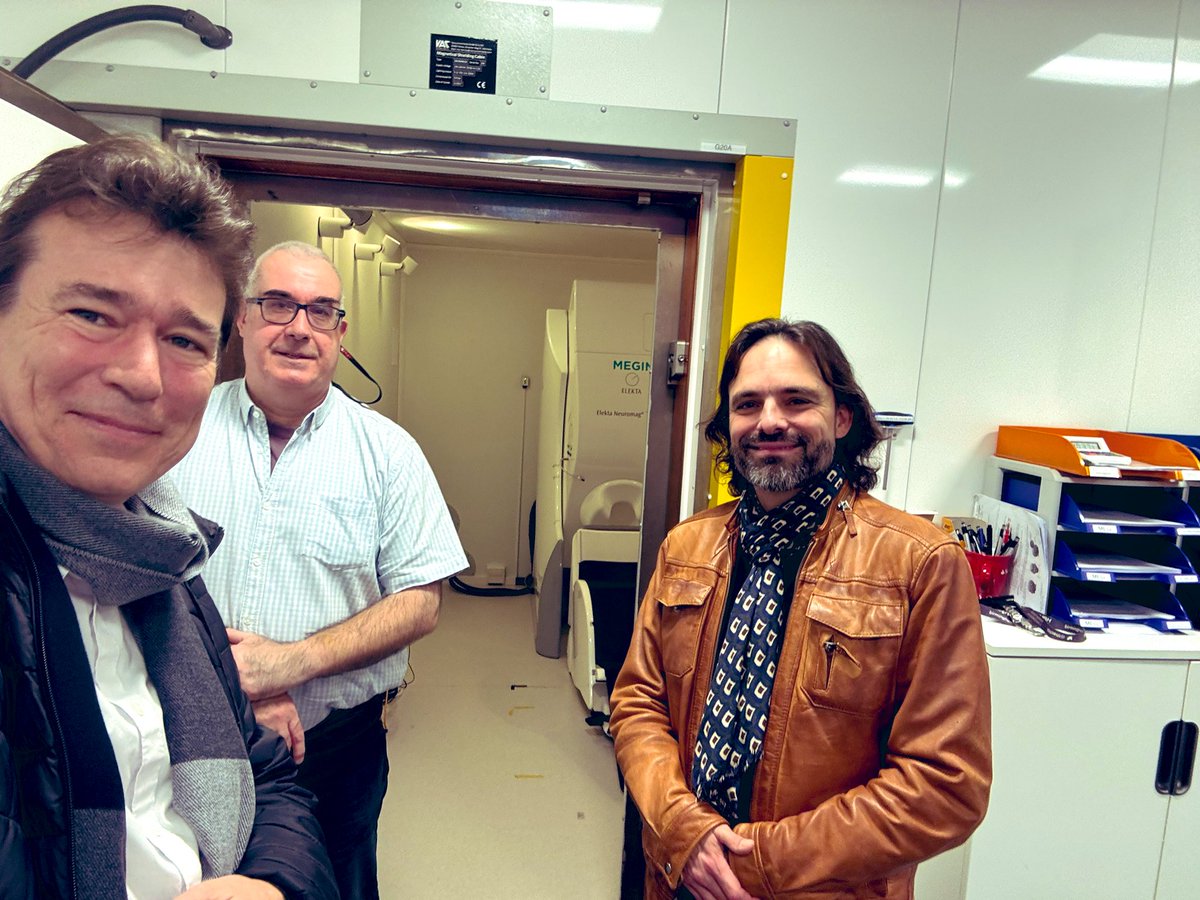
Terrific catching up with Prof Stephane de Brito, @gao_yidian and the @SCAN_Lab team in Birmingham today !! Thanks for being great hosts - looking forward to coming back next year in summer hopefully :)
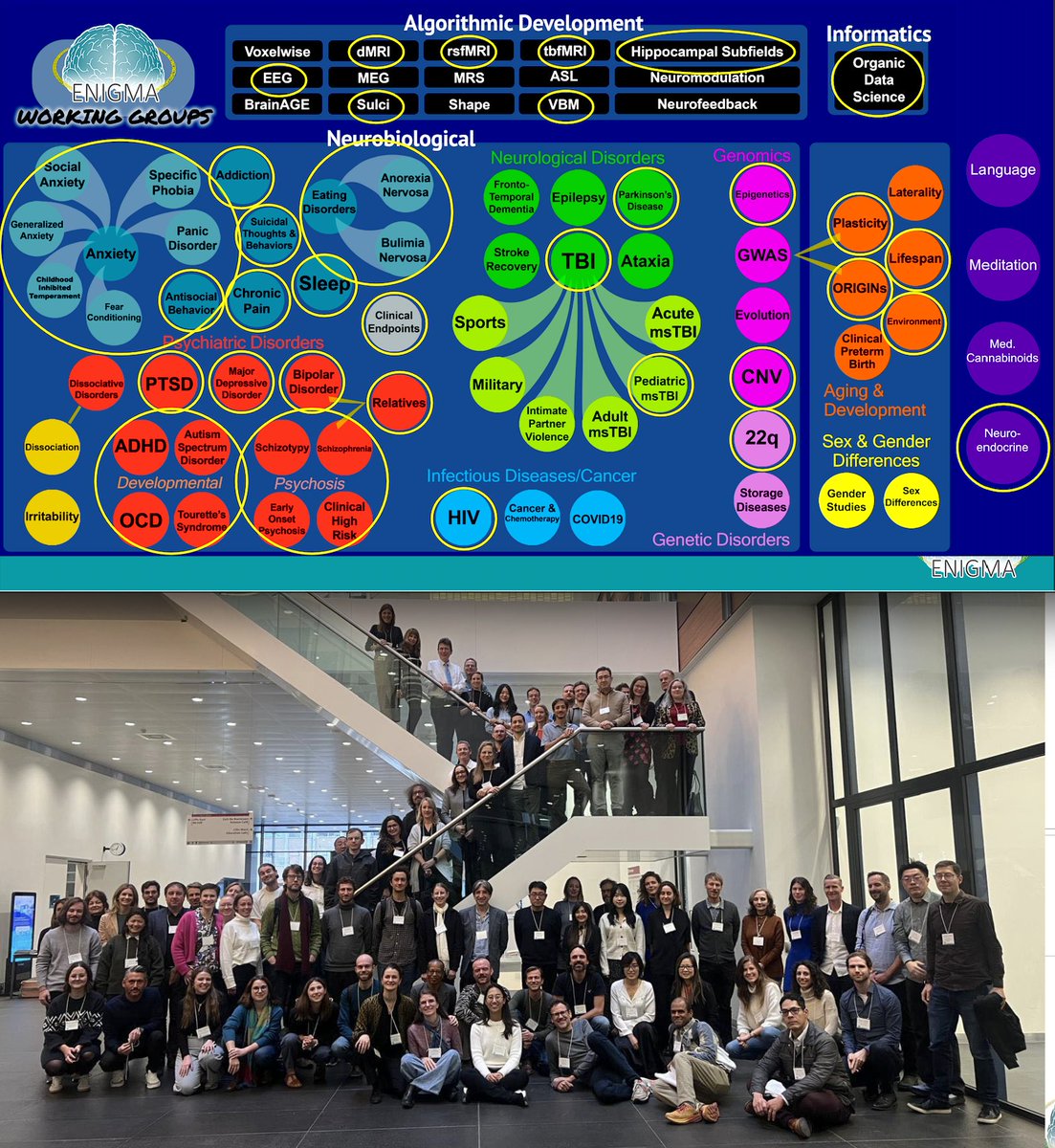
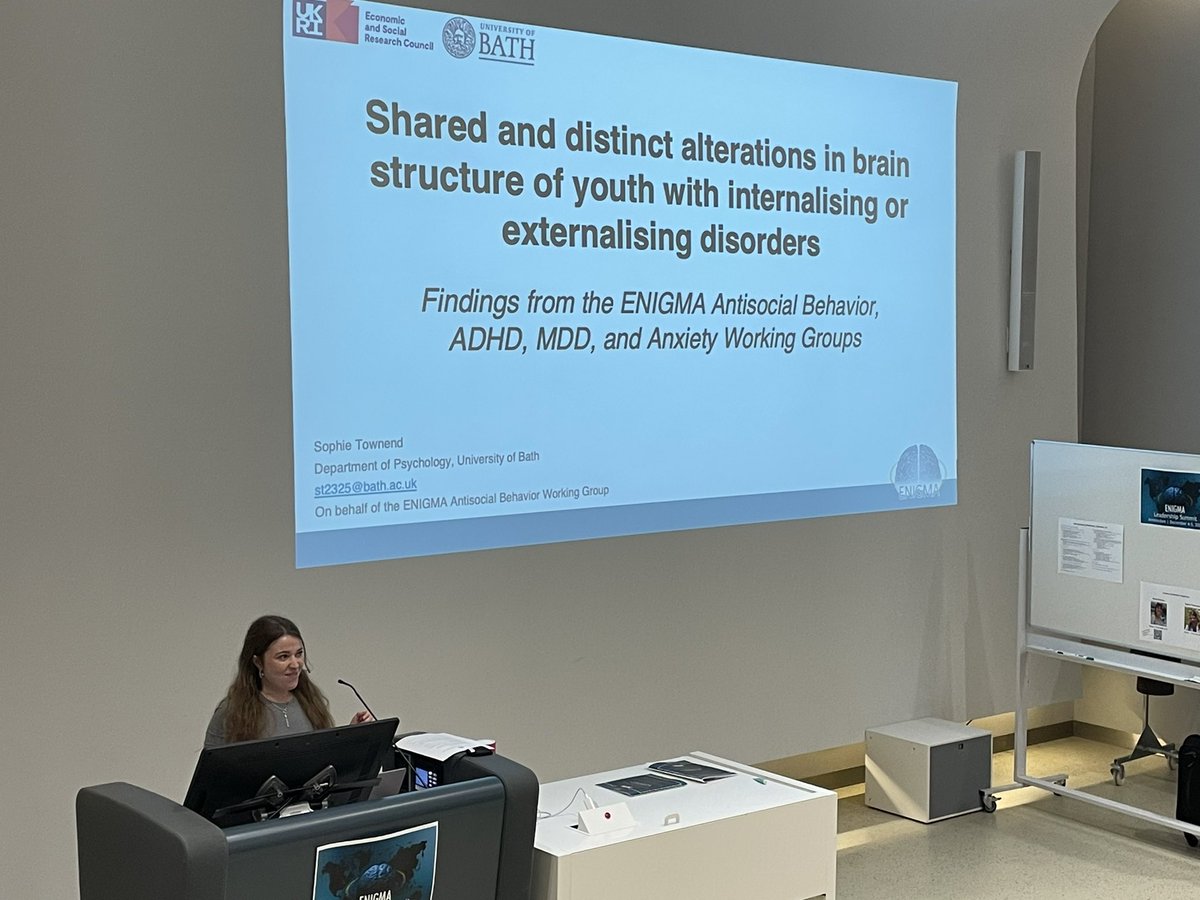
Fantastic 2 days meeting @enigmabrains discussing data & developments across multiple working groups focusing on psychiatric & neurodevelopmental disorders in youths. Great talk @TownendSophie on the cross-disorder findings! @MStaginnus @Jul_Dugre @gao_yidian@CAM_Cecil
Today's ENIGMA Summit compared over 20 brain disorders in tens of thousands of people scanned with MRI, and suggests that:
1. brain disorders that hit very early, before birth (e.g. those due to genomic copy number variants such as genetic deletions) tend to affect cortical surface area, often excessively in primary sensorimotor cortex
2. neurodevelopmental brain disorders that hit after birth but before adolescence tend to reduce cortical surface area more than (i.e. with greater effect sizes than) they reduce cortical thickness but more in a transmodal association cortex pattern than a primary sensorimotor pattern; these can be split into an strong externalizing and a weak internalizing pattern depending on the disorder type [4]
3. brain disorders that hit after puberty tend to affect cortical thickness, more so than regional cortical surface area, with some exceptions, as do adult onset disorders
4. the last category of mainly-thickness-deficit disorders can have their abnormality decomposed into 3 components - (1) a general component common to all disorders (PC1 in Zhipeng Cao's work [2]), (2) a disorder specific component, and (3) a medication effect;
5. focusing on the first two of these, there is a transdiagnostic covariance [1] that spans the set of disorder effects on the cortex and consists of 2 primary axes of disturbance, G1 and G2
6. to some extent, the amount and anatomical distribution of structural brain deviation in a disorder depends on the location and profile of greatest normal age-related brain change that is normally occurring in healthy people when the disorder hits and can look like an exaggerated version of that change, i.e. 'aging'
7. some of this is set out more formally in the transdiagnostic ENIGMA papers by Meike Hettwer/Sofie Valk on transdiagnostic covariance [1] and brain gradients, and in the linear PCA paper by Zhipeng Cat Hugh Garavan and ENIGMA [2]. For the CNV part see work by Clara Moreau [3], and for the childhood part see work by Sophie Townend and 4 of the ENIGMA neurodevelopmental working groups [unpublished except an abstract].
This is not really obvious until you see all the work presented together (as it was today at the ENIGMA Summit). Links in the thread below. @sofievalk@MMG_Kirschner@ClaraMoreau9@JulioVillaln1@kkumar_iitkgp@enigma_bipolar@ENIGMA_Diabetes@ENIGMA_ACRI@SCAN_Lab







![PTenigma's tweet photo. Today's ENIGMA Summit compared over 20 brain disorders in tens of thousands of people scanned with MRI, and suggests that:
1. brain disorders that hit very early, before birth (e.g. those due to genomic copy number variants such as genetic deletions) tend to affect cortical surface area, often excessively in primary sensorimotor cortex
2. neurodevelopmental brain disorders that hit after birth but before adolescence tend to reduce cortical surface area more than (i.e. with greater effect sizes than) they reduce cortical thickness but more in a transmodal association cortex pattern than a primary sensorimotor pattern; these can be split into an strong externalizing and a weak internalizing pattern depending on the disorder type [4]
3. brain disorders that hit after puberty tend to affect cortical thickness, more so than regional cortical surface area, with some exceptions, as do adult onset disorders
4. the last category of mainly-thickness-deficit disorders can have their abnormality decomposed into 3 components - (1) a general component common to all disorders (PC1 in Zhipeng Cao's work [2]), (2) a disorder specific component, and (3) a medication effect;
5. focusing on the first two of these, there is a transdiagnostic covariance [1] that spans the set of disorder effects on the cortex and consists of 2 primary axes of disturbance, G1 and G2
6. to some extent, the amount and anatomical distribution of structural brain deviation in a disorder depends on the location and profile of greatest normal age-related brain change that is normally occurring in healthy people when the disorder hits and can look like an exaggerated version of that change, i.e. 'aging'
7. some of this is set out more formally in the transdiagnostic ENIGMA papers by Meike Hettwer/Sofie Valk on transdiagnostic covariance [1] and brain gradients, and in the linear PCA paper by Zhipeng Cat Hugh Garavan and ENIGMA [2]. For the CNV part see work by Clara Moreau [3], and for the childhood part see work by Sophie Townend and 4 of the ENIGMA neurodevelopmental working groups [unpublished except an abstract].
This is not really obvious until you see all the work presented together (as it was today at the ENIGMA Summit). Links in the thread below. @sofievalk @MMG_Kirschner @ClaraMoreau9 @JulioVillaln1 @kkumar_iitkgp @enigma_bipolar @ENIGMA_Diabetes @ENIGMA_ACRI @SCAN_Lab](https://pbs.twimg.com/media/GeDuPXaWIAAHQZS.jpg)
![PTenigma's tweet photo. Today's ENIGMA Summit compared over 20 brain disorders in tens of thousands of people scanned with MRI, and suggests that:
1. brain disorders that hit very early, before birth (e.g. those due to genomic copy number variants such as genetic deletions) tend to affect cortical surface area, often excessively in primary sensorimotor cortex
2. neurodevelopmental brain disorders that hit after birth but before adolescence tend to reduce cortical surface area more than (i.e. with greater effect sizes than) they reduce cortical thickness but more in a transmodal association cortex pattern than a primary sensorimotor pattern; these can be split into an strong externalizing and a weak internalizing pattern depending on the disorder type [4]
3. brain disorders that hit after puberty tend to affect cortical thickness, more so than regional cortical surface area, with some exceptions, as do adult onset disorders
4. the last category of mainly-thickness-deficit disorders can have their abnormality decomposed into 3 components - (1) a general component common to all disorders (PC1 in Zhipeng Cao's work [2]), (2) a disorder specific component, and (3) a medication effect;
5. focusing on the first two of these, there is a transdiagnostic covariance [1] that spans the set of disorder effects on the cortex and consists of 2 primary axes of disturbance, G1 and G2
6. to some extent, the amount and anatomical distribution of structural brain deviation in a disorder depends on the location and profile of greatest normal age-related brain change that is normally occurring in healthy people when the disorder hits and can look like an exaggerated version of that change, i.e. 'aging'
7. some of this is set out more formally in the transdiagnostic ENIGMA papers by Meike Hettwer/Sofie Valk on transdiagnostic covariance [1] and brain gradients, and in the linear PCA paper by Zhipeng Cat Hugh Garavan and ENIGMA [2]. For the CNV part see work by Clara Moreau [3], and for the childhood part see work by Sophie Townend and 4 of the ENIGMA neurodevelopmental working groups [unpublished except an abstract].
This is not really obvious until you see all the work presented together (as it was today at the ENIGMA Summit). Links in the thread below. @sofievalk @MMG_Kirschner @ClaraMoreau9 @JulioVillaln1 @kkumar_iitkgp @enigma_bipolar @ENIGMA_Diabetes @ENIGMA_ACRI @SCAN_Lab](https://pbs.twimg.com/media/GeDuNbtWUAAolYN.jpg)
![PTenigma's tweet photo. Today's ENIGMA Summit compared over 20 brain disorders in tens of thousands of people scanned with MRI, and suggests that:
1. brain disorders that hit very early, before birth (e.g. those due to genomic copy number variants such as genetic deletions) tend to affect cortical surface area, often excessively in primary sensorimotor cortex
2. neurodevelopmental brain disorders that hit after birth but before adolescence tend to reduce cortical surface area more than (i.e. with greater effect sizes than) they reduce cortical thickness but more in a transmodal association cortex pattern than a primary sensorimotor pattern; these can be split into an strong externalizing and a weak internalizing pattern depending on the disorder type [4]
3. brain disorders that hit after puberty tend to affect cortical thickness, more so than regional cortical surface area, with some exceptions, as do adult onset disorders
4. the last category of mainly-thickness-deficit disorders can have their abnormality decomposed into 3 components - (1) a general component common to all disorders (PC1 in Zhipeng Cao's work [2]), (2) a disorder specific component, and (3) a medication effect;
5. focusing on the first two of these, there is a transdiagnostic covariance [1] that spans the set of disorder effects on the cortex and consists of 2 primary axes of disturbance, G1 and G2
6. to some extent, the amount and anatomical distribution of structural brain deviation in a disorder depends on the location and profile of greatest normal age-related brain change that is normally occurring in healthy people when the disorder hits and can look like an exaggerated version of that change, i.e. 'aging'
7. some of this is set out more formally in the transdiagnostic ENIGMA papers by Meike Hettwer/Sofie Valk on transdiagnostic covariance [1] and brain gradients, and in the linear PCA paper by Zhipeng Cat Hugh Garavan and ENIGMA [2]. For the CNV part see work by Clara Moreau [3], and for the childhood part see work by Sophie Townend and 4 of the ENIGMA neurodevelopmental working groups [unpublished except an abstract].
This is not really obvious until you see all the work presented together (as it was today at the ENIGMA Summit). Links in the thread below. @sofievalk @MMG_Kirschner @ClaraMoreau9 @JulioVillaln1 @kkumar_iitkgp @enigma_bipolar @ENIGMA_Diabetes @ENIGMA_ACRI @SCAN_Lab](https://pbs.twimg.com/media/GeDuL9pWMAAkilg.jpg)





![PTenigma's tweet photo. Today's ENIGMA Summit compared over 20 brain disorders in tens of thousands of people scanned with MRI, and suggests that:
1. brain disorders that hit very early, before birth (e.g. those due to genomic copy number variants such as genetic deletions) tend to affect cortical surface area, often excessively in primary sensorimotor cortex
2. neurodevelopmental brain disorders that hit after birth but before adolescence tend to reduce cortical surface area more than (i.e. with greater effect sizes than) they reduce cortical thickness but more in a transmodal association cortex pattern than a primary sensorimotor pattern; these can be split into an strong externalizing and a weak internalizing pattern depending on the disorder type [4]
3. brain disorders that hit after puberty tend to affect cortical thickness, more so than regional cortical surface area, with some exceptions, as do adult onset disorders
4. the last category of mainly-thickness-deficit disorders can have their abnormality decomposed into 3 components - (1) a general component common to all disorders (PC1 in Zhipeng Cao's work [2]), (2) a disorder specific component, and (3) a medication effect;
5. focusing on the first two of these, there is a transdiagnostic covariance [1] that spans the set of disorder effects on the cortex and consists of 2 primary axes of disturbance, G1 and G2
6. to some extent, the amount and anatomical distribution of structural brain deviation in a disorder depends on the location and profile of greatest normal age-related brain change that is normally occurring in healthy people when the disorder hits and can look like an exaggerated version of that change, i.e. 'aging'
7. some of this is set out more formally in the transdiagnostic ENIGMA papers by Meike Hettwer/Sofie Valk on transdiagnostic covariance [1] and brain gradients, and in the linear PCA paper by Zhipeng Cat Hugh Garavan and ENIGMA [2]. For the CNV part see work by Clara Moreau [3], and for the childhood part see work by Sophie Townend and 4 of the ENIGMA neurodevelopmental working groups [unpublished except an abstract].
This is not really obvious until you see all the work presented together (as it was today at the ENIGMA Summit). Links in the thread below. @sofievalk @MMG_Kirschner @ClaraMoreau9 @JulioVillaln1 @kkumar_iitkgp @enigma_bipolar @ENIGMA_Diabetes @ENIGMA_ACRI @SCAN_Lab](https://pbs.twimg.com/media/GeDuSNmWEAAA-eC.jpg)


