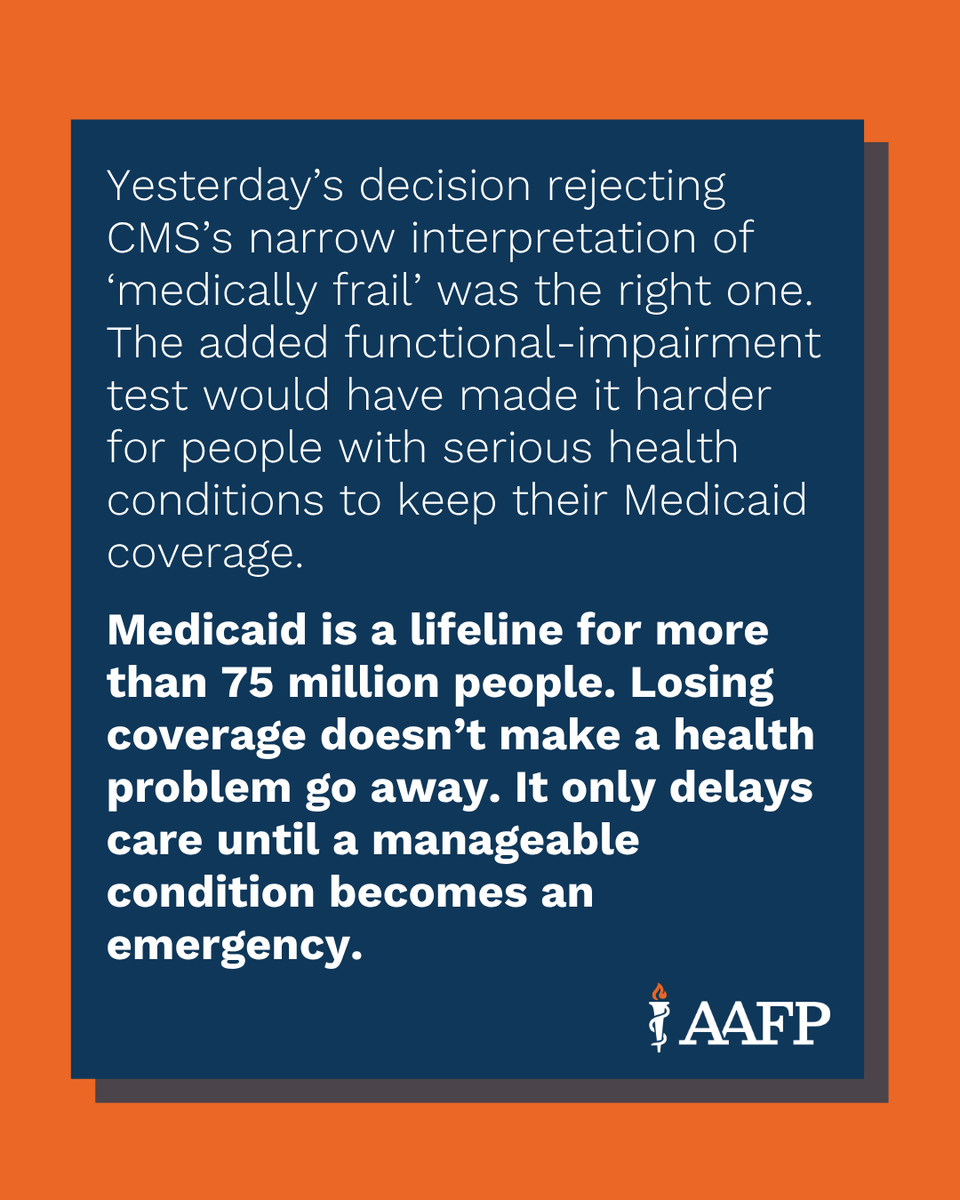
CMS must ensure eligible patients do not lose coverage and avoid shifting new paperwork and eligibility duties onto physician practices. Family physicians’ time should be spent caring for patients, not navigating unnecessary administrative burdens: https://t.co/BKXtIdKG7o
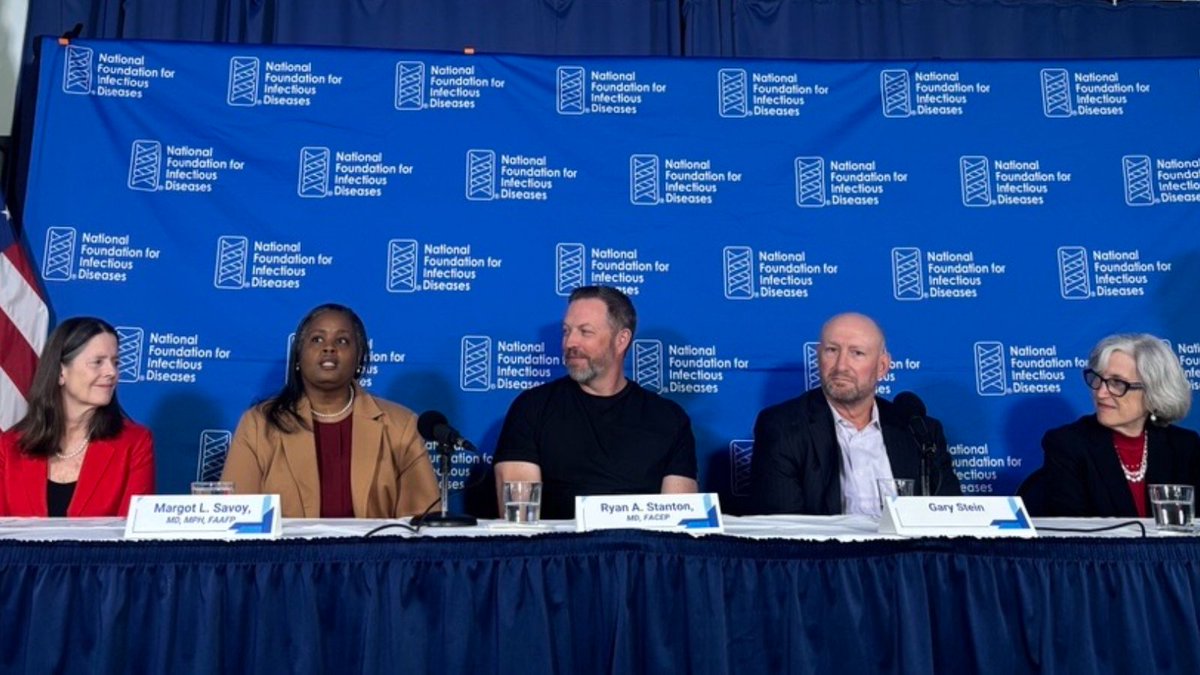
“Respiratory season comes every year, but severe illness is not inevitable. Immunizations protect patients. Our job as family physicians is to help every patient make informed decisions that help keep themselves and their loved ones healthy,” said @MargotSavoy, AAFP’s chief medical officer, at @NFIDVaccines's fall respiratory briefing.
Find the latest in immunization and vaccine resources: https://t.co/v5OpqAY5Yc
Medicaid is a lifeline for millions of Americans. Leaders from @aafp, @AmerAcadPeds, @ACPIMPhysicians, @acog, @AOAforDOs and @APAPsychiatric stand against work reporting requirements that run counter to the core tenets of Medicaid and lead to loss of access, coverage and more administrative burden. https://t.co/dH7qHsYdHm
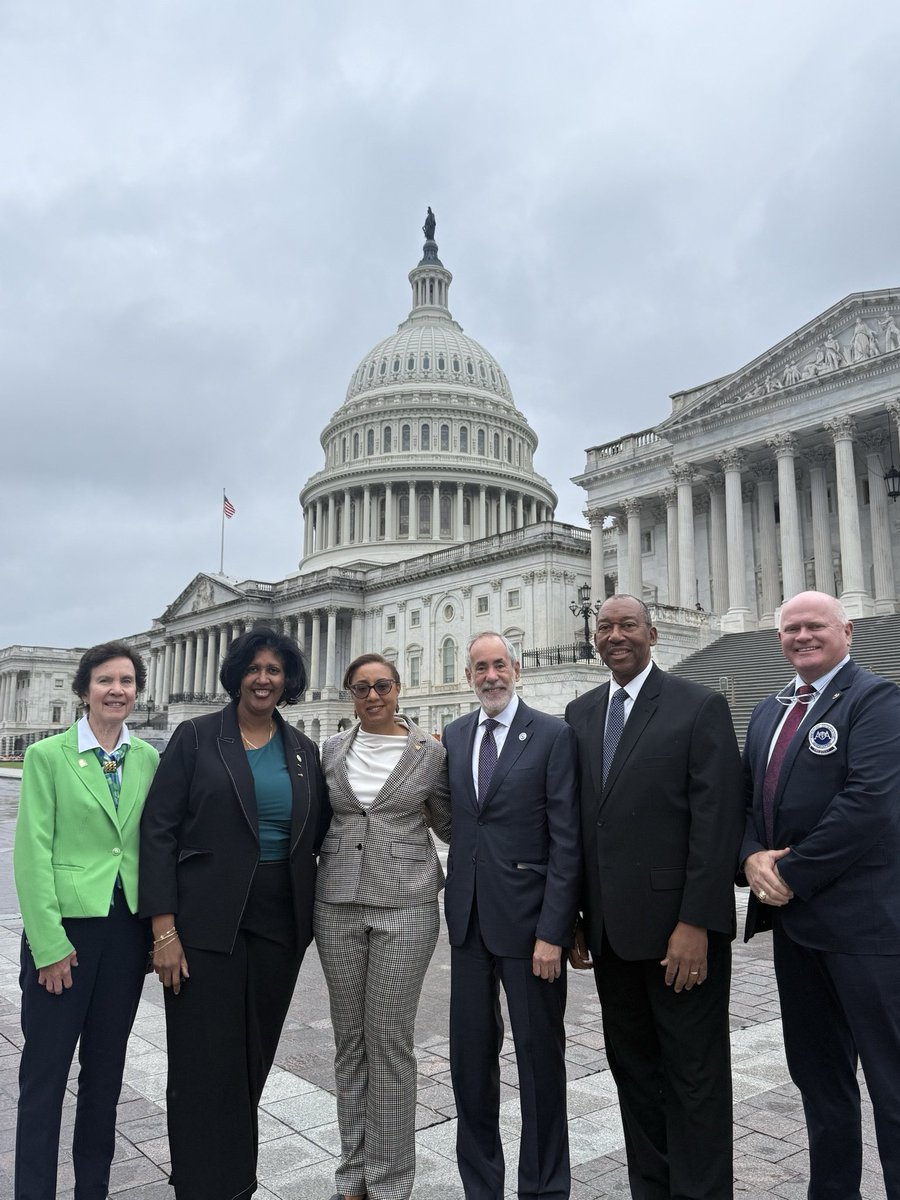
In 2015, I reached out to my friends and colleagues @AAPDelMonte and @BobDohertyDC suggesting that primary care needed a stronger presence in Washington, DC. That outreach led to the creation of the Group of 6. Today, the G6 remains a strong and effective coalition, focused on changing public policy.
Today, the current generation of G6 physician leaders are in DC continuing our tradition of advocating for patients and their colleagues.
@AOAforDOs@ACPIMPhysicians@AmerAcadPeds@acog@APApsychiatric@aafp
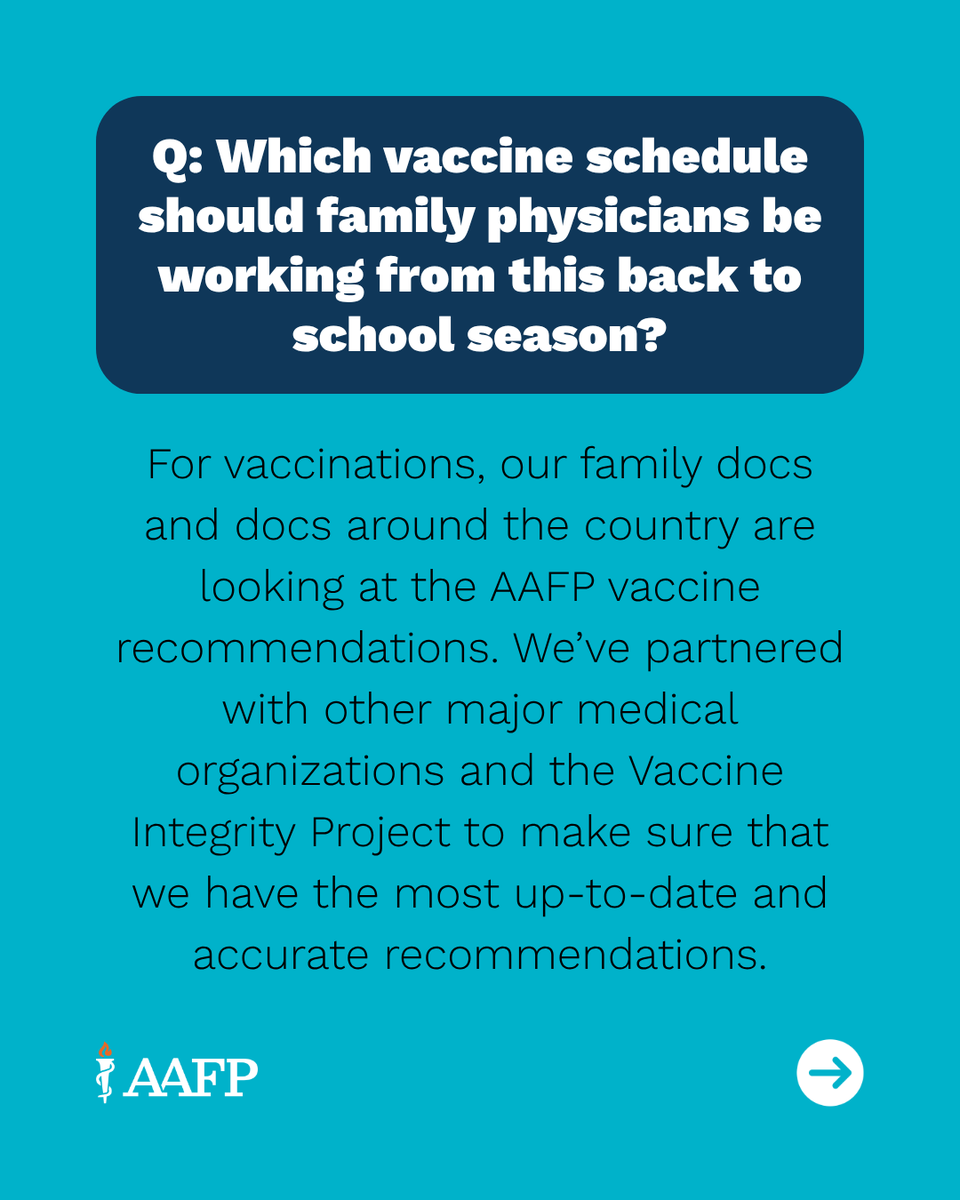
Learn about the 2026-27 immunization recommendations for respiratory virus season and the evidence-based review process behind them with AAFP President @SCNosalMD, @CIDRAP, @AmerAcadPed,
@ACOG, @AmerMedicalAssn and @IDSAinfo. https://t.co/B7DkzQrIuA
Don't miss Drs. David O'Gurek, Judy Chertok and James Simons on September 23 at 5:30 p.m. CT for a panel discussion exploring emerging substance use trends relevant to primary care. https://t.co/k23N69cqvJ
Family physician offices across the country are busy as kids come in for their back-to-school check-ups. AAFP President @scnosalmd spoke with @MedEconomics about family physicians should keep in mind as they navigate vaccine conversations with patients. https://t.co/uP2i7dU0EH
The noise generated by activists and political actors around vaccines can be confusing—and it can make it difficult for individuals and families to know whom to trust.
That is why the @AAFP has created a new resource offering clear, factual, and evidence-based information about vaccines.
Vaccines are safe and effective. They help each of us live healthier lives and protect the people most vulnerable to communicable diseases—including children, older adults, and people who are immunocompromised.
Adults, children, and families should stay up to date on recommended vaccines to protect themselves, their loved ones, and their communities.
The resource below can help you recognize vaccine misinformation and make informed, evidence-based decisions about your health and the health of your family.
https://t.co/f4Ewsp3lF3
When you are awarded the AAFP Degree of Fellow, you are recognized for your outstanding work in family medicine. Learn more about the benefits of earning your Degree of Fellow and how to apply: https://t.co/r6AcAbnqmb
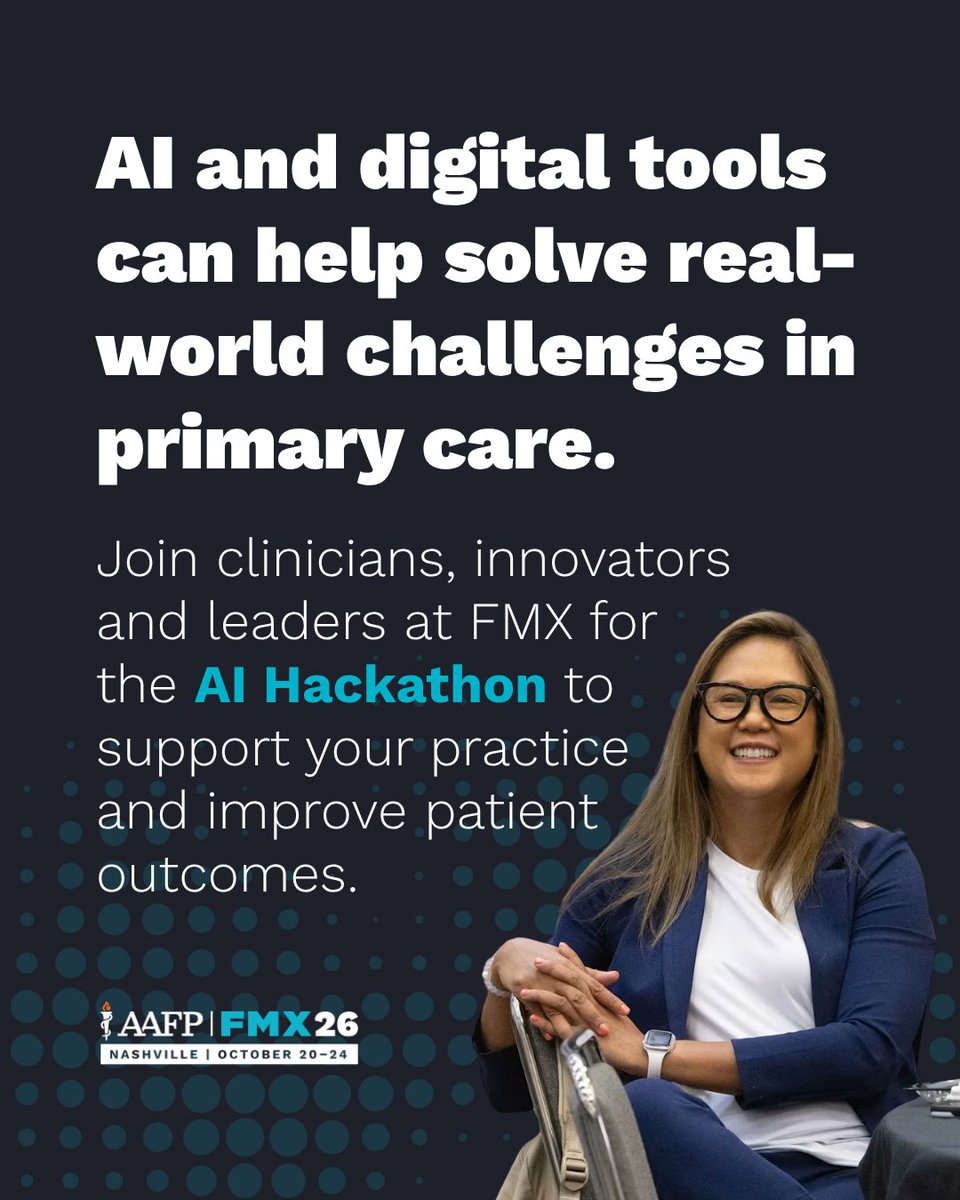
Whether you're an AI expert or a beginner, join fellow #AAFPFMX attendees at an interactive hackathon where your ideas will shape primary care innovations—and help you win prizes! 💻 Learn more and save your spot by adding the AI Hackathon to your schedule! https://t.co/GkMlEqFWS7
Find the latest clinical updates and practice solutions at #AAFPFMX! 👏 There are a variety of sessions that meet you where you are to support your career and patient outcomes. Explore this years' sessions: https://t.co/oA85zwzHPZ
The AAFP congratulates Michael Hanak, MD, FAAFP, on his election to the American Medical Association’s Council on Medical Service! We’re proud to support family physicians who are leading efforts to improve access to affordable, high-quality care, strengthen trust in public health and advocate for patients and communities nationwide.
The @aafp, @AmerAcadPeds, @acog and @ACPIMPhysicians are raising their voices about the importance of Medicaid and the risks posed by recent work reporting requirements. From preventive care for children to maternal health and chronic disease management, Medicaid plays a critical role in keeping patients healthy and reducing costs. Medicaid saves lives. We must protect it. https://t.co/CeXQ04sZl1
“The examples that doctors set each day couldn’t be more timely. You continually make things better. Even when you come up short, you try and try again. That is the exact spirit our country needs for health care reform.” - @SenatorHassan at #FMAS2026
📢 @rshawnm said it best: hundreds of family physicians are on Capitol Hill today advocating for policies that strengthen primary care and improve patient access. @aafp members are urging lawmakers to:
✔️ Eliminate cost-sharing for chronic care management services
✔️ Reform prior authorization in Medicare Advantage
✔️ Support physician workforce solutions
Follow @aafp_advocacy and @aafp today to see how family physicians are rolling up their sleeves to shape policies that support patients, communities and practices. #FMAS2026
It’s time for a new era of advocacy for physicians, writes @aafp president @scnosalMD. “Physicians are, by nature and necessity, advocates. In this moment, doctors must speak loudly about policy.” Read the full op-ed in @statnews: https://t.co/cqY6demY2C
Primary Care Is a Public Good. It's Time We Started Treating It Like One.
A recent article in JAMA calls for the creation of a multi-payer—or all-payer—primary care financing system. The concept itself is not new, but it arrives at a particularly important moment in our national health policy debate.
Too often, conversations about new ideas begin with what is missing or what is wrong. We should resist that tendency. Any discussion of this proposal should start with what the authors get right: primary care is a common good that benefits not only individual patients, but also families, communities, and society as a whole.
The authors make a particularly important observation: “Primary care has long fit awkwardly as an insurable risk in the marketplace. Insurance is designed to protect against large, unpredictable expenses. Yet primary care is largely predictable, similar to food, housing, and other common necessities.”
That insight deserves serious consideration. The proposal does not seek to replace the broader health insurance system. Rather, it seeks to establish a sustainable financing mechanism for universal access to primary care—one that exists outside the economic and administrative complexities of insurance. That is a conversation worth pursuing.
Many health care services can deliver value during discrete episodes of care. None, however, can match the long-term impact of comprehensive primary care. Nor can any consistently produce the same value per dollar spent. The evidence supporting this conclusion is overwhelming. It is also why the highest-performing health systems around the world are built upon universal access to primary care.
In fact, universal primary care may be the single most important distinction between the world's highest-performing health systems and the United States health care system as it exists today.
The authors' use of the term public good is especially important. Like clean water, public safety, and fire protection, the benefits of primary care extend well beyond the individual who receives the service. Strong primary care creates healthier communities, strengthens workforce participation, reduces avoidable health care spending, and contributes to economic stability. Its value is both personal and societal.
One of the most compelling aspects of this proposal is its potential to eliminate variation in financing and administration. A universal primary care financing model could finally create the conditions necessary for true prospective, population-based payment—payment that rewards access, continuity, prevention, and innovation rather than volume.
Importantly, such a model would not require a single practice structure. Direct primary care practices, community health centers, independent practices, and integrated health systems could all continue to operate and innovate. Patients would benefit from a more consistent experience, while practices would be relieved of many of the payer-specific rules, reporting requirements, and administrative burdens that increase costs and create barriers to care.
The authors describe their proposal as a compromise between single-payer and free-market approaches. That characterization feels accurate. With oversight delegated to states and room for diverse delivery models, the proposal reflects a pragmatic approach to reform rather than a wholesale restructuring of the health care system.
No proposal is perfect, and this one is no exception. Important questions remain about implementation, governance, accountability, and financing. Those questions deserve thoughtful debate.
But one thing is clear: primary care is a public good, and our current health care system has denied too many people access to its full value for far too long.
The conversation started by this proposal is the right one. At a time when confidence in our health care system continues to erode, we should focus less on preserving the status quo and more on building the foundation that every high-performing health system requires.
That foundation is primary care. And it should be available to every person and every community.
https://t.co/XWE812wtIL