EU takes next step to safe recycled #polystyrene (#rPS) in food packaging and other food contact material and articles (FCM): The European Commission (EC) has assigned and published the number of the novel technology (NT) developed by SCS with its consortium: BE1-3UT-2N6.
It has also assigned numbers to the NTs individually developed by SCS members Ineos @Styrolution and @Trinseo, as well as multiple others for PS and other plastics. SCS' NT includes a functional barrier, while those of its members are for direct food contact.
Marketability and transparency: This EC publication confirms that recycled plastic FCM manufactured according to the EU rules for NTs with the listed NTs is allowed on the European market. It may be used, e.g., to meet recycled content requirements of the EU packaging law (#PPWR). This follows directly from EU Regulation 2022/1616 (Art. 4(1),( 3)(b) and (5)). It does not require a prior @EFSA_EU assessment. The NT part of the Union register provides links to the mandatory publications detailing each technology. Its initial version lists 20 NTs of developers in the EU and 4 from outside the EU, fewer than the known overall number of NTs notified. The EC explains that it has only included data that it and the Member States have been able to validate. This includes the mandatory publications.
The safety of SCS' NT has been underpinned by extensive tests and multiple peer-reviewed studies since before its notification. Furthermore, the listed NTs have already passed multiple checks: during the verification of the notification by the competent authority according to the Regulation, as well as informally by the EC and with EFSA (according to the EC).
Way forward: Following the publication of four monitoring reports, SCS' has had a request to initiate the assessment by EFSA pending with the EC since May 2025. The EC has been working on these requests. We reiterate our calls on the EC to follow through with its plans to further confirm the safety of the NT, and to fully and even-handedly implement the Regulation to ensure the safety of both EU-produced and imported FCM.
We are confident regarding the capacity to supply safe FCM produced with 'novel' closed-loop mechanical and physical (dissolution) recycling technologies for of #PS (incl. GPPS and HIPS), #XPS as well as #EPS packaging, and for other applications. Furthermore, depolymerisation (chemical) recycling of these types of PS is already available at industrial scale. Used to produce 'as good as virgin' material, it does not fall within the scope of the Regulation at hand and Union register.
Ever more national and individual initiatives have already been achieving the use of 10-30% rPS in food packaging on the market. Public data points to growing available PS feedstock, sorting and recycling capacity.
Sources:
- Union register: https://t.co/g7jSgTOwVn
- INEOS @Styrolution's mrPS in yoghurt pots: https://t.co/tfp4wNx06X
- @Trinseo's rPS FCM: https://t.co/652V4QnMp0
- Safety of rPS FCM (with further references): https://t.co/eYSFksDric
- Examples of national and individual PS circularity initiatives across Europe (and beyond): https://t.co/a5pGgLcxMN
- Areas of growth in circular PS – available feedstock: https://t.co/bpAN4fERPe
- Areas of growth in circular PS – sorting capacity: https://t.co/kIC9LvmTy6
- Areas of growth in circular PS – recycling capacity: https://t.co/x1XK4mJxOL
@COEXPAN_@EslavaPlasticos @flogroup @GreinerNews@IntraplasS@Trinseo@eni (Versalis)
Value chain further increases commitment to and cooperation on the #circularity of #polystyrene to meet upcoming requirements of EU packaging law (#PPWR):
🇮🇹 In Italy, converters Faerch, Gruppo Happy and Klöckner Pentaplast @kpGroup_ signed a Voluntary Agreement for Sustainable Innovation in Styrene-based Food Packaging under the umbrella of their national Federazione Gomma Plastica. The scope of the agreement encompasses XPS, #PS (GPPS, HIPS and OPS) and EPS food packaging. It is open to all companies producing styrenic packaging.
It pursues environmental and technical harmonisation by sharing and disseminating already gained experience in design for recycling (DfR), promoting the adoption of DfR criteria and recycled content specifications, as well as traceability through certifications accredited with the Italian body @ACCREDIA, and with targeted awareness-raising communication.
Particularly, its signatories commit to using a minimum of 10% safe and accredited recycled content in styrenic food packaging, as the creation of a market for recycled plastic is a fundamental prerequisite for a sustainable circular system. This minimum may be increased while each signatory may independently pursue higher targets.
The agreement says that it fits perfectly within the framework of ongoing activities, e.g. the establishment of a coordination committee for the recycling of PS packaging within producer responsibility consortium @Corepla_Riciclo.
🇩🇪In Germany, dairy companies @Danone and Theo Müller Group joined Forum Rezyklat to promote PS recycling in the new initiative “Keeping PS alive – Realising PS Circularity.” Currently, 16 companies from all stages of the PS value chain participate in this initiative. These also include ALDI Nord and ALDI SÜD, SCS consortium members Greiner Packaging and Vogt Plastic, as well as BellandVision, Eko-Punkt, InterZero and PreZero, among others. The forum is hosted by @GS1 Germany.
Materials that can be effectively recycled and allow for the safe use of recyclates even in food packaging should be promoted. The announcement highlights that PS is such a material, also as 98% of it collected via the yellow bin has been food packaging. The initiative focuses on optimising the collection and sorting of PS pots, enabling the use of mechanically recycled PS (mrPS), and increasing the demand for it, with the goal of establishing a high-quality, (mechanical) recycling at scale loop for PS in the EU by 2030.
🇪🇸Meanwhile, the Spanish ACPS - Alianza por la circularidad del poliestireno has launched its communication channel.
Ever more national and individual initiatives have been improving the circularity of all types of PS packaging, achieving the use of 10-30% safe mrPS in food packaging on the market. Some of that is known to be provided by SCS members such as @Styrolution. Public data points to growing available PS feedstock, sorting and recycling capacity.
Sources:
- Original Italian announcement: https://t.co/cCAkVm9KK5
- Original German announcement: https://t.co/4xSRpUKeEG
- Examples of national and individual PS circularity initiatives across Europe (and beyond): https://t.co/a5pGgLcxMN
- Areas of growth in circular PS – available feedstock: https://t.co/bpAN4fERPe
- Areas of growth in circular PS – sorting capacity: https://t.co/kIC9LvmTy6
- Areas of growth in circular PS – recycling capacity: https://t.co/x1XK4mJxOL
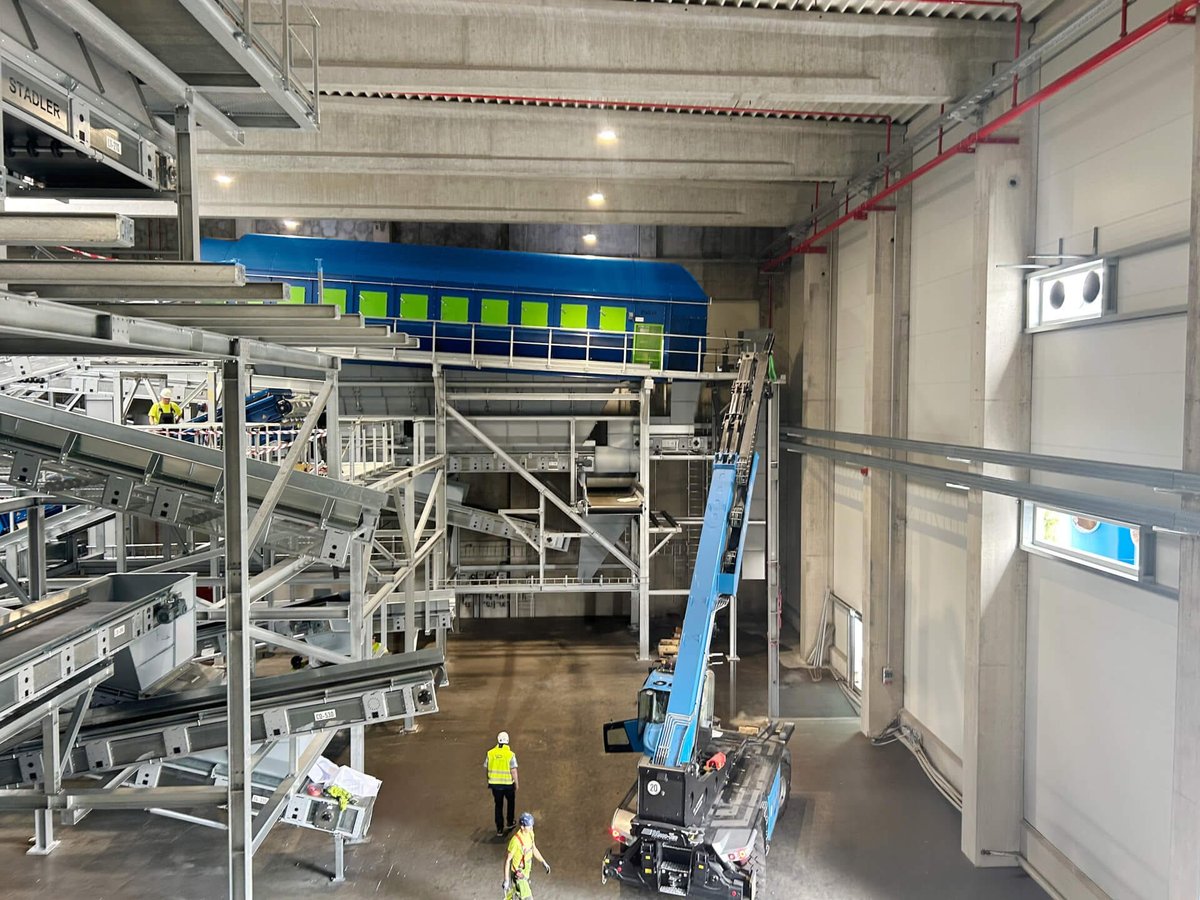
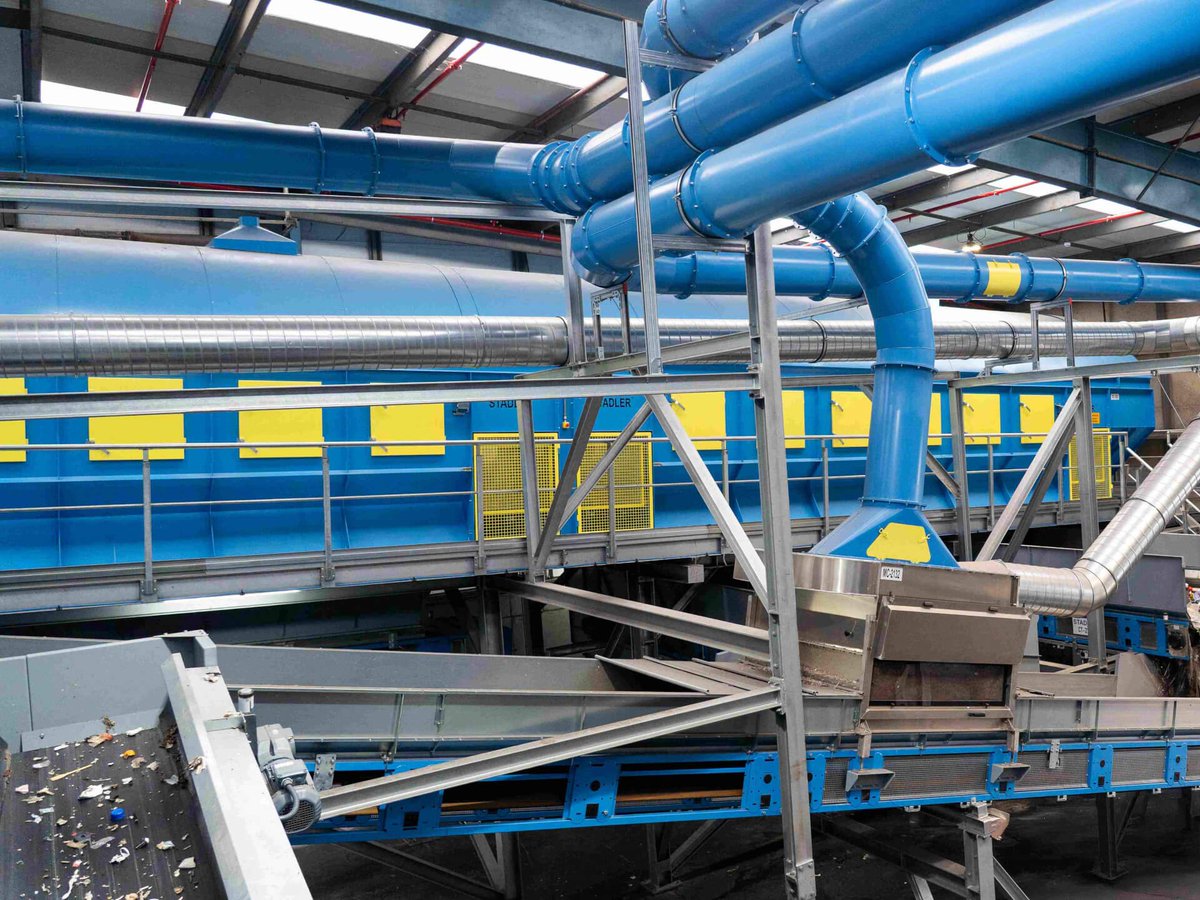
Large-scale sorting plant in Germany, including for #polystyrene, “rebuilt for resilience”: @Stadler_Group has announced that Sortierkontor Nord (SKN) in Bremen resumes operations. Jointly operated by Nehlsen AG and PreZero Deutschland, it is one of Europe’s most modern, state-of-the-art sorting plants and has a capacity of 120Kt for household packaging waste separately collected in Bremen and the surrounding federal states. It continues to deliver 12 high-purity mono-material fractions, including #PS.
Stadler had originally designed and commissioned the plant in 2021. It carried out the reconstruction after two fire incidents in 2022 destroyed around one-third of the machinery area and caused further damage. The plant now meets even higher safety requirements with significantly enhanced fire protection by structurally separating classification halls and other measures taken. It is also prepared for automated battery extraction – an increasingly critical challenge for the waste and recycling industry. Furthermore, optimised flow reduces material bottlenecks, Stadler said.
The fires temporarily disabling this large sorting plant coincided with a slight dip of the 'directed to recycling’ (input) rate for separately collected PS household packaging reported by the German Federal Environment Agency @Umweltbundesamt (UBA). It has since remained stable at 63%.
Sorting and #recycling capacity for PS is being extended across Europe (and beyond). Most recent examples include the upgrade and extension to 40Kt capacity of a sorting plant in Bizkaia (Basque Country), Spain, also by Stadler.
At the same time, multiple national and individual value chain initiatives have been further improving the #circularity of all types of PS packaging. This includes consumer-facing campaigns to improve the collection of household packaging, and safely incorporating mechanically, physically (dissolution) and chemically (depolymerisation) recycled PS (#rPS) in food packaging, closing the loop.
Sources:
- Stadler’s original post with link to press release: https://t.co/73kCyqALuc
- Established PS recycling in Germany: https://t.co/YJnXwvLzyu
- Areas of growth in circular PS – sorting capacity: https://t.co/kIC9LvmTy6
- Areas of growth in circular PS – recycling capacity: https://t.co/x1XK4mJxOL
- Upgrade brings sorting plant in Spain “to new levels”, including for PS: https://t.co/UMPSgq1TkZ
- Value chain initiatives for PS circularity: https://t.co/a5pGgLcxMN
Image: Stadler
Upgrade brings sorting plant in Spain “to new levels”, including for #polystyrene: @Stadler_Group has announced a comprehensive modernisation of the BZB (Bizkaiko Zabor Berziklategia) household packaging waste sorting facility in Amorebieta-Extano, Bizkaia (Basque Country). Its capacity reportedly increases from 23Kt to 40Kt.
According to Stadler, the original plant was commissioned in 2002. The upgraded facility was officially inaugurated at the end of January, with representatives of operators Garbiker AB SA and @TrienekensPV, producer responsibility organisation (PRO) Ecoembes and other stakeholders also in attendance. The upgrade represents a major leap forward in capacity, efficiency, automation and digitalisation. It enables BZB to more than double throughput from 3t to 8t per hour, to improve material purity of output fractions including #PS, and to future-proof operations in line with evolving regulatory and market demands. The definition of the sorting criteria was carried out in close coordination with the PRO, which plays a key role in the planning and implementation of the facility as a system partner. The upgrade was completed in a short timeframe, with assembly taking just three and a half months, and two months earlier than originally scheduled, Stadler said.
To realise the full #circularity potential of PS in Spain, @ecoembes , SCS members INEOS @Styrolution, @Trinseo, @COEXPAN_ and @IntraplasS, as well as SCS itself and others support the Alianza Circularidad PS (ACPS), which has been launched by dairy companies organised in @AEFY_es - Asociacion Espanola de Fabricantes de Yogur y Postres Lacteos Frescos.
It is one of multiple national and individual value chain initiatives that have been further improving the #recycling of all types of PS packaging. They contribute to growing sorting and recycling capacity for PS across Europe (and beyond).
- Stadler’s original post with link to press release: https://t.co/AwMdAgiD1Z
- SCS presents to ACPS in Spain: https://t.co/5yIn2uJmoM
- Value chain initiatives for PS circularity: https://t.co/a5pGgLcxMN
- Areas of growth in circular PS – sorting capacity: https://t.co/kIC9LvmTy6
- Areas of growth in circular PS – recycling capacity: https://t.co/x1XK4mJxOL
Image: Stadler
A growing number of national and individual value chain initiatives is further improving the #circularity of all types of #polystyrene packaging across Europe (and beyond). A few examples:
🇩🇪 In Germany, 63% of separately collected #PS household packaging is directed to established recycling. Its 75% recycling (output) efficiency is surpassed only by #EPS, according to the German Federal Environment Agency @Umweltbundesamt
(UBA). The industry Initiative "Mülltrennung wirkt" promotes correct household waste separation. Furthermore, major supermarkets @Lidl and Aldi Sud have introduced award-winning dairy pots containing 30% mechanically recycled PS (#rPS) from SCS member INEOS @Styrolution.
🇫🇷 In France, dairy producer organisation Syndifrais, which includes SCS member Yoplait, promotes the separate collection of yoghurt pots through the #TriTonPot campaign. With others, it committed to a ‘PS25’ vision in 2020. Producer responsibility organisation (PRO) @CiteoFrance established the PS recycling channel in 2022. It has since scaled up the 'over-sorting' of PS. The 'Créa-SRYR' project spearheaded by @Elipsoemballage has focused on EPS and #XPS. Citeo has recently laid out a roadmap for the recycling of EPS household packaging.
🇮🇹 In Italy, the value chain – including PRO @Corepla_Riciclo, Gruppo Happy, SCS consortium members Versalis, FLO Group and others – discussed a permanent roundtable on circularity in November, deeming PS, XPS and EPS packaging “synonymous with safety, hygiene and reliability” and “an integral part of the transition to a circular economy”. Major supermarket chain Esselunga has begun using XPS trays containing 10% rPS.
🇪🇸 In Spain, dairy companies organised in Asociacion Espanola de Fabricantes de Yogur y Postres Lacteos Frescos (@AEFY_es), have launched the Alianza Circularidad PS (ACPS). It is supported by PRO @ecoembes, SCS members such as @Trinseo and @COEXPAN_, SCS itself and others.
🇧🇪 In Belgium, PRO @FostPlusfr puts the recycling (output) rate for PS, XPS and EPS household packaging already at 50% – only a few years after the separate kerbside collection was extended to typical PS and XPS formats. Furthermore, major supermarket @Colruyt has improved the design of its XPS trays. Its sortable dark grey trays contain 10% rPS from Indaver's new depolymerisation plant, while its light brown XPS trays use mechanically rPS behind a functional barrier.
Other countries have also extended the collection and sorting of packaging waste for recycling, including PS. This is implemented by PROs such as Svensk Plaståtervinnings in Sweden, @Soc_Ponto_Verde in Portugal (in a project with SCS member @IntraplasS, and ARA Altstoff Recycling Austria. Initiatives are ongoing across the globe, e.g. by the @Polystyrene_SA and SCS member UpSolv in North America.
Feel free to share a link to your PS circularity project.
Sources:
- German PS ‘recycling’ (input) rate: https://t.co/YJnXwvLzyu
- PS' recycling efficiency: https://t.co/4swYAJZBOr
- rPS yoghurt pots: https://t.co/DhBFawQlci
- rPS dairy pot wins Deutsches Verpackungsinstitut @dviVerpackung (dvi) award: https://t.co/EmJEXcz6fc
- Closing the loop for yoghurt pots in France: https://t.co/RdiIGzqUQF
- Italian PS value chain “speaks with one voice”: https://t.co/ZqXxhEwqLg
- rXPS food trays in Italy: https://t.co/feKHX1sRxE
- SCS presents to ACPS in Spain: https://t.co/5yIn2uJmoM
- Belgian PS recycling rate: https://t.co/DD7EmjdZuk
- Belgian stakeholders close loop for (X)PS: https://t.co/OQqxWPKOVc
- Areas of growth in circular PS – sorting capacity https://t.co/kIC9LvmTy6
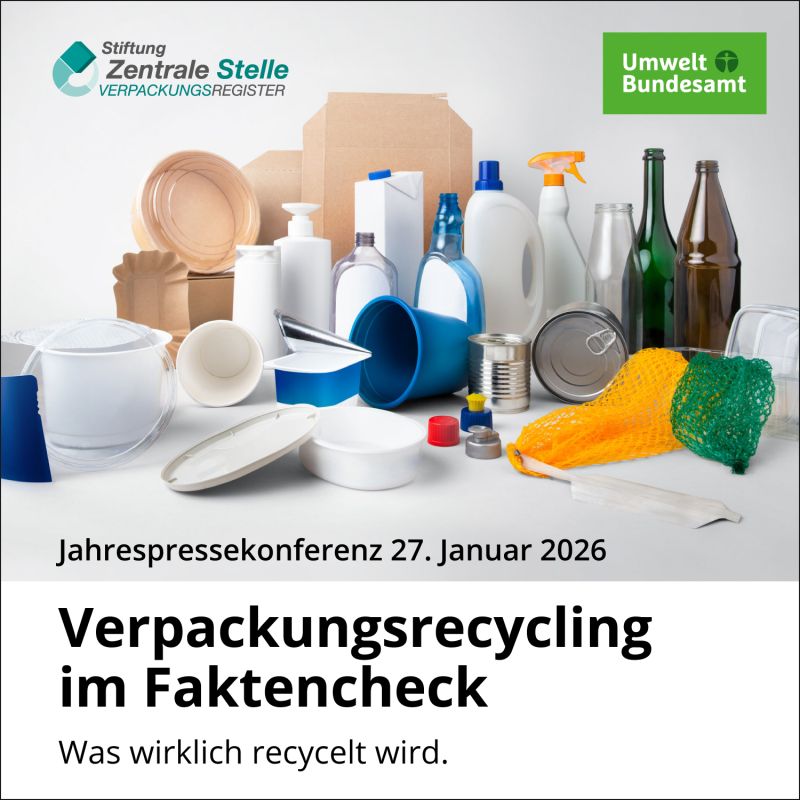
"Fighting myths with facts – recycling packaging waste in Germany works" – and that includes #PS: The
German Federal Environment Agency @Umweltbundesamt (UBA) and the Central Agency Packaging Register @ZSVR_LUCID (ZSVR) have unveiled their latest figures. They show that packaging #recycling works and is well monitored. Overall, recycling rates remained stable in 2024. Five out of eight national packaging waste recovery/recycling targets were (over-) achieved, including for plastics. The mechanical plastic recycling (input) rate has increased from 42% in 2018 to 70.8% (of the licensed volumes). Meanwhile, 28% of what is separately collected in the yellow bins/bags is incorrectly discarded in them.
The established #polystyrene recycling continued to contribute to this success. The sorted/'directed to recycling rate' for separately collected PS household packaging remained stable at 63%, according to the preview on a forthcoming UBA report. UBA documented earlier that once sorted, the 75% recycling (output) efficiency of PS household plastic packaging is surpassed only by #EPS.
ZSVR and UBA explain how the recycling rate can be further increased for all packaging: better design for recycling (DfR), continuous improvement of sorting technology in the 43 centres in Germany and consistent and correct separate discarding by users. The latter is encouraged by the industry Initiative "Mülltrennung wirkt".
Furthermore, PS packaging on German supermarket shelves has recently started including recycled PS (#rPS), e.g. 30% in PS pots. Such increased use of rPS will drive investments in sorting and recycling of PS.
(No) Need for confusion: The German institutions specify how they report against various national targets and based on various national methodologies here. Germany also reports a(n overall) plastic packaging waste recycling (output) rate according to EU rules to the EU. The #PPWR tasks the @EU_Commission with adopting harmonised granular EU reporting rules by February 2027.
Other European countries have been catching up to or exceeding such recycling success, including PS. For example, Belgian producer responsibility organisations (PRO) @FostPlusfr has provided recycling (output) rates for various plastic packaging categories ahead of the PPWR. For PS, XPS and EPS, it is already around 50% – only a few years after the separate collection at kerbside was extended to typical PS and XPS packaging formats like pots and trays across the country.
Furthermore, this does not even include the generally successful recycling of EPS commercial packaging, for which another PRO is responsible. Many more countries have been improving collection and sorting for recycling, including of PS.
- ZSVR's press release (with further references): https://t.co/bCREt5Mer6
- PS' recycling efficiency: https://t.co/4swYAJZBOr
- Belgian (PS) packaging recycling rate: https://t.co/DD7EmjdZuk
- INEOS Styrolution's rPS in yoghurt pots: https://t.co/DhBFawQlci
- Another dairy pot with 30% mechanically rPS content wins Deutsches Verpackungsinstitut (dvi) award: https://t.co/EmJEXcz6fc
- Areas of growth in circular PS – sorting capacity: https://t.co/kIC9LvmTy6
- Areas of growth in circular PS – recycling capacity: https://t.co/x1XK4mJxOL
Image: ZSVR
#circulareconomy
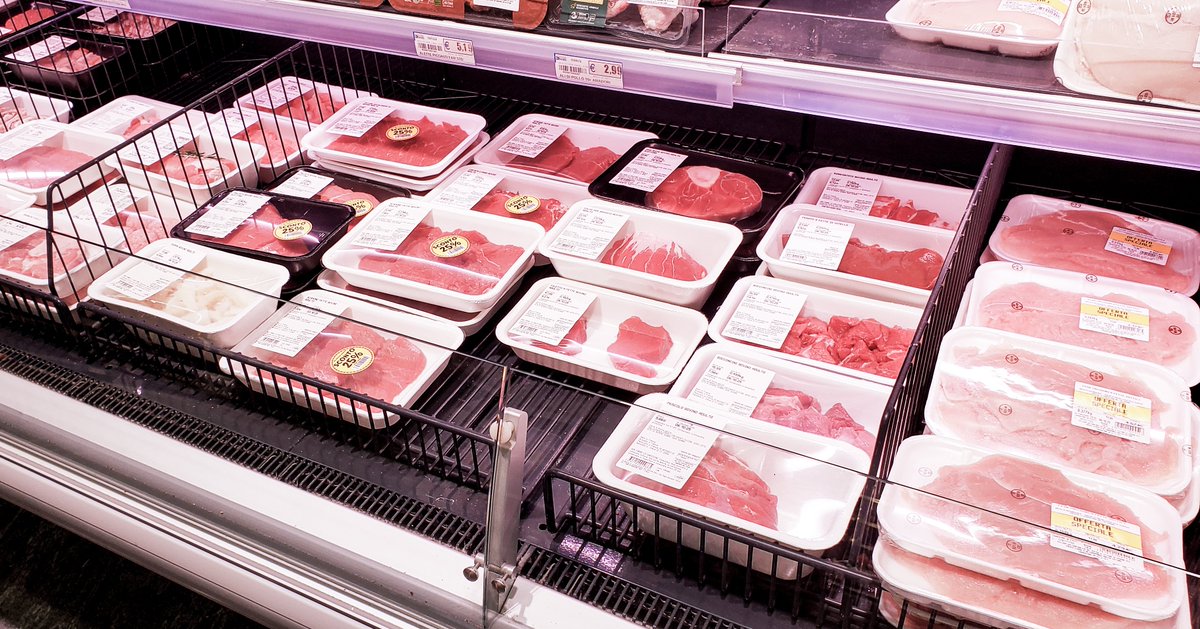
Italian value chain project closes loop for recycled #polystyrene (rPS) in XPS food trays: Polimerica reported that major supermarket chain Esselunga uses 150 million extruded polystyrene (XPS) trays per year, mainly to pack fresh meat and fish. To use rPS in them, it has worked with Versalis; recyclers such as Forever Plast; packaging producers Magic Pack, Faerch and Klöckner Pentaplast, as well as extended producer responsibility organisation (PRO) Corepla.
The initial share of rPS content is 10%. It is used in direct contact with food (rather than in an ABA structure).
This share could rise to 15% and even 20%. The EU packaging law #PPWR requires 10% recycled content in non-PET food packaging, including PS, from 2030, and 25% from 2040. In the future, such rPS may also be used in EPS food packaging.
Successful field tests were conducted at 26 stores in recent months. Another 48 supermarkets have been added since November. The roll-out will be completed in hundreds of locations this year, according to Polimerica.
Several complementary, mechanical, physical (dissolution) and chemical (depolymerisation) PS recycling technologies are being scaled up to efficiently address various feedstock and output qualities. They can all produce safe rPS food contact material (FCM), as well as material for other high value applications. Since October 2022, EU law has allowed the use of rPS FCM produced with so-called novel technologies under stringent conditions – also prior to a European Food Safety Authority (EFSA) opinion. Extensive tests and studies have confirmed the safety of post-consumer rPS.
Versalis launched mechanically rPS for direct food contact in 2024. @Styrolution, @Trinseo and others have also introduced food-grade rPS on the market. Mechanically rPS is for example used in dairy pots in Germany.
The design, collection, sorting and recycling of various types of PS packaging have been improving across Europe and beyond. For example, major Belgian supermarket chain @Colruyt has cooperated with PRO Fost Plus and Indaver to optimise the circularity of XPS meat trays. It recently announced that its sortable dark grey XPS trays have had 10% rPS content from Indaver's new depolymerisation plant since October, while its light brown foam trays contain mechanically rPS behind a functional barrier.
- Polimerica's article: https://t.co/RrACeePlOw
- Versalis' mrPS FCM: https://t.co/2lGEiRZITN
- INEOS Styrolution's mrPS in yoghurt pots: https://t.co/DhBFawQlci
- Dairy pot with 30% mechanically rPS content wins @dviVerpackung award: https://t.co/EmJEXcz6fc
- Trinseo's rPS FCM: https://t.co/mulRdj82CX
- Safety of rPS FCM (with further references): https://t.co/eYSFksDric
- Belgian stakeholders realise closed-loop recycling of (X)PS:
https://t.co/OQqxWPKOVc
#Recycling #circulareconomy
Some examples (more in our posts):
- Dairy pot with InSty's 30% mechanically recycled #polystyrene (mrPS) wins award: https://t.co/EmJEXcz6fc
- Trinseo launches dissolution-based rPS for direct food contact: https://t.co/e2LUntUBTT
- Indaver inaugurates depolymerisation plant: https://t.co/cbKjCZMqxO
- Areas of growth in available PS feedstock: https://t.co/bpAN4fERPe
- Areas of growth in PS sorting: https://t.co/kIC9LvmTy6
- Areas of growth in PS recycling capacity: https://t.co/x1XK4mJxOL
Dairy pot with 30% mechanically recycled polystyrene (mrPS) content wins German Packaging Award. The jury of the Deutsches Verpackungsinstitut (dvi) @dviverpackungannounced it as a winner in the category sustainability – recycled content yesterday. It noted that the sour cream pot demonstrates an innovative recyclate application in the food sector. It promotes the high-quality recycling of PS, which is now given a new lease of life, and reduces the use of virgin PS, resources and CO2 emissions. The pot is already available on the market.
Congratulations to Unternehmensgruppe Theo Müller, whose subsidiary submitted the pot, which it apparently fills for major supermarket chain Aldi Süd. The mrPS is supplied by our member @Styrolution.
In a similar cooperation, with PreZero International, our members @Styrolution and @COEXPAN_ also produce the material for yoghurt pots with 30% mrPS, which Müller fills for another major supermarket chain, @lidl in Germany. These pots with recycled content can also already be found on supermarket shelves. Furthermore, our members @eni Versalis and @Trinseo have launched safe, mechanically and physically recycled PS food contact material (rPS FCM) as well.
Since October 2022, EU law has allowed the use of rPS FCM produced with so-called novel technologies under stringent conditions – also prior to an European Food Safety Authority (@EFSA_EU) opinion. Extensive tests and studies have confirmed the safety of post-consumer rPS.
- dvi's announcement https://t.co/q0sB8jG65t
- Styrolution's mrPS in yoghurt pots: https://t.co/xGi8cqV1ds
- @Trinseo 's rPS FCM: https://t.co/TYtRs1mklP
- Versalis' mrPS FCM: https://t.co/2lGEiRZITN
- Safety of mrPS FCM: https://t.co/eYSFksDric
#circulareconomy #polystyrene #recycling
Various types of PS packaging are recycled across the globe: See this informative article on the long-established and further improving closed-loop recycling of XPS trays in Japan.
The European Styrenics value chain has also been deploying such complementary recycling technologies to efficiently address various feedstock and output qualities in practice: food-grade mechanical recycling, dissolution and depolymerisation.
Scaling up circular PS is supported by its intrinsic properties as well as areas of growth in available feedstock, sorting and recycling capacity across Europe.
Please see comment for examples (and more in our posts).
https://t.co/18ejeQPthA
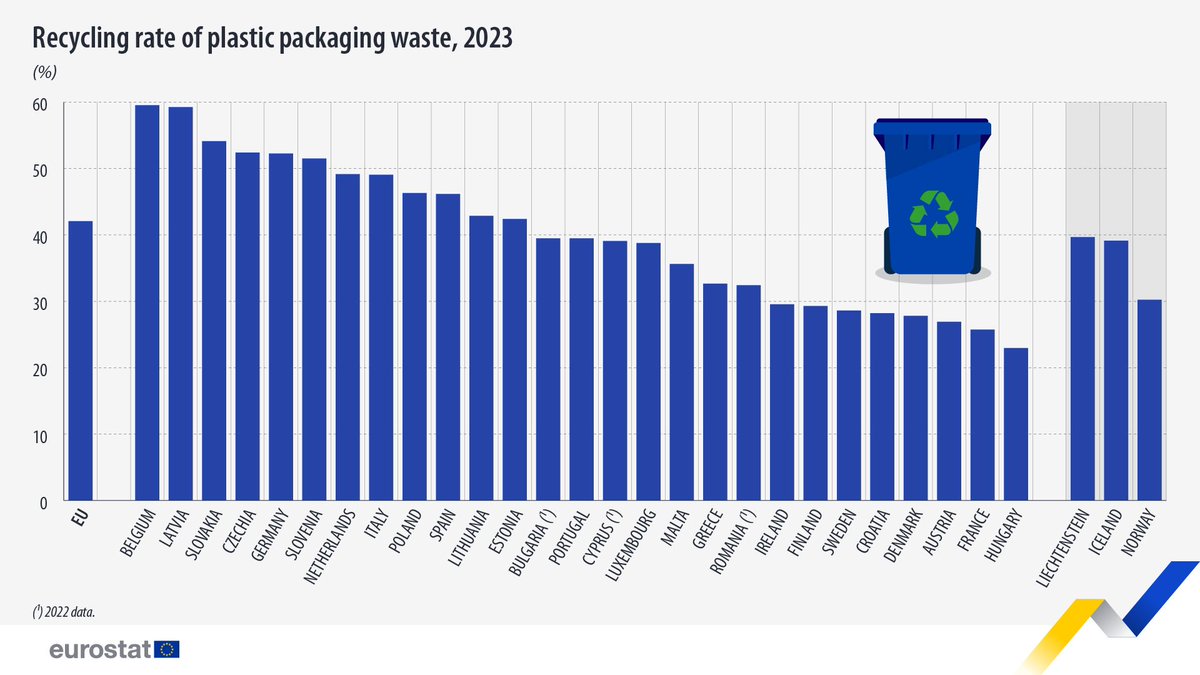
Belgium increases plastic packaging recycling, while keeping fee for #PS packaging competitive: @EU_Eurostat, the European Statistical Office, has reported the official plastic packaging recycling rates in 2023 (apart from three Member States, whose data is from 2022). Belgium recorded the highest recycling rate at 59.5%, a further increase from 54% in 2022.
Each person in the EU on average generated 35.3 kg of plastic packaging waste, 1 kg less than in 2022. Overall, 42.1% of all the plastic packaging waste generated in the EU was recycled, a slight increase from 41% in 2022, and increasing in the long-term compared with 2013 (38.2%). Methodological changes in 2020, including a harmonised calculation point for recycling and stricter accounting of composite packaging material fractions, led to a statistical decrease of 3.4% in the recycling rate for the EU in 2020. That calculation point is where plastic does not undergo further processing before entering pelletisation, extrusion, or moulding operations, or in the case of flakes, before their use in a final product.
In Belgium, household packaging producer responsibility organisation (PRO) @fostplusfr has significantly increased the recycling of plastic packaging waste since extending the separate collection to virtually all household packaging, including common PS formats, by the end of 2021. One month ago, @IndaverBE inaugurated an additional innovative recycling plant that will depolymerise PS packaging waste to 'virgin-like' monomer at industrial scale.
Despite such investments, Fost Plus' EPR fee for PS and XPS packaging will be just over €1/kg (€1.0007/kg), compared with e.g. €1.0161/kg for rigid PP and €1.1546-€1.1931/kg for non-bottle PET. The PRO reviews its fees yearly based on anticipated quantities, real costs and revenues for each category. This shows that PS packaging recycling is economical.
Furthermore, many of the countries that still reported relatively low plastic packaging recycling rates to the EU have been making much needed investments in increasing the collection and/or sorting of household packaging waste, including PS, for recycling more recently. This includes France, Austria, Sweden and Finland, as well as the PROs @citeofrance, ARA, Svensk Plaståtervinning and Sumi Oy and others there.
- Eurostat's original post: https://t.co/jryXbSX0kl
- Belgian packaging recycling rate increases further; about half of #polystyrene already recycled, with more recycling capacity imminent: https://t.co/qo6XDtnSZF
- Indaver inaugurates recycling plant: https://t.co/rxIwQETaP1
- Fost Plus' 2026 fees: https://t.co/fOvbdnS8D2
- Areas of growth in circular PS – sorting capacity (with further references): https://t.co/kIC9LvmTy6
Brussels wants to improve the collection of commercial packaging, such as #EPS: @VilleBruxelles , regional public waste organisation Bruxelles Propreté and regional authority Bruxelles Environnement have launched a series of awareness-raising campaigns as well as checks of catering businesses, restaurants and shops, Flemish public broadcaster @VRT reports.
Such businesses in the Brussels-Capital Region are obliged to conclude a commercial waste collection contract to avoid that shopping streets end up full of garbage bags. However, in one survey, 70% of retailers admitted that they do not have such a contract at all. In addition, other traders have insufficient contracts. They discard most of their commercial waste in household waste bags. A recent inspection of 2000 bags discarded in shopping streets on one day found that 470 of them contained waste from traders. Bruxelles-Propreté will offer the awareness-raising and enforcement model also to other municipalities, according to the news item.
In the picture provided by Bruxelles-Propreté, EPS packaging is visible next to piles of white mixed household waste bags. Unfortunately, this is a regular sight in Brussels. Restaurants and shops get fish, produce and other food in efficiently insulating EPS boxes, avoiding food waste. The waste holders often seem to have the right feeling that they are discarding a valuable and highly recyclable material, and try to keep the EPS separate when they ‘dump’ it at the kerbside. However, as with any other waste, avoiding litter and recycling start with proper collection arrangements being available and responsibly discarding of the material. This is already successfully practiced across Europe and beyond, where in particular EPS commercial transport packaging is separately collected, sometimes even compacted on the spot, and recycled.
On the other hand, EPS household packaging waste is separately collected at collection points/centres in Belgium. To maximise also its recycling, Belgian household packaging producer responsibility organisation (PRO) @FostPlusfr has been working on “new or adapted collection scenarios” and streamlining the collection at recycling centres.
- VRT news item: https://t.co/CfaqILMACi
- UN Environment Programme recognises that EPS transport packaging is recycled in practice and at scale: https://t.co/7vjsZeQj2z
- French environment agency ADEME confirms that EPS commercial packaging recycling is highly efficient: https://t.co/i5W9t6cfMU
Image: Bruxelles-Propreté
#recycling #polystyrene #circulareconomy
'Polystyrene. Circular. Food grade. Ready now.' – Thank you to all the participants for their interest in and engaging questions during our online event, hosted by @PackagingEurope.
In case you or your colleagues missed it, please find more information and a link to the recording on our website or share the link.
Another chance to watch the presentation by Dr Frank Welle, Dr Frank Eisentraeger, @SCS_KathmanJens as well as Ken Huestebeck, and the discussion moderated by Elisabeth Skoda.
More information and link to the recording: https://t.co/GdeRObHnRB
#recycling #polystyrene #circulareconomy
SCS' Policy Director Ken Huestebeck will join over 100,000 green and circular economy professionals from 120 countries at @Ecomondo in Rimini, Italy, on 5 November. He will present 'The new EU regime for recycled plastic food contact material – Changing the game?'.
Against the backdrop of recycled content requirements for plastic food packaging, the EU fundamentally changed its regime to ensure the safety of recycled plastic food contact material (FCM) at the end of 2022. Ken's presentation will address some of these fundamental changes, challenges and opportunities that also multiple companies in Mediterranean countries have been facing and using.
Learn more and register here: https://t.co/PUmpK754Lp
Details about the session: https://t.co/8usLkwiwS9
#polystyrene #circulareconomy #recycling
Effective 3 October, Walter van het Hof employee of @Trinseo Netherlands, has been appointed as the new Secretary General of Styrenics Circular Solutions (SCS). In this role, Walter succeeds @SCS_KathmanJens , who will return to @Styrolution Switzerland.
On behalf of SCS and our members, we sincerely thank Jens for his dedication, lead,ership and valuable contributions to the success of SCS since its early days.
We warmly welcome Walter to his new role. We are delighted that Walter brings his vast expertise in sustainability and industry affairs, as well as his experience as member of SCS working groups to this role.
Jens and Walter as well as the whole SCS team, including Policy Director Ken Huestebeck, have been ensuring a smooth handover. SCS will continue its successful work towards the transition of our value chain and realising the proven circularity potential of styrenics at scale, also through the current, generally challenging economic environment.
We wish both Walter and Jens every success for the future!
🚀 Ready for Take-Off! In just a few days we will be exhibiting our latest material innovations for high demanding applications of various industries at K Trade Fair 2025.
If you want to know more about it, visit us at Stand 5D02 in Hall B5 😉!
#KFair2025#sustainability
‘Circular PS – Ready now’: SCS Secretary General @SCS_KathmanJens will present on the advanced state of circular #polystyrene across Europe to a meeting of the Alianza Circularidad PS (ACPS) in Madrid tomorrow.
Spanish dairy companies organised in AEFY, users of PS packaging, initiated the ACPS to promote the circular economy and PS recycling, in line with EU objectives. Besides SCS, multiple of its members, waste management and recycling companies, as well as the Spanish packaging producer responsibility organisation (PRO) support the ACPS.
Read more: https://t.co/fawKYQYE4Y
#circulareconomy #recycling
One week to go until our online event with @PackagingEurope! Please join us for "Polystyrene. Circular. Food grade. Ready now." on Monday 29 September. Our speakers will take stock of the value chain's progress in 'closing the loop' for PS packaging, tackling questions such as:
▪️ What is the intrinsic functional value and circularity potential of styrenics?
▪️ How do scientific studies confirm the safety of recycled polystyrene food contact material (rPS FCM)?
▪️ How has the value chain been adapting to the evolving EU regulatory framework, including for packaging (PPWR) and recycled plastic food contact material?
▪️ How have collection, sorting and recycling capacities for polystyrene packaging been developing?
Our panel includes @SCS_KathmanJens and Ken Huestebeck of SCS, Dr Frank Eisentraeger of INEOS @Styrolution and Dr Frank Welle of the Fraunhofer Institute for Process Engineering and Packaging IVV.
There is still time to register: https://t.co/zY0DZaUwLe
#recycling #polystyrene #circulareconomy
Our Policy Director Ken Huestebeck will present on 'The future of polystyrene food packaging' at the 12th International Conference on Food Contact Compliance in Baveno, Italy.
As the organisers note, 2025 marks a turning point for European legislation on food contact materials (FCM). The long-awaited Packaging and Packaging Waste Regulation (PPWR) has entered into force, setting the stage for a radical transformation of the packaging sector by requiring recyclability and recycled content, among other things. In parallel, recent fundamental changes to the EU regulation of recycled plastic FCM have to be implemented. Ken's presentation will address how the #polystyrene value chain has been preparing for the challenges and opportunities that this transformation entails.
Learn more and register here: https://t.co/hkdd4psOiD
#circulareconomy #recycling