MIT atmospheric physicist Dr. Richard Lindzen has said "there will be no climate catastrophe."
"When someone says half a degree more and it's the end of the species, that's not science, that's theatre," says Lindzen.
Every apocalyptic prediction, from famine to ice-free poles to snowless winters, has failed.
And they'll keep failing.
2030 will pass, 2050 will pass, 50 years will pass -- there will be no climate catastrophe.
Lindzen isn't a fringe voice, he's a leading atmospheric scientist, author of nearly 250 peer-reviewed papers, and a member of the US National Academy of Sciences.
Today's climate agenda, he argues, isn't about data, it's about power. "It's about controlling policy, controlling economies, and reshaping society under the guise of a crisis that doesn't exist."
The real threat isn't climate change. It's climate policy.
Canada should become the data centre capital of the world
The past week brought competing responses to the politics of data centres on either side of the Canada-U.S. border. Alberta announced a major data centre development, one of the largest private-sector investments in Canadian history. New York imposed a one-year moratorium on large data centres, the first (but not the last) such ban in the United States.
As the Democratic Party reportedly prepares to target data centres ahead of November’s mid-terms, the growing resistance to their construction could be a significant economic and geostrategic opportunity for Canada. Put simply: America’s loss could be Canada’s gain.
But that presupposes our own politics can withstand the nascent opposition. With the Canadian Left starting to organize against data centres, that’s far from obvious.
Let’s start with the opportunity. Data centre construction is a major source of capital investment—among the largest in decades—and the compute capacity it provides is increasingly a key factor of economic competitiveness. As artificial intelligence diffuses across our economy and society, compute will undergird the innovation and productivity gains that follow.
The security upsides could be significant too. At a time when Canadians worry about dependence on U.S. technologies—data, privacy, unilateral limits on our access—becoming a major destination for continental compute is a useful insurance policy. Deeper integration into America’s most strategic industry would give us leverage over its corporate and political decision-making. If they ever threatened to cut us off, we’d have an ultimatum of our own.
If U.S. policymakers are going to make it hard to build data centres, Canada should position itself as the attractive alternative. We have a huge and sparsely populated landmass, abundant affordable energy, and cold temperatures. As I’ve previously written, First Nations reserves could be significant players as they obtain new land through court decisions and settlement negotiations, and the Alberta experience shows companies will invest heavily in adjacent infrastructure—a potential win-win for participating communities.
Now here’s the risk. Avi Lewis won the federal NDP leadership on a platform that included a national moratorium on data-centre construction, and his party is organizing behind local fights across the country. In Mississauga, councillor Alvin Tedjo is campaigning against a proposed 200,000-square-foot facility—through a petition, 300-person town hall, and pending council vote—under the slogan of no new data centres.
The arguments will be familiar to anyone following American politics, where local opposition delayed or cancelled roughly US$156 billion in projects in 2025 alone. The talking points about energy, water, and corporate giants have crossed the border intact, right down to the demand for moratoriums.
The concerns aren’t totally frivolous. Data centres consume enormous amounts of power, and residents are entitled to ask who bears the costs. But those are questions for planning and pricing rather than prohibition. A moratorium doesn’t manage the tradeoffs. It exports the investment to jurisdictions willing to build.
A version of the same confusion runs through official Ottawa, where the Carney government is spending billions trying to engineer a sovereign AI stack. Being the data centre capital of the world is a far better national ambition than subsidizing a homegrown AI ecosystem at any and all cost. One strategy builds on Canada’s genuine advantages and makes us indispensable. The other burns public money chasing American scale with a fraction of American resources.
Sovereignty comes from being needed, not from owning a national champion. Rather than trying to replicate Silicon Valley, Canada should aim to power it.
Far from a consolation prize, this may be Canada’s biggest economic opportunity in a generation. New York has decided to sit it out. We shouldn’t make the same mistake.
Your risotto is made of methane.
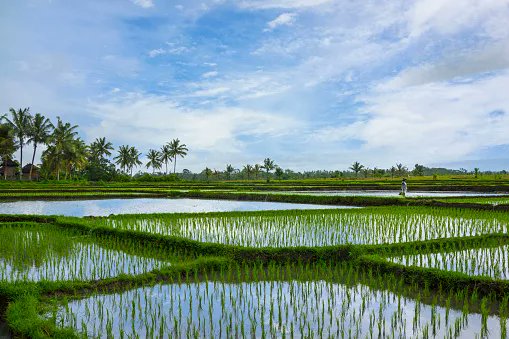
Rice is grown by flooding a field, and the flooding is not incidental, it is the entire method. Standing water keeps oxygen out of the soil. With no oxygen, a particular set of microbes takes over the mud and starts breaking down organic matter without it, and the waste product of that process is methane, which bubbles up through the water and out through the plant's own stem.
Those microbes are archaea. They are the same organisms, doing the same chemistry, as the ones in the cow's rumen.
There is no difference in the gas. There is no difference in the mechanism. A paddy field is a rumen with the lid off, and it works because a farmer deliberately drowned the ground to make it happen.
Rice is somewhere around 8 to 12 per cent of all human methane emissions, depending on whose inventory you read. It is the third biggest agricultural source after cattle, and it is bigger than the entire global sheep and goat population put together.
Nobody has ever been asked to give up rice on a Monday. There is no Rice Free January. No documentary. No supermarket pledge. No fourteen-year-old at the dinner table explaining to her grandfather that his paella is killing the planet.
Because rice is a plant, and plants have been granted permanent moral clearance, and the archaea did not get the memo.
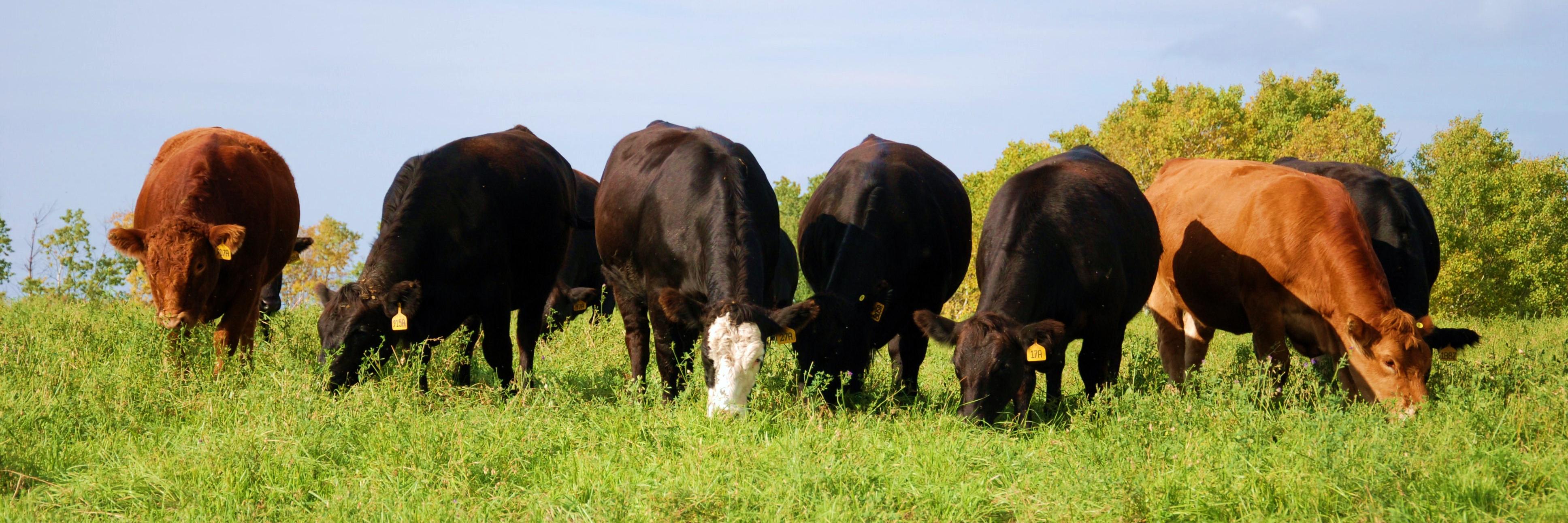
The crime they see: 15,415 litres of water to produce one kilogram of beef. Every campaign, every documentary, every leaflet through the door since about 2012.
The crime they do: not reading the paper.
The figure is real. It comes from Mekonnen and Hoekstra at the University of Twente, and it is careful, peer-reviewed work. What the campaigns strip out is that the same authors split that number into three parts, because the three parts are not the same thing at all.
Green water is rain. It falls on the grass. The cow eats the grass. For beef, green water is about 94 per cent of that headline.
Blue water is the stuff that matters. Rivers, lakes, aquifers. The stuff that gets pumped, metered, fought over in court, and does not come back.
So here is the blue water, in litres per kilogram, from the same authors, same method, same units.
- Pistachios: 7,602
- Almonds: 3,816
- Walnuts: 2,451
- Dates: 1,250
- Cashews: 921
- Beef: 550
Read that last line again, then go and look at what is in your granola.
The 15,415 counts rain that fell on a Welsh hillside as a cost, against an animal that was standing in it, on land where nothing else grows, in a country where rain is the one thing we have never once been short of.
The pistachio is drinking fourteen times more of the water that actually runs out.
She is outside in the rain right now, getting blamed for it.
Stephen Harper just laid it out at CPAC.
He reminded everyone what actually works:
- Shifted the justice system from coddling criminals to protecting victims. Violent crime dropped nearly 30%.
- Stopped targeting law-abiding gun owners and went after actual gun criminals instead.
- Rejected carbon taxes that punish Canadians and businesses.
- Fixed immigration to focus on economic needs and phased out the exploitive low-skilled TFW abuse.
- Cut taxes across the board (corporate, small business, personal, GST from 7% to 5%) while still investing in healthcare, education and infrastructure — and left the country with a balanced budget.
- Survived the worst global financial crisis in a century and came out stronger, creating 1.5 million jobs.
- Invested in real military capability instead of virtue signalling.
- Flew the Canadian flag at full mast and actually delivered national unity by getting things built.
And he said it plain: We are living in an **age of nationalism**.
Every other country is putting itself first. Canada has more reason than most to do the same — secure borders, energy superpower status, pipelines to tidewater right now, not “someday,” and stop letting federal policy block projects that benefit the entire country.
Meanwhile the current crew has spent 11 years doing the exact opposite: targeting legal gun owners, exploding crime in places like Brampton and Toronto, hammering Canadians with carbon taxes, flooding the system with low-skilled TFWs while youth unemployment skyrockets, and running deficits that would make the 2008 crisis look tame.
Harper governed with results.
They govern with slogans, virtue, and managed decline.
The contrast couldn’t be clearer.
We don’t need more lectures about “elbows up” or globalist fantasies.
We need what Harper proved works: put Canada first, protect citizens, grow the economy, and stop apologizing for being a nation that wants to win.
Age of nationalism isn’t coming.
It’s here.
The only question is whether Canada finally joins it — or keeps pretending the last decade was normal.
🎥 @BeautifulCana1
#cdnpoli #Harper #AgeOfNationalism #Conservative #LiberalFail #CanadaFirst
This month the Energy Secretary approved his third large solar farm in a fortnight, one of them on prime farmland across Nottinghamshire and Lincolnshire that his own inspectors told him to refuse. They walked the site. They said no. He signed it anyway.
So here's the grand plan. Take some of the best food-growing soil in England, ground that has fed people for a thousand years, and bury it under glass panels shipped in from China to catch the famous Lincolnshire sunshine. In a country where the sun knocks off mid-afternoon for half the winter and turns up for roughly eleven per cent of the year, we are concreting over arable land to harvest photons that mostly aren't there.
A British solar field spends most of its life doing an impression of a very expensive greenhouse with the plants missing. The panels tilt hopefully at a grey sky. The soil beneath them, some of the finest in the country, sits in the dark for forty years quietly learning to be a car park.
And it doesn't come back. Not in your lifetime. They are making a permanent decision about a temporary energy fashion, on ground you cannot un-glass, against the written advice of the men they pay to give it, in the same fortnight the same government swears food security keeps it awake at night.
Sunniest idea they've had all year.
“Islam has a problem with gays, democracy, bacon, dogs, music, Christmas, Hindus, Jews, Buddhists, Christians, women who show their hair, people who leave their religion, and even people who draw pictures of their prophet, who, by the way, married a six-year-old. But if I have a problem with Islam, for some reason, I'm an Islamophobe.”
The world's clean energy transition represents a colossal expansion of the world's mining industry.
To catch a diffuse energy source like sunlight or wind needs an unprecedented volume of physical machinery. A single solar farm requires roughly 30 times more total metal infrastructure than a conventional gas plant. We aren't moving away from mining; we're swapping enormous oceanic drilling rigs for vast open-cut metal mines.
The demand for heavy mining and rare earths is just as compelling as the downstream e-waste crisis, but the numbers are even more staggering. While solar cells rely heavily on high-purity silicon, silver, and copper, the broader 'green infrastructure' ecosystem demands far more.
The EV motors, wind turbines and massive national grids required to tie intermittent solar together are entirely dependent on an unprecedented surge in heavy mining and rare earth extraction.
This physical mining demand has simply exploded with the shift from conventional fossil fuel energy generation to wind and solar. Because wind and sunshine are so diluted and diffused, harvesting them requires a massive physical footprint, necessitating endless extra acres of complex machinery.
This translates into heavily vandalised landscapes and grotesque coastal settings. According to the IEA, replacing them world's fossil-fuel system with renewables increases the total volume of materials requiring extraction and handling by a factor of 10.
Solar alone is exceptionally copper-intensive, using roughly 850 kg per megawatt for intricate grid connections, inverters and cabling. Renewable energy is projected to drive 45% of total global copper demand by 2030. Yet, developing a new major copper mine takes an average of 16 years from initial discovery to first production.
The world faces a massive demand spike for a metal where the supply chain is notoriously slow, costly, and inflexible.
Solar panels don't use much in the way of rare earths, but wind turbines and the electric vehicle motors that back up the low-carbon shift are hungry for permanent magnets made from neodymium, praseodymium and dysprosium. Processing these elements involves intensive chemical leaching that produces vast amounts of toxic and radioactive wastewater.
Compounding the problem, China controls roughly 60–70% of the extraction and up to 90% of the refining for these specific elements.
This has created a massive geopolitical bottleneck.
Image: this massive chasm is the Bingham Canyon Mine (also called the Kennecott Copper Mine) just outside Salt Lake City, Utah. It is one of the largest man-made excavations on Earth and the deepest open-pit mine in the world, stretching 4 kilometres wide and more than a kilometre deep.
This article was written by a 26 yr old college student by the name of Alyssa Ahlgren, who's in grad school for her MBA. What a GREAT perspecitve..👍🏽
My Generation Is Blind to the Prosperity Around Us!
I'm sitting in a small coffee shop near Nokomis (Florida) trying to think of what to write about. I scroll through my newsfeed on my phone looking at the latest headlines of presidential candidates calling for policies to "fix" the so-called injustices of capitalism. I put my phone down and continue to look around.
I see people talking freely, working on their MacBook's, ordering food they get in an instant, seeing cars go by outside, and it dawned on me. We live in the most privileged time in the most prosperous nation and we've become completely blind to it.
Vehicles, food, technology, freedom to associate with whom we choose.These things are so ingrained in our American way of life we don't give them a second thought.
We are so well off here in the United States that our poverty line begins 31 times above the global average. Thirty One Times!!!
Virtually no one in the United States is considered poor by global standards. Yet, in a time where we can order a product off Amazon with one click and have it at our doorstep the next day, we are unappreciative, unsatisfied, and ungrateful. ??
Our unappreciation is evident as the popularity of socialist policies among my generation continues to grow. Congresswoman Alexandria Ocasio-Cortez recently said to Newsweek talking about the millennial generation, "An entire generation, which is now becoming one of the largest electorates in America, came of age and never saw American prosperity."
Never saw American prosperity! Let that sink in.
When I first read that statement, I thought to myself, that was quite literally the most entitled and factually illiterate thing I've ever heard in my 26 years on this earth. Many young people agree with her, which is entirely misguided.
My generation is being indoctrinated by a mainstream narrative to actually believe we have never seen prosperity. I know this first hand, I went to college, let's just say I didn't have the popular opinion, but I digress.
Why then, with all of the overwhelming evidence around us, evidence that I can even see sitting at a coffee shop, do we not view this as prosperity? We have people who are dying to get into our country.
People around the world destitute and truly impoverished. Yet, we have a young generation convinced they've never seen prosperity, and as a result, we elect some politicians who are dead set on taking steps towards abolishing capitalism.
Why? The answer is this,?? my generation has only seen prosperity. We have no contrast. We didn't live in the great depression, or live through two world wars, the Korean War, The Vietnam War or we didn't see the rise and fall of socialism and communism.
We don't know what it's like to live without the internet, without cars, without smartphones. We don't have a lack of prosperity problem. We have an entitlement problem, an ungratefulness problem, and it's spreading like a plague."
I appeared on the Steve Gruber Show this morning to discuss trends in extreme weather. Reality doesn’t match alarmist claims by most relevant metrics.
Strong-to-violent F/EF2+ tornadoes are down >50% in the U.S. since 1954; major hurricanes landfalls are down by ~45% since 1930; wildfire burn acreage is down by >90% since 1926 (mostly due to fire suppression); there have been no increases in river floods or droughts, the worst of which were in the 1930s and 1950s; and extremely hot days here in the States are down by ~18% since 1900.
cc: @stevegrubershow
The world is more than 1 degree warmer and CO₂ has reached 427 ppm - yet our planet is becoming a green paradise.
Global greening from higher CO₂ has delivered an unexpected windfall; 5.5 million km² of new greenery springing up across the world since 2,000 (NASA studies). This isn't just extra leaves. Green growth is equal to twice the area of the Amazon Rainforest and the Sahara Desert has lost 8% desert to new plant growth.
Across the Arctic, vegetation increased by 38% between 1985 and 2016. Between 2000 and 2017 satellites identified a 25% to 50% increase in vegetated lands turning green. Food production has been boosted by 35-40%.
This is the Earth’s way of self-correcting and 30% of these areas already have a natural cooling effect through water-vapor management. The planet isn't a passive victim, it's an active participant.
The UN climate ideology was about fear and control.
No tengo ningún problema con el islam. Simplemente estoy en contra de la decapitación, la lapidación, el matrimonio con niñas pequeñas, la esclavitud sexual, la taqiyya, la trata de esclavos, la violación, las conversiones forzadas, la yihad, el burka, los ataques a otras religiones, el abuso infantil, el abuso contra las mujeres, el maltrato animal, la poligamia, el asesinato, la sharia, el terrorismo, el lavado de cerebro, la intolerancia, la avaricia, el anticientificismo, la tortura, el analfabetismo, la glotonería, la mutilación genital y la endogamia. ¿Acaso eso me convierte en islamófobo?
JOHN CLAUSER, 2022 NOBEL PRIZE PHYSICIST:
THE "CLIMATE CRISIS" IS PSEUDOSCIENCE:
THE CLIMATE IS SET BY EARTH'S SELF REGULATING CLOUD COVER, NOT CO2!
"Contra the IPCC and other major institutions, he argues that climate is primarily set by what he refers to as the “cloud cover thermostat,” a self-regulating process whereby more clouds start to enshroud the Earth when the temperature is too high, and vice-versa. Although he accepts observations showing that atmospheric carbon dioxide is increasing, he believes that gas’s effect on heat transfer is swamped by a great natural cloud cycle.
“It [the carbon dioxide] may or may not be made by human beings,” Ms. Clauser said. “It doesn’t really matter where it comes from.”
The physicist believes that objective science on climate has been sacrificed to politics. The preeminence of politics is all the worse, he said, because so much money has already gone to climate.
“We’re talking about trillions of dollars,” he said, adding that powerful people don’t want to hear that they’ve made “trillion-dollar mistakes.”
Concerns about such mistakes may have been relevant after Mr. Clauser was slated to speak before the U.N.’s International Monetary Fund (IMF) on July 25."
Dr. John Clauser, Nobel Prize Recipient for Physics, 2022
In 2016, the Netherlands Meteorological Institute adjusted temperatures at De Bilt, the country's main climate station. Daily maximums from 1901 to 1950 were lowered by up to 1.9C, which removed 16 of 23 heatwaves from the record.
The altered data were then used to claim modern heatwaves were unprecedented.
Four researchers challenged the changes, but the institute dismissed the criticism, so the analysis went to peer review. In 2021, it was published, conclusively demonstrating the method systematically erased historical heat extremes.
Today, the Meteorological Institute has quietly changed its approach, and as a result, seven erased heatwaves have been restored, including the extreme summer of 1947.
Here again, we have a government agency caught rewriting climate history. The Netherlands Meteorological Institute erased heatwaves of the past, ignored critics, and reinstated the truth only when the evidence became impossible to ignore.
Policies were built on that manipulated record.
Dutch farmers lost livelihoods.
Industry and the wider economy paid the price.
But accountability is coming.





![robinmonotti's tweet photo. JOHN CLAUSER, 2022 NOBEL PRIZE PHYSICIST:
THE "CLIMATE CRISIS" IS PSEUDOSCIENCE:
THE CLIMATE IS SET BY EARTH'S SELF REGULATING CLOUD COVER, NOT CO2!
"Contra the IPCC and other major institutions, he argues that climate is primarily set by what he refers to as the “cloud cover thermostat,” a self-regulating process whereby more clouds start to enshroud the Earth when the temperature is too high, and vice-versa. Although he accepts observations showing that atmospheric carbon dioxide is increasing, he believes that gas’s effect on heat transfer is swamped by a great natural cloud cycle.
“It [the carbon dioxide] may or may not be made by human beings,” Ms. Clauser said. “It doesn’t really matter where it comes from.”
The physicist believes that objective science on climate has been sacrificed to politics. The preeminence of politics is all the worse, he said, because so much money has already gone to climate.
“We’re talking about trillions of dollars,” he said, adding that powerful people don’t want to hear that they’ve made “trillion-dollar mistakes.”
Concerns about such mistakes may have been relevant after Mr. Clauser was slated to speak before the U.N.’s International Monetary Fund (IMF) on July 25."
Dr. John Clauser, Nobel Prize Recipient for Physics, 2022](https://pbs.twimg.com/media/HJfhH7LXQAATSjv.jpg)


