Serving the western U.S. with a mission to advance the nation’s monetary, financial, and payment systems to build a stronger economy for all. RT ≠ endorsements
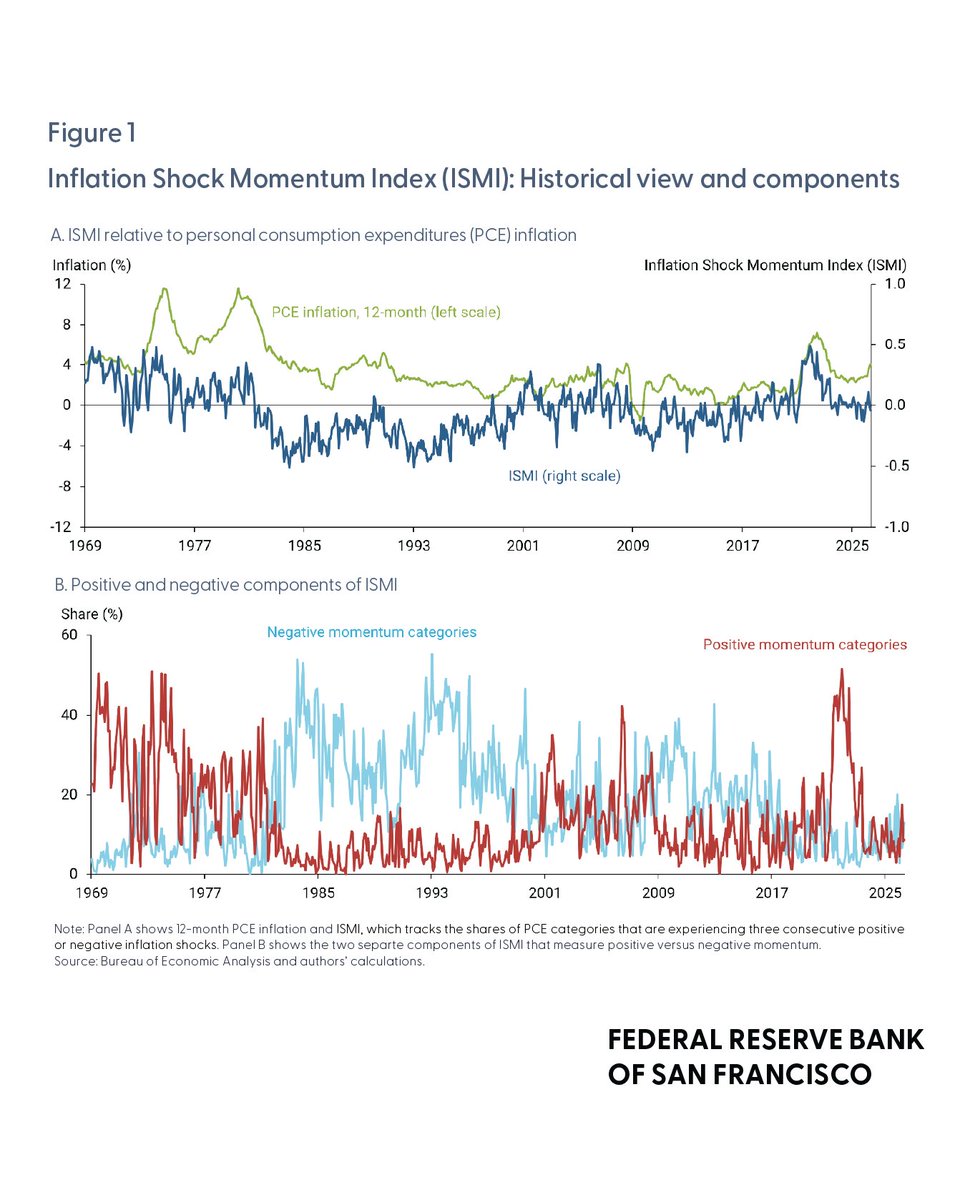
A new indicator can help identify emerging inflationary pressures in real time. https://t.co/q466a5b7u0
Our Economic Letter introduces the Inflation Shock Momentum Index, which improves inflation forecasts at one- to three-year horizons by tracking patterns of inflation shocks.
The latest regional indicators for labor markets and prices are available: https://t.co/IpJHtjZsqP
The San Francisco Fed monitors regional economic indicators to help achieve the Fed system's maximum employment and price stability goals.
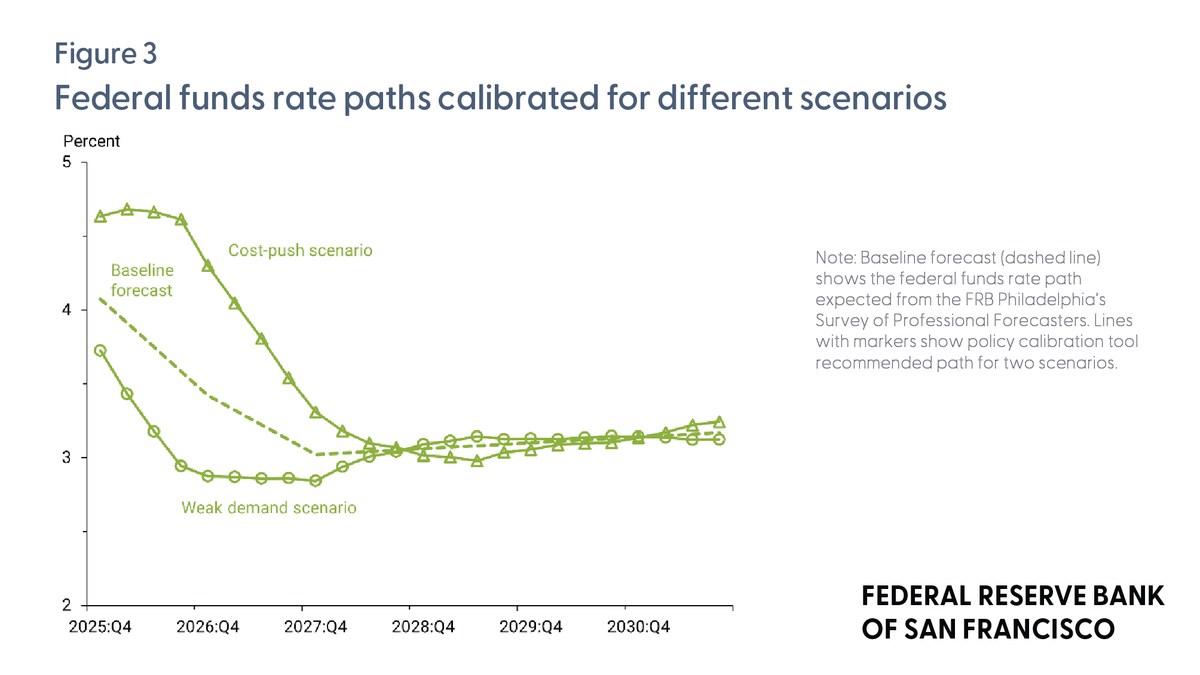
How do policymakers decide on a rate path that best achieves the Fed’s dual mandate of price stability and maximum employment? The SF Fed Policy Calibration Tool can compare multiple policy scenarios, providing new insights during times of uncertainty. https://t.co/bLhpgMvNBc
PCE inflation contributions from goods and services provides monthly updates on price changes for the broad categories of goods and services that U.S. households consume, as measured by personal consumption expenditures inflation.
PCE inflation contributions from goods and services provides monthly updates on price changes for the broad categories of goods and services that U.S. households consume, as measured by personal consumption expenditures inflation.
Professor Schmidt will discuss the different ways that technology influences the demand for labor and workers’ earnings, specifically addressing the distinction between what happens to jobs and what happens to individual people.
Register for our next EERN event on July 1: https://t.co/mT5cjJ8Fy6
Join us for a live presentation on the impact of AI on labor and wages from Lawrence D.W. Schmidt, the Victor J. Menezes (1972) Career Development Associate Professor of Finance at MIT Sloan School of Management.
...pursue new paths, and find new opportunities. We appreciate the energy and enthusiasm they brought to the Bank, are grateful for their hard work, and wish them the best moving forward. https://t.co/BDLAjtIT2u
When they arrived, our research associates brought fresh perspectives and an eagerness to learn from professional economists and others working at the @sffed.
Now, after two years in our research department, they are preparing to take their next steps...
How did the market react to the latest FOMC meeting? Check out our SF Fed's U.S. Monetary Policy Event-Study Database (USMPD), which collects high-frequency changes of interest rates and asset prices around Federal Open Market Committee (FOMC) communication events.
What happens when central banks purchase bonds and other securities with their own reserves? An Economic Letter finds that the mechanism can, to an extent, lessen the effectiveness of asset purchases in lowering the very safest government bond yields. https://t.co/2HKdR67klG
The @sffed's Phoenix Processing Center serves the AZ market. Opened in 2001, the facility marks its 25th year of operations this year and plays a key role in ensuring the stability of the financial system, processing 2 mil banknotes every day for more than 140 banks in the area.
This is a virtual event hosted by the EmergingTech Economic Research Network (EERN). Registration is open to everyone. It will be livestreamed and available as a recording after the event. We invite you to register and submit a question.
Register today: https://t.co/Xqvv8fokvv
On June 24, @RonnieChatterji , chief economist at @OpenAI, and Sylvain Leduc @sylvainecon, director of economic research at the @sffed will discuss the economic value of AI in both professional and personal settings.
Our speakers will cover OpenAI’s latest research on who’s using AI, what they’re using it for, and whether it’s creating real economic value at work and at home.