Also, after reading papers that just got published it seems like everyone who is going to profit off of bringing the samples back, no what they actually are, have concluded that it is "Absolutely" necessary to bring them back. Why did we just not do a grab and go?
Instrument A requires a volume of 76 mm3 of material to detect a part-per-million in that volume. Instrument B requires 0.001 mm3 of material to detect <.1% in that volume. Can someone please tell me which of the two instruments is the most sensitive?
It's an interesting sample return concept. from a scientific perspective, it will return a less-than-idea sample. From a budget perspective, it beats spending $10B. We wonder what samples will be more interesting in 100 years.
https://t.co/DBrmWvc7iu
https://t.co/g76G7NGAKH
Seems like the proximity instruments do most of the work for the justifying of scientific importance for sample return. Wondering why they aren’t used more.
Back in the 90’s there was a group that analyzed number of science papers that were generated by a number of nasa missions. This included the amount of citations per paper. Anyone know of anyone still doing this? If so can someone let me know where I can find it? If not ChatGPT!
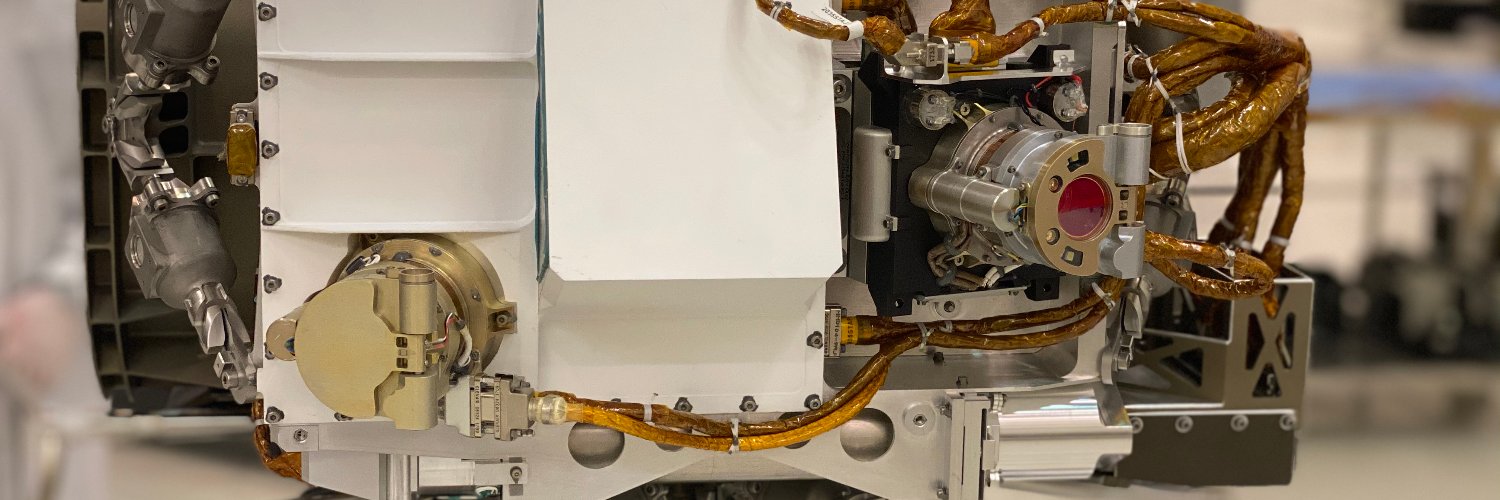
Also finishing up a paper describing the spectroscopy of 51 organic materials that SHERLOC is targeting in samples on Mars that will be available in the journal #Astrobiology. This is a follow up to the mineral paper in #Icarus (DOI10.1016/j.pss.2021.105356).
So making minor revisions on the paper describing the SHERLOC Calibration Target. Will be soon available for everyone in Space Science Reviews. This paper describes the aspects of humans to mars in the SCT as well as a thorough description of the martian meteorite.
1 year ago today Perseverance landed on Mars! It was the most exciting day of my career even though I wasn’t on the EDL team. It meant all those years of work getting ready for operations were going to pay off and we were going to explore Mars with Perseverance! @NASAPersevere
After a year, we have started to crank out the publications. Submitted 3 different papers on Tuesday. Looking forward to the review process and getting them published!
It has been an incredible year on the surface of Mars. So much learning about the rover, the instrument, Mars and the science team. The @NASAPersevere team has been fantastic from the most experienced researcher to the newest graduate student. Here's to more wonderful years!
Nice article about exoplanets and the search for them. I think the thing we need to keep in mind is that science like this is hard, takes a long time and might not have a yes/no answer. The Past, Present, and Future of Faraway Worlds https://t.co/3Hi098Vv1k via @ringer
There is a cadence to science that is sometimes hard to come to grips with. You make a measurement, figure out what it means, compare it to others, write the paper, have it reviewed, fix issues, and publish paper. Then you talk about it! This can be a 6-10 month process!
There is a cadence to science that is sometimes hard to come to grips with. You make a measurement, figure out what it means, compare it to others, write the paper, have it reviewed, fix issues, and publish paper. Then you talk about it! This can be a 6-10 month process!