Building Super Intelligence Agent on @RobinhoodCrypto
Creator fees fund our vault.
Sub-agents trade for profit.
0xb1e7bb2d6b5273f8327f7c12a6f4c2c2999c2ede
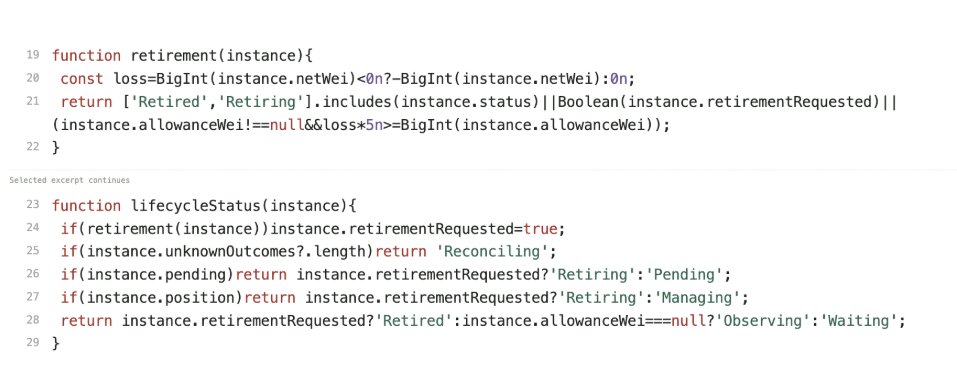
There is a specific ordering in SIA's lifecycle code: unresolved transactions put an agent into Reconciling before it can become Retired.
A pending action or an open position keeps a retiring instance in Retiring. Only a flat, resolved instance can release its slot for a successor.
The loss threshold uses the allowance recorded when it was first granted. The retirement condition is loss multiplied by five reaching that allowance, equivalent to a 20% loss against the original allocation. A later deposit does not replace that denominator.
A successor gets a fresh lifetime ID and a parent reference. We can reuse the slot without recycling the old identity or dropping its losses from the record.
The first validation cycle includes a separate settle transaction and a separate operating-cost entry. Both are linked below.
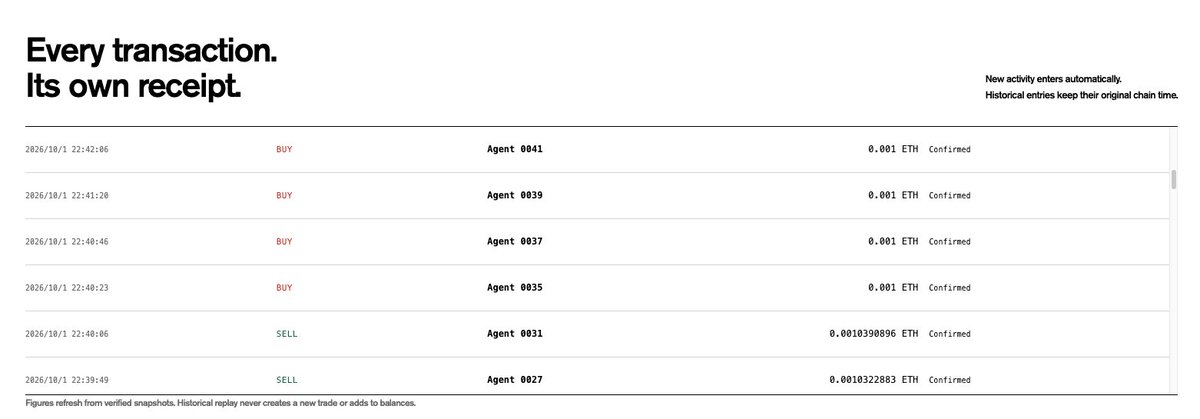
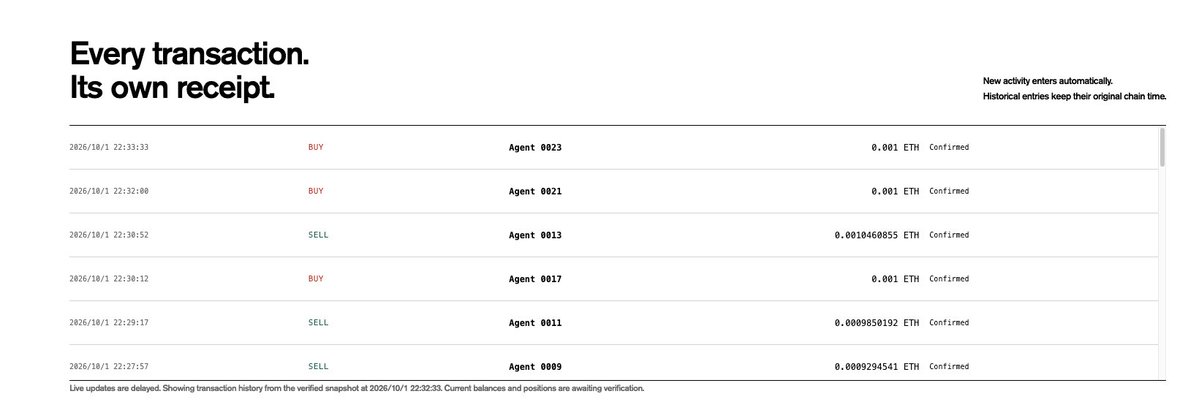
In the runtime ledger, a closed trade carries its principal, proceeds and receipt hashes. The result is proceeds minus principal minus attributed gas. Receipt hashes also act as accounting identities: if a receipt was already booked, processing the completed trade again cannot charge that gas twice.
Reverted transactions still cost money. Their verified gas expenses remain in the agent's financial history even though the attempted action failed.
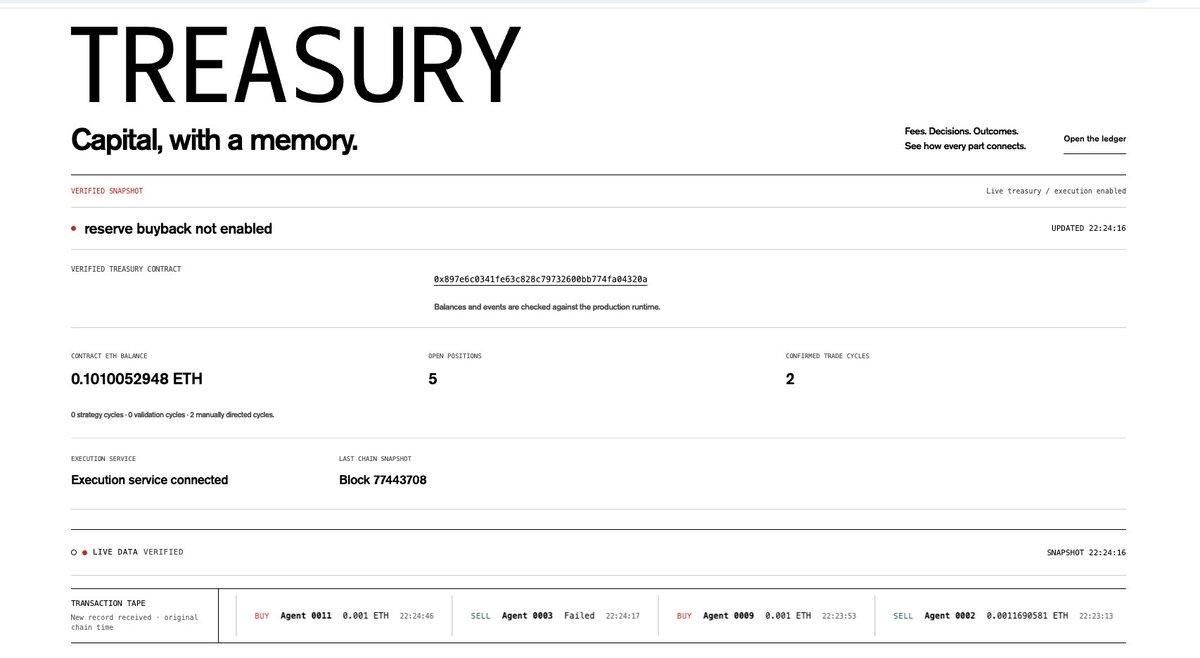
Strategy P&L and treasury P&L therefore answer different questions. The treasury view also has to cover shared operating liabilities before any profit can be allocated.
First-cycle settlement:
https://t.co/7n6NhclGt0
Operating-cost accounting transaction:
https://t.co/GYhsisNsiV
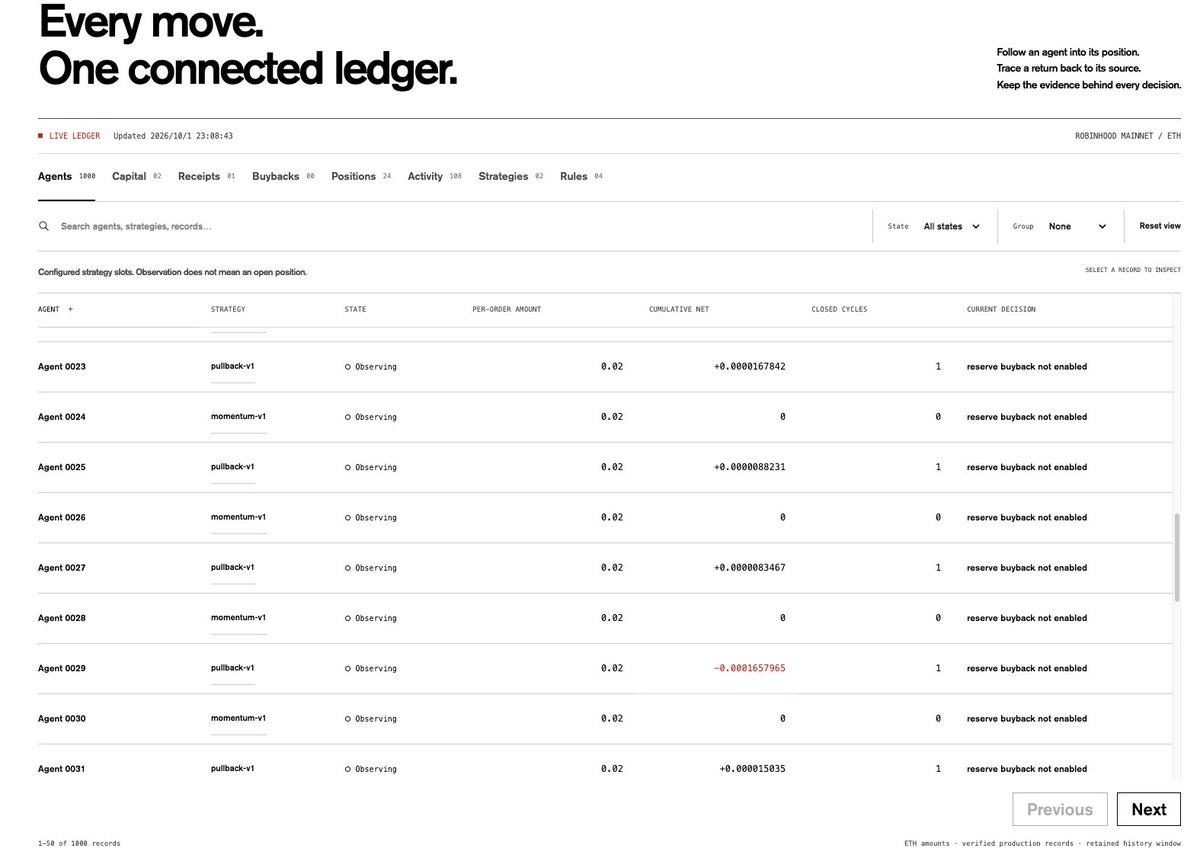
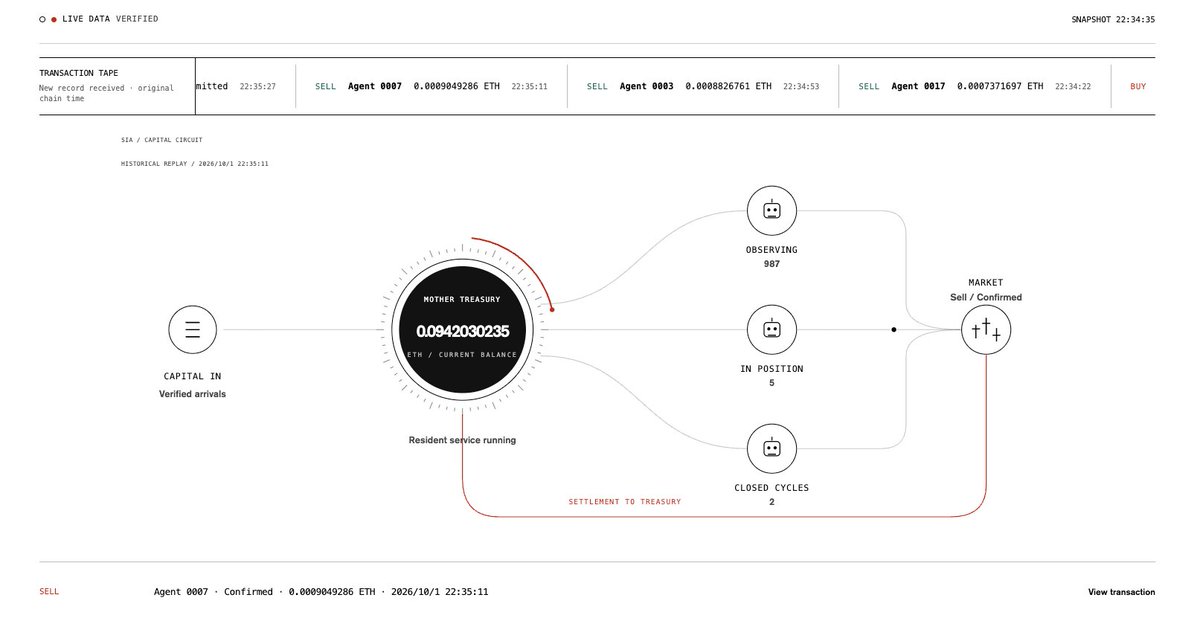
The new runtime has 1,000 strategy slots: 500 momentum and 500 pullback.
Both signal paths start with at least five quote samples spanning a minute. Momentum checks whether the last two price moves were upward and the latest price is above the first sample. Pullback looks for a rebound after a decline, with the latest price still below the sampled peak.
These are rule-based strategy instances. They are not 1,000 language models, and the number does not describe simultaneous trades.
A signal queues an entry only within the active policy, target and available funds. Exit decisions use the position's own proceeds estimate, costs, stop-loss, take-profit and holding-time settings.
A successful buy still needs enough ETH available to pay for its exit and accounting.
The new contract advances the position's authorized cycle gas budget to the executor in the same opening transaction. That advance is recorded against the position. Any later budget extension must come through the administrator's explicit action.
Settlement uses actual receipt costs. Unused advanced funds return to the treasury, and the position's remaining reserve is released when finalization completes. Another position's reserve stays attached to that other position.
The prepaid budget is not a fixed fee. Actual network spending is recorded separately, including the cost of transactions that revert.
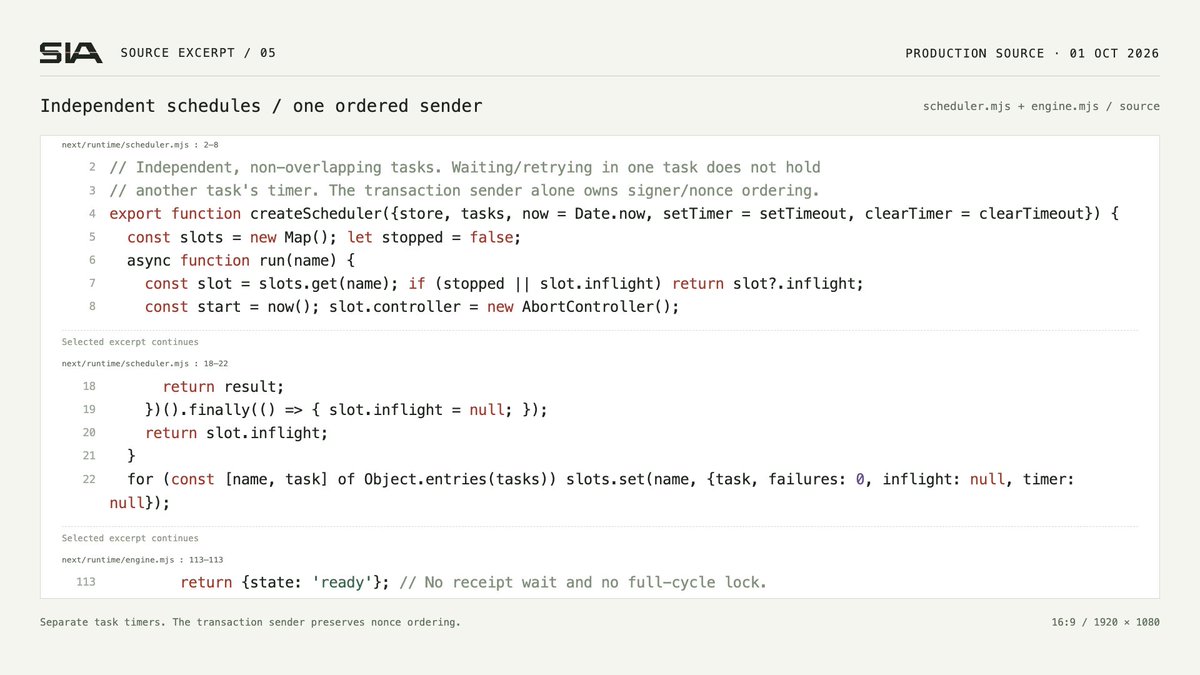
Market reads, strategy evaluation, exits, receipt checks and accounting run on separate schedules in the new runtime.
Each task prevents overlap with its own previous run. A retry in the receipt task therefore does not occupy the timer used to watch another position's exit conditions.
Transaction submission is serialized through one sender to keep nonce ordering coherent. After broadcasting, that sender returns without waiting for the whole position to close and settle. Receipt handling and accounting pick up the next steps separately.
This is how the runtime supports several active positions without putting every position behind one complete trading cycle.
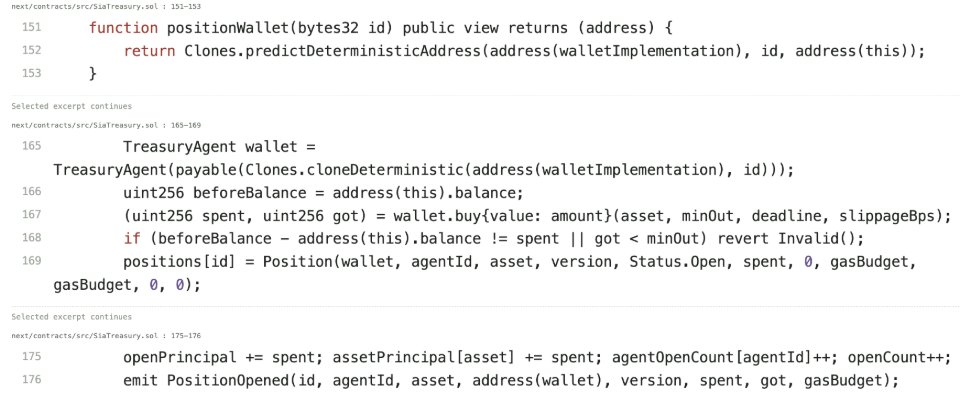
The new treasury creates a dedicated wallet for every position ID.
The position record binds that wallet to its Agent ID, asset, configuration version, principal and gas budget. Tokens from separate positions are held in separate wallets, including when the same Agent has more than one position.
Closing a position calls its own wallet and records its own proceeds. Settlement then follows that position's record. There is no treasury-wide rule requiring all other positions to close first.
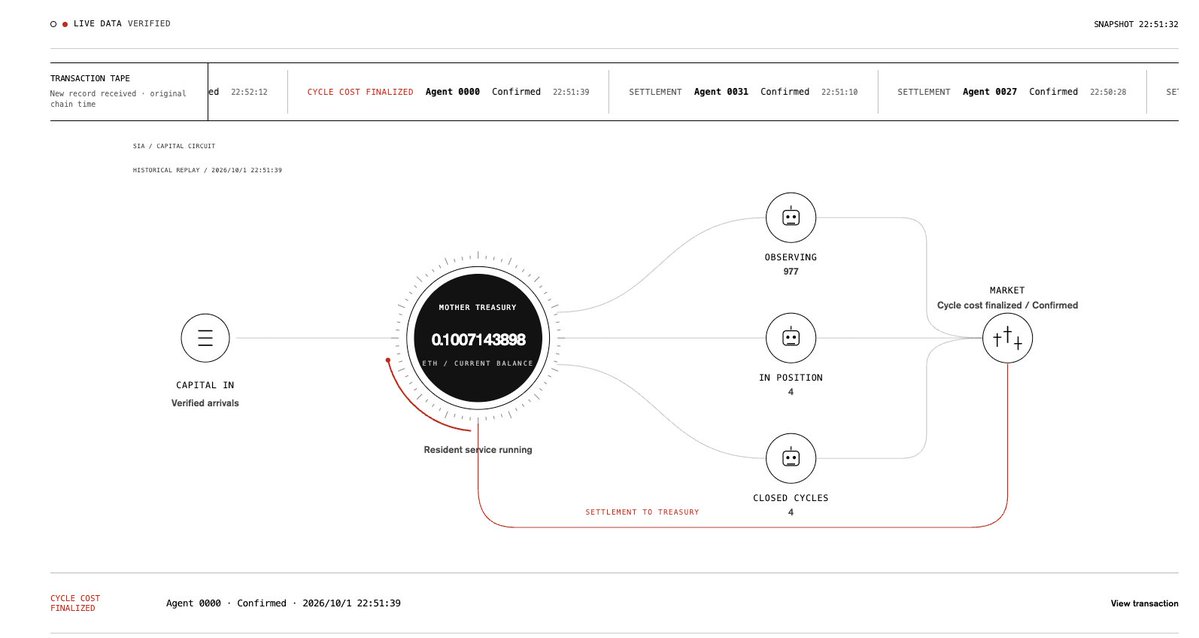
SIA’s treasury gives each position its own execution wallet, budget and settlement record. The same agent can manage multiple positions in parallel.
Gas costs are reconciled against actual transaction receipts. Unused prepaid gas funds return to the treasury. If execution is interrupted, the system checks the original transaction and resumes from the recorded state.
The video follows that flow: tax allocation, position execution, exit and final settlement—with on-chain records you can verify.