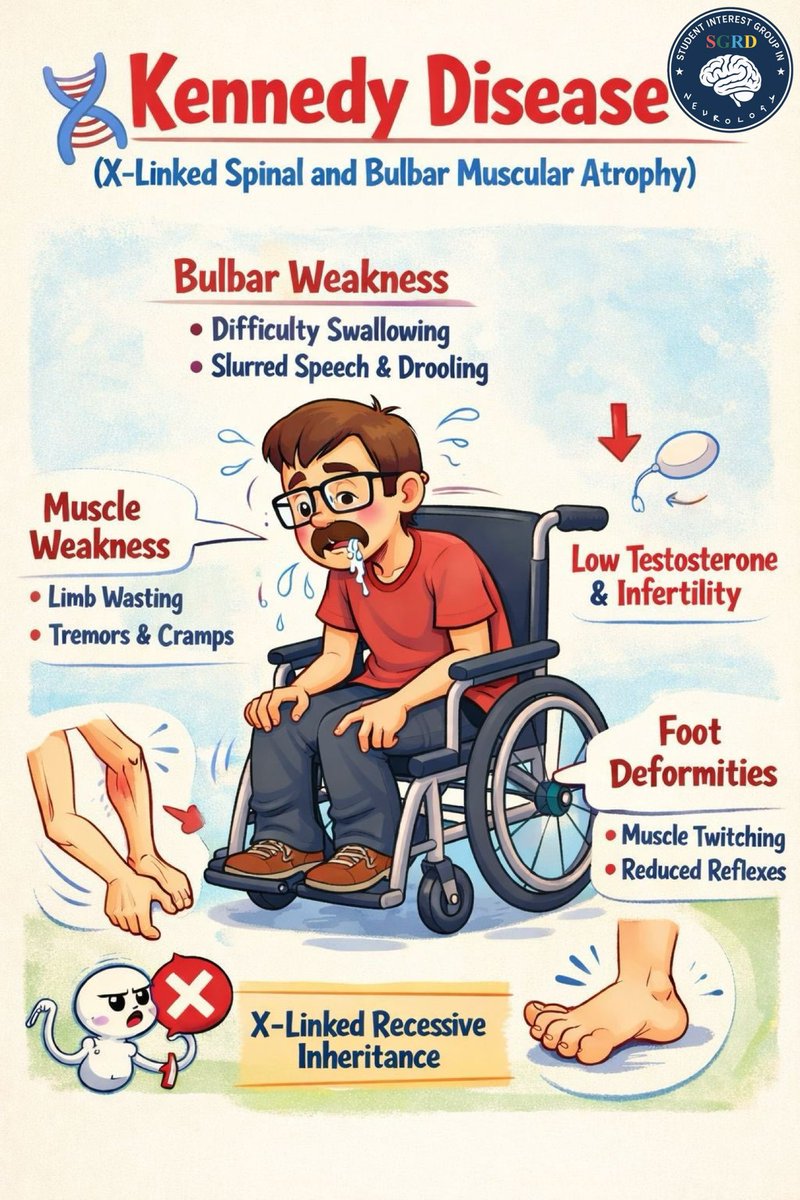
Kennedy disease, also called X-linked spinal and bulbar muscular atrophy (SBMA), is a rare inherited lower motor neuron disorder seen almost exclusively in males.Clinically, patients present in adulthood with slowly progressive muscle weakness, especially of proximal limb muscles, along with bulbar symptoms such as dysarthria, dysphagia, and tongue fasciculations.
Other characteristic features include muscle wasting, cramps, tremors, reduced deep tendon reflexes, and signs of androgen insensitivity like low testosterone and infertility. The disease progresses gradually and is not rapidly fatal, which helps distinguish it from ALS.
Although Kennedy disease primarily affects lower motor neurons, it also involves the brain, especially the brainstem. Degeneration occurs in the motor nuclei of cranial nerves (IX, X, XII) located in the medulla, explaining bulbar weakness, slurred speech, and difficulty swallowing.
In addition, mutant androgen receptors accumulate abnormally in neurons of the brain and spinal cord, leading to neuronal dysfunction and apoptosis.
This combined spinal, bulbar, and central neuronal involvement gives Kennedy disease its distinctive clinical picture.
Mirror neurons are your brain’s built-in empathy system 🧠
They fire not only when you act - but also when you watch someone else do the same. That’s why you instinctively flinch when someone gets hurt, smile when others smile, or learn simply by observing.
In a way, your brain is constantly “mirroring” the world - helping you connect, understand, and grow through others’ experiences.
Empathy isn’t just emotional… it’s neurological.
Stress is a natural part of life, but ignoring it can affect both your mind and body. Taking small steps like talking to someone, practicing Breathing Exercises, or simply giving yourself time to rest can make a big difference. Remember, your mental well-being matters every day - not just on World Mental Health Day - so take a moment to pause, breathe, and care for yourself.
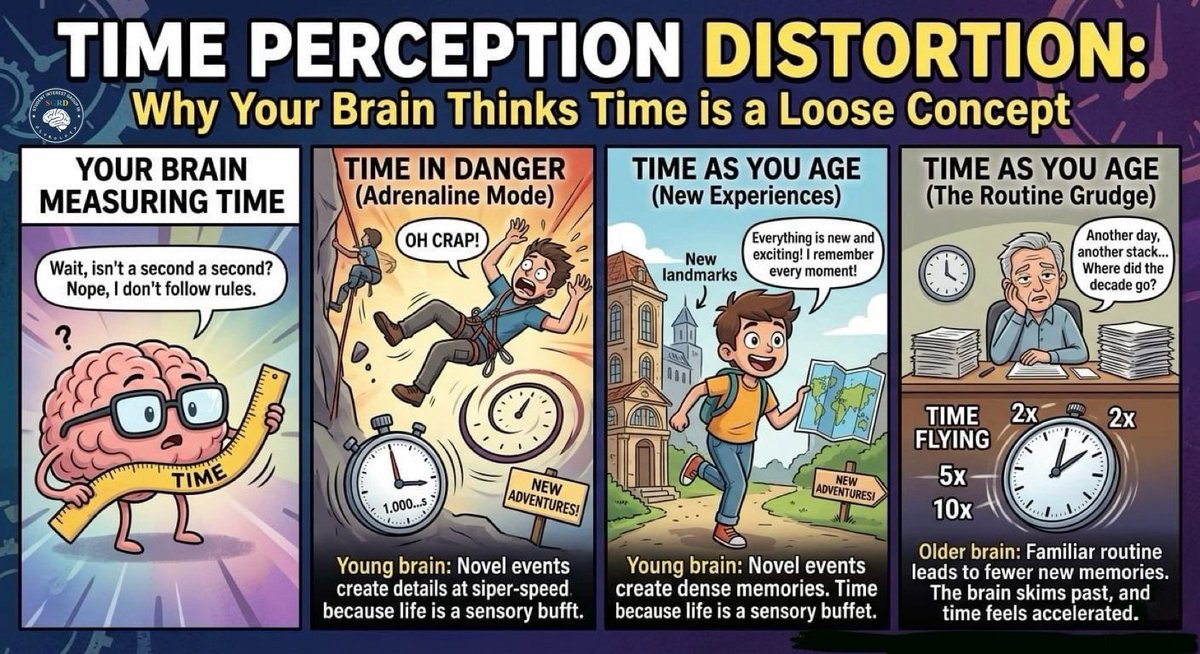
⏳ Time Isn’t Real (At Least, Not in Your Brain)
Ever notice how a scary moment feels slow motion… but years seem to fly by? That’s not just in your head—it’s because of your head.
🧠 Your brain doesn’t measure time like a clock. It measures experience.
⚡ In dangerous situations:
Your brain goes into high-alert mode, processing more details per second. The result? Time feels like it slows down.
🎢 As you get older:
Fewer things are new. Your brain records less “fresh” information, so time feels like it’s speeding up.
📸 Think of it like this:
Childhood = a highlight reel full of new scenes.
Adulthood = fewer snapshots, more repetition.
💡 The takeaway:
If you want life to feel longer… do more things that are new, challenging, and memorable.
Because time doesn’t just pass—
it’s something your brain creates.