Afortunadamente ya se acaba esta separación. Regreso.
Pero dentro de mí está la noche de la gran separación,
dentro de mí la amargura de cuando ya no me tengas,
dentro de mí tu soledad...
🐦Nazim Hikmet
🧘It is only when the mind is free from the old that it meets everything anew, and in that there is joy☀️
🧘We carry about us the burden of what thousands of people have said and the memories of all our misfortunes. To abandon all that is to be alone, and the mind that is alone is not only innocent but young -- not in time or age, but young, innocent, alive at whatever age -- and only such a mind can see that which is truth and that which is not measurable by words☀️
—- J. Krishnamurti.
—Rafael Silveira 🎨 “Free Mind"
On this day in 1915, Saul Bellow was born, a man who probably understood better than almost any other writer of the twentieth century how difficult it is to be intelligent, sensitive, and alive all at once.
He was born into a family of Russian Jewish immigrants who arrived in North America carrying the old luggage of all migrants: a few suitcases, many hopes, and the conviction that the future had to be better than the past.
His home was filled with languages, memories, religious traditions, family expectations, and the constant feeling that a person could belong to more than one world at the same time.
Perhaps that is where Bellow began.
Between the old world and the new.
Between the street and the library.
Between pragmatism and metaphysics.
"A man can forget what he wants to say, but he never forgets what he wants to be."
That is what his characters pursue.
Not success.
Not wealth.
Not fame.
Themselves.
In novels such as "The Adventures of Augie March", "Herzog", "Humboldt's Gift" and "Mr. Sammler's Planet", Bellow created a new literary hero: the intellectual who is simultaneously brilliant and confused, educated and lost, philosophical and completely incapable of organizing his own life.
In other words, a human being.
And here Bertrand Russell would probably smile.
Because Bellow never placed much faith in ideologies.
He believed in human beings.
With all their contradictions.
With all their magnificence.
With all their absurdity.
"Each of us is a little comic, a little tragic, and entirely incapable of seeing the difference in time."
This is not pessimism.
It is observation.
His philosophy of life was simple and uncomfortable.
Human beings cannot live on ideas alone.
But without ideas, life becomes unbearably shallow.
That is why his novels are filled with conversations about literature, history, religion, politics, love, death, and meaning, because Bellow understood something that the modern world often forgets:
that intellect is not an ornament.
It is a way of survival.
Love also occupies a central place in his life.
Five marriages.
Countless disappointments.
Much passion.
Much hope.
And enough material for several novels.
Bellow seems to have spent his life trying to understand a simple mystery: why people who so desperately seek closeness are so remarkably talented at hurting one another.
Perhaps that is why the women in his books are never merely romantic interests.
They are forces of nature.
Sources of chaos.
Sources of salvation.
Sometimes both at once.
"Love is the only reasonable madness."
The more I read Saul Bellow, the more it seems to me that he never wrote novels about America.
Nor about Chicago.
Nor about intellectuals.
He wrote about human consciousness.
About that restless, brilliant, and often comic creature that constantly searches for meaning in a world that rarely offers ready-made answers.
And perhaps that is why Bellow remains so contemporary.
Fashion changes.
Politics change.
Technology changes.
But the human soul continues to ask the same questions.
And great literature begins precisely there.
Raphael's 1504 painting 'The Dream of a Knight" was inspired by Scipio's dream. In this vision, a young knight must choose b/t two female symbols: Life of Virtue [book/sword] or Life of the Senses [myrtle] yet the perfect knight should live in harmony with Mind, Courage & Desire.
«El distanciamiento entre la obra de arte y la realidad se ha vuelto demasiado grande, ya no hay realidad que me interese, y sé que podría pasar el resto de mi vida copiando una silla».
Alberto Giacometti.
Родная земля — самое великолепное, что дано для жизни. Ее мы должны возделывать, беречь и охранять всеми силами своего существа.
〰️Паустовский Константин Георгиевич
Όλοι έχουν προβλήματα, & οι αισιόδοξοι..
Ο τρόπος αντιμετώπισης τους κάνει την διαφορά..
Δεν αντιδρούν άμεσα, σκέφτονται ψύχραιμα, αποφασίζουν με βάση την λογική..
Όχι επειδή είναι "καλύτεροι", αλλά επειδή η παρόρμηση οδηγεί στο χάος..
Ε.Κ.
Καλησπέρα σε όλους.!! ☺️😊🌷🪷🫶🙏🩷
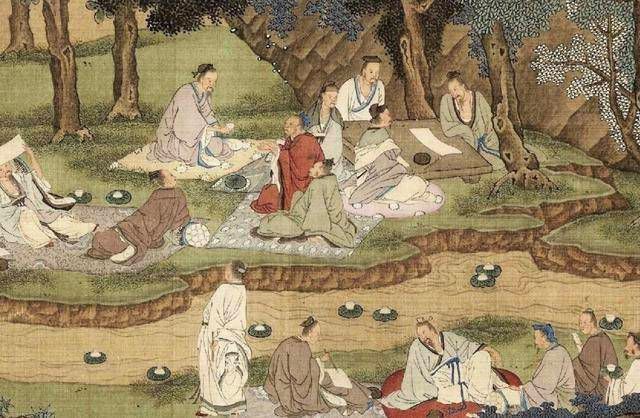
At the Winding Stream Party, 曲水流觴, poetry arrives with the wine.
On the third day of the third lunar month, during the Shangsi Festival, scholars gather beside a bending stream. Floating cups drift with the current; when one stops before a guest, the moment becomes 1/3
#art
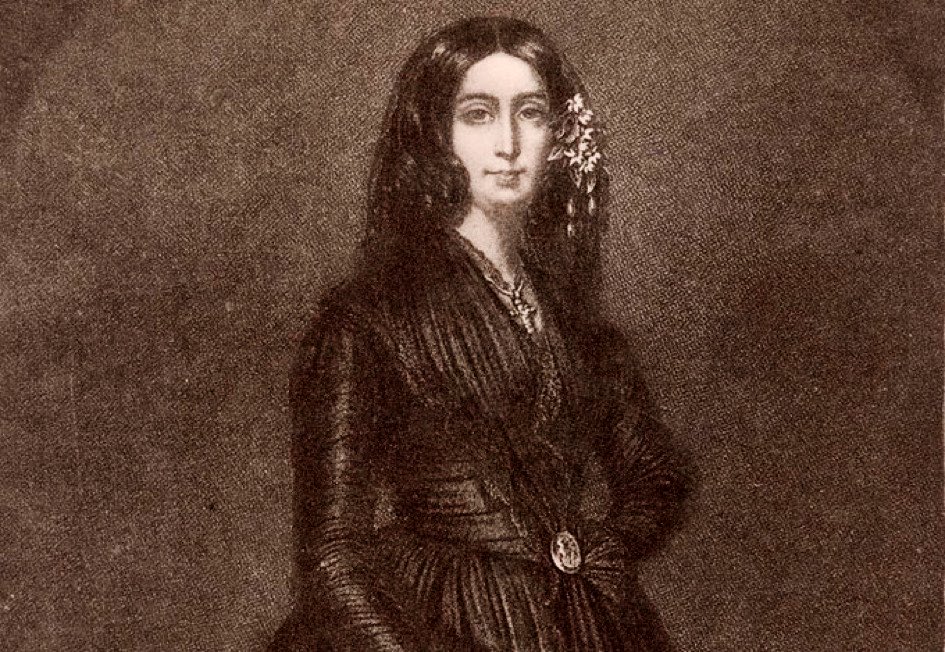
Ero l’uomo perché ero più alta.
Mia sorella decideva
quando dovevamo mangiare.
D’ogni tanto, avrebbe avuto un bambino.
2.
Poi è apparsa la mia anima.
Chi sei, dissi.
E la mia anima disse,
sono la tua anima, l’affascinante sconosciuto.
Louise Gluck
cet instant
où je me suis éveillé
au cœur de la nuit
tout reposait
n'était que silence
et la vie ne m'effrayait plus
Charles Juliet • Lumière d'avant-printemps (L'opulence de la nuit)
"Hay una emoción del tiempo y de las cosas que sólo nos deparan las fotografías, una forma de la experiencia o del recuerdo que sin ella no sería posible, que no puede encontrarse en ningún otro arte".
Antonio Muñoz Molina
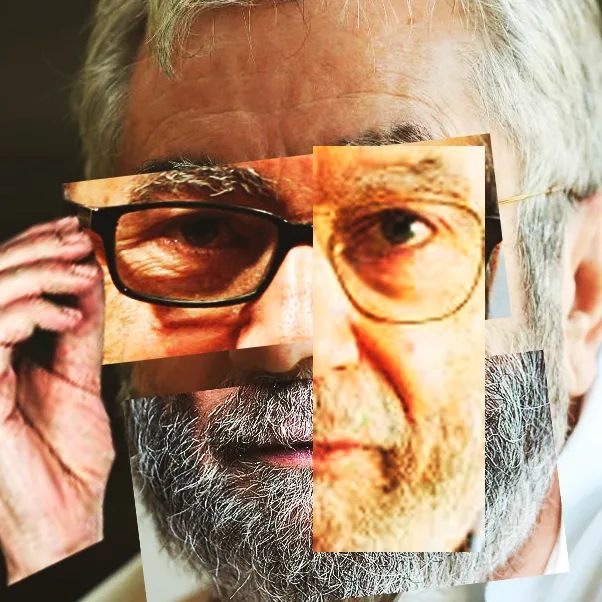
«El arte es el susurro de la historia que se oye por encima del ruido del tiempo […]. Todas las definiciones verdaderas del arte son circulares, y todas las definiciones falsas del arte le atribuyen una función específica».
#JulianBarnes#PremioPrincesadeAsturiasLetras2026


![VeraCausa9's tweet photo. Raphael's 1504 painting 'The Dream of a Knight" was inspired by Scipio's dream. In this vision, a young knight must choose b/t two female symbols: Life of Virtue [book/sword] or Life of the Senses [myrtle] yet the perfect knight should live in harmony with Mind, Courage & Desire. https://t.co/2CtDe4enXl](https://pbs.twimg.com/media/HKehD1rXQAALe4o.jpg)






![AidaBSanchez's tweet photo. «El arte es el susurro de la historia que se oye por encima del ruido del tiempo […]. Todas las definiciones verdaderas del arte son circulares, y todas las definiciones falsas del arte le atribuyen una función específica».
#JulianBarnes
#PremioPrincesadeAsturiasLetras2026 https://t.co/Lcsq4rgToe](https://pbs.twimg.com/media/HKfnsfAXMAEaGDH.png)


