@IngrahamAngle If you are used to being arrogant, sometimes you need to be a little more low-key! You are just being stubborn. If you don’t have a production line, how can you refine it with your mouth?
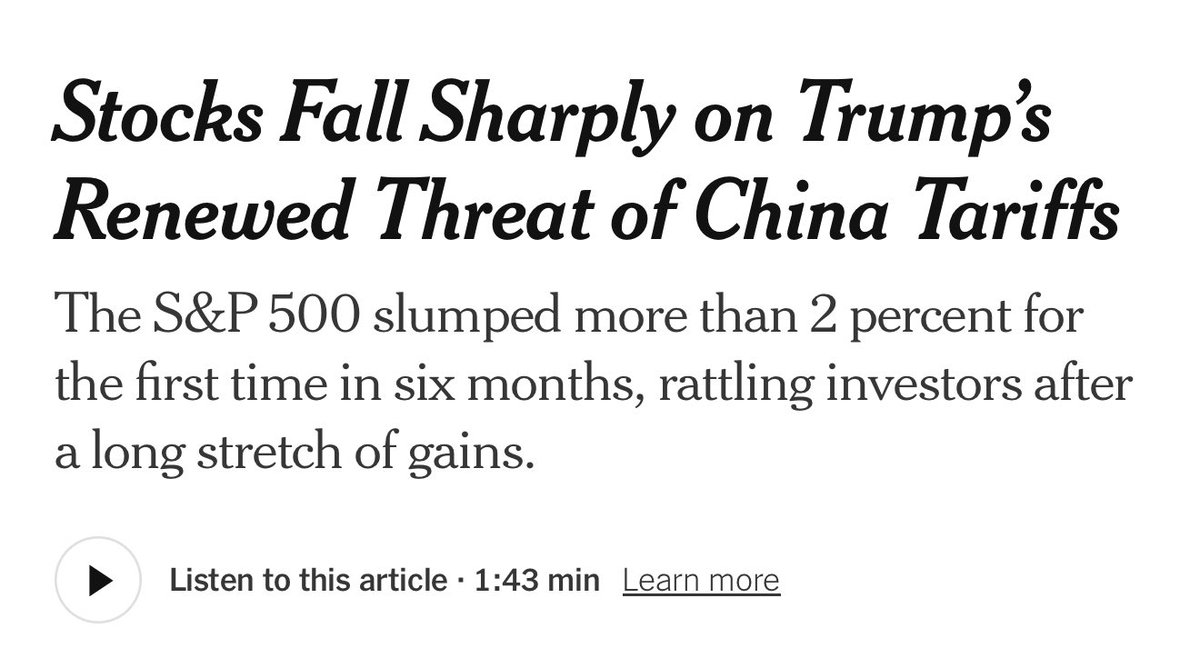
Mr. President is right in admitting that the 100% additional tariffs on Chinese goods are not sustainable. But his claim that China forced him to do so is completely unfounded. China’s rare earth export controls are not a provocation against the US. Instead, they are a response to Washington’s actions—such as expanding sanctions against Chinese companies even after the two sides reached an agreement, and imposing port fees on Chinese vessels—which have undermined the deal. In other words, it was the US side that forced China to take countermeasures, not China that took the initiative to pressure or coercion the US. This cause-and-effect relationship must be made clear.
China’s Export Controls Mirror U.S. Strategy, and Washington Shouldn’t Cry Foul
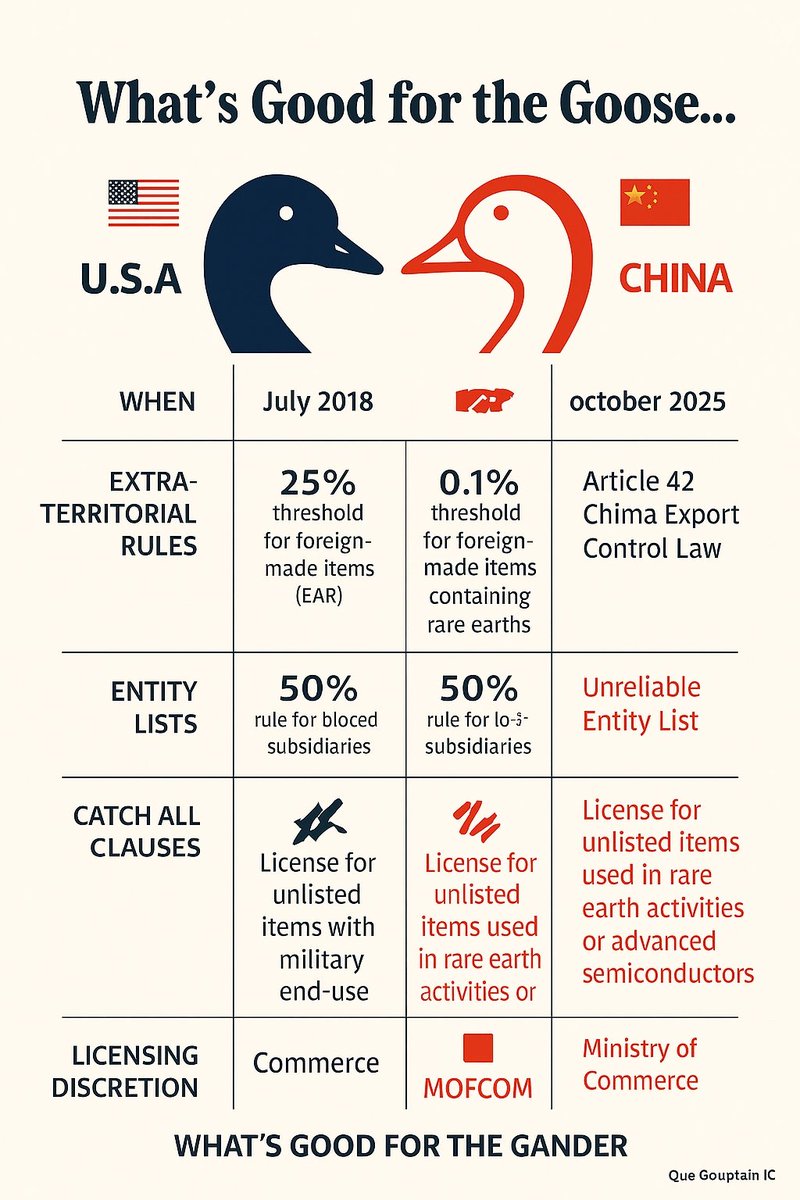
What’s Good for the Goose, is Good for the Gander! If you cannot take punches - don't jump into the ring.
On October 9, 2025, China unveiled sweeping new export control rules targeting rare earths, semiconductors, and AI technologies. The move sent tremors through global supply chains and triggered predictable outrage from Washington. But let’s be clear: this is not a rogue maneuver—it’s a mirror. China is playing by the very rulebook the United States wrote.
For years, the U.S. has wielded export controls as a strategic weapon to contain China’s technological rise. From blacklisting Huawei and SMIC to blocking access to advanced chipmaking tools, Washington has used its dominance in semiconductor equipment and IP to choke off Chinese innovation. Now, Beijing is returning the favor—with precision.
🪞 A Strategic Echo of U.S. Controls
China’s new rules are not just reactive—they’re reflective. Consider the parallels:
- Extraterritorial reach: The U.S. Export Administration Regulations (EAR) apply to foreign-made items with ≥25% U.S. content. China’s new rules apply to foreign-made products with just ≥0.1% Chinese-origin rare earths or tech. That’s not just mimicry—it’s escalation.
- Entity-based restrictions: The U.S. “50% rule” blocks subsidiaries of blacklisted firms. China now applies the same logic to its own controlled entities. If a firm is on Beijing’s watchlist, its subsidiaries are automatically denied licenses.
- Catch-all clauses: The U.S. catch-all rule blocks exports not explicitly listed if they’re destined for military use. China’s version now covers any item—even consulting services or IP licensing—if it relates to rare earth production or AI with military potential.
- Licensing discretion: Just like the U.S. Commerce Department, China’s Ministry of Commerce (MOFCOM) now reviews sensitive exports case-by-case, with broad authority to deny.
🪶 What’s Good for the Goose…
There’s an old proverb: “What’s good for the goose is good for the gander.” If Washington believes it has the sovereign right to weaponize supply chains in the name of national security, then Beijing has the same right. Export controls are no longer a one-way street—they’re a geopolitical norm.
The U.S. cannot cry foul when China uses the same tools to protect its strategic interests. Complaining about Chinese restrictions on rare earths while maintaining bans on chipmaking tools is not just hypocritical—it’s strategically incoherent.
🔄 The New Normal: Reciprocal Containment
This is the era of reciprocal containment. The U.S. controls lithography machines; China controls rare earth magnets. The U.S. blocks AI chips; China blocks AI algorithms. The symmetry is striking—and it’s here to stay.
Rather than lamenting China’s assertiveness, Washington should recognize the new reality: export controls are now mutual leverage points. The question is not whether they’re fair—it’s whether they’re effective. And whether both sides are prepared for the long-term consequences of a fragmented tech ecosystem.
🧭 Strategic Clarity, Not Strategic Whining
If the U.S. wants to maintain technological leadership, it must invest in domestic capacity, diversify supply chains, and engage allies—not just complain when China plays the same game. Export controls are a double-edged sword. When wielded wisely, they protect national interests. When wielded hypocritically, they erode credibility.
China’s October 9 rules are not a provocation—they’re a reflection. And if the goose can dish it out, the gander should be ready to take it.
The big Trade Meeting in Europe between The United States of America, and China, has gone VERY WELL! It will be concluding shortly. A deal was also reached on a “certain” company that young people in our Country very much wanted to save. They will be very happy! I will be speaking to President Xi on Friday. The relationship remains a very strong one!!! President DJT
(TS: 15 Sep 08:15 ET)
India and Pakistan have today worked out an understanding on stoppage of firing and military action.
India has consistently maintained a firm and uncompromising stance against terrorism in all its forms and manifestations. It will continue to do so.