The next meeting of the Saint John Astronomy Club is this Saturday, November 4, at 7pm in the Rockwood Park Interpretation Centre.
Agenda
1. Imaging sunrise/moonrise at Split Rock (T Almon)
2. Observing reports & Outreach
3. Albedo (M West)
4. Show & Tell, Buy & Sell
5. Business
8/8 you will not realize it until several hours later.
Saturday, October 21 from 7 - 10 pm at Irving Nature Park (Back-up October 22): International Observe the Moon Night
1/8 The make-up meeting of the Saint John Astronomy Club will be this Saturday, October 14, at 7pm in the Rockwood Park Interpretation Centre. No need to wear make-up.
...
7/8 the solar system in motion - a rock 3500 km wide travelling at 1 km per second. Some eclipse glasses will be available for sharing. DO NOT LOOK AT THE SUN WITHOUT THE PROPER EYE PROTECTION! Temporary or permanent loss of eyesight could occur without feeling pain and ...
Astronomy Club meeting cancelled.
This evening's meeting is cancelled as the rain and wind will be worsening during that time. A decision will be made whether to have the meeting next weekend.
Enjoy your family weekend!
Curt
6/6 There will be public observing of the partial solar eclipse on October 14 at the Irving Nature Park in Saint John. Questions? Contact Curt Nason at [email protected].
1/6 This Week in the Solar System
Saturday’s sunrise in Moncton is at 7:25 am and sunset will occur at 6:48 pm, giving 11 hours, 23 minutes of daylight (7:29 am and 6:53 pm in Saint John). Next Saturday the Sun will rise at 7:34 am and set at 6:35 pm, ...
5/6 The Saint John Astronomy Club meets at the Rockwood Park Interpretation Centre at 7 pm this Saturday, and the Fredericton Astronomy Club meets at the UNB Forestry & Earth Sciences Building at 7 pm on Tuesday. ...
1/7 We will be monitoring the forecast for this evening and making a call around noon whether to cancel the meeting, postpone or go ahead. - Curt
This Week’s Sky at a Glance, 2023 October 7 – October 14
With moose season and the Moon out of the way, this weekend might be ...
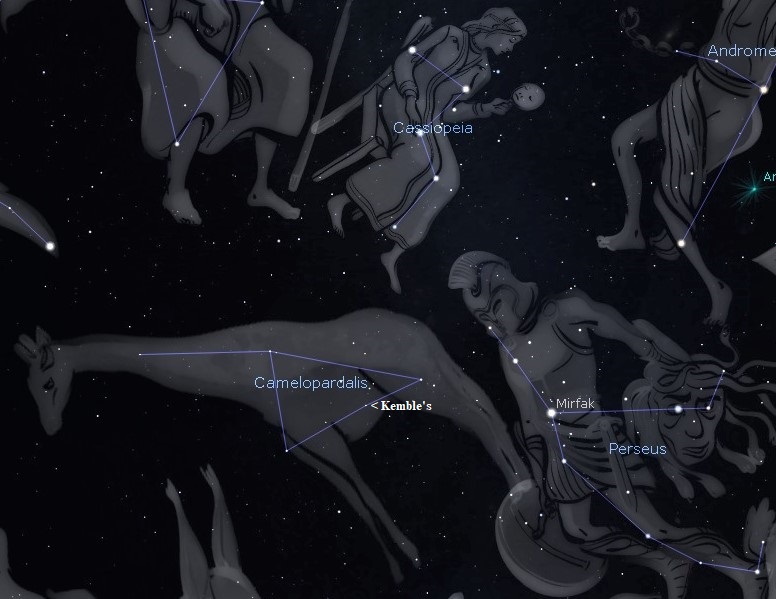
6/7 your way there is to imagine a line across the top stars of Cassiopeia’s W shape, right to left, and extend it an equal distance. Another is to extend an equal length line from Algol to Mirfak, the two brightest stars in Perseus. Near one end of this asterism ...