Anthropic Reveals a Strong ROI Case for AI That’s Hard to Ignore
Unfortunately, it's cybercrime.
So while CFO's in most industries are struggling to see ROI on their AI rollout in their quarterly reports.
Cybercrime is literally making out like bandits.
DNTLS inverts the economics of agent swarm attacks against the attacker.
Part 3 of the Cybersecurity Siege Economy explains how.
The Cybersecurity Siege Economy - Part 3 https://t.co/79wAZhkWSN
@davidcowan Hi David. You wrote, “Securing AI agents has become the defining cybersecurity challenge of 2026.”
I think the defining challenge is securing everything else from malicious AI agents.
Let’s go there.
@OneOverNever@EpochAIResearch I don't think you're familiar with the objective theory of cost. You borrow $100 to sell me something for $1 today, and tomorrow you borrow $1000 to sell me the same thing for $0.25 then its COST is increasing while its apparent value decreases. Lets see this graph fully costed.
My second installment on the Cost of the Cybersecurity Siege Economy is now published:
The Cybersecurity Siege Economy - Part 2 https://t.co/NyOhC5ZMNt
I’ve been asked to substantiate why I think the open Internet is heading toward a Cybersecurity Siege Economy.
So I wrote the full argument.
The Cybersecurity Siege Economy - Part 1 https://t.co/zl7eyELAq9
This is just a webpage proving the networking works. It is not tied to HTTP. The same model can secure agents, services, devices and any other peer communication.
The part I like most is that none of the web3 machinery is visible to the user.
They just connect.
Is universal, global zero trust networking possible? Yes it is.
For the last six months or so, I have been working on a decentralized solution for just that.
Today we got it working end to end.
No certificate authority in the trust path. No necessary web2 gateway.
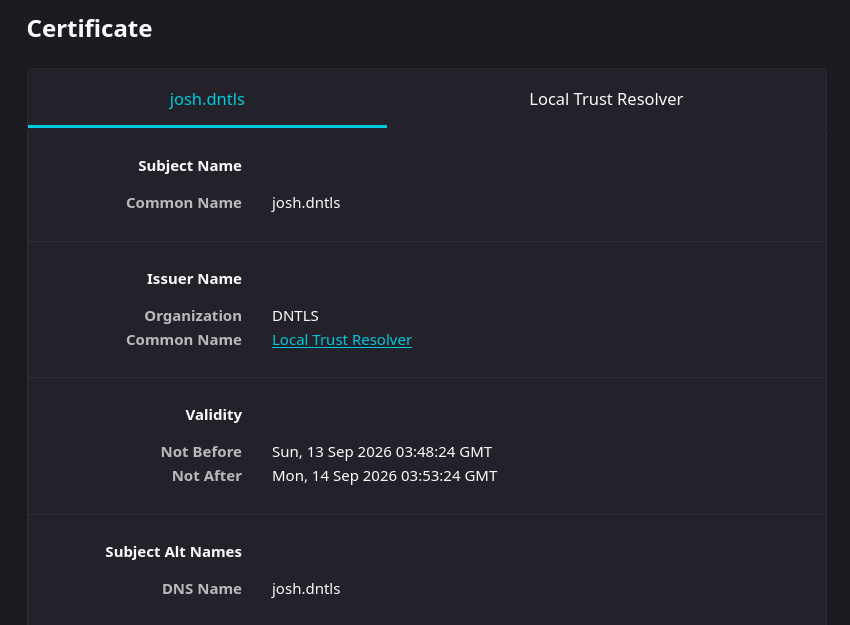
DNS is not part of naming, peer lookup or security. We fake DNS locally for the browser because browsers expect it, but a native client would not need that.
In the screenshots I connect to the same peer both through a relay and directly over IPv6. The browser doesnt know or care how. The networking figures it out transparently based on what the host requires.