I'm a cardiologist. Erling Haaland just scored twice to knock Brazil out of the World Cup. And the fuel behind the freight train is the most fascinating nutrition story in sports — because it quietly rejects almost everything the "performance nutrition" industry sells.
No protein powders. No shakes. No engineered supplements. Just real food — around 6,000 calories a day of it.
Beef heart. Beef liver. Tomahawk steaks. Sea bass. Eggs on sourdough. Raw honey. And milk he drives to a Cheshire farm to buy fresh from grass-fed cows.
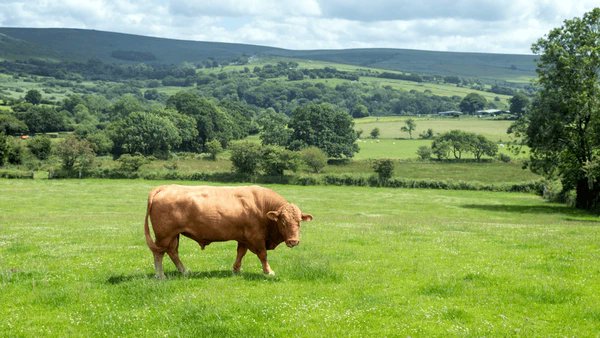
He said it plainly in his documentary: "People say meat is unhealthy. Which meat? The one from McDonald's — or the local cow eating grass right over there?"
That distinction is the whole thing. And as a cardiologist, it's the distinction I wish every patient understood.
Here's the science under the eccentricity.
Organ meats — heart and liver — are the most nutrient-dense foods on earth. Beef liver is arguably nature's original multivitamin: staggering levels of B12, folate, vitamin A, copper, and iron in a form your body absorbs far better than any pill. Beef heart is loaded with CoQ10 — the exact cellular-energy molecule I recommend to patients, the one statins deplete, the one that powers every heartbeat. Our ancestors prized these organs and ate the muscle meat second. We reversed it, then wondered why we needed supplements.
His food philosophy, in his own words: "Eat real, with as few ingredients as possible." That is, essentially, the entire evidence base for cardiovascular nutrition compressed into six words.
Now — the honest caveats, because I'm a physician, not a hype man.
6,000 calories works for Haaland because he's a 6'4" elite athlete burning through it across a 50-game season. For a sedentary adult, that's a fast track to metabolic disease. Copy the principle, not the portion.
Raw milk carries genuine infection risk — the CDC and European food agencies warn against it, and I don't recommend it for most people. Grass-fed and pasteurized captures nearly all the benefit without the danger.
And that much red meat isn't automatically optimal for everyone. Your ApoB, your Lp(a), your genetics, your metabolic health all determine how your body handles saturated fat. I've written about this — same diet, different DNA, different arteries.
But strip away the extremes and Haaland is teaching a lesson worth learning: the "performance nutrition" aisle is largely a marketing invention. The most powerful fuel on earth isn't in a tub. It's food your great-grandmother would recognize.
There's a detail I love most. Despite earning £525,000 a week, he still cooks his own food. And before big home games, he eats his father's homemade lasagne — the same father, a former Premier League player, whose legacy he told himself as a boy he'd surpass. The man he's trying to eclipse is still in the kitchen, feeding the monster he helped build.
Talent gets you noticed. Discipline in what you put in your body — every single day, when no one's watching — is what turns a gifted kid into the machine that ran through Brazil.
Most people will just watch the goals and say "he's built different."
He is. Because he decided to build himself that way — one plate of real food at a time.
💥💥💥 Please share 💥💥💥
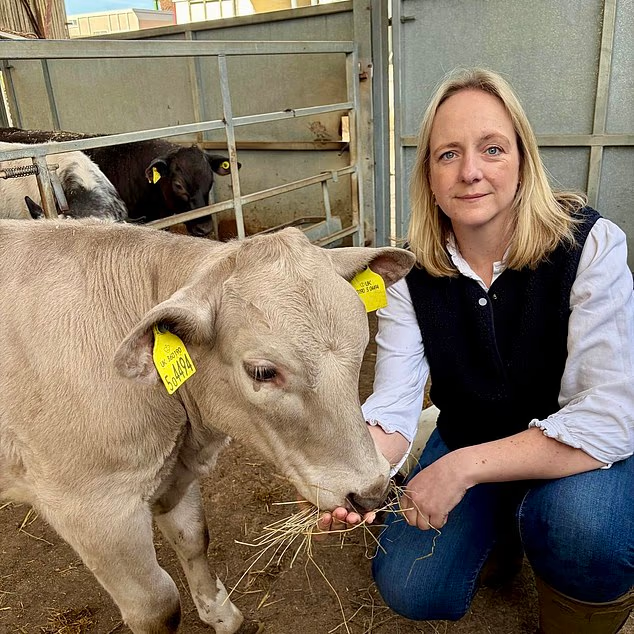
If you see a lamb like this stuck, rather than try find a farmer just quietly pop it out. If you can’t get it out then please let someone know. This is the worst time of year for it, the lambs still have small enough heads to push through and their horns are quite springy. Anyway, if you do see one, please do something about it. Thank you
Jeremy Clarkson’s Farm show on Amazon is the most radicalizing piece of mainstream media I’ve ever seen
Just one example (bear with me):
Badgers became a protected species in Britain 40+ years ago.
The population has exploded and now frequently transmits tuberculosis to cows
But farmers can’t cull the badger population to protect their cattle because the government still considers them to be endangered
Instead of addressing the root cause, the UK has the most batshit testing regime for cattle
There’s no TB vaccine. So the cattle have to get tested. The vets administering the test have to measure welts on the cows neck. Whether a cow lives or dies comes down to a vet trying to discern 1mm on a caliper (reactive vs non reactive).
If a cow tests positive, the farm (already running on super thin margins) is quarantined and starts hemorrhaging money.
Jeremy Clarkson’s cow (pregnant with twins) has an inconclusive test so it’s separated from the herd. It receives a second inconclusive test so they have to kill it (before it can give birth to the twins).
Now here’s the kicker: the autopsy reveals no sign of TB. It was a healthy cow needlessly killed
So - silver lining the farm should be removed from quarantine, right? WRONG - it’s still under quarantine and has to keep testing and can’t sell its beef
Kafkaesque doesn’t even begin to describe how f’d up it is for British farmers
In 2024, the Welsh government proposed that every farm in Wales must plant trees on 10% of its land and manage another 10% as wildlife habitat to receive any subsidy payment.
This was the Sustainable Farming Scheme. The economic impact assessment commissioned by the Welsh government itself, modelled at full uptake, found the scheme would deliver:
A reduction of 122,000 Welsh livestock units. An 11% cut in the labour required across Welsh agriculture. The equivalent of 5,500 lost rural jobs.
The response was the largest farmer mobilisation Wales had seen in a generation. Thousands of wellies lined the steps of the Senedd, each pair a family leaving the land. Tractors blocked Cardiff. Wrexham. Aberystwyth. Llandudno. The rural affairs minister was reshuffled. The scheme was paused. The blanket 10% tree mandate was dropped from the final version published on 15 July 2025.
That was the headline.
Read the small print.
BPS payments to every farm were cut from 100% in 2025 to 60% in 2026, then 40%, 20%, and zero by 2029, a steeper taper than originally promised. The scheme-level ambition to plant 17,000 hectares of trees across Wales by 2030 was retained. A tree and hedgerow planting opportunity plan is still required of every entrant. The 10% habitat requirement is mandatory, not optional, for every participating farm.
The farmers won the headline. The department kept the policy.
The First Minister recently dismissed agriculture as less than 1% of the Welsh economy. The supply chain it underwrites, in feed, vets, hauliers, abattoirs, fencers, agricultural merchants, supports an estimated 230,000 jobs.
The department has not produced a figure for that.
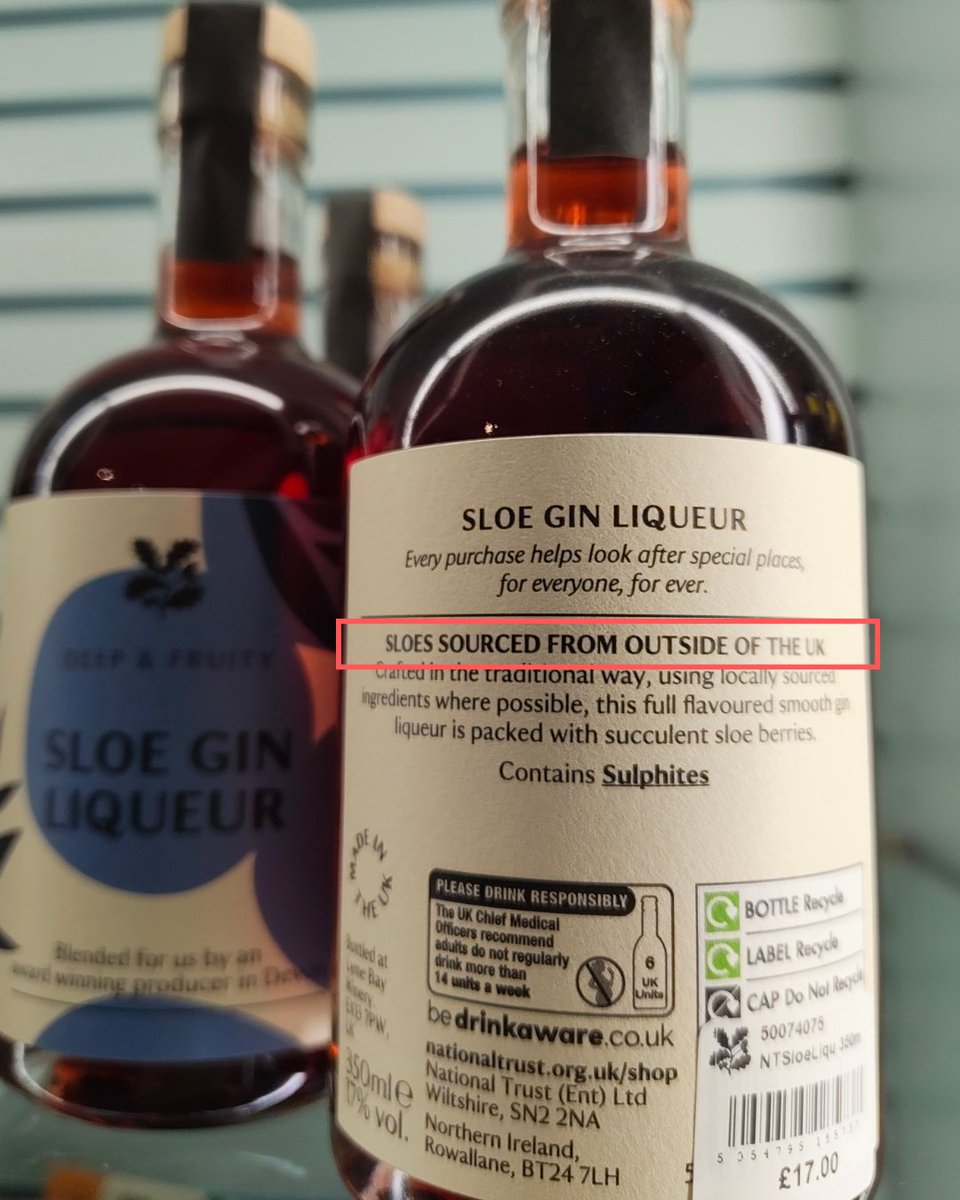
“Food you can feel good about”… imported from overseas with a giant carbon footprint?
Why does the National Trust source apples, damsons, sloes, blackcurrants, rhubarb, and onions abroad for its products “Made in the UK”?
Is the National Trust on the side of British farmers?
#Lichfield#Burntwood#Hammerwich area - keep an eye out for this white van, caught on camera stealing from our farm today - plates are false
please RT to warn others 👍
But when you 🔍the label you find it’s not what you thought you were buying.
This HAS GOT TO STOP
UK farmers are fed up of this unlevel playing field, in particular PORK.
We’re nowhere near self-sufficient in pork and if retailers continue to screw their farm suppliers … 3/4
Your vegan oat-and-almond latte killed more bees, drained more groundwater, and required more long-haul lorry mileage than a year's worth of dairy milk from a Welsh cow that drank rain. You will not have heard about this, because the carton has "plant-based" on it in nice green lettering.
California's Central Valley produces 80% of the world's almonds. Every almond on every supermarket shelf, in every flapjack, blended into every oat-and-almond latte from London to Berlin, started life in one valley in central California.
A gallon of almond milk requires around 162 gallons of irrigation water. A gallon of British dairy milk uses around 8 gallons of tap water, and the rest comes from rain falling on grass that grows nothing else of nutritional value to humans. The cow drinks the rain. The almond tree drinks the aquifer.
California almonds consume approximately 1.1 trillion gallons of irrigation water annually. Roughly the same volume of water used by Los Angeles and San Francisco combined. Around two-thirds of the crop is then exported to Asia and Europe. A state in repeated drought emergencies, where over a million residents lack reliable access to clean drinking water, is locking its aquifer inside almonds and shipping it overseas in containers.
Almond trees bloom for three weeks in February. To pollinate 1.5 million acres of orchards in that window, California requires roughly two-thirds of every commercial honeybee in the United States to be physically transported into the Central Valley on flatbed lorries. The largest managed pollination event on earth, every year, conducted on the back of a truck.
The bees are released into groves sprayed with neonicotinoids, which scramble their navigation. Fungicides, which weaken their immune systems. Herbicides, which have already killed the wildflowers they would normally forage on between blooms.
Between June 2024 and March 2025, US commercial beekeepers lost 62% of their colonies. 1.6 million colonies dead. The largest honeybee die-off ever recorded in American history. The trigger period for the worst losses was the months immediately surrounding the almond bloom.
Meanwhile, beneath the orchards, the ground itself is sinking. The US Geological Survey has documented parts of the San Joaquin Valley that have subsided by up to 30 feet since groundwater pumping began in the 1920s. The valley lost as much elevation between 2006 and 2022 as it lost in the previous forty-five years. The Friant-Kern Canal has lost 60% of its flow capacity because the land beneath it sank faster than the canal could be redesigned.
Once those clay aquifer layers compact, the storage is permanently lost. The aquifer is being run as a one-way withdrawal, and California has been told this in formal hydrological reports for decades.
The land was never meant to grow almonds. The bees were never meant to live on flatbed trucks. The aquifer was never meant to be a tap.
But the carton says "plant-based" in nice green lettering.
So, presumably, you are saving the planet.
Carry on.
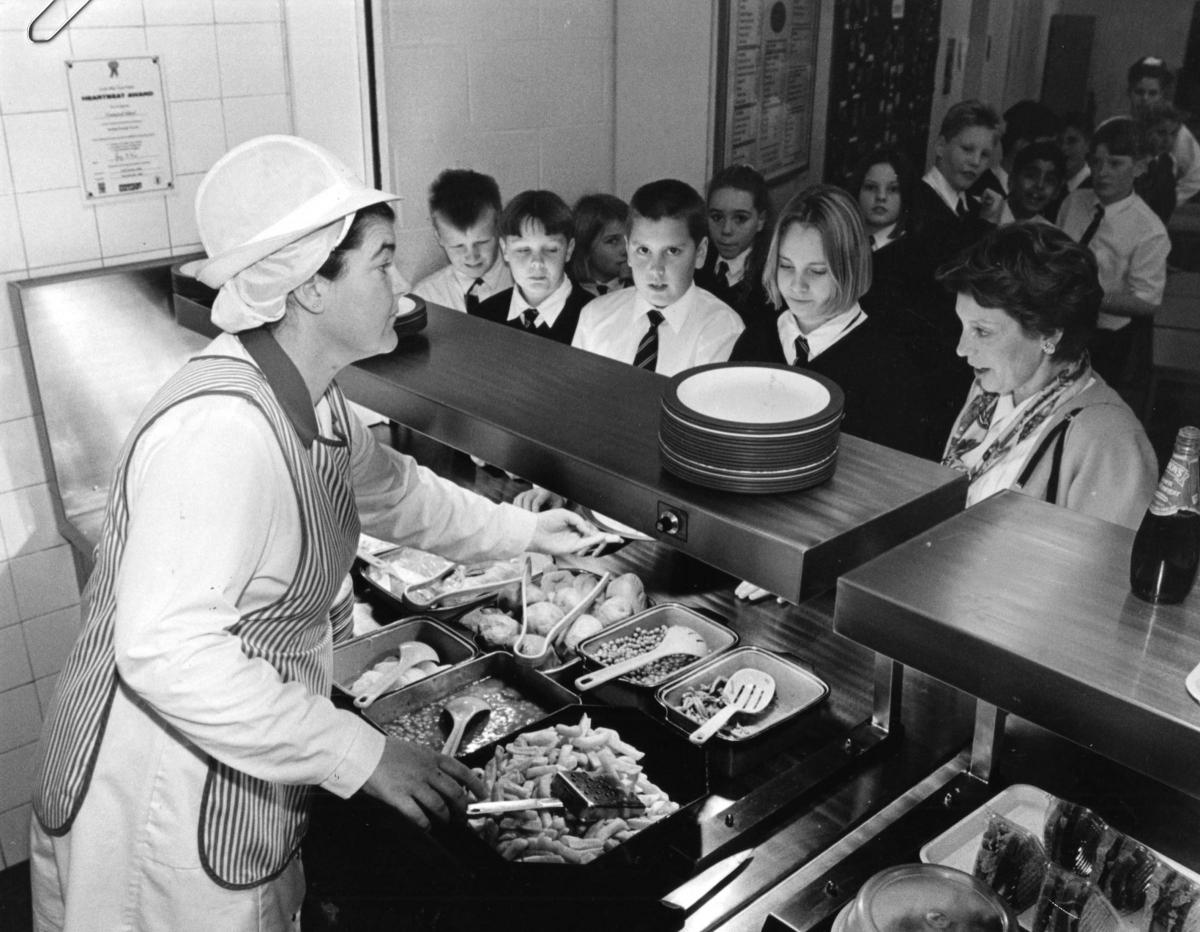
A British school dinner in 1975 was cooked on-site, from whole ingredients, by a dinner lady who knew, without consulting a nutritional database, what a growing child needed to eat.
The dinner was: roast beef, gravy from the drippings, boiled potatoes, cabbage, and sponge pudding with custard made from eggs and milk. Or shepherd's pie from real mince. Or liver and onions. Or fish on Friday, battered and fried in beef dripping.
In a single sitting: haem iron from the meat, calcium from the custard, B12 from the liver, vitamin A from the gravy fat, vitamin D from the eggs, zinc from the beef, omega-3 from the fish, collagen from the gravy, complete protein from every component, and roughly 800 calories dense enough to carry a child through an afternoon of running around a playground in January.
Then the system changed.
In the 1980s and 1990s, local authority catering was outsourced. On-site kitchens closed. Dinner ladies were made redundant. Central production kitchens began manufacturing meals reheated in convection ovens.
The roast beef became a turkey twizzler. The shepherd's pie became a pre-formed disc of processed potato and reconstituted meat product. The liver disappeared entirely. The fish was coated in breadcrumbs and fried in vegetable oil. The custard was made from powder, water, and yellow colouring. The sponge pudding was replaced by a yoghurt tube.
Jamie Oliver's 2005 campaign filmed children who could not identify a tomato. Kitchens where the only equipment was a deep fryer and a microwave. Menus that contained less nutritional value in a full week than the 1975 dinner contained in a single sitting.
The government pledged reform. But the on-site kitchen did not come back. The dinner lady did not come back. The roast beef and the liver and the custard made from eggs did not come back.
The 1975 dinner lady, who had no nutritional qualification and had never heard of a DIAAS score, was producing, at approximately 30p per serving, a meal that contained more bioavailable nutrition than anything the modern system produces at three times the cost.
She has been replaced by a supply chain.
The supply chain is more expensive.
The children are less well fed.
The dinner lady knew what she was doing.
Nobody asked her.
Can someone please explain, in very simple language, how growing almonds in a Californian desert, draining the local aquifer until the ground subsides, spraying the entire crop with fungicides because almonds can't survive without them, killing off the commercial bee population in the process, then refrigerating the harvest and shipping it six thousand miles to Britain is environmentally friendly,
but buying a piece of beef from a farmer twelve miles down the road, whose cattle eat the grass that grows in the rain that falls on the hills that have been there since before anyone had opinions about this,
is a planetary emergency?
Asking for the cow.
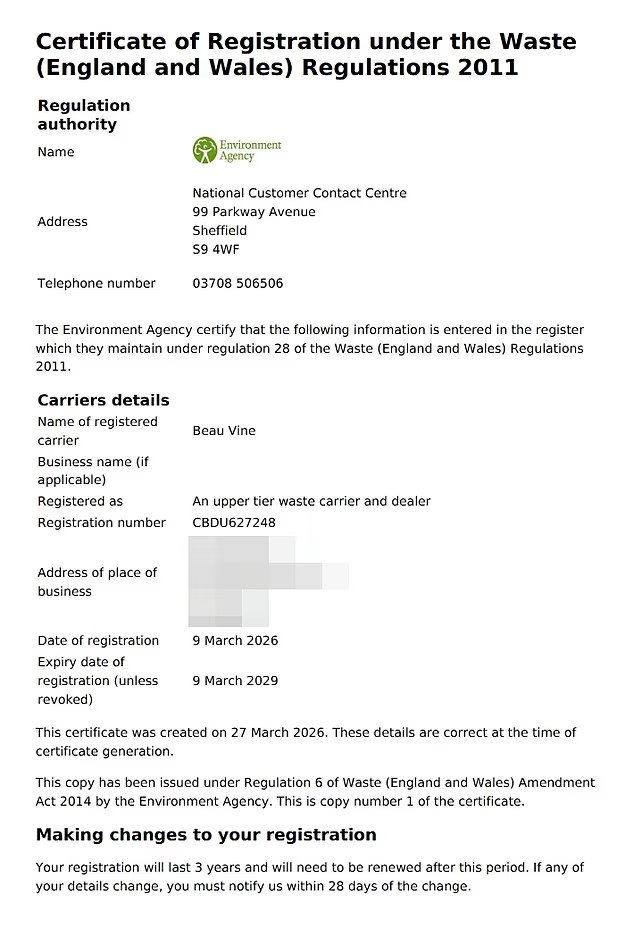
Wiltshire farmer Ann Maidment, 42, has brilliantly exposed the “ridiculous” government waste licensing system, by registering her prize cow Beau Vine as an official rubbish disposer.
It took just five minutes online and cost £184. The Environment Agency approved it instantly. No ID, no business checks, no criminal record verification, just a tick-box promise of no environmental offences.
Her family cattle farm in north Wiltshire has been repeatedly hit by fly-tippers dumping everything from asbestos to kitchen waste.
Ann’s message is simple: “A system that cannot stop a cow cannot stop a criminal.”
Fly-tipping now costs Britain £1 billion a year, with 1.26 million incidents last year alone, many carried out by licensed “carriers” who then illegally dump on rural land.
Farmers are left with tens of thousands in clean-up bills while the system smooths the path for organised crime.
Government now promises tougher checks… but the cow licence proves it’s been wide open for years.
Farmers and local farm shops are using social media to sell their food. Supermarkets pay them pittance for their food and a vindictive government punishes them. So they are taking the matter into their own hands and trying to sell direct via social media. Support our farmers.
We don’t have a classroom management problem.
We have an emotional regulation crisis that teachers are being asked to handle.
Somehow, “classroom management” has turned into:
• de-escalating trauma
• supporting anxiety and depression
• calming panic attacks
• breaking up fights
• being cursed at, threatened, and even assaulted
• being the counselor, social worker, and crisis team
And at the same time…
we remove the very things that actually help:
• recess
• movement
• art
• play
• connection
Teachers aren’t trained for this.
And they shouldn’t have to be.
Classroom management was never meant to do all of this.
It’s about:
relationships
rules
routines
responsibility
That’s it.
It was never designed to replace what families, communities, and systems failed to provide.
And until we stop offloading every societal failure onto schools,
teachers will keep drowning under expectations no human can meet.
Being soft on behaviour isn't going to help students. It will simply allow a small number of students to be in charge rather than the adults who must be. I've seen that and it's a scary and unsafe place. And no it doesn't mean ignoring needs either. Do both.
The most successful rebranding of agricultural runoff in modern history.
- Oats are a grain. Oat milk is oats liquefied with enzymes and then diluted until they pour.
- The primary ingredient, after water, is a starch slurry. You are paying premium prices for warm starch water.
- The enzymatic processing converts starch to maltose. A glass of oat milk triggers roughly the same glycaemic response as a glass of Ribena. The barista version has added oil.
- That oil is usually rapeseed or sunflower. Seed oil. In your morning coffee. Presented as the health-conscious choice.
- Oats contain avenin, a prolamin protein structurally similar to gliadin in wheat. Cross-reactivity with gluten sensitivity: documented.
- Phytic acid content binds zinc and iron. The trace minerals on the label are largely unavailable. The bioavailability of plant iron from oats versus haem iron from beef: approximately 3% versus 25%.
- Most commercial oats are glyphosate-desiccated prior to harvest. Residue testing in oat products has been consistent enough to generate several rounds of investigative journalism and at least one class action.
The grain that spent six thousand years as livestock fodder is now the ethical breakfast.
The cow that ate it is the problem.