Stop threats before they start. Our PTEM platform unifies ASM & dark web intelligence to help defenders prioritize what's exploitable — not just what's exposed.
A new era for Searchlight Cyber starts today. We’re launching our Preemptive Threat Exposure Management (PTEM) platform alongside a brand-new corporate identity & website. Learn how we’re helping organizations stay ahead of attackers. https://t.co/64zzyRLsYv #PreemptiveSecurity
Our research team discovered a pre-auth RCE in Drupal core by exhausting system limits to trick the installer into thinking an existing site wasn't installed. We reported the issue to Drupal, and it has since been fixed (SA-CORE-2026-017). Read more here: https://t.co/jQgca6CUk2
In this clip, former US Army security specialist Andrew Craig shows how a "medium" vulnerability can sit in the backlog while the risk behind it climbs. The server is unapproved, attackers are actively targeting SSH, and admin credentials have been exposed https://t.co/WbGFfIXKiM
"Assume breach" was a useful reset. It shouldn't drive a passive approach. Not every attack can be stopped, but organizations can prevent far more than they realize. https://t.co/qZWIHlB1b5
2026 was bad. It's about to get a bit worse.
We (@SLCyberSec Labs / @assetnote) just reported a pre-auth RCE in a widely used piece of software.
The picture may or may not be related.
sha256: 633f7b552bd9afd5ed85af7bd352206219d92ebb672c67276ad6c44ac994db2f
Traditional programs measure effort: alerts handled, patches applies, tickets closed. Preemptive programs measure outcomes in terms of what the business actually cares about - risk, not activity. https://t.co/hZeov5Z7LN
Controls, policies, and configurations don't matter if they don't hold up under real worls conditions. Validation asks: Can this actuall be exploited? What would it take for an attacker to chain this into impact? Are our defenses observable and bypassable? https://t.co/akHnHGoNSI
You can't fix what you don't know exists. And in modern environments, what exists is constantly changing. Assets appear and disappear and exposure is dynamic, not periodic. The answer is continuous discovery and remediation. https://t.co/mcdaQla5yf
Preemptive security aligns prioritization with real attacker behavior and answering these questions: Is it exploitable in practice? Is it reachable from the outside? Does it lead to somewhere valuable? https://t.co/qEfbJ7udR2
The question "are we secure?" has no good answer. Preemptive cybersecurity starts by acknowledging that you're already exposed in ways you don't fully understand. The better question is: where are we exposed and how quickly can we reduce it? https://t.co/hA6P5s5wNB
What if someone could unlock any car of a major make, from anywhere in the world? In their spare time, our Chief Research Officer, @infosec_au, and Sam Curry found a vulnerability in a connected car platform that could have let attackers do exactly that: https://t.co/3xTCCsfcxi
“How the hell do you know what to prioritize in the noise?” It’s a top question on r/Cybersecurity. On 19th November follow a fictional org through 24 hours to see where first-come, first-served security misses what matters most. https://t.co/B6oRkKTQA7 #Cybersecurity
When everything counts as an asset, nothing stands out as risk. Use our ASM waste calculator to estimate how much of your budget is spent on noise → https://t.co/n3FZ6mliyS
Introducing Image Search and Optical Character Recognition (OCR) to Searchlight Investigate. Teams can now quickly identify gift card fraud, user access credentials in screenshots, and cases where their company name or logo appears on posters or placards. https://t.co/8doMaRPZU1
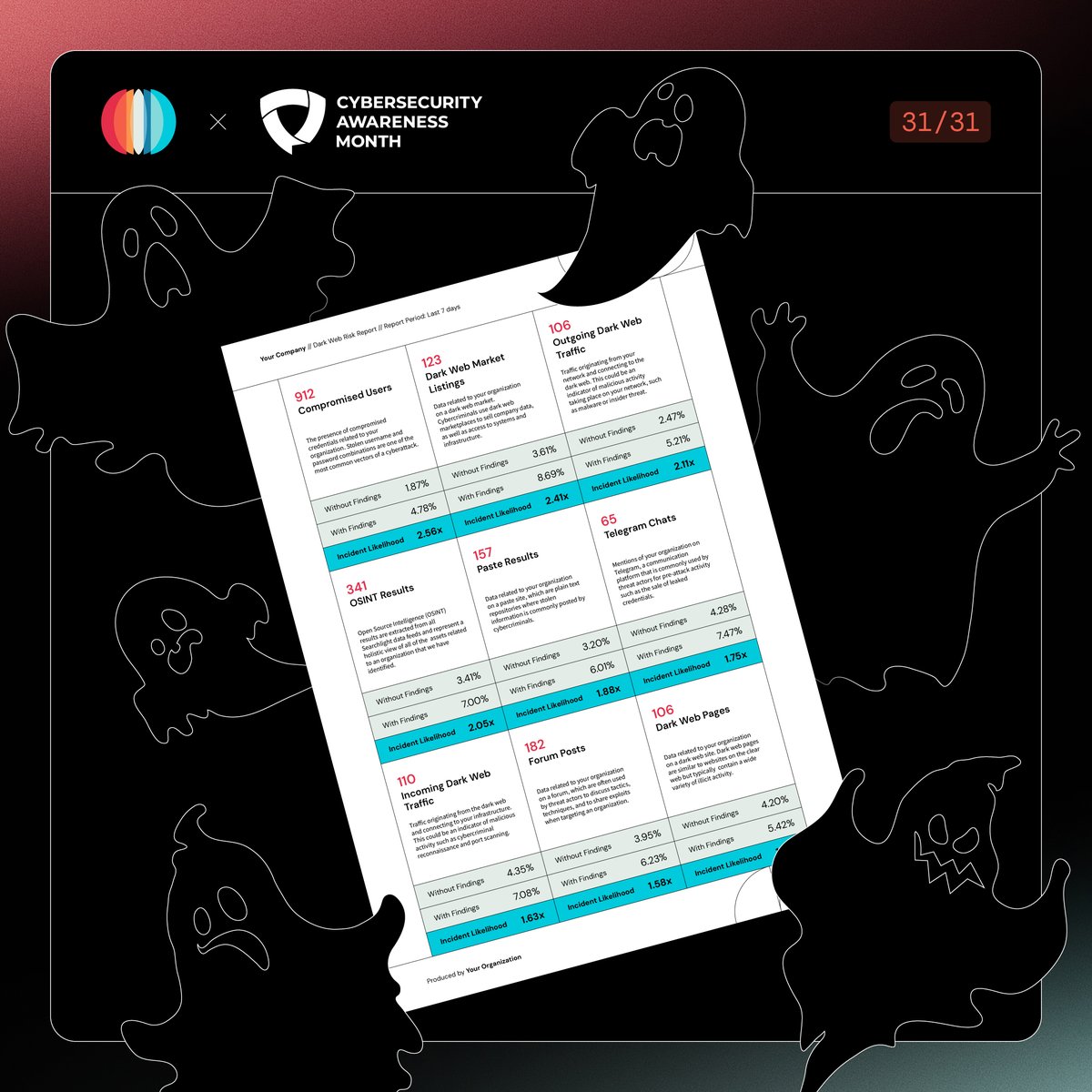
All month, we've shown you how Searchlight disappoints attackers at every stage - before they're even inside the building. Find out what's exposed on your own attack surface right now. It only takes a few minutes. https://t.co/wlfa2DOTp5
Cybersecurity Awareness Month ends tomorrow, but the approach behind this month doesn't - continuous attack surface visibility, validated exposures, attacker intelligence, all working the same way in November and beyond. #31DaysofDisappointment https://t.co/WBOsbyCjfb
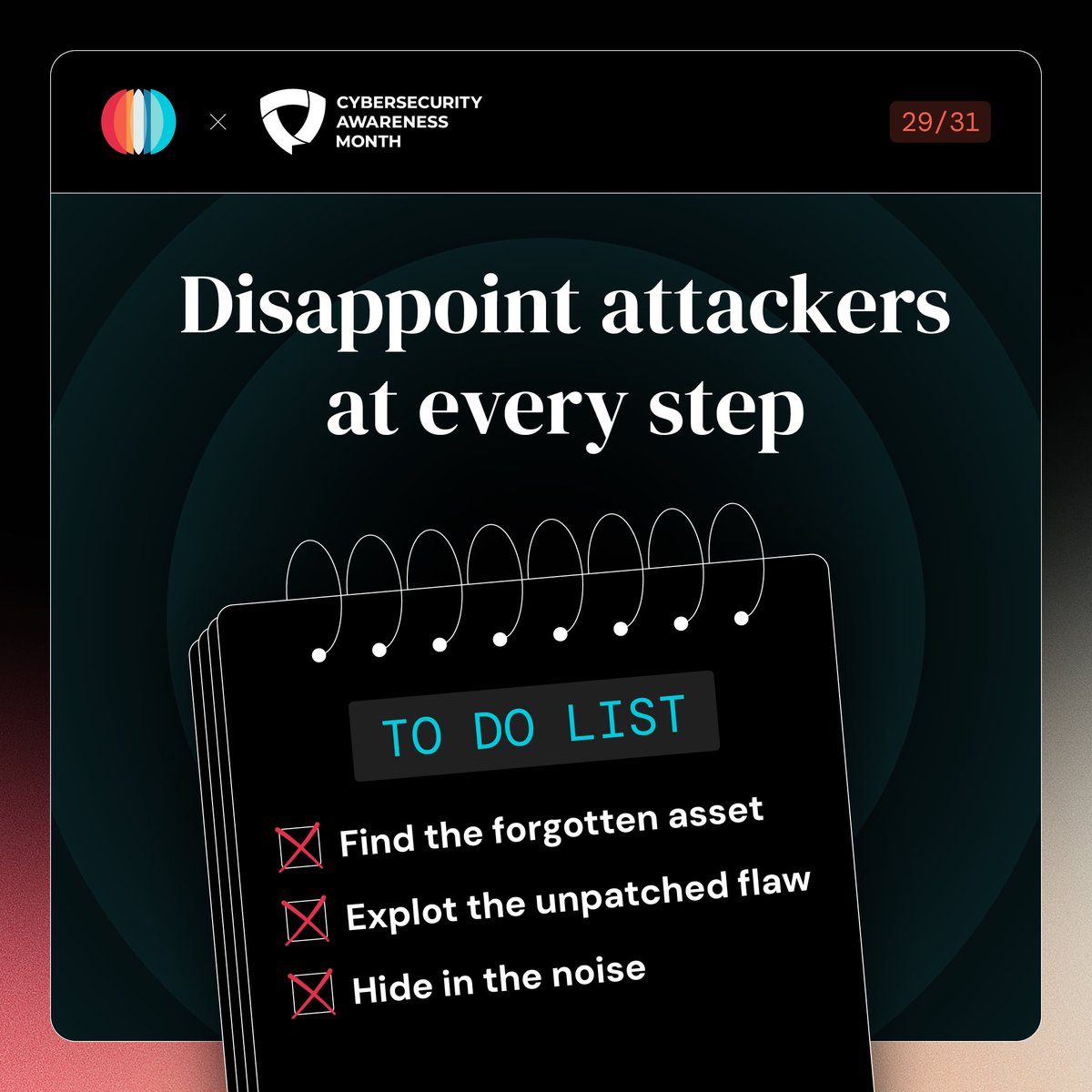
29 days into #31DaysofDisappointment, here’s everything we released this month. Three formats, one idea: see what attackers see, prove what’s exploitable, and fix it first. Disappointment #29: every step they planned for ends in a dead end.