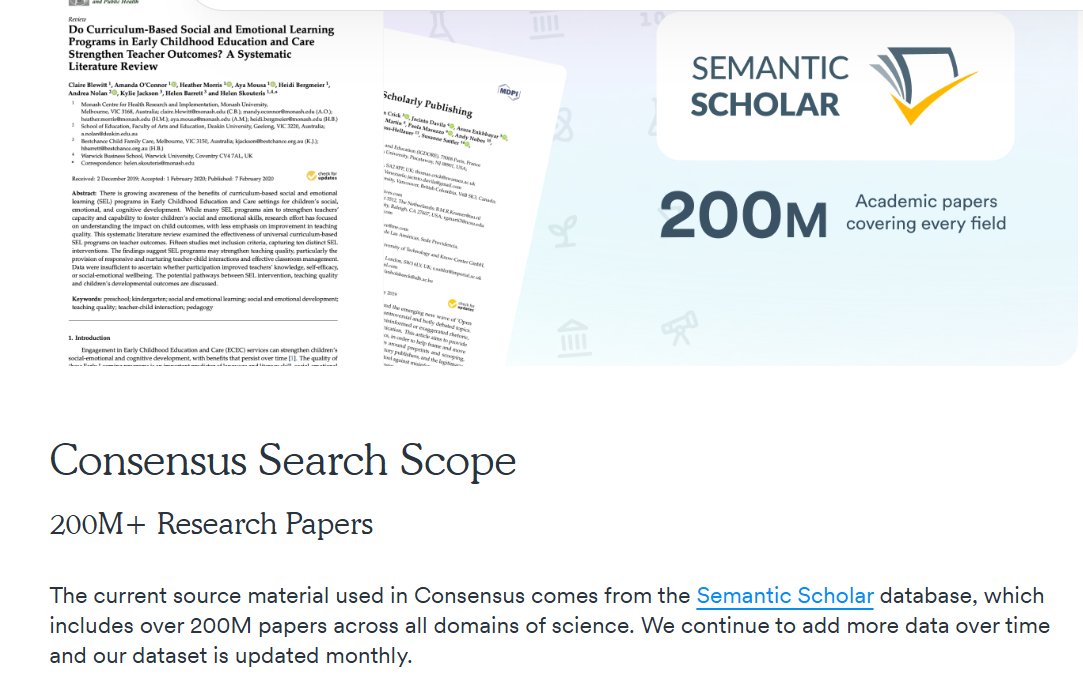
@miniapeur https://t.co/V8317lcyGs, or if you prefer a different interface with that backend+more, https://t.co/rmONIHCiro (also includes patent citations to-and-from)
@fake_journals If you have scopus access: grab an api key and programmatically search and gather the data: https://t.co/gYjI9dGFyU. Imo it's a lot easier to use a different source though, e.g. https://t.co/iE4zTLbkvO and/or https://t.co/J3RCnzfpnb
@fake_journals@Scopus Lecture notes isnt a journal though, they're bundles of conference materials like proceedings and such; editorializing is done by each conference and not by lecture notes themselves, shouldn't be on this list
@aarontay Yeah that's "easy" to do with openalex, using cited/referenced works+ topics and fields. If you like I can adapt my python code to do so, and share it in a web-based marimo notebook so you can easily run it from your browser (or download+ run locally of course)?
@aarontay "New topics algo: works created after the migration will use an updated algorithm but deliver similar results using the same taxonomy.
New keywords: works will get new keywords from a new algorithm based on our concepts algo."
From https://t.co/ZKhoFSDUbq
@aarontay The openalex assignments are per-article, by machine learning, so not 100% accurate; more than good enough for most applications in my experience. You're familiar with the docs I presume: https://t.co/KAtpOKeDh4?
Curious to see if this is also part of the big OA update today!
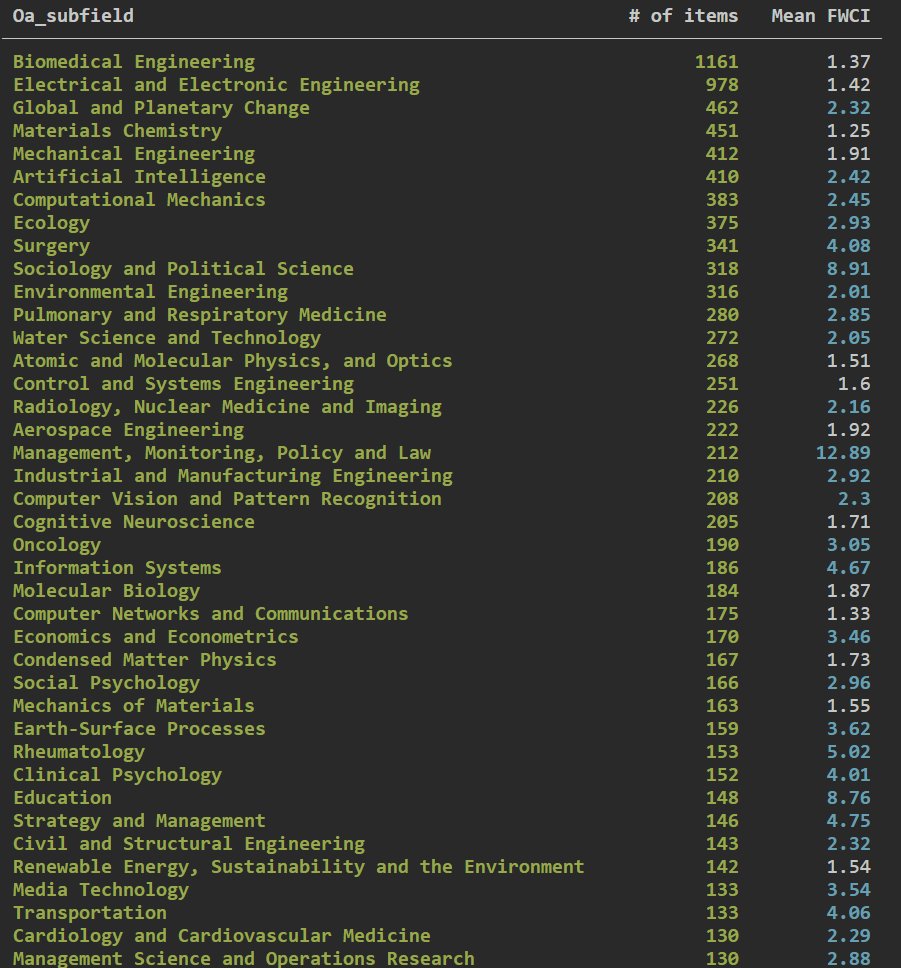
@aarontay As you can see, "topics" are slightly more granular than the scival system, but generally comparible. I find them a lot more useful compared to the 3-terms-grouping. "subtopics" are less granular, useful for grouping on research field; matches with other scival fields.
@aarontay I solved that issue by grabbing the dois and pulling the openalex data for those items to use their classification system instead. Attached is the result of a comparison I did between scival and openalex a year ago for a set input list of dois from my institution.
@aarontay We've split up evaluation in two: triage (seriously consider this tool?); only compare/evaluate whatever passes. this focuses on the first part. Wasn't familiar with the ROBOT framework, but we indeed needed a more specific version of general AI - evaluations.
@aarontay Fully agreed. Thanks for these commentaries, very helpful for us (uni librarians)! We're working on our own evaluation framework for search tools because there's no good one out there, if you're interested here's a pdf overview of what we started with: https://t.co/xeUU4w206g
@aarontay their 'deep research' tool can be found here: https://t.co/P1Ks3PhDYV
imo these Ai2 tools are very good considering their speed and cost (free!), at least for an initial exploration of a subject area, and it's also useful imo for inspiration for keywords and such.
@larsiusprime I think its because llms are mostly used "only" for tasks that could easily be done with conventional methods -- the advantages are in reduction of time/effort/learning required by the user. It requires an expert or lots of time to actually use them in transformative ways.
@lakens In general, if a doi is broken because the url(s) in crossrefs database are wrong, the publisher should update the entry - so contacting SAGE about a broken/erroneous doi is the best thing to do I'd say!
@lakens Librarian here (UTwente). That doi points to the correct link for me (the 2nd one)! If you pull the info from the crossref api (https://t.co/6EaAkpGaWg) it also only includes the correct url - see screenshot. So I'd say any other url is a redirect on either your end or SAGE's!