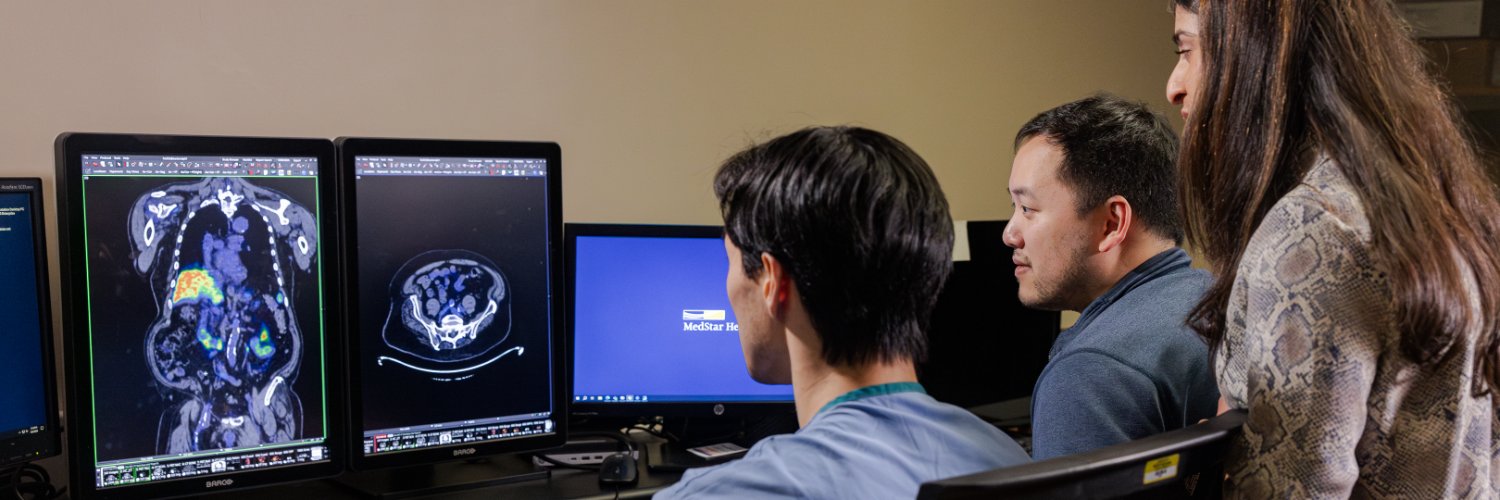
We can see the cancer. Now what? According to Jérémie Calais, MD, PhD, we have to know how to act on it. Our tools are better than ever, but nuclear medicine still has room to improve the efficacy of PSMA treatments. More from Jérémie Calais: https://t.co/aTHQ5KJpNV
Instead of targeting the body’s general inflammatory response, researchers developed a cocktail of radiotracers that targeted specific strains of P. aeruginosa. Learn more in JNM: https://t.co/uUJlRAl34M
For many hospital patients – especially the immunocompromised and critically ill – the greatest threat to their health isn’t what brought them there. It's infection, typically caused by the bacterium Pseudomonas aeruginosa. Diagnosis is often slow, but PET may change that.
Nuclear medicine is growing and innovating faster than we can fill open positions. Every area of the nuclear medicine field needs to recruit rapidly to meet the demand and fulfill the potential that nuclear medicine holds for patients. How do we solve this?
On the SNMMI podcast, learn about the current workforce landscape from a physician, technologist, and pharmacist, and SNMMI's efforts to ensure a strong field for years to come. Know someone who may be interested in nuc med? Share this episode! https://t.co/AAYbdCbghY
Where is theranostic dosimetry heading? As theranostics matures, Joyita Dutta says we're ready to head into a future where doses are more precisely calibrated.
90 years ago today, one question changed medicine...
"Can iodine be made radioactive artificially?"
That is the question Dr Saul Hertz posed on 12 November 1936 at a Harvard lecture on "What Physics Could Do for Medicine"
The answer came back from Karl Compton, President of MIT a month later: yes.
Radio-iodine was the cornerstone of theranostics as we know it today. 85 years later, we still cannot beat it. A single administration can cure patients with metastatic disease.
Turn on the audio and listen to Dr Hertz himself 👇
Our 2026 Theranostics Conference had the highest attendance yet! From lectures by the leading voices in theranostics to opportunities to network and collaborate, the meeting was focused on the most promising aspect of nuclear medicine. What was your biggest takeaway?
Industry Sponsored Webinar on Rethinking Dose–Response in Targeted Alpha Therapy
A multidisciplinary expert roundtable with diverse perspectives to examine the evolving science of dose–response relationships in Targeted Alpha Therapy.
Learn more: https://t.co/IjlVdKzavc
Advanced Theranostics Tumor Board on Theranostics in Oncology. Identify appropriate candidates for theranostic treatments based on approved indications, clinical criteria, and molecular imaging findings.
Learn more: https://t.co/zU5GVLDNfh
Kicking off the Theranostics Conference with the Sam Gambhir Award Lecture. Looking forward to an exciting few days of innovation, insights, and collaboration!
1,500 amyloid PET scans (500 each of the FDA approved tracers) were assigned to both local nuclear medicine physicians and radiologists and a panel of experts. Agreement was strong -- with 86% agreement on positive scans and 91% on negative. Read more: https://t.co/seVOTsahK4
Amyloid PET scans have become the gold standard for detecting brain amyloid plaques, a core feature of Alzheimer’s disease. But can local nuclear medicine physicians and radiologists interpret the scans as well as experts?
Our clocks were turned back, but our research is still moving forward! Get cozy with the newest edition of The Journal of Nuclear Medicine! Here are the highlights:
FEATURED: Targeted RPT of CEACAM5-Expressing Human Xenografts Using an Albumin-Binding Domain–Fused C9 Affibody: Proof-of-Principle Study - https://t.co/cRcm9LEVDU