Taking initiative in Afghanistan without foreign aid just goes to show what state our country was & still is in. Everyone turned to NGOs for a source of income without asking what would happen if that NGO left. Afghanistans aid dependence became a social norm, from the people on
Fundraising Alert!
Sosun Nayemi @SNayemi is one of our many diaspora Afghan volunteers who has been dedicating her time in creating partnerships with fellow environmentalist experts, regional networks & the international community. She actively engages with youth & works to
This doesn’t happen overnight, it’s the result of “ghost schools,” and years of corruption. Ongoing limitations on girls’ education is certainly not helping, but the fact remains that this is the direct impact of decades of mismanagement, fraud and disinterest
Afghans are being deported into a country already struggling to absorb them. But in EU and UN spaces, that’s not what some of the loudest Afghan voices are focused on.
Case in point: Lailuma Sadid, who has supported resistance and federalism narratives, and repeatedly framed her statements as the view of “the people of Afghanistan.” ⬇️
This footage of Iranian skies this morning, blackened by US-Israeli strikes on oil depots, is one of the most haunting images of the last three years. What a world we have made. What a world we continue to choose as it descends.
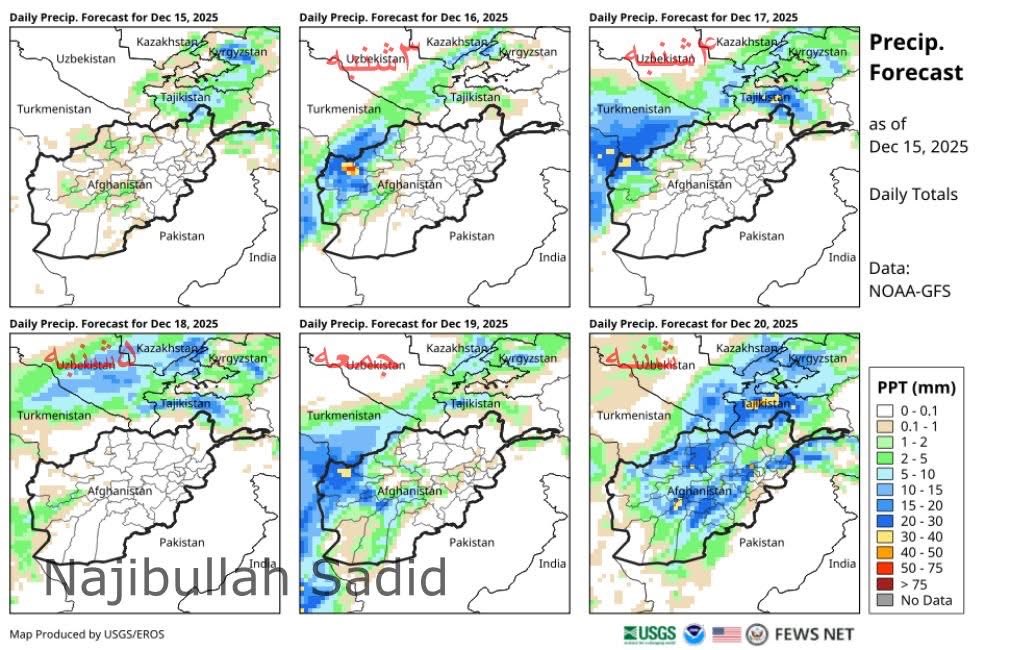
A fruitful wave of #precipitation is ahead for #Afghanistan & the region in the coming days. Drought has significantly impacted winter cultivation in Afghanistan & the reservoirs are rapidly emptying. This rainfall just comes in the right time.👇 shows daily forecasted rainfall.
The directive to cut off internet connectivity in Afghanistan, like so many other directives, is causing confusion and disinformation on the ground. Explanations range from national security issues to censorship, rivalries, and coups. From the possible to logical to fanciful.
the youth to utilize their knowledge to problem solve and work with communities and for small scale solutions to help either the private sector generate revenue or ease the burden of sanctions.
The harsh truth is that the perpetrators of the current climate crisis aren’t paying it forward in reparations. Afghanistan under occupation saw mismanagement of projects regarding water, bottling of water companies, policies regarding how water has been managed internally,
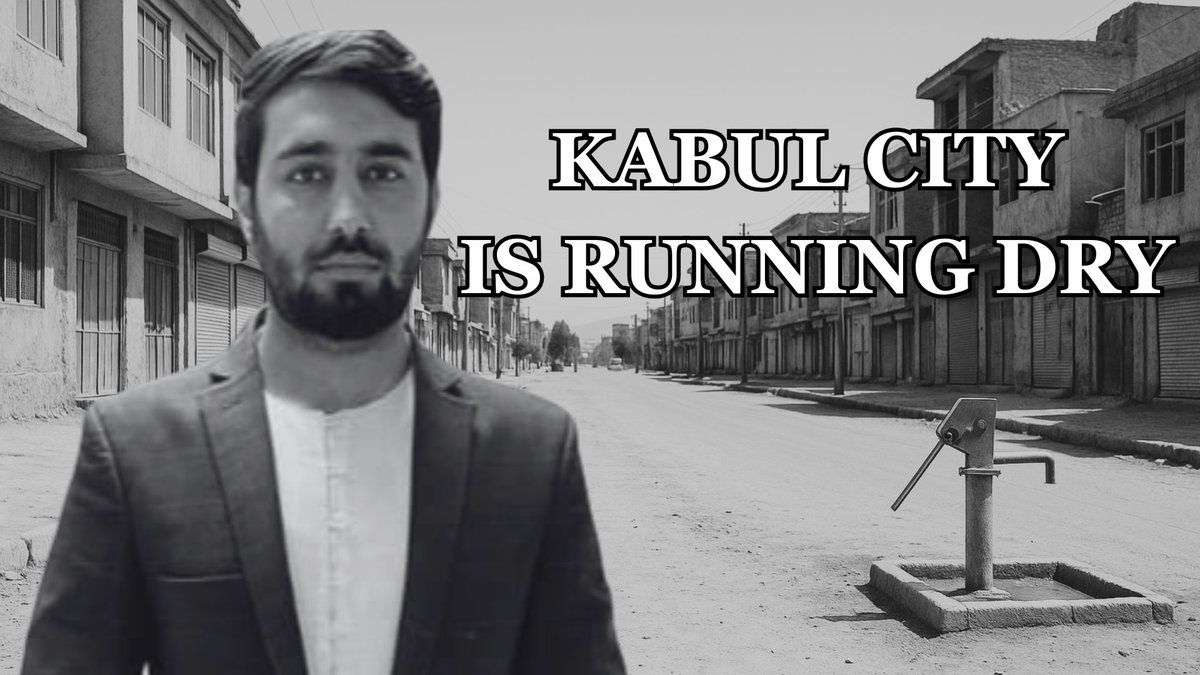
🚨 Kabul is drying up.
7 million people. No functioning water grid.
And the world is silent.
In this @AFGEYE podcast, activist @Sayedmuhammad65 explains how Afghanistan’s capital is collapsing from below—literally.
🎧 Listen + read: https://t.co/fcHtLz7GHC
regionally both for drinking and wastewater. Everything has come to a full blown crisis now because of all of these factors. The money isn’t coming to help so now it’s up to grassroot organizations to be taken seriously to do the work on the ground
Domestic tourism is on the rise in #Afghanistan despite restrictions on women. As a relatively new sector, it faces numerous challenges- from inadequate infrastructure to poor waste management (👇Paghman River & plastic waste)- threatening both water resources & the environment.
Kabul’s population isn’t shrinking. It’s growing. It needs water, not warnings.
Save this thread. In the coming years, Afghan cities will grow even faster. Planning for services—especially water—should be the priority.
This shift creates business opportunities for some but adds financial pressure on many, especially in the absence of effective government intervention. But still, people stay. Because they are driven by economic, educational, and health opportunities.
As the palace will bring water by transportation from sources like Qargha. The same coping mechanisms are available to residents. As a result, water scarcity will fuel the growth of a water trade market—which is already expanding in Kabul—than to trigger mass migration.
The idea of a city-wide exit due to water shortages ignores this reality.
Yes, water scarcity is real. It threatens livelihoods, health, and the city’s sustainability. But it won't force people to flee. Instead, they will adapt, just as they have before.
Kabul experienced a mass evacuation in 2021. Number of residents dropped, rents fell, the economy slowed, & even mosques were nearly empty.
But life quickly returned. Today, Kabul is once again crowded. Rents are rising & housing is hard to find.
Kabul water shortages won’t trigger mass displacement:
If water shortage really meant displacement, then the first to evacuate should be the Arg (Afghan presidential palace-now the Taliban PM’s office), located in the driest parts of Kabul. But its evacuation is not on the table.
Environmental Awareness Workshop Series – Mazar-e-Sharif
As part of Samsoor Watan Organization’s Environmental Awareness Workshop Series, we conducted a session on June 28, 2025, at Farogh Arya Private School in Mazar-e-Sharif, engaging 38 students in an interactive discussion
Environmental Awareness Workshop Series – Baghlan
Another workshop in Samsoor Watan’s ongoing Environmental Awareness Workshop Series was held on June 26, 2025, at Noman Ben Sabet Private School in Baghlan, with the participation of 75 students.
The session introduced students
Environmental Awareness Workshop Series – Daikundi
On June 28, 2025, Samsoor Watan Organization delivered the third session of our Environmental Awareness Workshop Series at a private education center in Shina Ali Khan village/district of Daikundi Province, reaching 27 students.
Women’s Pre-Conference Consultation-ALCOY 2025
As part of our preparations for the Afghanistan Local Conference of Youth (ALCOY) 2025, we are launching a series of consultations with the most vulnerable groups in Afghanistan to ensure that their voices shape the national youth