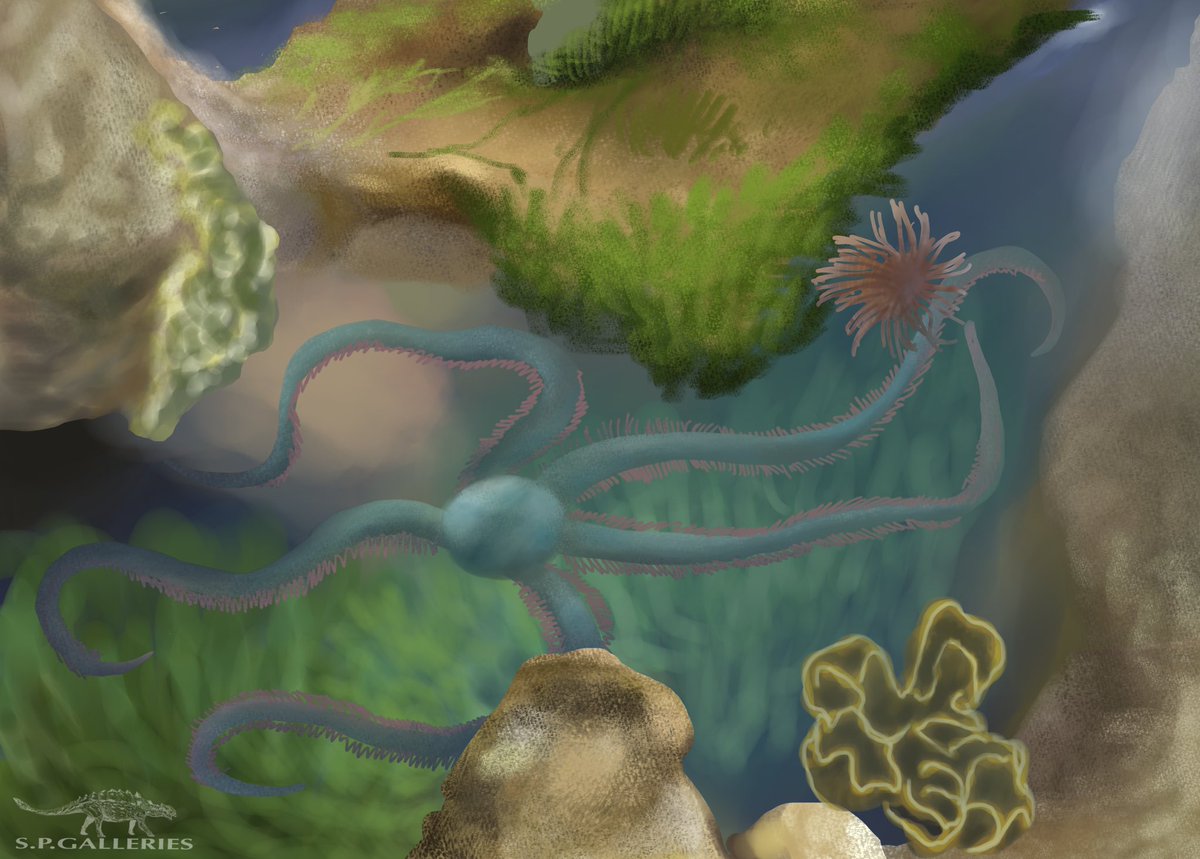
In the tide pools fought throughout the Pacific islands, one can find Na Kika (Nakika gilbertensis), a giant species of brittle star. Na kika are much larger and more mobile, and are capable of actively hunting worms, mollusks, crustaceans, and small fish.
@C_MarvelousSS Mostly because coconut crabs (hermits) are the largest land arthropods and look like giant spiders. That and I love the idea of kumonga having scorpion mandibles, which is what small repurposed pincers would resemble!
Somewhere in Louisiana, a real big delicacy is served - an ebirah (Macrocheirus horridus). Ebirah is a colossal species of crawfish found throughout the Gulf Coast in primarily brackish water ecosystems.
Ebirah are one of many arthropod groups to evolve sizes more common in vertebrates through a lack of competition and the unique shedding of their exoskeletons in smaller sections. By shedding pieces at a time, ebirah aren’t left vulnerable and exhausted.
@HadadBa60511@Strange_Animals@PlantRobinson Many things set them apart! Their teeth are fused, serrated projections of their jawbones, of which they have 2 rows on the upper jaw. They also have a beak which is what the order they belong to is named after - Rynchocephalia (beak-headed)
@HadadBa60511@Strange_Animals@PlantRobinson Both young and adult tuatara have a 3rd eye on top of their heads with a retina and lens. But it doesnt doesn't form images, instead it helps them detect daylight sort of like our pineal gland.
Endopedes are very similar to isopods - feeding on any and all decaying organic matter - including rotting wood, dead leaves, and animal remains. This process returns waste to the soil.
Within the world of Radiocene, endopedes are terrestrial xiphosurans related to horseshoe crabs. These creatures are eusocial detritivores found all over the world (different species of course) and dig large nests that hold thousands at a time.