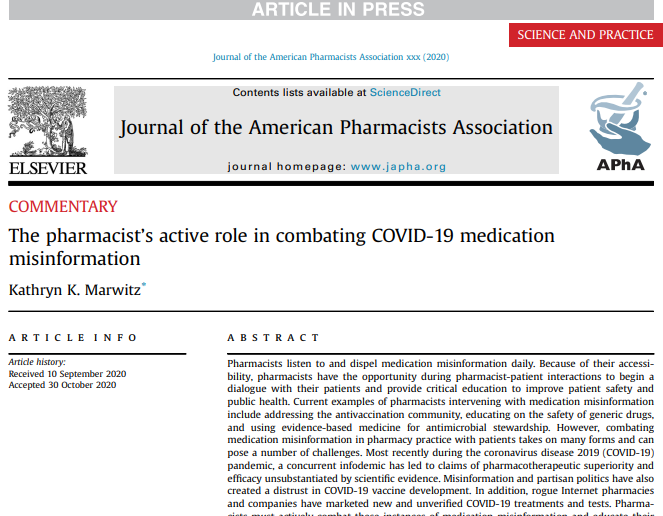
#TwitteRx Find these & other articles in the Sept/Oct issue!
+Meta-analysis of the CV toxicity of cannabinoids
+Addressing #SDOH in #communitypharmacy
+Discrimination & harassment in #pharmacy
+#PharmacyTechs roles in immunizations & product verification
https://t.co/R22cMONueP
IN PRESS: Polypharmacy, concomitant use of 5 or more medications, sometimes lead to suboptimal clinical outcomes in various disease states. We reviewed the impact of Polypharmacy on COVID-19 clinical outcomes.
#TwitteRx#pharmacists
https://t.co/w4tnHAVfnx
IN PRESS: This study described current pharmacists’ and pharmacist extenders’ participation in emergency response activities and training, and their willingness to respond in any emergency situations.
#communitypharmacy#TwitteRx#pharmacists
https://t.co/SbSkFIpk80
IN PRESS: Socialized &Traumatized: Pharmacists, Underserved Patients, & the COVID-19 Vaccine. @NphaPharmacy describes minoritized Pharmacists & healthcare professionals' serving those affected by COVID-19.
#publichealth#TwitteRx#pharmacists
https://t.co/P69Iu6kcza
We are excited to announce a call for papers in the area of #vaccine confidence and hesitancy. General author guidelines are at https://t.co/gu3aChG2LN. Submit your papers at https://t.co/mGO79AjnK8 Looking forward to some great submissions in this important area!
Check out the May/June issue! Some great articles on #pharmacists interventions in children w/ #asthma, economic burden of the #opioid crisis, technicians as immunizers, #endoflife medication counseling, hospital-in-home models w/ pharmacists, and more!
https://t.co/6wapRYhWuj
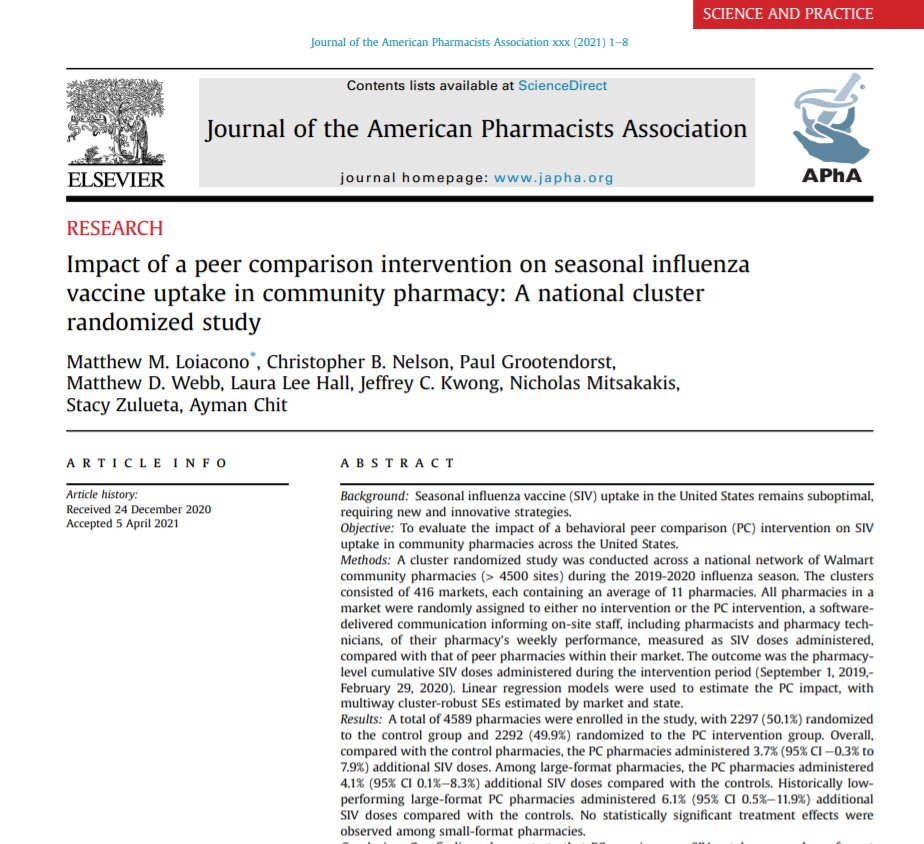
IN PRESS: Evaluated via a cluster randomized design across a national pharmacy network, peer comparisons were shown to significantly improve influenza vaccine uptake in community pharmacies by up to 6.1%
#quality#communitypharmacy#TwitteRx#pharmacists
https://t.co/yPkJiNpswv
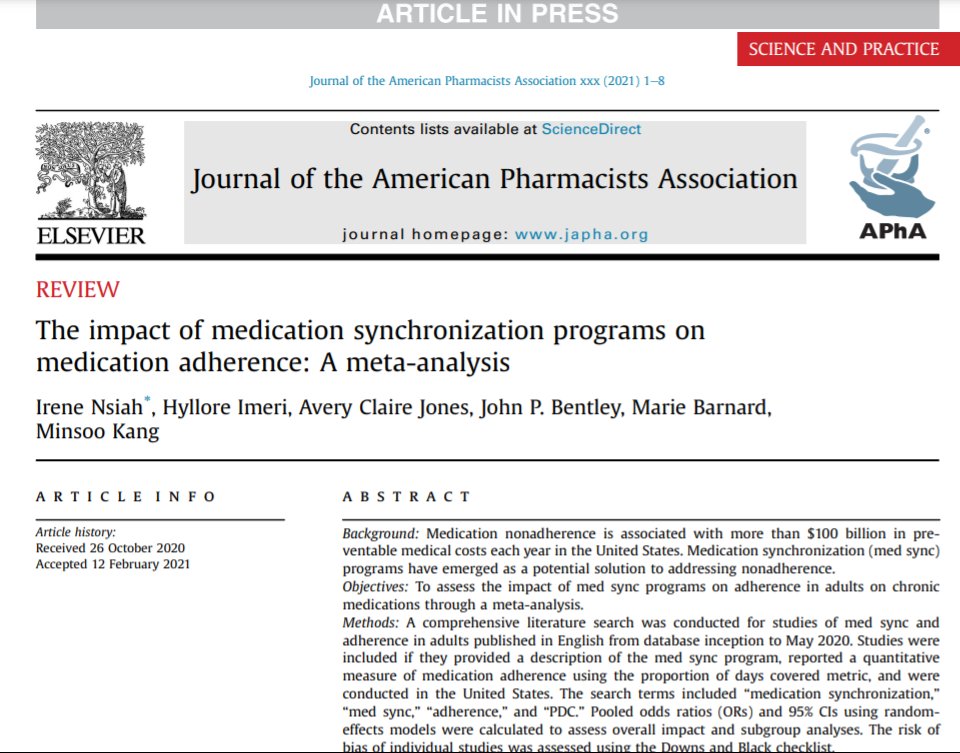
IN PRESS: Medication nonadherence is associated with significant health care costs and morbidity. Reimbursement to pharmacists to support med sync programs is associated with significant improvement in adherence.
#communitypharmacy#TwitteRx#pharmacists
https://t.co/Es8QjhAA7R
IN PRESS: Pharmacists’ interventions may improve health outcomes in children. However, the number of studies in this subject is still low and showing low-quality evidence.
#pediatrics#TwitteRx#pharmacists
https://t.co/Wpp211ZO0J
[image]
Our first issue of 2021 has exciting papers on reimbursement for pharmacist services, #PrEP screening, and more! Also, check out the 2 sets of themed papers on culturally-appropriate care and med safety. #TwitteRx#CulturallyAppropriateCare#MedSafety
https://t.co/K8GjfKrqs2
IN PRESS: Active engagement of pharmacists in SARS-CoV-2 testing can help to address many of the gaps in testing availability and demonstrate the value that pharmacists can provide in addressing unmet health needs. #COVID19#pharmacists
https://t.co/R9gK1OUxCM
IN PRESS: Pharmacists are the most accessible and essential health care providers willing to take on critically important roles during the COVID-19 pandemic provided appropriate safety measures can be met.
#COVID19#publichealth#pharmacists#TwitteRx
https://t.co/SDhSkv1Dmx
IN PRESS: : The Board sought to update professional practice standards by transitioning from prescriptive regulations to a “standard of care” model that harmonizes pharmacists education and training with their legal scope of practice. #Idaho#pharmacists
https://t.co/DhIEkSAMY1
IN PRESS: #Pharmacists are designated by #CDC as qualified and authorized immunizers, and thus there should be no additional barriers in place to require further authorizations or approvals under shared clinical decision making. #immunizations
https://t.co/pN79O3PUwV
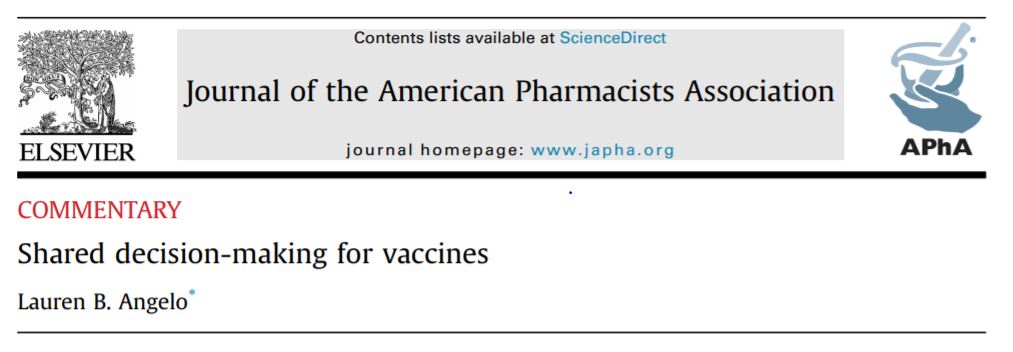
IN PRESS: Shared decision-making for vaccines presents additional opportunities for #pharmacists and student pharmacists to actively engage patients in determining what vaccines they need and which
ones to consider. #vaccination
https://t.co/FLwlHESHc8
IN PRESS: Incorporation of a psychiatric #pharmacist into primary care can produce positive outcomes and improve access to #depression treatment. Patients maintained reduced PHQ-9 scores and were seen in less than one-third the time versus the BHC.
https://t.co/lhUmDU4S9N





![JAPhAJournal's tweet photo. IN PRESS: Pharmacists’ interventions may improve health outcomes in children. However, the number of studies in this subject is still low and showing low-quality evidence.
#pediatrics #TwitteRx #pharmacists
https://t.co/Wpp211ZO0J
[image] https://t.co/H0OeAIEuto](https://pbs.twimg.com/media/EwT_1xkWQAQ1UdJ.png)