Dad. Husband. Urology. @carolinaurology. Asst Prof @VCOMcarolinas. Fellow @UTHUrology/@UTMDAnderson. Res @JeffNJurology. DO @PCOMeducation. But first @PittTweet
I'm a spine surgeon. You asked a fair question, so here's the plain-English answer.
Before 2012 you could buy an individual plan online for about $200 a month, pick from six or seven insurers, and choose your own deductible: $500 if you wanted to pay more up front, $5,000 if you didn't. If you were healthy, that is. If you were sick, they could turn you down, and that part was real and had to be fixed.
Obamacare fixed it by requiring every plan to cover everyone for everything. Good. But that made the real price of a plan jump, and the only way to keep the monthly number from looking insane was to push the cost onto the back end. That's your $6,500 deductible. You're paying comprehensive prices for catastrophic coverage.
Then the quiet part. The law caps what insurers can keep at 20% of premiums. So the only way an insurer makes more money is if the total bill gets bigger. 20% of $10,000 beats 20% of $5,000. They have no reason to fight the hospital's price. They pass it through, take their cut, and send you the premium.
And the hospital's price went up. Hospitals bought the independent doctors, and the same visit & surgery under the hospital's name now costs 3-10 times more. Hospital prices are up 281% since 2000.
The number of insurers you can choose from fell to one in half the counties in America by 2018. Meanwhile, six in ten adults now have a chronic disease, so the pool is sicker.
So: sicker patients, pricier hospitals, an insurer that profits from a bigger bill, and a law that moved the cost to your deductible. That's what you're paying for.
Nobody in that chain gets paid more if you get better. That's the part to fix.
I have been asked what the key is to prevent bleeding post aquablation. These are some tibits:
1. Completely empty the bladder after the ablation and inspect the anterior tissue. This is probably my number one tip. Pay particular attention to the anterior tissue that may lie beyond the catheter balloon. This area almost always bleeds and can persistently ooze, even when everything appears perfectly clear with a full bladder. You can easily miss this bleeding unless you completely empty the bladder and inspect that area carefully.
2. Be liberal about removing fluffy tissue. Remember, the Aquablation waterjet does not uniformly penetrate every part of the prostate. There may be areas underneath the fluffy tissue that conceal persistent bleeding. Removing this tissue allows you to visualize the underlying prostatic fossa and identify any oozing that would otherwise be missed.
3. Identify the urethral cliff during treatment planning. This is critical for defining the floor of the prostatic urethra and avoiding excessive depth or undermining of the bladder neck. Going too deep into the prostatic fossa can lead to unnecessary bleeding.
4. Make sure you have adequate catheter balloon volume and proper positioning. I typically use 60–80 cc in a balloon. The key is allow bleeding to stay in the prostate fossa rather than have the balloon floating freely in the bladder. Even if the bladder neck is slightly undermined, appropriate tamponade can help keep blood and clots within the prostatic fossa rather than allowing them to accumulate in the bladder.
When I remove the catheter, I deflate the balloon and irrigate the prostatic fossa to evacuate the accumulated clots.
Bottom line: Don't assume a clear field with a full bladder means you have achieved hemostasis. Empty the bladder, inspect the anterior tissue, expose hidden bleeding beneath fluffy tissue, respect the bladder neck, and ensure adequate catheter tamponade.
#aquablation #procept
🚀 We are proud to recognize Dr. Sravan Panuganti of Carolina Urology Partners for treating 100 patients with the CVAC System! Dr. Panuganti treated an average stone burden of 16 mm and achieved an average visual stone clearance of 97%.
This marks a meaningful milestone for kidney stone patients in Gastonia, NC and the future of #Urology.
Learn more about the #CVACSystem: https://t.co/lkW8ZzRlUQ
Safety Info: https://t.co/JixRFZogZh
Based on cases for which information was available.
#NoStoneLeftBehind #KidneyStone #Calyxo
Meet the Urology Atlas, a first of its kind map of US urology.
8,984 urologists in all 50 states. Toggle to see where urologists are needed, check access for any town or ZIP, and snapshot any metro.
What's missing? What would you add?
https://t.co/9Cm8UzQmLy
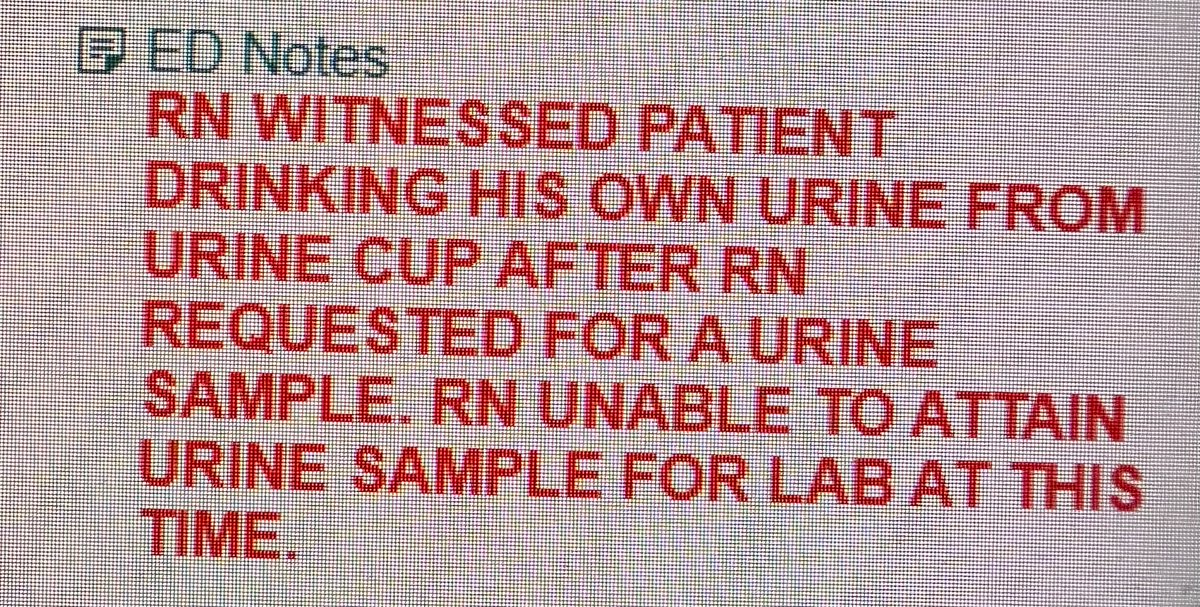
I was actually consulted for this once as a resident. Literal hospitalist thought “patient drank his own urine” was an appropriate urological surgical inpatient consultation.