Public key vs private key: what’s the difference?
A public key is shared openly and helps encrypt data or verify signatures. A private key stays secret and is used to decrypt data or create signatures.
Learn how both protect online security at this link:
https://t.co/CEw0hw3TEG
2-year certs made short outages annoying. Ultra-short lifetimes make them operationally risky.
Would your renewal pipeline recover cleanly from a CA-side interruption today?
Check the full story:
https://t.co/RIOz3NsGSj
#PKI#TLS#ACME#SSLCertificates
The awkward timing?
The interruption landed days before Let’s Encrypt starts rolling out 45-day certificate profiles for early adopters.
The SSL industry is speedrunning renewals while hoping the automation never sneezes.
The awkward timing?
The interruption landed days before Let’s Encrypt starts rolling out 45-day certificate profiles for early adopters.
The SSL industry is speedrunning renewals while hoping the automation never sneezes.
Let’s Encrypt briefly stopped issuing certificates after an internal hierarchy error broke part of the renewal flow.
One missing “Server Authentication” marker was enough to jam the machine.
Let’s Encrypt briefly stopped issuing certificates after an internal hierarchy error broke part of the renewal flow.
One missing “Server Authentication” marker was enough to jam the machine.
Public key cryptography helps keep online banking, emails, shopping, and secure websites protected.
It uses two keys: a public key to encrypt data and a private key to decrypt it.
Learn how it works and why it matters for digital security at this link: https://t.co/TnYvAzv1IS
The real risk in modern TLS isn’t expired certificates, but blind spots between trust layers.
When no one owns the full certificate map, issues don’t fail — they drift.
Full editorial here:
👉 https://t.co/JYmE0CSaOQ
From what we see across modern client setups, this is where TLS troubleshooting starts to break down.
Each layer owns a different certificate, yet conversations still assume there’s only one trust decision in play.
TLS didn’t get more complex, but infrastructure did.
One service can now run on four different certificates at once, all enforcing trust at separate layers.
TLS didn’t get more complex, but infrastructure did.
One service can now run on four different certificates at once, all enforcing trust at separate layers.
SSL won’t magically boost your SEO — but it does build trust, protect users, and support better engagement.
Here’s how SSL really affects SEO 👇
https://t.co/gY3Xngbf2n
#SEO#SSL#HTTPS
Now that SHA-1 is finally out of public PKI, the question is, what else is still hiding in yours?
Full analysis 👉
https://t.co/17SUUOGocs
#PKI#TLS#SSLCertificates#WebEncryption
Browsers deprecated SHA-1 years ago. But deeper in the hierarchy, it kept lingering in older intermediates and revocation data.
Invisible to users, but still embedded in trust infrastructure.
Browsers deprecated SHA-1 years ago. But deeper in the hierarchy, it kept lingering in older intermediates and revocation data.
Invisible to users, but still embedded in trust infrastructure.
SHA-1 is finally gone from public certificate chains.
At SSL Dragon, we track hierarchy changes closely, and the CA/Browser Forum’s latest ballot sunsets the remaining SHA-1 signatures across SubCAs and CRLs.
SHA-1 is finally gone from public certificate chains.
At SSL Dragon, we track hierarchy changes closely, and the CA/Browser Forum’s latest ballot sunsets the remaining SHA-1 signatures across SubCAs and CRLs.
That’s where SSL becomes concentrated. A small number of teams end up carrying most of the trust layer.
Full Analysis:
👉 https://t.co/Ac9PMt1Etn
#SSLCertificates#TLS#WebSecurity#PKI
E-government only works with trust.
Digital signatures and SSL/TLS secure data, verify identities, and protect public services.
👉 https://t.co/aP0ZCF5xfC
#CyberSecurity#Egovernment#SSL
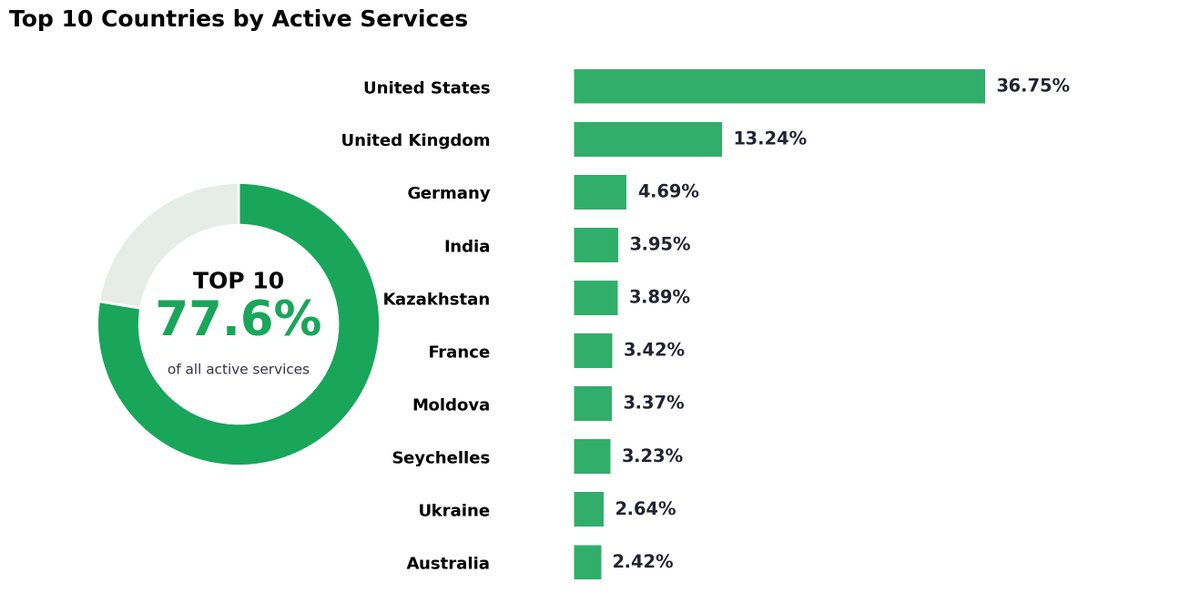
This is what the SSL ecosystem actually looks like: not global, not flat, but clustered around whoever still runs infrastructure.
Full Analysis:
👉 https://t.co/Ac9PMt16DP
#SSLCertificates#TLS#WebSecurity#PKI
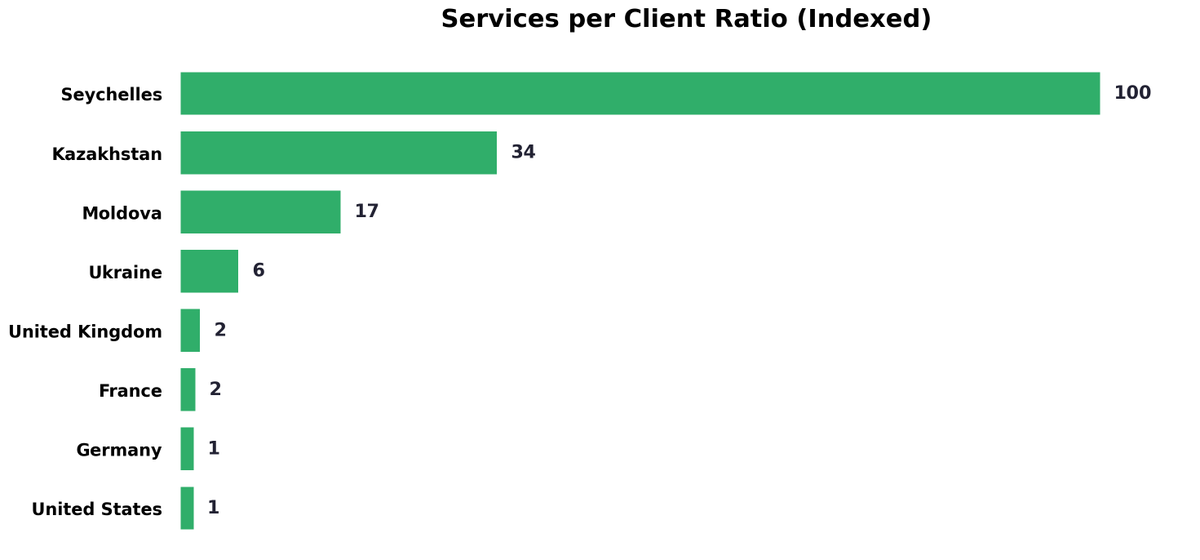
Those countries aren’t big buyers. They’re big operators. Few clients. Huge certificate volumes.
It means certificates are being run as infrastructure, not bought one by one.
Those countries aren’t big buyers. They’re big operators. Few clients. Huge certificate volumes.
It means certificates are being run as infrastructure, not bought one by one.
And the top 10 isn’t just “the usual suspects.”
Alongside the US and UK, you see countries like Kazakhstan and Seychelles ranking high in active services. That’s where it gets interesting.