Libs play a game I call "How Much Pain Can I Tolerate?" where they think, it's just chess pieces. Trivial to replace. Costs basically nothing. No big deal. Why would I put someone in jail for stealing them, are you insane? How selfish can you be? I can easily tolerate the pain of having to replace chess pieces for a couple of bucks every once in a while.
My 1 point of discomfort for tolerating the behavior easily outweighs by the 9999 points of discomfort that punishing the behavior would generate. You want me to put some kid in jail over a couple hunks of plastic?
Why would I arrest a guy for buying a banana with counterfeit money? Why would I chase someone down for Skittles and an Arizona Iced Tea? Why would I disrupt the houseless schizo shooting up and jacking off on the subway, it doesn't really affect me. It's easy to ignore. These people are already suffering.
But the chess pieces keep getting stolen. Old chess guys stop using the park. Rowdy teenagers take over. Moms stop bringing their kids. The park fills up with crackheads.
You see this phenomenon everywhere you look. Libs let petty crime slide because they think "I can take it." And maybe they can. But every time they do this, they add a little bit of pointless friction to every day life. A sliver of pain, a cost that adds up and up.
Now your Rite Aid shampoo is locked up. Now the shop has to hire a security guard (and raises prices accordingly). Now there's needles under the jungle gym. Now there's no old people on the corner keeping an eye on things. Now your kid can't run to the corner store after dark. Now your wife gets catcalled on her way home from work. Now there's loud reggaeton playing all the time. Life gets a little shittier and shittier. But hey, you can tolerate it. No big deal.
@CaminoTexas To be fair, 据https://t.co/rrN6n0VBh0 您所说的应该是Kyle Field 也就是全美第四大容量的体育场,而全美前三也都是公立大学的体育场。所以说这类设施在美国已经是一流,和中国的比较充其量是��源分配措施不同(然而美国的分配措施在利用效率上明显是更优的),而不能直接证明基建质量谁优谁劣。
The bravest man in the prison camp did not carry a rifle. He carried a Mass kit and a stolen sack of food, and the Communists were more afraid of him than of any soldier there.
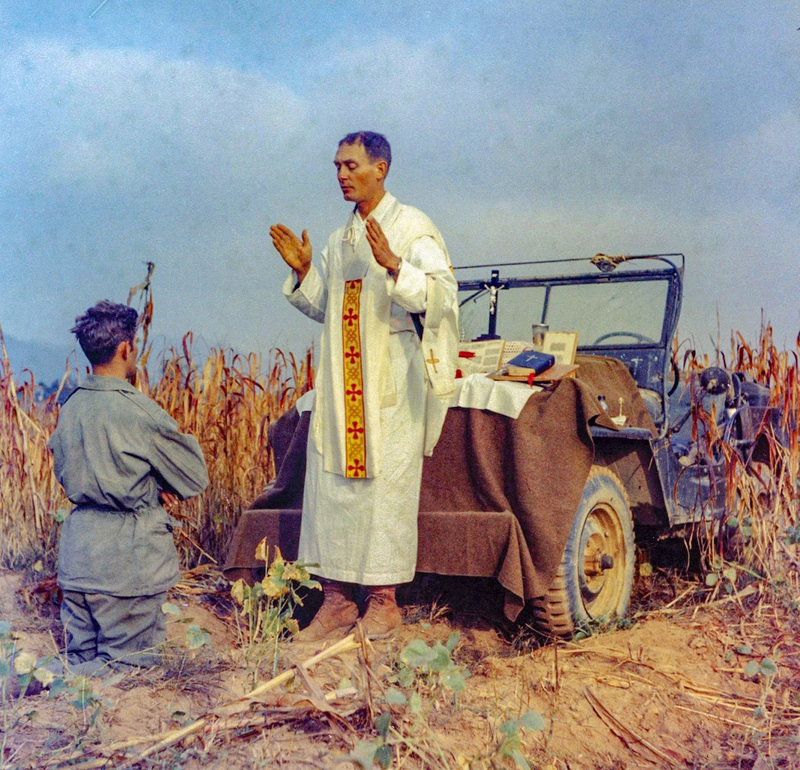
Father Emil Kapaun was a Catholic priest from a tiny farm town in Kansas. Soft spoken, humble, the kind of man who probably should have spent his life doing quiet parish work. Instead he put on an Army uniform and became a chaplain, and he ended up on the front line in Korea in the fall of 1950.
At the battle of Unsan his unit got overrun by a massive Chinese assault. Men were told to pull out and save themselves. Kapaun refused to leave. He walked back and forth through the incoming fire, unarmed, dragging wounded soldiers out of the open, giving last rites to the dying, carrying men on his back. When the position finally fell he could have slipped away. He stayed with the wounded who could not move, knowing it meant capture.
Then came the moment people never forgot. A Chinese soldier stood over a wounded American sergeant named Herbert Miller, about to execute him where he lay. Kapaun walked straight up, pushed the enemy soldier aside, picked the wounded man up off the ground, and carried him away. The enemy was so startled by the sheer nerve of it that they let it happen. Miller lived the rest of his life because a priest refused to let him be shot.
What he did in the prison camp over the next seven months might be the most incredible part. In a filthy, freezing camp where men were dying of starvation and dysentery every day, Kapaun became the heart of the place. He snuck out at night to steal food for the sick. He boiled water in secret to keep men from dying of disease. He gave away his own tiny rations. He washed the filth off dying soldiers with his own hands, and he led prayers out loud in defiance of guards who beat him for it, keeping hope alive in men who had every reason to quit.
The Communists hated him for it, because faith was the one thing they could not take from those prisoners as long as he was breathing. Eventually the beatings and the starvation and a blood clot broke his body. When he got too sick, the guards hauled him off to the death house, a filthy room where they dumped men to die alone. He forgave his guards on the way out. He died there in May 1951 at just thirty five years old.
Sixty two years later they gave him the Medal of Honor. His fellow prisoners, the ones who lived because of him, spent their whole lives telling the world what he did. His body, long lost in an unmarked grave, was finally identified and brought home in 2021. And the Catholic Church is now on the road to declaring the humble priest from Kansas a saint.
Nobody is telling you how FUCKED the "foreign policy stays in Washington" rule just became.
Everyone is watching the cancelled meeting.
Nobody is talking about how close it came to happening.
→ July 7, 11 AM — calendar invite confirmed
→ Location: 2 United Nations Plaza
→ Zero advance notice given to the State Department
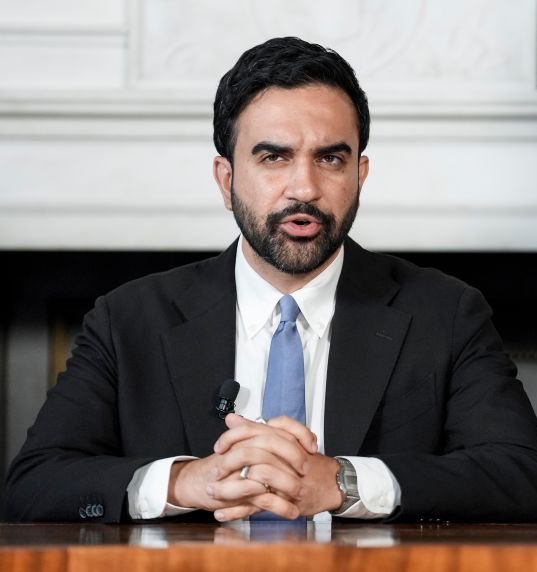
Ana María Archila, Mamdani's Commissioner for International Affairs, scheduled a sit-down with Amir-Saeid Iravani — Iran's Permanent Representative to the UN. Two more senior city officials were also on the invite.
This wasn't a courtesy call. This was three days after Iran fired on commercial ships in the Strait of Hormuz.
💀 Here's what nobody is explaining to you:
This doesn't just change THIS one meeting. This changes ALL city-level contact with hostile governments. Forever.
→ Every city commissioner in America now knows a sit-down with an adversarial government can be booked without a single federal official in the loop
→ Every hostile government watching now knows a U.S. mayor's cabinet might hand them a back channel Washington never approved
→ Every ally watching just saw a mayor's own office nearly meet Iran's UN envoy in the middle of an active maritime conflict
→ Mamdani's own office claims he "did not know about it until there was a press inquiry"
Archila didn't tell her boss. She scheduled it, got caught, and was reprimanded and ordered to cancel — only after the State Department found out on its own and had to step in to clarify the rules.
The Department of State exists to make sure one government speaks for this country. Not fifty mayors, not their commissioners, not a side deal at 2 UN Plaza.
This wasn't a scheduling mixup. This was a city official trying to run parallel foreign policy
Many people will wish they followed me sooner.
I read yesterday that India and Pakistan each recorded more births last year than the entire European continent.
Really, same goes for most other large non-White nations.
And yet, we're still expected to treat people from these high-fertility areas as helpless "minorities"? lmao
Whites are a clear global minority. There is nothing more racist than flooding our countries with global majorities, shitting on us relentlessly, and then shaming us when we say we don't want this.
Mamdani's Culturally enriched New York 🗽🇺🇸 where you can't walk your dog because it happens obviously that they hate dogs.
Look at their courage, how they become dominant over the Americans.
If you don't do something now, you will regret it tomorrow. Mamdani has no place in US.
Kinda distantly related, in my experience, many adults with quite some work experience cannot really process conditional instructions - they probably understand what those means, but just don't have the ability to make the judgment or align their conduct with the condition.
"I will not allow you to jump on the couch."
As a speech-language pathologist who works with very young children for a living, this kind of language is insufferable. Simply because I will see parents use it with 3 and 4 year olds who do not have the ability to pick up on the nuance of your language. I am not opposed to treating children with respect and explaining consequences to their actions, but you cannot rattle off all of this info to a small child and expect them to grasp anything of what you're saying. You need nice short sentences with direct language. Not a paragraph of grammatically complex information.
"Do not jump on the couch. You are hurting the couch. If you jump on the couch again, you're in trouble. Do you understand?"
I did a very similar thing with my second youngest nephew who was 3 years old at the time of this story. We were at the pool together and he was standing over the deep end, kicking things into the pool. The situation was dangerous as he could have easily lost balance, fallen into the pool, and possibly hit his head in the process.
My brother had been struggling to get him to follow directions all day... mostly because he uses this type of language with him. I put a stop to it immediately. This is what I did:
"Hey! T------. Look at me." *Gestures to eyes.* "Do not kick the toys. It is dangerous. You will get hurt. Now, you can stay here and not kick the toys... OR you can pick up the toy, and go play with it over there with your dad."
My nephew, T----- silently picked up his toy and carried it over to his dad. It's that simple.
Lettre à l'Amérique, d'un Français qui a vu la fin du film.
Vous vous croyez encore le dernier pays libre. Vous l'êtes pour l'instant. Je vous écris depuis un pays qui l'était aussi, et qui a signé sa reddition sans qu'un seul coup de feu ne soit tiré.
En France, l'État capte et redistribue 57% de tout ce que la nation produit. Cinquante-sept pour cent. Arrêtez-vous sur ce chiffre. Pour chaque unité de valeur créée par un ingénieur, un ouvrier, un fondateur qui a risqué sa peau, plus de la moitié transite par une main qui n'a rien bâti. Ce n'est pas une ligne budgétaire. C'est une hypothèque permanente sur l'existence des gens.
Et voici ce que personne ne vous avouera : ça n'arrive jamais par la révolution. Personne ne vote pour le déclin. On vote pour la compassion, pour la sécurité, pour la justice, pour la planète. À chaque étape, on troque un morceau de liberté contre une promesse. Et les promesses sont toujours belles. C'est ça, le piège.
Le collectivisme d'aujourd'hui n'agite plus le drapeau rouge il a compris que ça ne se vend plus. Il a appris à parler la langue du soin. ESG, gouvernance, conformité, « responsabilité » : ce sont les mots nouveaux d'une très vieille idée. L'idée qu'une élite éclairée sait mieux que vous ce qui est bon pour vous, et qu'il faut donc lui transférer, ligne après ligne, le pouvoir de décider à votre place. Ce n'est pas un complot. C'est pire : c'est un consensus. Personne ne se cache. Tout se fait à visage découvert, applaudi, subventionné.
Hayek l'avait écrit il y a quatre-vingts ans : la route de la servitude est pavée de bonnes intentions et de planification centralisée. La France a marché sur cette route en souriant. On a nationalisé le risque, socialisé l'échec, taxé l'audace, et administré tout le reste. Résultat : un pays magnifique qui ne construit plus rien, qui gère sa décrépitude avec une élégance funèbre, et où le jeune le plus doué rêve d'une seule chose partir. Beaucoup atterrissent chez vous.
L'Amérique a encore ce que nous avons perdu : le réflexe de bâtir plutôt que d'administrer. Le fondateur y est un héros, pas un suspect. La réussite y est une preuve, pas une faute à expier. C'est votre trésor. Et un trésor, ça se perd sans qu'on s'en aperçoive un formulaire, une agence, une « bonne cause » à la fois.
Alors ne cherchez pas d'ennemis cachés. C'est inutile et c'est indigne de vous. Regardez plutôt le chiffre. Regardez la France. Chaque point de PIB que vous laissez glisser vers l'État est un point de liberté qui ne revient jamais.
La liberté ne meurt pas assassinée. Elle meurt anesthésiée, sous les applaudissements.
Ne signez pas. Construisez.
You've probably heard this before, but it's always worth repeating. Something extremely cool about the "Star-spangled Banner," the American national anthem, is that it asks a question, and it's the question at the heart of everything in the American worldview.
"Oh, say, can you see
By the dawn's early light
What so proudly we hailed
At the twilight's last gleaming..."
So the anthem begins with a question and a scene. One man, a patriot, is asking another man, another patriot, "can you see it?" at sunrise after a long, dangerous night.
The "it" in question is going to be revealed to be the flag, our "star-spangled banner," which they had last fully recognized and honored as the sun set, daylight failed, and night crept over them the evening before.
Can you see it? Say! Can you see it?!
IS IT STILL THERE?!
"Whose broad stripes and bright stars
Through the perilous fight
O'er the ramparts we watched
Were so gallantly streaming..."
Here we find that the "it" is in fact the flag, our star-spangled banner, and we learn why the question is being asked.
The flag is described as having flown and streamed gallantly over ramparts of war through a perilous fight. All could have been lost. The flag, and even the fledgling country for which it stands, one nation under God and indivisible.
Say! Can you see it? Now that the light is back?
IS IT STILL THERE?!
"--And the rockets' red glare,
The bombs bursting in air,
Gave proof through the night
That our flag was still there!--"
They could see it through the battle in the light of the rockets and bombs that threatened them, here and there in quick glimpses. But it was still there throughout! But now? At dawn?
Say! Can you see?
IS IT STILL THERE?!
"Oh, say, does that star-spangled banner yet wave
O'er the land of the free
And the home of the brave?"
The urgency is palpable with every refrain. They have to know. It's the first thing they must know as the sun begins to light the sky, even before it rises.
IS IT STILL THERE?!
Say! Say!! Can you see? Can you see it?!
At the heart of every American beats the fundamental truth and reality that what we have here is precious, that it's worth fighting for, to the death if necessary, and that it's fragile. That at any moment it can be lost. That we have to remember to look for it because last night might have been the night in which it failed.
Every day, every year, every generation.
The American fight for freedom, to live in self-governance within ordered liberty, is ongoing and never-ending. The price of the land of the free is that it must be the home of the brave. We have to defend it, defend it, and defend it again, against all enemies foreign and domestic, because what we have is amazing, rare, fragile, and worth every cent of treasure, every drop of blood, and every risk to our sacred honor to protect it.
Our anthem is not a declaration. It is not a proclamation. It is not a statement.
It is a question.
Every time we sing our wholly unique national anthem, we as American ask the question again. IS IT STILL THERE?! Are we still America? Does that star-spangled banner yet wave?
Because it's a question, the answer is not known. It is not a guarantee. It cannot be taken for granted and isn't. And what an honor to ask and take up our part in the story, in the American Experiment, in the greatest country the world has ever known.
For tonight, the last night of our first 250 years, as the sun gave way to twilight's last gleaming and darkness overtook our land once again, the answer was still yes. We can see it even tonight in the red glare of rockets, with small bombs bursting in air, fill the sky with the noble tribute of fireworks once again.
And we all ask ourselves, will it still be flying at dawn?
This is what it means to be an American.
Happy 250th, America! Now for many happy returns!
🇺🇸🇺🇸🇺🇸🇺🇸🇺🇸🇺🇸🇺🇸🇺🇸🇺🇸🇺🇸🇺🇸🇺🇸🇺🇸
Europe is so cooked. Literally and figuratively.
Joking aside, I have a theory.
That continent has fought itself stupid.
Napoleon, WWI, WWII, etc.
Since 1800, 120+ million people have died on that continent due to war.
Usually the finest stock of a country goes to war, so the strongest among them are just genetically… gone.
It’s just a continent full of literal sheepish retards at this point. There’s nothing left to resist tyranny because the kind of people who do that are now dead.
Fully spent.
Cooked.
I was never a practising, observant Muslim.
Yet, even I wanted Islam to take over Europe and the West until I was a teenager.
We are taught that Islam's greatest achievements are conquest and colonialism.
We are taught that the greatest thing we could ever do is enable the invasion and conquest of non-Muslim countries.
This is a fact that only a former Muslim would tell you.