Eid Mubarak to Muslims. Eid is a moment to express gratitude for blessings. May our hearts remain with those who are enduring poverty, suffering and conflict. May this Eid deepen our compassion, strengthen our faith, and inspire us to serve humanity with humility and hope.
From defying the UN Charter and violating treaty obligations to suppressing human rights and sponsoring cross-border terrorism, India remains deeply uncomfortable with confronting the truth.
Pakistan’s delegate, Saima Saleem, once again set the record straight at the UN Security Council earlier today — not through propaganda or falsehoods, but by speaking with clarity, facts, and truth.
Watch her right of reply (RoR) to Indian representative
With regards to terrorism, India may export violence abroad through state-sponsored terrorism — from terrorist proxies to extra-judicial assassinations — but it cannot hide its fingerprints in the country of origin. Kulbhushan Jadhav remains a living evidence of India’s covert operations inside Pakistan. The TTP, BLA and Majeed Brigade, aided, financed and operated from Afghan soil, have killed thousands of innocent civilians in Pakistan. Just couple of days ago, on 24 May, the Quetta train bombing, whose responsibility was claimed by BLA once again showed the human cost of Indian-sponsored terrorism: killing and injuring numerous Pakistani nationals, including innocent men, women and children who were on their way to celebrate Eid with their loved ones.
Right of Reply to India by Counsellor, Ms. Saima Saleem during the UN Security Council Open Debate on “Maintenance of International Peace and Security: Upholding the Purposes and Principles of the UN Charter and Strengthening the UN-centered International System”
Right of Reply to India by Counsellor, Ms. Saima Saleem during the UN Security Council Open Debate on “Maintenance of International Peace and Security: Upholding the Purposes and Principles of the UN Charter and Strengthening the UN-centered International System”
(26 May 2026)
*******
Mr. President,
I have been compelled to take the floor to respond to the fallacious remarks of the Indian representative. These remarks were not a defence; they were a confession by a State that is deeply uncomfortable with facing the truth of its own abysmal record.
2. That truth begins with Indian Occupied Jammu and Kashmir: it is not India’s internal matter, but an internationally recognized dispute on the agenda of this Council brought by India itself. By refusing to implement Security Council resolutions on Jammu and Kashmir, India defies the UN Charter, including Article 25, which obliges Member States to accept and carry out the decisions of this Council.
3. India’s reckless attempt to hold the Indus Waters Treaty in abeyance reveals yet another dangerous disregard for international law. Treaties are instruments of peace, not weapons of war; and when a State threatens the water, food security, livelihoods and right to water of millions of Pakistanis, it does not merely violate a treaty — it assaults the very principles of humanity, legality and peaceful coexistence enshrined in the UN Charter.
Mr. President,
4. With regard to terrorism, India may export violence abroad through state-sponsored terrorism — from terrorist proxies to extra-judicial assassinations — but it cannot hide its fingerprints in the country of origin. Kulbhushan Jadhav remains a living evidence of India’s covert operations inside Pakistan. The TTP, BLA and Majeed Brigade, aided, financed and operated from Afghan soil, have killed thousands of innocent civilians in Pakistan. Just couple of days ago, on 24 May, the Quetta train bombing, whose responsibility was claimed by BLA once again showed the human cost of Indian-sponsored terrorism: killing and injuring numerous Pakistani nationals, including innocent men, women and children who were on their way to celebrate Eid with their loved ones.
Mr. President,
5. At home, India’s Hindutva project against more than 200 million Muslims is being carried out through genocidal acts. Genocide Watch has warned of the risk of genocide against Muslims in India, and the signs are visible to the international community: pogroms of Muslims in Gujrat and Dehli, lynchings by cow vigilantes, mob violence, demolition of mosques and homes of Muslims, discriminatory laws, and Islamophobic rhetoric against Muslims by Hindutva zealots and politicians. Muslims are not the only victims: Sikhs are disenfranchised, Dalits are dehumanized, and Christians are persecuted in the largest hypocrisy of the world.
Mr. President,
6. Let me remind the Indian delegation that today’s debate is about “Upholding the Purposes and Principles of the UN Charter and Strengthening the UN-centered International System.” India blatantly flouts the very principles at the heart of this theme: sovereign equality through carrying out aggression against all its neighbours; peaceful settlement of disputes through its refusal to resolve Jammu and Kashmir and other disputes; right to self-determination of Kashmiris through denial to implement Security Council resolutions; non-intervention through terrorism and covert operations; respect for human rights through repression of minorities and oppression of Kashmiris; and sanctity of the Charter and other treaties through its holding in abeyance of the Indus Waters Treaty.
7. Pakistan’s conduct is faithful to the theme of this debate: we uphold the Charter in its entirety, promote peaceful settlement of disputes in the region and beyond, respect international law and the UN Charter, and maintain a principled commitment to a UN-centred international system.
8. History will remember the difference: peace is built by those who honour the Charter in conduct, not by those who invoke it in words while violating it in practice.
I thank you.
**********
I strongly condemn the explosion targeting a train in Pakistan.
Terrorism in all its forms is unacceptable.
The perpetrators must be identified & brought to justice.
The @UN stands in solidarity with the people & the Government of Pakistan.
Remarks delivered by Deputy Prime Minister / Foreign Minister of Pakistan, Senator Mohammad Ishaq Dar @MIshaqDar50 at the UN Security Council Open Debate on “Maintenance of International Peace and Security: Upholding the Purposes and Principles of the UN Charter and Strengthening the UN-centered International System”
(26 May 2026)
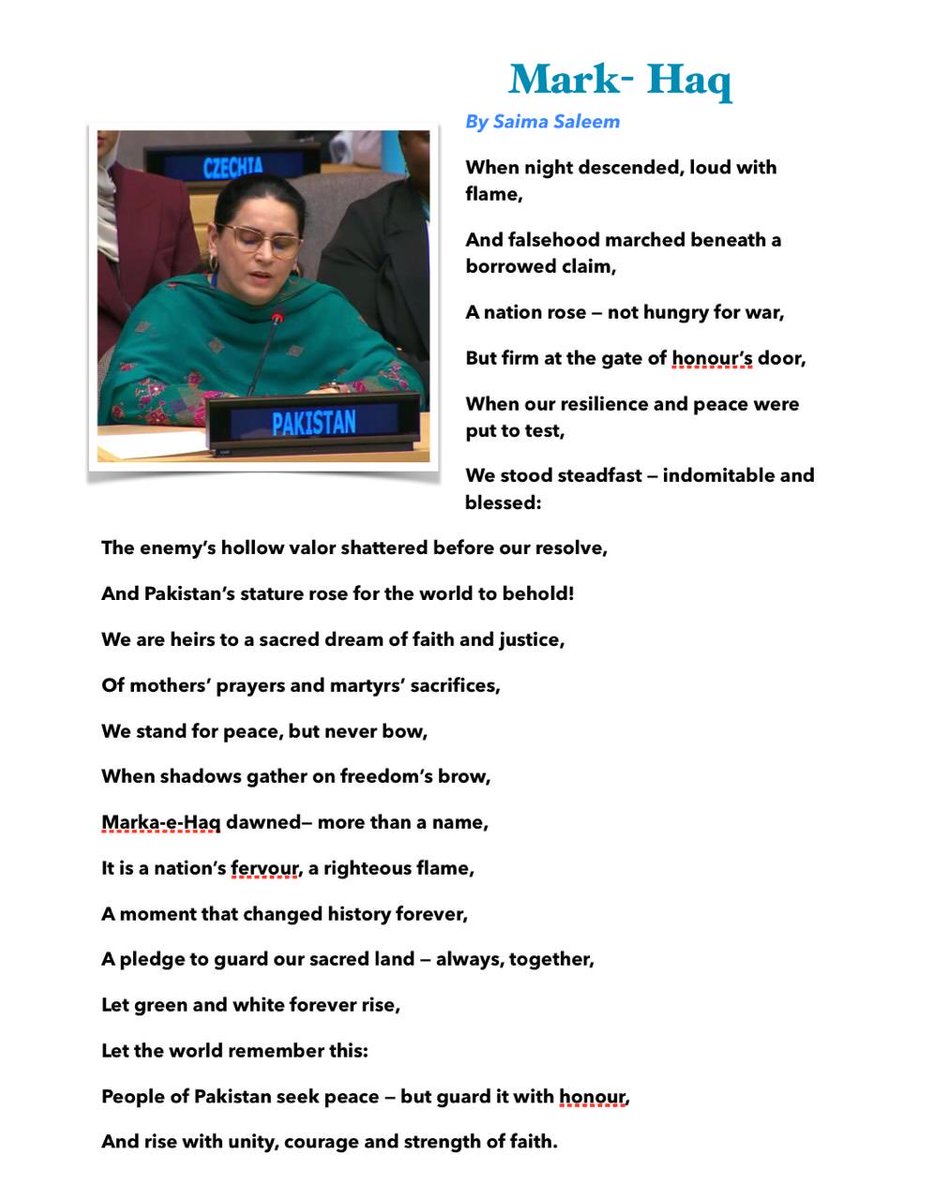
Beneath the Ache
BY Saima Saleem
The heart kept trembling without resting.
No human promise could still the storm,
No familiar voice could hold the breaking,
No bond of the world could give the soul a home.
Without the fear of being left again,
Yet beneath the ache,
where wounds no longer explain themselves,
A softer light began to gather,
At the brow of solitary night,
Emotions, once scattered like rain against closed windows,
Slowly found their rhythm again—
Not because the world became kinder,
But because the heart was held,
By what does never change.
Not in bonds that could not stay,
Not in words that changed with weather,
But in the nearness of the Eternal-
Quiet enough to enter pain, tender enough to steady it.
There, the heart learned:
Peace does not always come from what we love,
Sometimes, it descends without sound or fury—
From a Presence that knows, feels and heals all—
And becomes the shelter the world could never give!
Pakistan stands for peace, dialogue, peaceful settlement of disputes and adherence to international law. India stands exposed by terrorism, occupation, aggression, repression and disregard for international law.
Pakistan has responded strongly to remarks made by India during a United Nations Security Council (UNSC) debate on the protection of civilians, saying that India stands exposed by terrorism, occupation, aggression, repression and disregard for international law.
https://t.co/Y5keOhu7uc
#pakistan #UNSC #unitednations #thedipomaticinsight
@SSaima11@PakistanUN_NY
Our colleague, Saima Saleem, effectively called out India for what it is: a state sponsor of terrorism whose terror franchise has gone global. India’s sponsorship of terrorism against Pakistan is not an abstract notion; rather, it has exacted a massive human cost. The TTP, BLA, and Majeed Brigade — terrorist proxies supported by India — have been involved in the killing of thousands of innocent civilians, including women and children, in our mosques, markets, schools, and streets through networks financed, facilitated, and operated from Afghan soil, something that the reports of the UNSC Monitoring Team have laid bare.
Right of Reply by Counsellor, Ms. Saima Saleem
In Response to Remarks by India during the Security Council Annual Debate on the Protection of Civilians
(20 May 2026)
****
Mr. President,
Today, India once again came to this Council wearing the mask of a victim — but the world can see the face behind that mask.
2. It is the face of a State that exports terrorism abroad, occupies people by force, persecutes minorities at home, weaponizes water, commits aggression in the region, and then tries to lecture others on the protection of civilians.
3. India’s state-sponsorship of terrorism against Pakistan is not abstract; it has a human cost. Its terrorist proxies — including the TTP, BLA and Majeed Brigade have killed thousands of civilians, including women and children in our mosques, markets, schools and streets, through networks financed, facilitated and operated from Afghan soil.
4. With regard to Afghanistan, based on credible intelligence, Pakistan carried out precise, deliberate and professional counter-terrorism operations against terrorist hideouts, training camps, ammunition storage sites, and support networks used to plan and launch attacks against Pakistani civilians, security forces and infrastructure. These operations were directed solely against terrorist and their infrastructure, not against the brotherly people of Afghanistan or civilian facilities. Allegations advanced by the Taliban regime and echoed by their Indian patrons are part of a familiar disinformation campaign to hide their crimes against innocent civilians in Pakistan. We can sense India’s disappointment, as its investments in the use of Afghan terrorist franchise against Pakistan are going to waste due to our effective counter-terrorism operations.
Mr. President,
5. India can neither conceal nor deny its occupation of Jammu and Kashmir — an internationally recognized dispute that remains on the agenda of this Council. In the occupied territory, civilians are killed, detained, dispossessed and silenced; homes are demolished, freedoms are crushed, and an entire people are denied their right to self-determination, as corroborated by facts presented by international community, including the Special Procedures and highlighted in our statement today.
6. India’s treatment of its minorities should alarm the conscience of the world specially genocide of Muslims. Under state-sponsored Hindutva extremism, Islamophobia has been normalized as policy, hate speech rewarded in politics, mob violence met with impunity, and discrimination turned into a daily reality for Muslims and other minorities, including Sikhs, Dalits and Christians.
7. India’s disregard for international law is also evident in holding of the Indus Waters Treaty in abeyance. A State that threatens the water, food security and livelihoods of millions of Pakistanis cannot certainly speak of civilian protection.
Mr. President,
8. Pakistan stands for peace, dialogue, peaceful settlement of disputes and adherence to international law. India stands exposed by terrorism, occupation, aggression, repression and disregard for international law.
9. Pakistan remains a peace loving and international law-abiding nation that seeks harmonious relations with all countries in its neighbourhood and beyond - based on mutual respect and sovereign equality, addressing all disputes in a peaceful manner in accordance with the UN Charter and Security Council resolutions.
I thank you.
India is a country that exports terrorism abroad, occupies people by force, persecutes minorities at home, weaponizes water, commits aggression in the region, and then tries to lecture others on the protection of civilians.
While Pakistan stands for peace, dialogue, peaceful settlement of disputes and adherence to international law, India stands exposed by terrorism, occupation, aggression, repression and disregard for international law.
Counsellor Saima Saleem responds to remarks of the Indian representative during the Security Council Annual Debate on the Protection of Civilians
Please listen to the Right of Reply (RoR) by Pakistan below
Today, the UN General Assembly adopted with consensus the resolution “promotion of interreligious and intercultural dialogue, understanding and cooperation for peace” proposed by Pakistan and the Philippines under plenary agenda item Culture of Peace.
The consensual adoption of the resolution sends a strong signal of international community’s unanimous rejection of xenophobia, intolerance and discrimination. It is also a vivid recognition of Pakistan’s longstanding efforts for peaceful coexistence, interfaith harmony and, international peace and tranquility.
Grateful to the co-sponsors and a wide UN membership for their unstinted support for the resolution
Pakistan has successfully conducted the training fire of the indigenously developed and designed Ground-Launched Cruise Missile “Fatah-4”.
The successful test marks another significant milestone in strengthening the country’s indigenous defence capabilities and strategic deterrence.
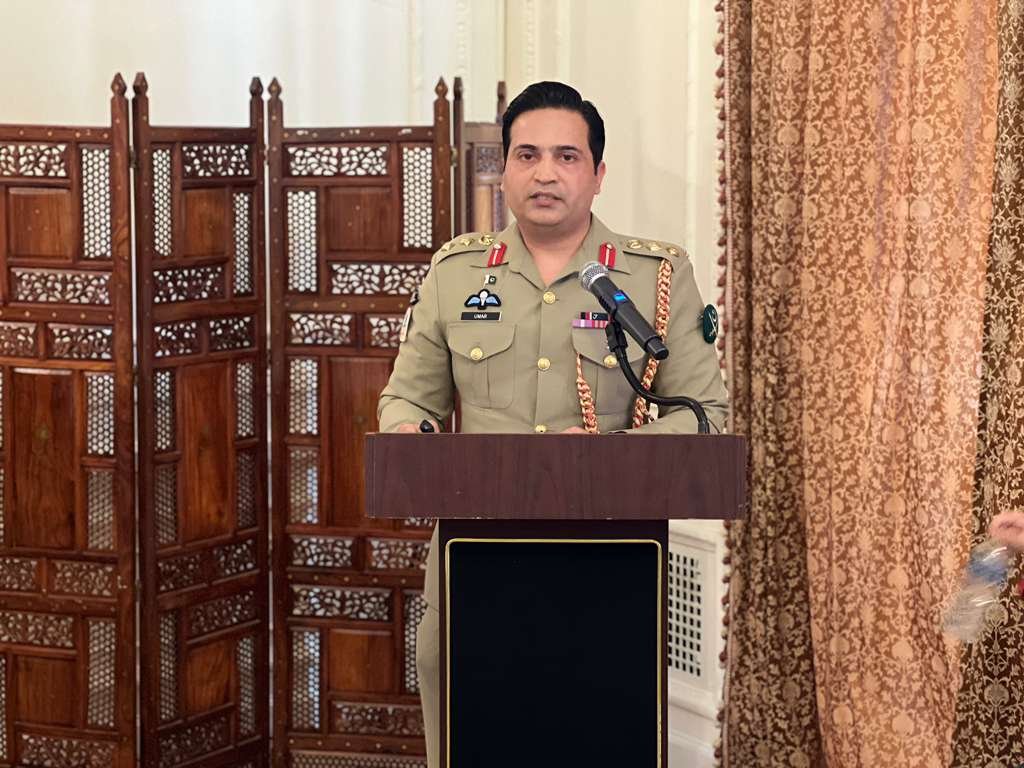
Col. Umar Shafique, Military and Police Advisor and Counsellor Saima Saleem of the Pakistan Mission briefed the participants of the U.S. Army War College about Pakistan's contribution to the UN peacekeeping as well as the country's engagement with the UN system respectively.
Speakers Term Marka-e-Haq a Defining Moment of National Strength, Unity, and Diplomatic Resolve
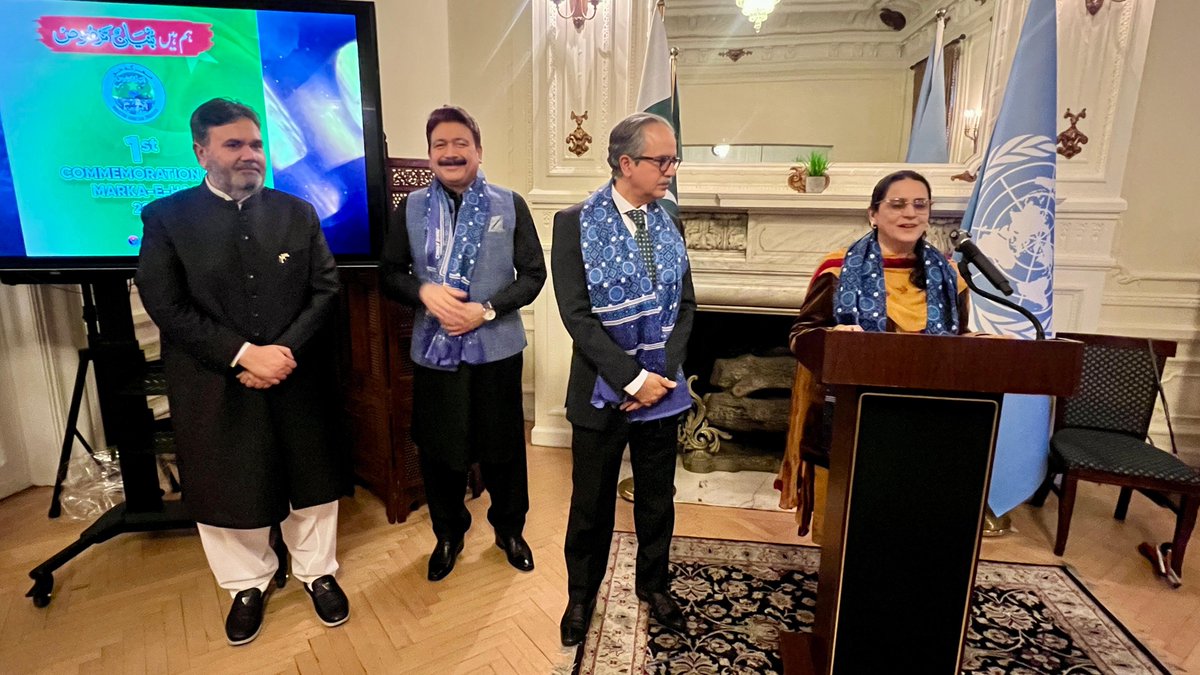
The Pakistan Mission and Consulate General of Pakistan in New York hold a joint event to commemorate the first anniversary of Marka-e-Haq
New York, May 9, 2026: Marka-e-Haq was a defining moment of national strength, resilience, and strategic clarity. Pakistan’s response to India’s unprovoked aggression was firm, measured, and successful. It demonstrated Pakistan’s full capability to defend its sovereignty while acting with responsibility, restraint, and strategic maturity. The Armed Forces of Pakistan were commended for their professionalism and preparedness, with their conduct reflecting not only strength in defence of the homeland but also discipline under pressure and confidence in the face of provocation.
Pakistan reiterated its consistent desire for peace; however, Marka-e-Haq conveyed a clear message that Pakistan’s commitment to peace should not be misconstrued as weakness.
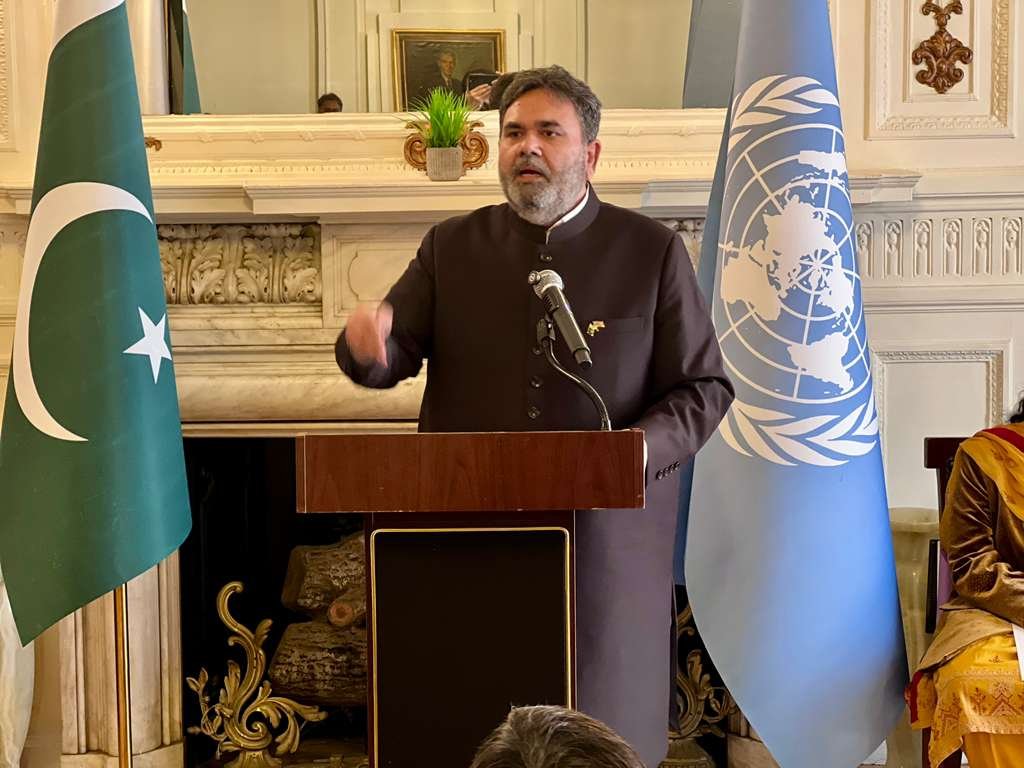
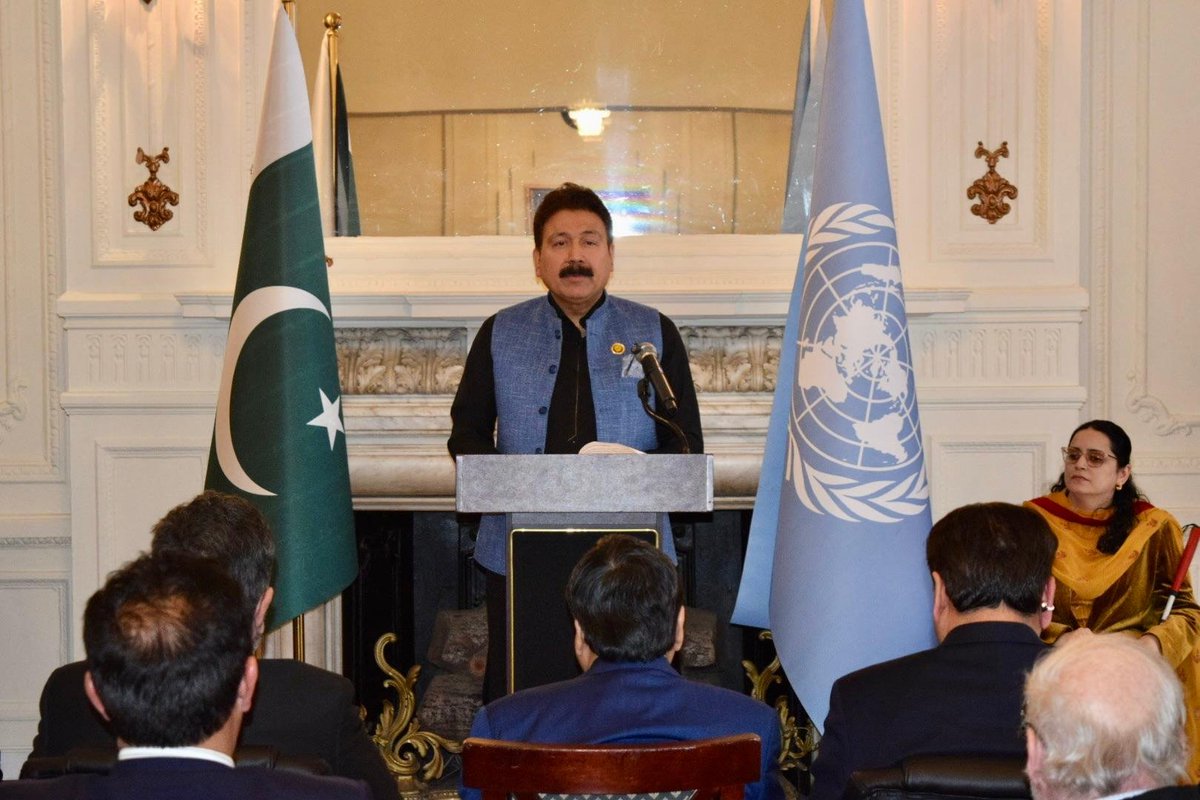
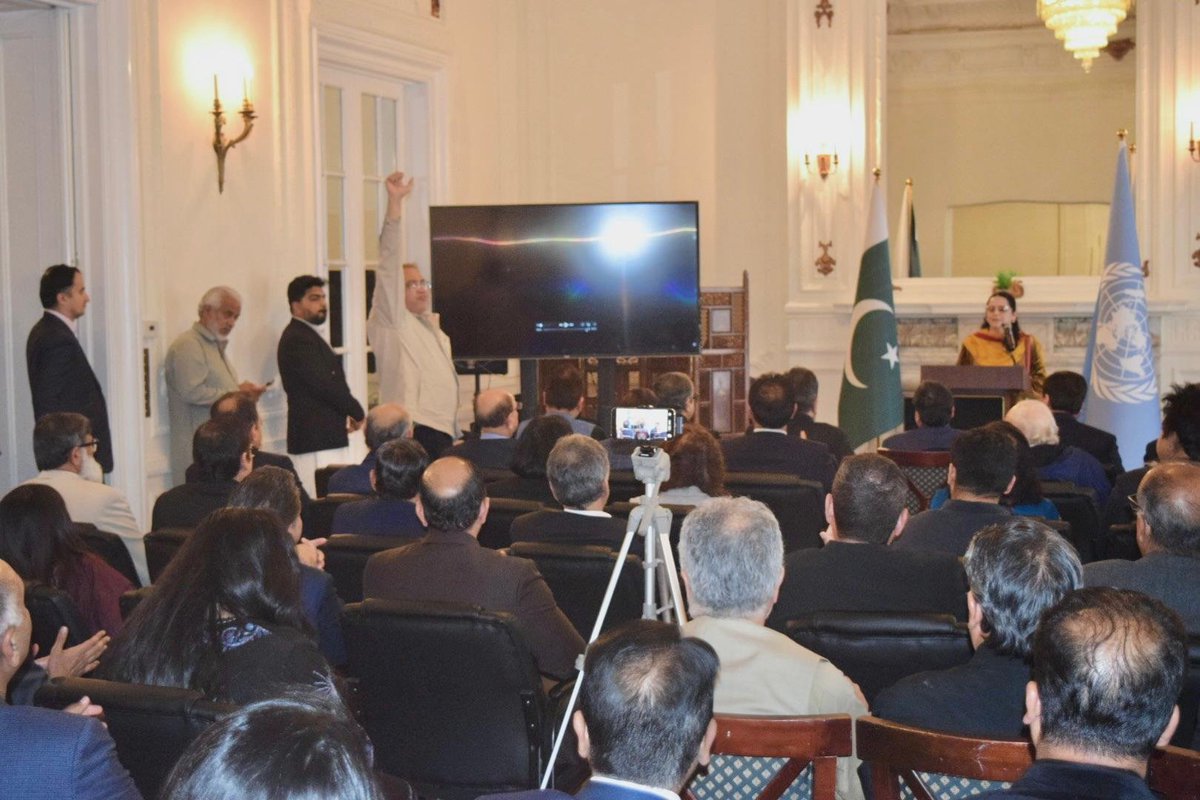
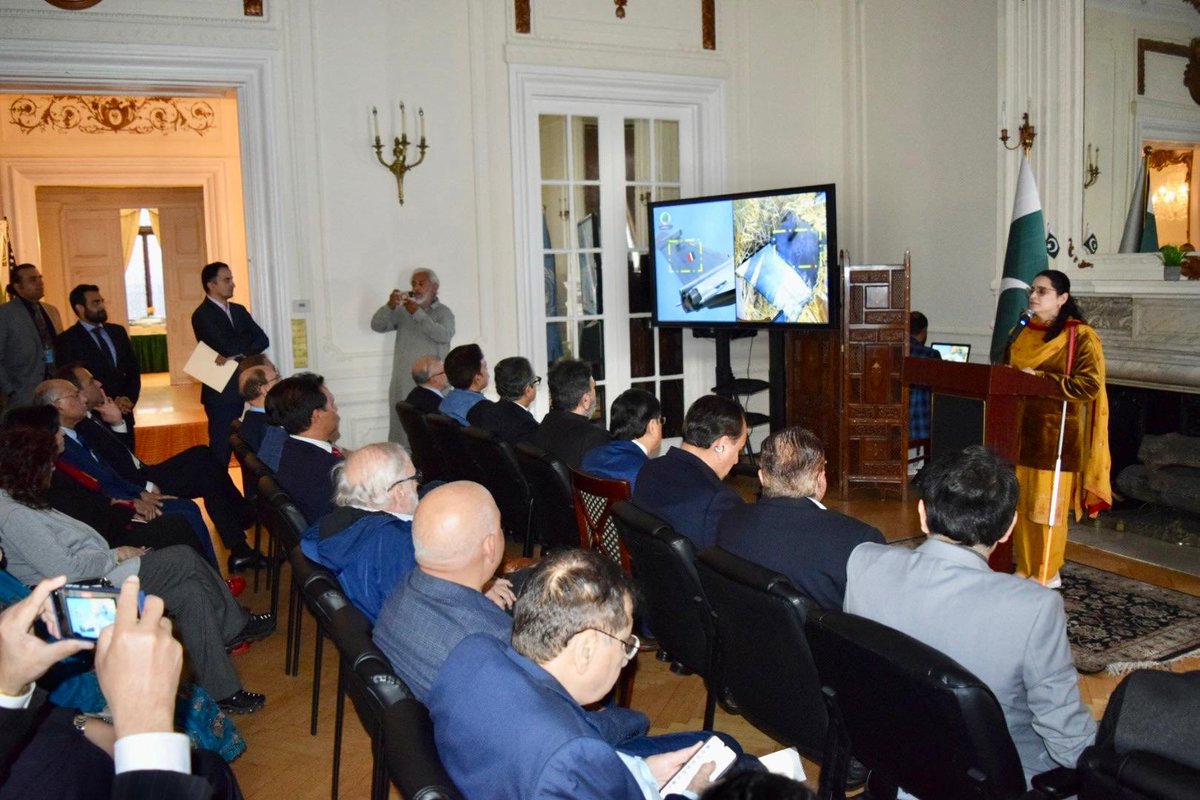
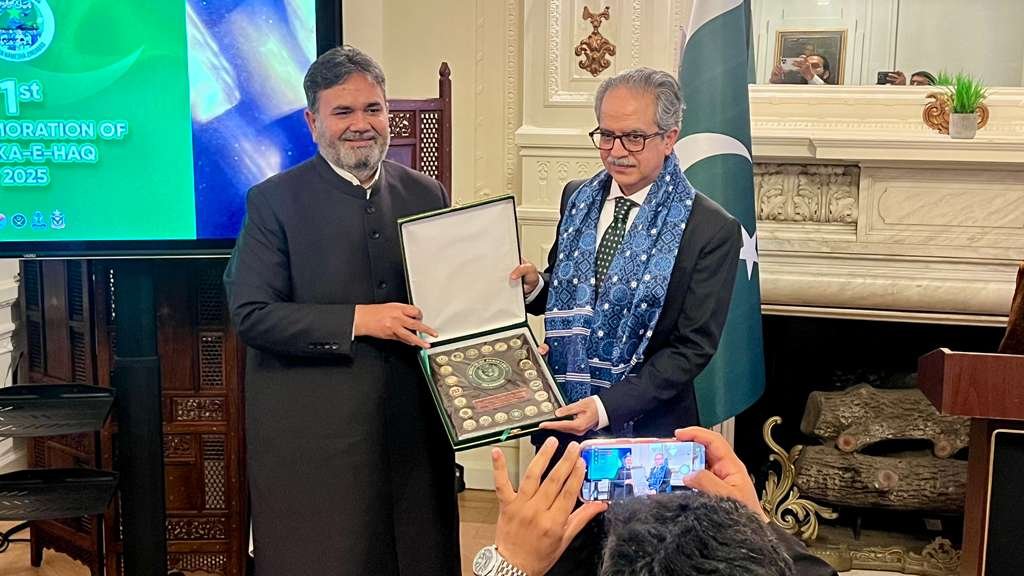
These views were expressed by distinguished speakers at a special event co-hosted by the Permanent Mission of Pakistan to the United Nations and the Consulate General of Pakistan in New York on the occasion of the first anniversary of Marka-e-Haq. The event brought together diplomats, Kashmiri leaders, and members of the Pakistani community in New York. The event was held under the theme of “Marka-e-Haq: Commemorating Pakistan’s Victory – Resilience, Resolve and Pursuit of Justice.”
Speakers emphasized that lasting peace and stability in South Asia require the peaceful resolution of all disputes, particularly the Jammu and Kashmir dispute, in accordance with relevant United Nations Security Council resolutions and the aspirations of the Kashmiri people.
Those who spoke on the occasion included Consul General of Pakistan in New York Mr. Aamer Ahmed Atozai, Senator Rana Mahmood-ul-Hassan, Dr. Gholam Mujtaba (Chairman, Pakistan Policy Institute), Dr. Ghulam Nabi Fai (Secretary General, World Kashmir Awareness Forum), Mr. Ali Rashid (Community Leader), Mr. Taj Khan (Kashmiri Activist), and Ambassador Asim Iftikhar Ahmad, Permanent Representative of Pakistan to the United Nations.
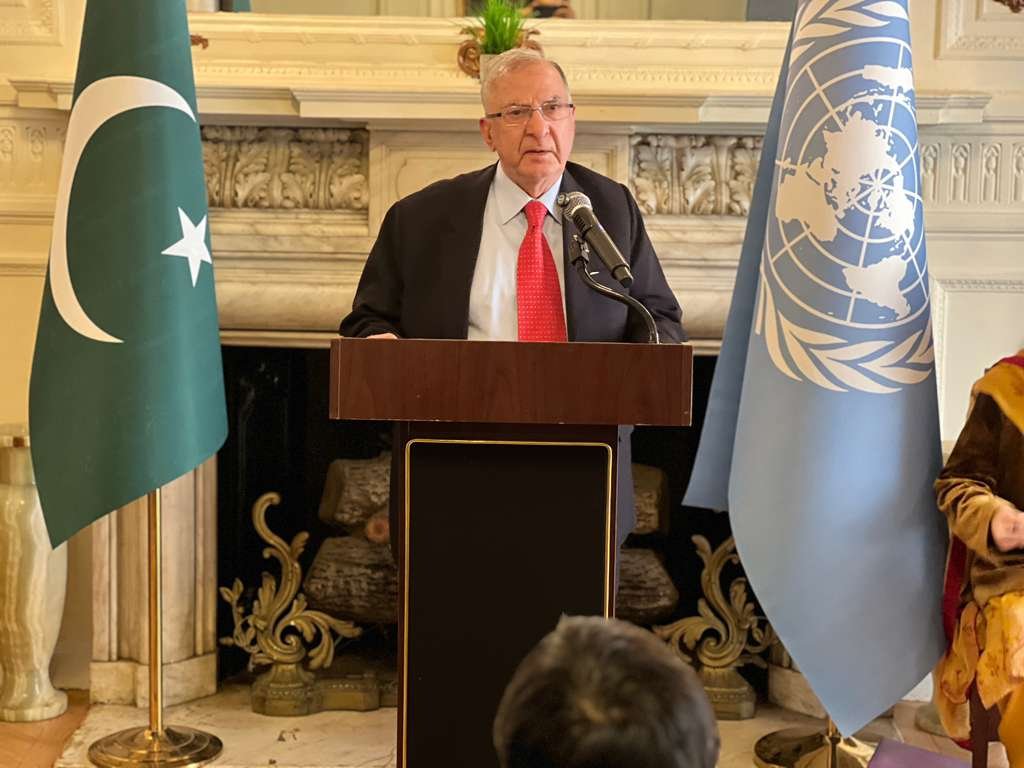
In his keynote speech, Ambassador Asim Iftikhar Ahmad, Pakistan’s top envoy to the UN, paid tribute to the courage, professionalism, and sacrifices of Pakistan’s Armed Forces and the resilience and unity of the Pakistani people. He stated that Marka-e-Haq represented a defining moment in Pakistan’s recent history, reflecting national resolve, strategic clarity, and an unwavering commitment to defending sovereignty and territorial integrity with honour and dignity.
The Ambassador underscored that Pakistan’s response to India’s unprovoked aggression was firm, measured, and responsible, demonstrating both military preparedness and strategic restraint. He noted that Marka-e-Haq exposed India’s aggressive designs, disinformation campaign, and false narratives, while reaffirming Pakistan’s principled approach of responding to aggression with resolve, propaganda with truth, and escalation with restraint.
He further highlighted the key role of Pakistan’s diplomacy, particularly at the United Nations, in effectively presenting Pakistan’s position before the international community and cautioning against the risks of escalation.
Reaffirming Pakistan’s commitment to peace, Ambassador Asim Iftikhar Ahmad stressed that durable peace and stability in South Asia require the just and peaceful resolution of the Jammu and Kashmir dispute in accordance with relevant United Nations Security Council resolutions and the aspirations of the Kashmiri people. He emphasized that Pakistan remains a responsible and peace-loving country that seeks dialogue, stability, and peaceful coexistence based on justice, mutual respect, and sovereignty. He concluded by stating that Marka-e-Haq had further strengthened Pakistan’s credibility and international stature, reinforcing its message of peace with dignity and steadfastness in the face of challenges.
Speaking on the occasion, Senator Rana Mahmood-ul-Hassan stated that Marka-e-Haq marked a historic turning point in the history of the subcontinent, demonstrating Pakistan’s military strength, national unity, and strategic resolve. He said Pakistan not only successfully defended itself against Indian aggression on the military front, but also achieved significant diplomatic and political successes by effectively presenting its principled position before the international community. He described the period as one of the finest hours of Pakistan’s diplomacy, exposing false narratives, highlighting India’s aggressive posture, and reaffirming Pakistan’s commitment to peace, restraint, and responsible statecraft.
The Senator further emphasized that Marka-e-Haq once again established the centrality of the Jammu and Kashmir dispute to lasting peace and stability in South Asia. He stressed that durable regional peace cannot be achieved without a just and peaceful resolution of the Kashmir dispute in accordance with the aspirations of the Kashmiri people and relevant United Nations Security Council resolutions.
Reaffirming Pakistan’s determination to safeguard its national interests, he stated that Pakistan would protect its sovereignty, security, and legitimate share of water under the Indus Waters Treaty at all costs.
In his opening remarks, Consul General Aamer Ahmed Atozai emphasized Pakistan’s enduring commitment to peace, dialogue, and regional stability. He noted that Pakistan’s conduct during Marka-e-Haq demonstrated responsibility, restraint, and preparedness in safeguarding national interests. He underscored that lasting peace in South Asia remains closely linked to the just resolution of the Jammu and Kashmir dispute in accordance with relevant UN Security Council resolutions and the aspirations of the Kashmiri people. He also appreciated the unwavering support and patriotism of the Pakistani and Kashmiri diaspora, particularly the Pakistani-American community in New York, and called for renewed commitment towards a stronger, more united, and prosperous Pakistan.
Dr. Gholam Mujtaba stated that India’s designs against Pakistan’s sovereignty and territorial integrity were firmly rebuffed through national unity, strategic resolve, and the professionalism of Pakistan’s Armed Forces. He emphasized that Pakistan demonstrated clear primacy in both diplomacy and military planning, successfully countering aggression while projecting its principled position internationally. He further noted that these achievements must now be translated into economic strength and self-sufficiency, enabling Pakistan to emerge as a secure, resilient, and prosperous nation.
Dr. Ghulam Nabi Fai stated that Marka-e-Haq elevated Pakistan’s international standing by demonstrating diplomatic maturity, military capability, and national resolve. He said the people of Indian Illegally Occupied Jammu and Kashmir (IIOJK) welcomed Pakistan’s success, recognizing that a strong Pakistan is essential for the Kashmiri people’s right to self-determination. He alleged that India’s attempt to exploit the Pahalgam incident through a false-flag narrative failed due to the leadership of Field Marshal Asim Munir, the wisdom of Prime Minister Shehbaz Sharif, and the professionalism of Pakistan’s Armed Forces. He further stated that India rejected Pakistan’s call for a neutral international investigation due to the hollowness of its own claims, and expressed concern over efforts to erode the Muslim identity, culture, and heritage of IIOJK.
Speaking on the occasion, community leader Ali Rashid stated that Marka-e-Haq stands as a powerful example of how resilient nations respond in moments of crisis with unity, resolve, and confidence in their institutions. He emphasized that Pakistan remains committed to peace and stability while retaining full capability to defend its sovereignty and national interests. He highlighted the role of the Pakistani-American community as a bridge between Pakistan and the United States, stressing their responsibility to present Pakistan’s narrative truthfully and counter misinformation.
Kashmiri leader Taj Khan stated that Marka-e-Haq is a moment of pride for both Pakistanis and Kashmiris, reflecting shared resilience and solidarity in the face of challenges to peace and stability. He highlighted the strong synergy between Pakistan’s civil and military leadership in addressing national security challenges, ensuring a coordinated and effective response. He further noted that India’s propaganda was effectively countered and ultimately failed due to Pakistan’s proactive and credible diplomatic engagement on the international stage.
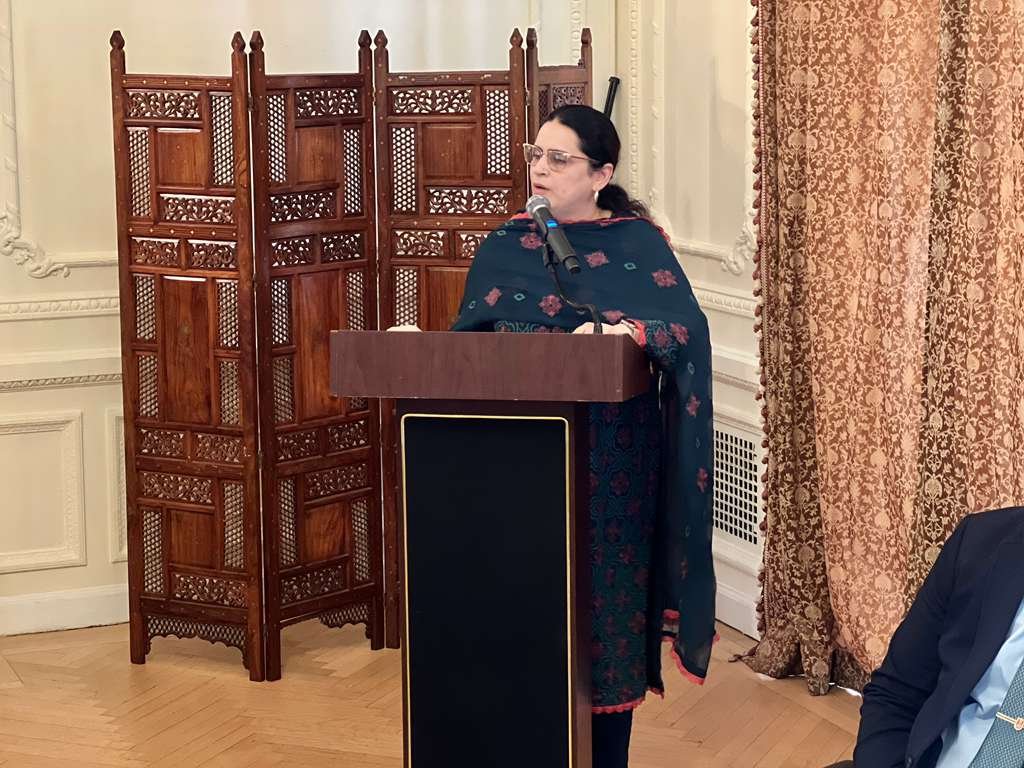
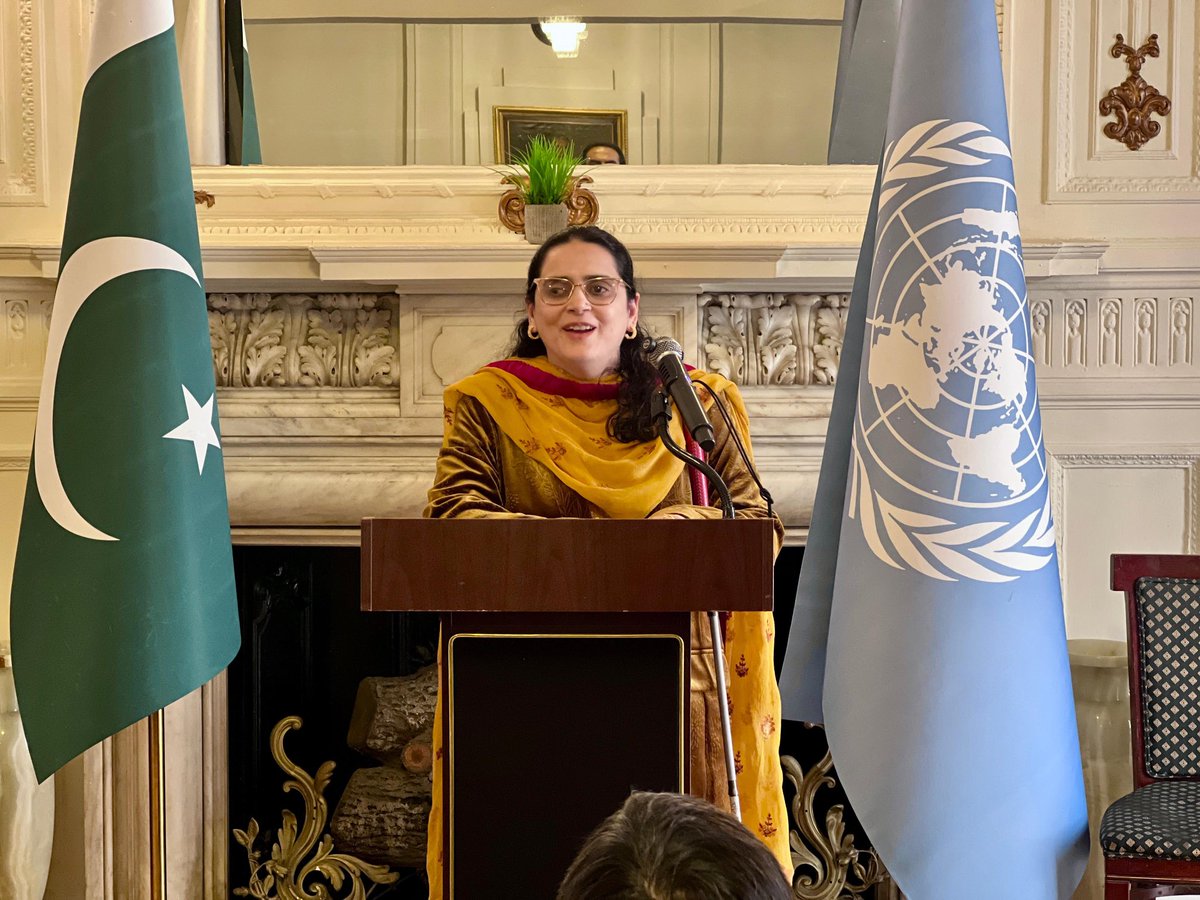
Counsellor Saima Saleem conducted the proceedings of the event.
The Pakistan Mission and the Consulate General of Pakistan in New York hosted an event under the theme of “Marka-e-Haq: Commemorating Pakistan’s Victory – Resilience, Resolve and Pursuit of Justice”.
The event brought together diplomats, Kashmiri leaders, and members of the Pakistani-American community to commemorate the first anniversary of Marka-e-Haq.
Marka-e-Haq marked a defining moment of national strength, resilience, and strategic clarity for Pakistan. The speakers paid rich tribute to the armed forces for their courage and valour. They stated that Pakistan’s response to India’s unprovoked aggression was firm, measured, and responsible — demonstrating the country’s full capability to defend its sovereignty with restraint, professionalism, and strategic maturity.
They emphasized that Pakistan remains committed to peace, dialogue, and regional stability, while making clear that its desire for peace must never be mistaken for weakness. They underscored that durable peace in South Asia requires the just and peaceful resolution of the Jammu and Kashmir dispute in accordance with relevant UN Security Council resolutions and the aspirations of the Kashmiri people.
Those who spoke on the occasion included Ambassador Asim Iftikhar Ahmad, Permanent Representative of Pakistan to the United Nations, Consul General of Pakistan in New York Mr. Aamer Ahmed Atozai, Senator Rana Mahmood-ul-Hassan, Dr. Gholam Mujtaba (Chairman, Pakistan Policy Institute), Dr. Ghulam Nabi Fai (Secretary General, World Kashmir Awareness Forum), Mr. Ali Rashid (Community Leader), and Mr. Taj Khan (Kashmiri Activist).
Please watch the proceedings of the event
@Asimiahmad@PakistanPR_UN@PTVNewsOfficial@PakTVGlobal@epwing_official@RadioPakistan@MoIB_Official@ForeignOfficePk
Moderating event for Marka-e-Haq: Commemorating Pakistan’s Victory, Resilience, Resolve and Pursuit of Peace organized by the Permanent Mission of Pakistan and Consulate General of Pakistan.