Bernard of Clairvaux and John Calvin were very different from each other but they had at least one thing in common: they loved the Lord Jesus.
(Calvin, Institutes II.16.1)
R.C. Sproul called Calvin's Institutes "a titanic work." Schaff called them "the masterpiece of a precocious genius."
Read more about Calvin's Institutes here: https://t.co/1hHQf0FJkC
Martin Luther and Bernard of Clairvaux carefully distinguished between Christ's eternal sonship and what he achieved for us in his humanity. Both are essential.
I never get tired of re-reading this.
(Sermon on John 1, LW22:52)
Cyril of Alexandria dealing with an interesting objectjon:
"Q. He said to the Samaritan woman 'you worship what you do not know and we worship what we know.' How can we worship the one who places himself among the worshippers?...
A. The one speaking to this woman was the sole and unique Jesus Christ, in whom the worshipping humanity and worshipped divinity (προσκυνουσης ἀνθρωπὸτητος και προσκυνουμενης θεοτητος) are ineffably united..."
(Cyril of Alexandria, Dialogue on the incarnation)
This 13th c. roll at the British Library reminds me that the way medieval people thought is a mystery.
It's a serious document (genealogical roll of English kings) yet full of strange humour.
A monkey doctor examines a fox's urine and a cat pretends to be hanged to catch mice.
Martin Luther, one the most influential men in church history, reminding us not to trust in men but in God. God's church managed without us and will do just fine after us.
Against the Antinomians, 1539 (LW47:118)
"Our Lord's kingdom is not of this world; and most of his people may do their country much more essential service by pleading for it in prayer, than by finding fault with things which they have no power to change."
John Newton (Letter 10)
Painfully true:
"There is an amazing and humbling difference between the conviction we have of the beauty and excellence of divine truths, and our actual experience of their power ruling in our hearts."
John Newton (Letter 11)
Helpful warning by John Piper on the excess of some "biblical theology."
Many typology or Hebrew geeks look for clever, symbolic connections that are just too speculative.
https://t.co/SCp7wSIMk0
Deuteronomy is a realistic book telling Israel how things should be and how they are:
15.4: 'there will be no poor among you for the Lord will bless you...'
15.7: 'if one of your brothers should become poor...'
15.11: 'there will never cease to be poor in the land...'
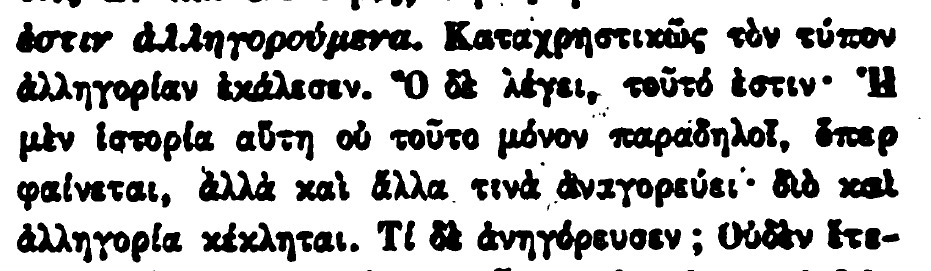
Chrysostom on Paul's use of "allegory" in Gal 4.24. Perceptive distinction but probably anachronistic!
"Paul unusually calls allegory that which is a type. He means this: this story does not just declare what is manifest but also reveals other things; hence it’s name allegory.
@birdchadlouis Interestingly, in Rom 8.15 and Gal 4.6, Paul does not add "πατερ!" vocative, but "ὁ πατηρ" nominative with the article: he defines abba. Same thing with the Lord Jesus in Mk 14.36. Abba definitely doesn't mean 'daddy'.
In the pouring out of the Father's love, there is not one drop falls besides the Lord Christ. Love is first poured out on Christ; and from him it drops as the dew of Hermon upon the souls of his saints.
John Owen (Communion with God, II:27)
I am struck how often Charles Spurgeon preached about the duty to give to the poor and show compassion to them.
(Sermon on Phil. 4.19, 'my God shall supply all your needs', Sept. 17th 1882)