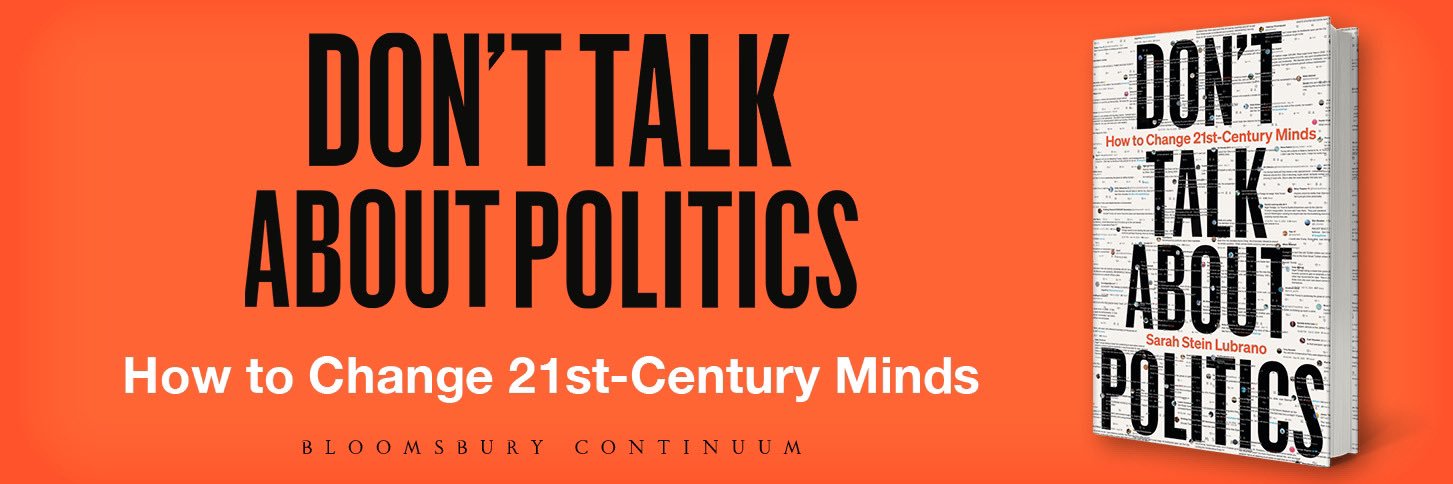
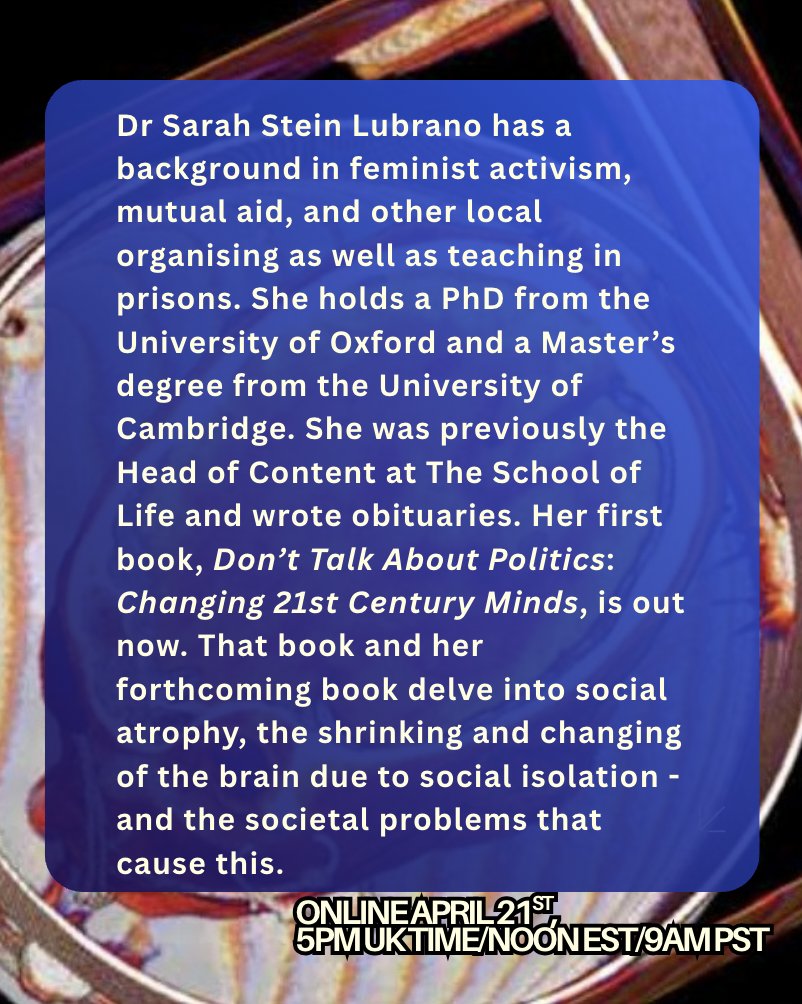
My first ever book is out today in the United Kingdom, and after a six year PhD and a two year writing process it is absolutely a moment of pure joy for me—not just about authoring, but self authoring.
https://t.co/QWiUITtGku
I added another online lecture, since the last one is popular :)
https://t.co/nY5D0uTOnZ
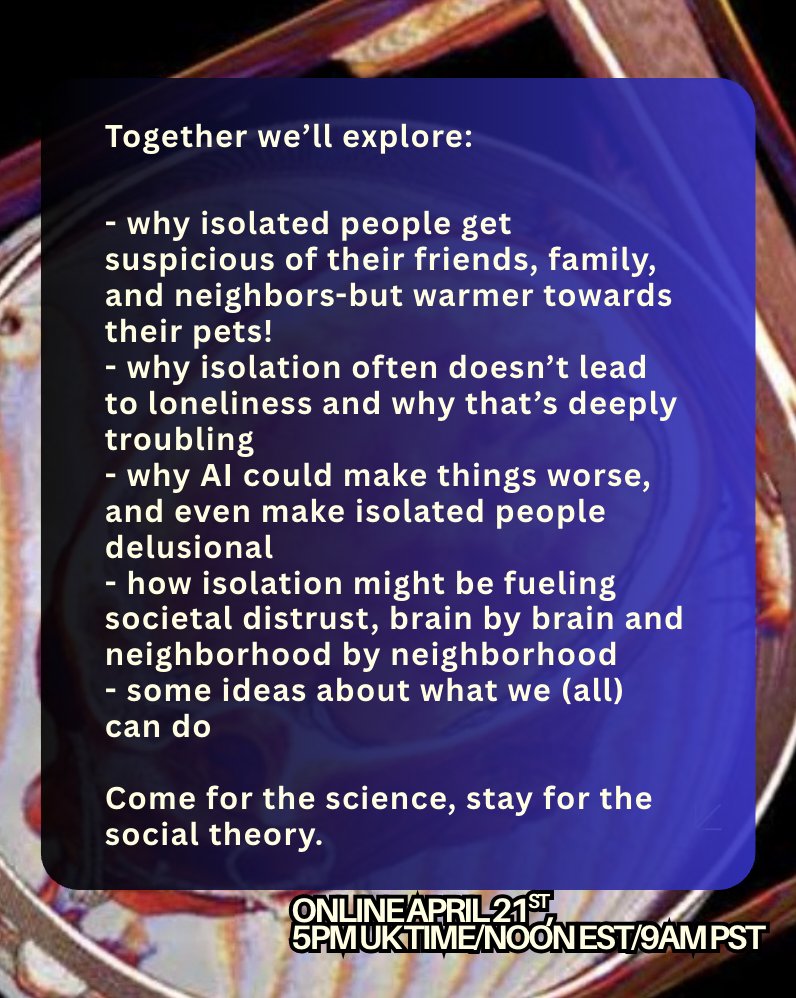
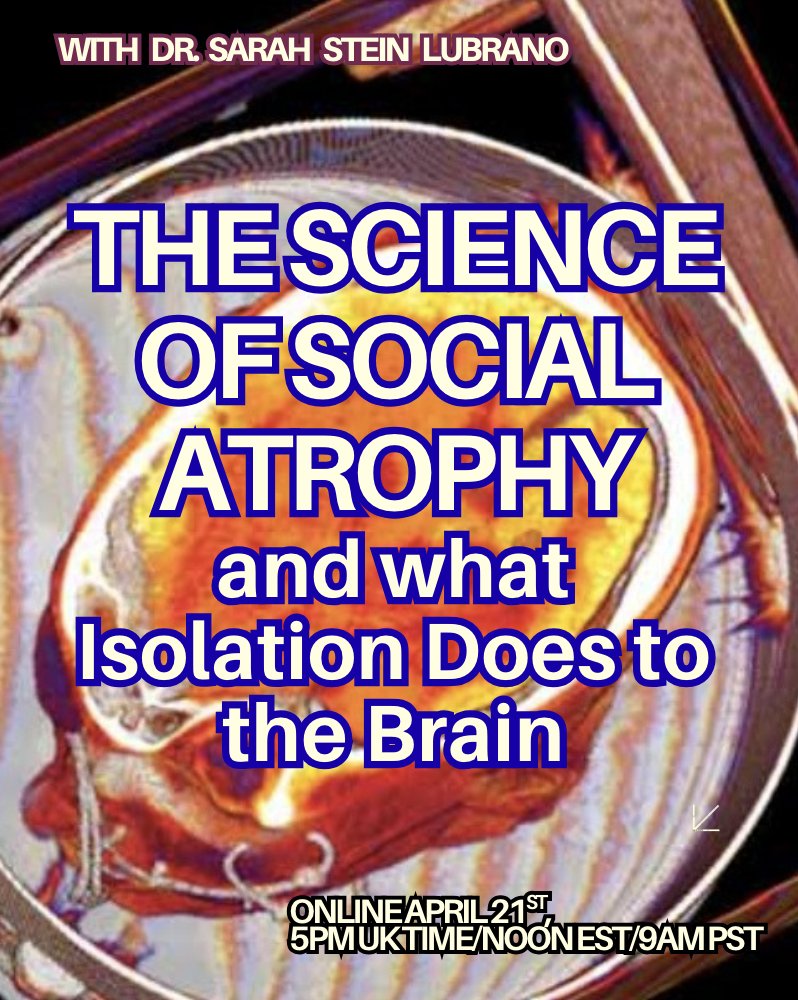
Come for the data and theory, stay to dream up better ways of keeping each other going, together.
New Course Loading: Reaching the Public For Academics
Are you an academic who is being constantly asked to “show impact” or “reach the public”? Would you like help doing this in a way that is maximally effective and minimally annoying?
https://t.co/Osrs73pGtO
This likely doesn’t mean much for the actual finding of dissonance (weirdly) but if true makes these researchers (Festinger et al) seem like real dickheads.
The fall of "When prophecies fail": Another social psychology classic turns out to be based on fabrications and lies.
In 1954, Dorothy Martin predicted an apocalyptic flood and promised her followers rescue by flying saucers. In “When Prophecy Fails “ (1956), the now-canonical account of the event, Festinger, Riecken and Schachter claimed that the group doubled down on its beliefs and began recruiting—evidence, the authors argued, of a new psychological mechanism, cognitive dissonance.
When Prophecy Fails is one of the most influential case studies in 20th-century social science. It shaped popular understandings of how belief survives disconfirmation, and became a touchstone for explaining the origins of religious movements...
But the case was misrepresented. The cult did not persist, proselytize, or reinterpret its failure as a spiritual triumph. Its leader recanted, the group disbanded, and belief dissolved. Drawing on newly unsealed archival material, this article demonstrates that the book's central claims are false, and that the authors knew they were false. The documents reveal that the group actively proselytized well before the prophecy failed and quickly abandoned their beliefs afterward.
They also expose serious ethical violations by the researchers. The newly unsealed Box 4 of papers contain transcripts, telephone logs, research notes, channeled messages, and internal communications among the researchers. Collectively, they reveal serious ethical breaches: fabrications, covert manipulation, and at least one instance of interference with a child welfare investigation.
One coauthor, Henry Riecken, posed as a spiritual authority and later admitted he had “precipitated” the climactic events of the study. This article shows that the authors of When Prophecy Fails misled their readers—and that scholars in psychology, sociology, and religious studies have been building theories atop a collapsed foundation.
The full scope and variety of the misrepresentations and misconduct of the researchers needed the unsealed archives of Festinger to emerge, the full story could not be written until now. Every major claim of the book is false, and the researchers’ notes leave no option but to conclude the misrepresentations were intentional.
If you feel like you're bad at your job and it's making you depressed, just consider that, as the investigation of the recent heist revealed, the password to access the Louvre's videosurveillance system was "Louvre".
“Even a very good argument or piece of information is unlikely to change someone’s mind when it comes to politics.”
@SSteinLubrano explains why debates aren’t a tool for political change, like many believe.
Read the article: https://t.co/3ZZ1MUxYM7
The deputy Treasury secretary, the CDC director, and the DIA director all got fired suddenly this week and I think only the most committed of news consumers noticed
So so so pleased that my piece on social atrophy is out in the Open Society Foundation’s The Ideas Letter.
In it I bring in a bit more Marx, and think about how alienation and neuroplasticity are related.
https://t.co/FJ6v9TYJUa