$GME the #DSPX and the indexes correlation.
Understand and see how market mechanics work, giving us ideas of when to to be long $GME and the Indexes.
Thanks for your ongoing teachings @jam_croissant
https://t.co/SH7Cd4mxDH
$GME is about to Meltup above $100, and here's why:
A short thread summarizing my #GMEMELTUP thesis, and the numerous ways to take advantage of this once a lifetime opportunity 🧵
So far, the story about $GME has been how our indicators allow us to see, for ourselves, low stock liquidity, as well as the very short-term, simple internal mechanics for ignition.
🧵
This illiquidity can be seen in DPI, IV30 (implied option volatility for 30 days), and GEX/DEX interacting to cause ignition. Additionally, there are simple ways to determine whether the ITM or OTM calls and puts are being bought or sold by traders, which in turn causes MMs/dealers to hedge these option positions, potentially leading to explosive price movements.
Today, I'll start the next phase of this story:
Why don't we always get crazy ignition whenever all of the indicators line up? What causes ignition in $GME , why might it be different.
🧵
I also suggest doing some of your own investigation. You can easily align my free charts here https://t.co/v2oxOjkmFv with TradingView on another screen and do some simple visual backtesting. Check your other favourite stocks while your theere.
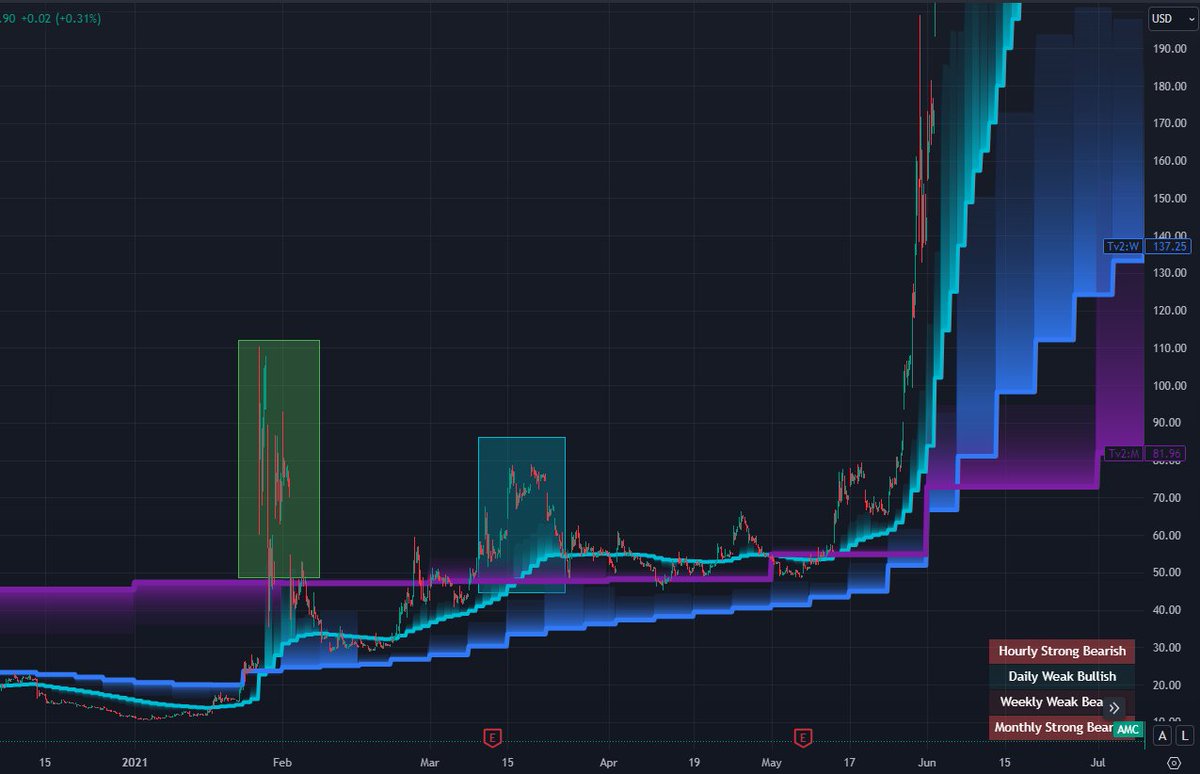
$GME At the close today will generate bullish Monthly Velocity, flipping from negative to positive for the first time since November 2020.
This is only just getting started.
500 likes I’ll have the most comprehensive $GME video of my life out for you guys on Sunday.
Still trying to get back to my pre-suspension follower count (12.5k), and every like goes a long way :)
$GME caught support perfectly at its Monthly Trigger, and has only gone up since its bullish crossover.
See you all next week :)
This thing is only just getting started.
$GME - This latest crossover took the algo from Strong Bearish to Weak Bearish.
Meaning, we aren't expecting any upside explosions, but we are expecting downside to subside, and price to start working its way towards bullishness again.
If you appreciate the live commentary, likes/retweets go a long way for me :)
#JustDarioDaily
🚨 WHICH BANKS ARE AT RISK OF GOING BUST IN A LIQUIDITY CRISIS BECAUSE ALREADY (RIDICULOUSLY) INSOLVENT? 🚨
Thank you for waiting, but I assure you what follows isn't going to disappoint you! 😁
Two months ago in "This time is NOT different - Part 2," I flagged how my analysis at that time flashed (big) red warnings on several US banks (https://t.co/UricUgGwOb).
My analysis today will expand on the methodology presented (https://t.co/pLcqYGNvl0) to include the following points:
1 - I will now include the largest European banks. Consequently, I reclassified their figures to harmonize all the datasets on US reporting. In particular, with regards to Available For Sale (AFS) and Hold To Maturity (HTM) securities.
2 - All values presented are in $USD. Non-USD figures have been converted using the 30th September FX rate for consistency.
3 - Shareholders' Equity is considered in its entirety.
Now that the stage is set, the show can begin! 🎬
⚠️ LOAN / DEPOSIT RATIO
A L/D ratio above 90% is already a warning sign, but there are 2 banks that managed to lend more than the deposits they collected! (Table 1)
⚠️ [LOAN + HTM] / DEPOSIT RATIO
HTM books are now officially "Hide to maturity" and stuffed with assets trading at a significant loss because of high interest rates (and soon high credit losses too). Not only banks cannot afford to sell those securities, but trading at such a discount to the par value, they even stop being collateral-worthy. Effectively, the risk of those books is now equivalent to the loan ones. Furthermore, bear in mind there is no #BTFP in Europe, while in the US, that only applies to US Treasuries or government-guaranteed securities.
Now, check how many banks hold more highly illiquid assets than the deposits they collected...(table 2) I feel now the warning bells in your head are already pretty loud 😂
⚠️ [LOAN + HTM + AFS] / DEPOSIT RATIO
AFS securities aren't Marked to Market but booked according to their "fair value." Translated, their real value in the market is lower due to a lack of liquidity.
Now, check how many banks cannot cover their deposits if we include the AFS assets in the analysis... (table 3) I bet now those bells in your head turned into a Marilyn Manson concert! 🤣
At this point, I hope you agree with me that all those capital ratios and risk metrics the regulators use to assess banks' health are completely useless. As a matter of fact, banks that went bust always had "strong capital" according to the regulatory metrics, from #CreditSuisse (recently) to #Lehman in 2008. Fyi, both banks imploded with an "A" rating! 🙈
🚨 Alright, now is time for fireworks! 🚨
In the last table, I present two scenarios on the current state of banks’ books:
1 - "La La Land" that only assumes 5% losses on loans, 10% on HTM, and 2.5% on AFS books and compares those with the bank's total equity.
2 - “Soft Landing" that assumes 7.5% losses on loans, 20% on HTM, and 5% on AFS books.
I wanted to include a "Realistic" one, but my heart ❤️ couldn't bear it, sorry. 🥲🙏🏻 Feel free to play with the data and see what happens if you assumes realistic losses..
Considering how twisted the reality we are living in is, I used green crayons to mark all those banks that have high chance of being already insolvent in the “ridiculous” scenarios presented. 🤭
⚠️Important to bear in mind is this analysis only considers on-balance sheet items to limit its complexity. However, if we bring in off-balance sheet items I strongly doubt banks like $BAC , $UBS and $HSBC will come up so strong as per previous detailed analysis I posted…
Beware, during a financial crisis, all the assets, including "cash and equivalents," suffer a haircut while liabilities only get a haircut 💇 after a company files for Chapter 11. This means that the chances for the assets I left out to be able to increase in value during a crash to compensate for the calculated losses are close to zero.
THE END 🎇🎆
GSE's reported reverse repo (RRP) trade amounts of $7.36 trillion in Q3 of 2021, or $7,363,672,000,000, to be more precise.
Now that I have your attention again, let's go through some housekeeping, then make this all make sense.
-----
I. Reverse Repurchase Agreements: Also known as reverse repos, or "RRP", reverse repurchase agreements are operated by the New York Fed's Open Market Trading Desk (a/k/a "The Desk") and authorized by the Federal Open Market Committee (FOMC) in efforts to facilitate the Fed's mandate of maintaining financial stability and liquidity.
In a reverse repo, the desk sells a [treasury] security to a party--banks, government-sponsored enterprises (GSE's), and money market funds--under an agreement to repurchase at a later date and/or time, with interest. Each party utilizing the Fed's reverse repo facility has a $160 billion per day limit.
(Reuters) --
[Reverse repo] "allows eligible banks and investment firms to park cash at the Fed and earn interest - is the largest source of easily extinguished liquidity".
Eligible parties--or 'counterparties when entered into a contract with another party--that participate in the Fed's RRP facility are banks, investment manager/money market funds (MMF), and GSE's.
-----
II. Government-Sponsored Enterprise (GSE):
According to Investopedia, GSE's are privately held "quasi-governmental entity established to enhance the flow of credit to specific sectors of the U.S. economy", and were created by Congress to "help to facilitate borrowing for a variety of individuals, including students, farmers, and homeowners."
• "GSE's do not lend money to the public directly; instead, they guarantee third-party loans and purchase loans in the secondary market, ensuring liquidity"
• "GSE's also issue short and long-term bonds (agency bonds) that carry the implicit backing of the U.S. government"
-----
Some quick interpretation...
During and leading up to the third quarter of 2021, GSE's like Fannie Mae and Freddie Mac, needed more liquidity to issue mortgages and keep their own doors open, and turned to the reverse repo facility.
-----
So, what was going on in 2021?? A recap, courtesy of Financial Times.
• January: Stocks like #AMC and #GME shocked the financial world, as investors bought and hold, and caused gamma squeezes, which would ultimately lead to Melvin Capital's demise. If is likely this event would set off a chain of events that are still being felt and dealt with to this day
"Brokers, hedge funds and regulators received a crash course in the power of retail investors on a mission"
-
• February: Five-, seven- and 10-year [treasury] notes all fell sharply in price within an hour. In the "flash event" that shortly followed, treasuries saw a significant sell-off
"...it also illustrates that the world’s most important market is not as structurally robust as investors might hope"
"...the blow-up happened because liquidity — the ability of sellers easily to find buyers, and vice versa — evaporated"
-
• March: Bill Hwang’s Archegos Capital Management fails in "spectacular fashion". Hwang amassed a mountain of leverage on a small number of stocks.
"When one of his more recent bets, on ViacomCBS, turned sour, that set off a chain of events that left banks including Credit Suisse and Nomura with billions of dollars in losses."
-
• May: "China’s crackdown on the cryptocurrency and its production, or 'mining', sparked the first serious crash of 2021"
-
And all of this during a time where the world economy was vulnerable and at the mercy of a pandemic, which crippled economies and would lead to a recessionary environment.
-----
So, let's put it all together, now.
GSE's, these semi-government entities who increase stability and liquidity in areas of the U.S. economy--particularly real estate--guaranteeing loan products and making financing more widely available, where in high demand in 2021.
Events that transpired would have caused significant stress on the economy, banks, and liquidity.
In response, these GSE's turned to the Fed's reverse repo facility to access desperately needed funds.
$7.3 trillion worth of funds... in one quarter!
-----
Okay....that's all well and good, Squeezy. But why you bringing up old news?
Despite this reverse repo information being two years old, since the Fed only publishes reverse repo transaction data retroactively at the end of each quarter for 2 years prior, it gives us some context and perspective to understand GSE's role in markets, especially during times of market stress.
Looking back at the data, however, we see that Federal Home Loan Mortgage Corporation (Freddie Mac) and Federal National Mortgage Association (Fannie Mae) were responsible for over 98% of the $7.3 trillion GSE's parked at the Fed in Q3 of 2021; 54.73% and 44.48&, respectively.
-----
So, Freedie Mac and Fannie Mae are pretty important than??
Yes. but don't just take my word for it.
(Investopedia) --
"Together, these agencies make the mortgage market more liquid, stable, and affordable by providing liquidity and guarantees to thousands of banks, savings and loans, and mortgage companies in the U.S."
-----
In short, Fannie Mae and Freddie Mac are crucial to the mortgage and loan market, and in times of stress--like 2008 where they nearly collapsed--are prone to liquidity shortages and uncertainty, and turn to the Fed to help keep the [proverbial] lights on.
To put this into perspective, 2023 has been a tumultuous year, as well. 5 banks have failed, banks acquired other banks' failed assets, banks were issued [not] bailouts, lending facilities were all going brrrr, and much more.
It would be safe to hypothesize that GSE's, in particular Fannie and Freddie, are feeling the pressure again. Unfortunately, we wont know how bad things are--in terms of repo borrowing--until Q3 2025 when the Fed releases transaction data for right now.
-----
According to Fannie Mae's 10-Q,
Fannie Mae provided "$288 billion in liquidity to the mortgage market in the first nine months of 2023", through their "single-family and multifamily business segments"
According to Freddie Mac's 10-Q,
Freddie Mac provided "$98 billion in liquidity to the mortgage market in 3Q 2023".
Together, the efforts of Fannie and Freddie in Q3 alone, enabled 1,543,000 home purchases and refinances.
-----
So, now what?
With no reverse repo data available, we look to other factors to determine if we think Fannie and Freddie are a good position strong financial condition. Are they in a similar position now as they were in 2008? 2021? Etc.
• High inflationary environment.... ✓
• High interest rates.... ✓
• Reduced discretionary spending.... ✓
• Increased delinquencies on credit cards and consumer loans.... ✓
• Stressed treasury market.... ✓
• Student debt moratorium lifted.... ✓
• Failing banks.... ✓✓
-----
My two cents....
In my opinion, when the Fed releases transaction data for Q3 2023, I believe we will see GSE's parking even more at the Fed's reverse repo facility than they did in 2021.
When we consider the laundry list of economic, political, and social factors at play across markets, it is fair to assume that things are at a pivotal moment.
Headlines and statistics for mortgages of late have actually showed strength, and mortgage delinquencies are relatively non-existent. However, we know that nothing last forever.
-----
Signs of the Times
HT to @JG_Nuke and @m3_melody for having a conversation which highlighted a recent article that lets us know that change is already coming.
Commercial Observer lets us know that,
• Fannie Mae "alerted lenders on Tuesday that all agency-backed loans involving brokers are now subject to pre-review."
"'The action by Fannie Mae could have major repercussions for mortgage brokers involved with agency lending', according to Ira Zlotowitz, CEO of Gparency"
• And don't worry, Freddie is getting in on the action, too.
"Freddie Mac (FMCC) has put Meridian Capital Group under the microscope after a loan brokered on behalf of the government-sponsored entity was called into question", leading Meridian to be barred "from placing deals through lenders that are Freddie Mac seller-servicers while the investigation is underway".
-----
What's more??
• A recent Fannie Mae survey shows that,
"85% of consumers indicated that it’s a 'bad time' to buy a home, with most respondents citing high home prices and high mortgage rates as the primary reason", as consumers are expressing "greater pessimism toward the larger economy this month, in addition to their ongoing frustration with the housing market," said Fannie Mae Senior Vice President and Chief Economist Doug Duncan.
• Fannie Mae's September monthly summary let us know that delinquencies are on the rise:
1. The Conventional Single-Family Serious Delinquency Rate increased 1 basis point to 0.54% in September.
2. The Multifamily Serious Delinquency Rate increased 7 basis points to 0.54% in September.
-----
According to Fannie Mae's 10-Q,
• Fannie Mae has borrowed $125.7 billion in the first nine months of 2023
• Fannie Mae lost
↠ $1.9 billion in receive-fixed swaps
↠ $64 million on foreign exchange swaps
↠ $6 million on receive-fixed swaptions
↠ $63 million in net contractual interest expense on interest-rate swaps
• And much more...
According to Freddie Mac's 10-Q,
Freddie Mac realized $118 million in losses from the sale of available-for-sale securities and report $184.9 billion in total debt on the consolidated balance sheet.
Together, the efforts of Fannie and Freddie in Q3 alone, enabled 1,543,000 home purchases and refinances.
• Freddie Mac lost
↠ $48 million in swaps
↠ $424 million in written options
↠ $10 million CRT-related derivatives
↠ $194 million in "other" derivatives designated as hedges
• And much more...
-----
And let's not forget recent events threatening the treasury market, which is propped up on securitized mortgages:
• Hedge funds adding to treasury market volatility by shorting it over $600 billion
We discussed this previously:
• Industrial and Commercial Bank of China's (ICBC) malware attack which disrupted the U.S Treasury market by prevented the settling treasury trades on behalf of market participants, effecting the liquidity of treasury markets
-----
Before we go, a fun fact.
Fannie Mae and Freddie Mac are regulated by the Federal Housing Finance Agency, who also regulates the Federal Home Loan Bank system.
For FHLBs,
↠ As a prerequisite to membership and borrowing activity, all FHLB members are required to purchase FHLBNY's capital stock
↠ FHLB members are required to pledge collateral to fully secure credit products [loans], sometimes "up to the counterparty's total credit limit".
Said another way, some members need to pledge collateral of the exact amount they want the FHLBank to loan them, in order to borrow.
↠ Interesting forms of collateral that are eligible to secure advances from FHLBNY include:
• one-to-four family and multi-family mortgage loans that are "delinquent for no more than 90 days".
If you missed that, let me clarify. To secure or renew advances (loans) from FHLBNY, members--institutions, insurance companies, etc--can pledge delinquent mortgages as collateral, as long as they are not more than 90 days delinquent.
↠ Residential mortgage loans are the principal form of collateral for advances
-----
My interpretation...
FHFA regulates GSE's like FHLBs, Fannie Mae, and Freddie Mac. This would lead me to believe that on some level, GSE's are sharing a pool of resources, liquidity, and/or mortgages, such that, GSE's are [essentially] counterparties to one another.
Fannie and Freddie's 'bread and butter' is the single and multi-family mortgage. Single and multi-family mortgages are also the life blood of FHLB's, as they serve as the principal form of advances--to banks like #JPMorgan, #BankofAmerica, and #WellsFargo--and are used for collateral that is pledged by FHLB member banks so they can be eligible to borrow from the FHLB system.
I can keep going, but long story short, mortgages are the backbone to GSE's, be it as an MBS swap for liquidity, or securitized as bonds in the repo market.
As the economic landscape continues to suffer stress event after stress event, the average consumer suffers; with less to spend, paying more to borrow, and the cost of living--both figuratively and literally--going up with each passing day.
What do you think happens when mortgages start defaulting in large numbers akin to and greater than 2008?!!? And how do you think that will affect the treasury markets??!?!
(death spiral loading...)
....but I will digress.
-----
TLDR:
For GSE's, who we know to be heavy users of lending facilities like the Fed's reverse repo and FHLB system, it is likely that these quasi-governmental entities are feeling the pressure, which recent news and survey's confirm.
With regulatory and central bank tightening policies, increased financial responsibilities and obligations, all in the face of declining treasury liquidity, high inflation, and ever-increasing rates, it may only be a matter of time before the house [of cards] falls.
If Fannie Mae and Freddie Mac are unable to maintain their level of providing liquidity--which in turn means less mortgages being written--many markets and lending facilities' ability to function may be significantly reduced, as securitized mortgages are a lifeblood of Wall Street, its customers, and those who aid and abet corporate greed.
-----
"Just don't f*cking dance!"
-----
"Each time history repeats itself, the price goes up."
- Ronald Wright
-----
#SystemicRisk #HousingCrisis #StockMarket #MortgageBackedSecurities #Swaps #Derivatives #Mortgage #Delinquency #MemeBanks
November 7, 2023 Commercial Observer article I:
https://t.co/d5pigV2F6B
November 7, 2023 Commercial Observer article II:
https://t.co/r5cxeMaP9E
November 7, 2023 National Housing Survey:
https://t.co/3X6E51xIcn
October 31, 2023 Reuters article:
https://t.co/2bzoECdtqy
Fannie Mae Form 10-Q for the Quarterly Period Ended September 30, 2023:
https://t.co/xNe4ktxXFG
Freddie Mac Form 10-Q for the Quarterly Period Ended September 30, 2023:
https://t.co/PVjZkq0N5G
Fannie Mae September 2023 Monthly Summary:
https://t.co/jqxp2Be2n8
NY Fed Repurchase & Reverse Repurchase Transactions for the Third Quarter of 2021:
https://t.co/LhikDcqoZD
December 17, 2021 Financial Times article:
https://t.co/nGorLmToqq
NY Fed Reverse Repo Counterparties:
https://t.co/f2iVvKBliL
St. Louis Fed [FRED] - Delinquency Rate on Single-Family Residential Mortgages, Booked in Domestic Offices, All Commercial Banks:
https://t.co/jYLlvRG7Ku
Investopedia - Government-Sponsored Enterprise:
https://t.co/ULQx7P6yma
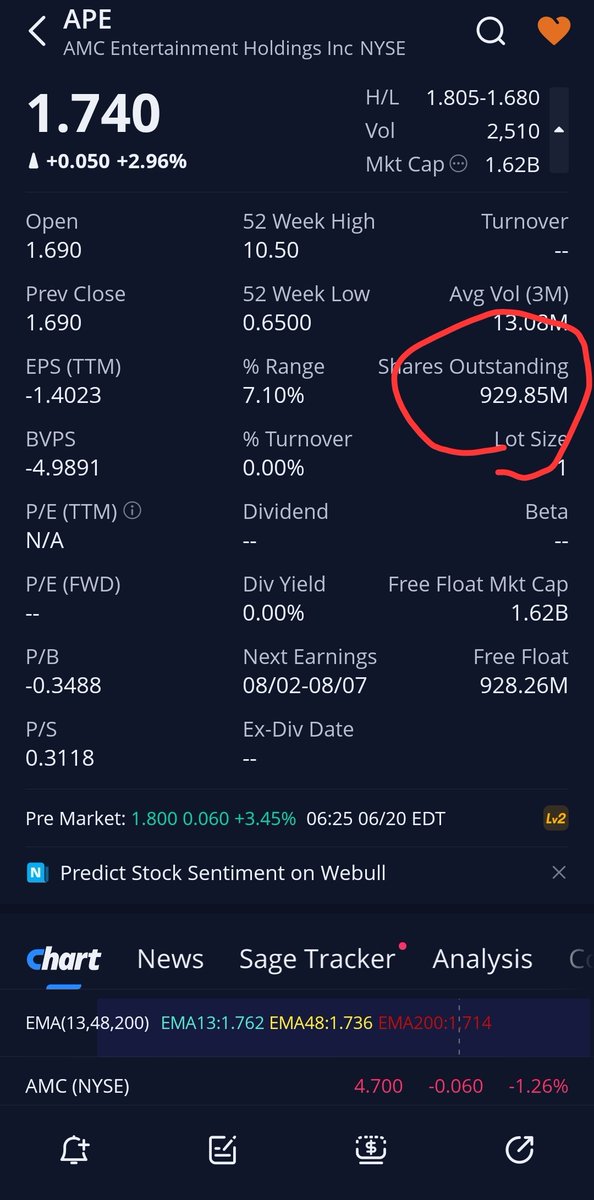
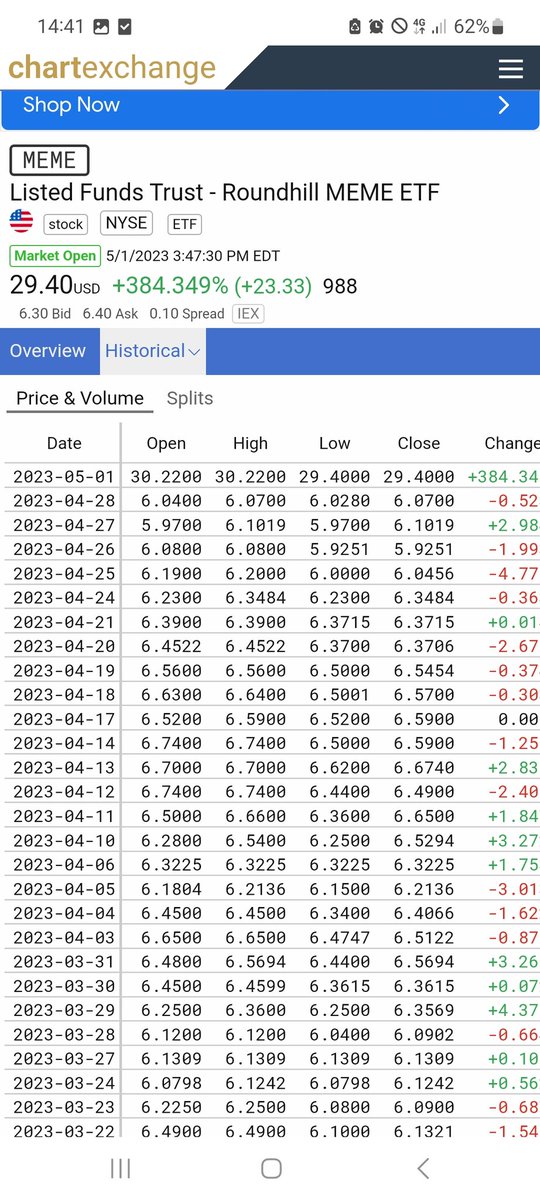
Article experiment: With over 90% of AMC held by retail investors, it’s odd how a company can lose a third of its market cap in two days. Share your view: If you hold AMC shares, did you sell? Poll below!




![DarioCpx's tweet photo. #JustDarioDaily
🚨 WHICH BANKS ARE AT RISK OF GOING BUST IN A LIQUIDITY CRISIS BECAUSE ALREADY (RIDICULOUSLY) INSOLVENT? 🚨
Thank you for waiting, but I assure you what follows isn't going to disappoint you! 😁
Two months ago in "This time is NOT different - Part 2," I flagged how my analysis at that time flashed (big) red warnings on several US banks (https://t.co/UricUgGwOb).
My analysis today will expand on the methodology presented (https://t.co/pLcqYGNvl0) to include the following points:
1 - I will now include the largest European banks. Consequently, I reclassified their figures to harmonize all the datasets on US reporting. In particular, with regards to Available For Sale (AFS) and Hold To Maturity (HTM) securities.
2 - All values presented are in $USD. Non-USD figures have been converted using the 30th September FX rate for consistency.
3 - Shareholders' Equity is considered in its entirety.
Now that the stage is set, the show can begin! 🎬
⚠️ LOAN / DEPOSIT RATIO
A L/D ratio above 90% is already a warning sign, but there are 2 banks that managed to lend more than the deposits they collected! (Table 1)
⚠️ [LOAN + HTM] / DEPOSIT RATIO
HTM books are now officially "Hide to maturity" and stuffed with assets trading at a significant loss because of high interest rates (and soon high credit losses too). Not only banks cannot afford to sell those securities, but trading at such a discount to the par value, they even stop being collateral-worthy. Effectively, the risk of those books is now equivalent to the loan ones. Furthermore, bear in mind there is no #BTFP in Europe, while in the US, that only applies to US Treasuries or government-guaranteed securities.
Now, check how many banks hold more highly illiquid assets than the deposits they collected...(table 2) I feel now the warning bells in your head are already pretty loud 😂
⚠️ [LOAN + HTM + AFS] / DEPOSIT RATIO
AFS securities aren't Marked to Market but booked according to their "fair value." Translated, their real value in the market is lower due to a lack of liquidity.
Now, check how many banks cannot cover their deposits if we include the AFS assets in the analysis... (table 3) I bet now those bells in your head turned into a Marilyn Manson concert! 🤣
At this point, I hope you agree with me that all those capital ratios and risk metrics the regulators use to assess banks' health are completely useless. As a matter of fact, banks that went bust always had "strong capital" according to the regulatory metrics, from #CreditSuisse (recently) to #Lehman in 2008. Fyi, both banks imploded with an "A" rating! 🙈
🚨 Alright, now is time for fireworks! 🚨
In the last table, I present two scenarios on the current state of banks’ books:
1 - "La La Land" that only assumes 5% losses on loans, 10% on HTM, and 2.5% on AFS books and compares those with the bank's total equity.
2 - “Soft Landing" that assumes 7.5% losses on loans, 20% on HTM, and 5% on AFS books.
I wanted to include a "Realistic" one, but my heart ❤️ couldn't bear it, sorry. 🥲🙏🏻 Feel free to play with the data and see what happens if you assumes realistic losses..
Considering how twisted the reality we are living in is, I used green crayons to mark all those banks that have high chance of being already insolvent in the “ridiculous” scenarios presented. 🤭
⚠️Important to bear in mind is this analysis only considers on-balance sheet items to limit its complexity. However, if we bring in off-balance sheet items I strongly doubt banks like $BAC , $UBS and $HSBC will come up so strong as per previous detailed analysis I posted…
Beware, during a financial crisis, all the assets, including "cash and equivalents," suffer a haircut while liabilities only get a haircut 💇 after a company files for Chapter 11. This means that the chances for the assets I left out to be able to increase in value during a crash to compensate for the calculated losses are close to zero.
THE END 🎇🎆](https://pbs.twimg.com/media/F_3h5rDbcAAIY5W.jpg)
![DarioCpx's tweet photo. #JustDarioDaily
🚨 WHICH BANKS ARE AT RISK OF GOING BUST IN A LIQUIDITY CRISIS BECAUSE ALREADY (RIDICULOUSLY) INSOLVENT? 🚨
Thank you for waiting, but I assure you what follows isn't going to disappoint you! 😁
Two months ago in "This time is NOT different - Part 2," I flagged how my analysis at that time flashed (big) red warnings on several US banks (https://t.co/UricUgGwOb).
My analysis today will expand on the methodology presented (https://t.co/pLcqYGNvl0) to include the following points:
1 - I will now include the largest European banks. Consequently, I reclassified their figures to harmonize all the datasets on US reporting. In particular, with regards to Available For Sale (AFS) and Hold To Maturity (HTM) securities.
2 - All values presented are in $USD. Non-USD figures have been converted using the 30th September FX rate for consistency.
3 - Shareholders' Equity is considered in its entirety.
Now that the stage is set, the show can begin! 🎬
⚠️ LOAN / DEPOSIT RATIO
A L/D ratio above 90% is already a warning sign, but there are 2 banks that managed to lend more than the deposits they collected! (Table 1)
⚠️ [LOAN + HTM] / DEPOSIT RATIO
HTM books are now officially "Hide to maturity" and stuffed with assets trading at a significant loss because of high interest rates (and soon high credit losses too). Not only banks cannot afford to sell those securities, but trading at such a discount to the par value, they even stop being collateral-worthy. Effectively, the risk of those books is now equivalent to the loan ones. Furthermore, bear in mind there is no #BTFP in Europe, while in the US, that only applies to US Treasuries or government-guaranteed securities.
Now, check how many banks hold more highly illiquid assets than the deposits they collected...(table 2) I feel now the warning bells in your head are already pretty loud 😂
⚠️ [LOAN + HTM + AFS] / DEPOSIT RATIO
AFS securities aren't Marked to Market but booked according to their "fair value." Translated, their real value in the market is lower due to a lack of liquidity.
Now, check how many banks cannot cover their deposits if we include the AFS assets in the analysis... (table 3) I bet now those bells in your head turned into a Marilyn Manson concert! 🤣
At this point, I hope you agree with me that all those capital ratios and risk metrics the regulators use to assess banks' health are completely useless. As a matter of fact, banks that went bust always had "strong capital" according to the regulatory metrics, from #CreditSuisse (recently) to #Lehman in 2008. Fyi, both banks imploded with an "A" rating! 🙈
🚨 Alright, now is time for fireworks! 🚨
In the last table, I present two scenarios on the current state of banks’ books:
1 - "La La Land" that only assumes 5% losses on loans, 10% on HTM, and 2.5% on AFS books and compares those with the bank's total equity.
2 - “Soft Landing" that assumes 7.5% losses on loans, 20% on HTM, and 5% on AFS books.
I wanted to include a "Realistic" one, but my heart ❤️ couldn't bear it, sorry. 🥲🙏🏻 Feel free to play with the data and see what happens if you assumes realistic losses..
Considering how twisted the reality we are living in is, I used green crayons to mark all those banks that have high chance of being already insolvent in the “ridiculous” scenarios presented. 🤭
⚠️Important to bear in mind is this analysis only considers on-balance sheet items to limit its complexity. However, if we bring in off-balance sheet items I strongly doubt banks like $BAC , $UBS and $HSBC will come up so strong as per previous detailed analysis I posted…
Beware, during a financial crisis, all the assets, including "cash and equivalents," suffer a haircut while liabilities only get a haircut 💇 after a company files for Chapter 11. This means that the chances for the assets I left out to be able to increase in value during a crash to compensate for the calculated losses are close to zero.
THE END 🎇🎆](https://pbs.twimg.com/media/F_3h5rCbIAAxI4v.jpg)
![DarioCpx's tweet photo. #JustDarioDaily
🚨 WHICH BANKS ARE AT RISK OF GOING BUST IN A LIQUIDITY CRISIS BECAUSE ALREADY (RIDICULOUSLY) INSOLVENT? 🚨
Thank you for waiting, but I assure you what follows isn't going to disappoint you! 😁
Two months ago in "This time is NOT different - Part 2," I flagged how my analysis at that time flashed (big) red warnings on several US banks (https://t.co/UricUgGwOb).
My analysis today will expand on the methodology presented (https://t.co/pLcqYGNvl0) to include the following points:
1 - I will now include the largest European banks. Consequently, I reclassified their figures to harmonize all the datasets on US reporting. In particular, with regards to Available For Sale (AFS) and Hold To Maturity (HTM) securities.
2 - All values presented are in $USD. Non-USD figures have been converted using the 30th September FX rate for consistency.
3 - Shareholders' Equity is considered in its entirety.
Now that the stage is set, the show can begin! 🎬
⚠️ LOAN / DEPOSIT RATIO
A L/D ratio above 90% is already a warning sign, but there are 2 banks that managed to lend more than the deposits they collected! (Table 1)
⚠️ [LOAN + HTM] / DEPOSIT RATIO
HTM books are now officially "Hide to maturity" and stuffed with assets trading at a significant loss because of high interest rates (and soon high credit losses too). Not only banks cannot afford to sell those securities, but trading at such a discount to the par value, they even stop being collateral-worthy. Effectively, the risk of those books is now equivalent to the loan ones. Furthermore, bear in mind there is no #BTFP in Europe, while in the US, that only applies to US Treasuries or government-guaranteed securities.
Now, check how many banks hold more highly illiquid assets than the deposits they collected...(table 2) I feel now the warning bells in your head are already pretty loud 😂
⚠️ [LOAN + HTM + AFS] / DEPOSIT RATIO
AFS securities aren't Marked to Market but booked according to their "fair value." Translated, their real value in the market is lower due to a lack of liquidity.
Now, check how many banks cannot cover their deposits if we include the AFS assets in the analysis... (table 3) I bet now those bells in your head turned into a Marilyn Manson concert! 🤣
At this point, I hope you agree with me that all those capital ratios and risk metrics the regulators use to assess banks' health are completely useless. As a matter of fact, banks that went bust always had "strong capital" according to the regulatory metrics, from #CreditSuisse (recently) to #Lehman in 2008. Fyi, both banks imploded with an "A" rating! 🙈
🚨 Alright, now is time for fireworks! 🚨
In the last table, I present two scenarios on the current state of banks’ books:
1 - "La La Land" that only assumes 5% losses on loans, 10% on HTM, and 2.5% on AFS books and compares those with the bank's total equity.
2 - “Soft Landing" that assumes 7.5% losses on loans, 20% on HTM, and 5% on AFS books.
I wanted to include a "Realistic" one, but my heart ❤️ couldn't bear it, sorry. 🥲🙏🏻 Feel free to play with the data and see what happens if you assumes realistic losses..
Considering how twisted the reality we are living in is, I used green crayons to mark all those banks that have high chance of being already insolvent in the “ridiculous” scenarios presented. 🤭
⚠️Important to bear in mind is this analysis only considers on-balance sheet items to limit its complexity. However, if we bring in off-balance sheet items I strongly doubt banks like $BAC , $UBS and $HSBC will come up so strong as per previous detailed analysis I posted…
Beware, during a financial crisis, all the assets, including "cash and equivalents," suffer a haircut while liabilities only get a haircut 💇 after a company files for Chapter 11. This means that the chances for the assets I left out to be able to increase in value during a crash to compensate for the calculated losses are close to zero.
THE END 🎇🎆](https://pbs.twimg.com/media/F_3h5q-bAAAE-et.jpg)
![McSqueezyTheCow's tweet photo. GSE's reported reverse repo (RRP) trade amounts of $7.36 trillion in Q3 of 2021, or $7,363,672,000,000, to be more precise.
Now that I have your attention again, let's go through some housekeeping, then make this all make sense.
-----
I. Reverse Repurchase Agreements: Also known as reverse repos, or "RRP", reverse repurchase agreements are operated by the New York Fed's Open Market Trading Desk (a/k/a "The Desk") and authorized by the Federal Open Market Committee (FOMC) in efforts to facilitate the Fed's mandate of maintaining financial stability and liquidity.
In a reverse repo, the desk sells a [treasury] security to a party--banks, government-sponsored enterprises (GSE's), and money market funds--under an agreement to repurchase at a later date and/or time, with interest. Each party utilizing the Fed's reverse repo facility has a $160 billion per day limit.
(Reuters) --
[Reverse repo] "allows eligible banks and investment firms to park cash at the Fed and earn interest - is the largest source of easily extinguished liquidity".
Eligible parties--or 'counterparties when entered into a contract with another party--that participate in the Fed's RRP facility are banks, investment manager/money market funds (MMF), and GSE's.
-----
II. Government-Sponsored Enterprise (GSE):
According to Investopedia, GSE's are privately held "quasi-governmental entity established to enhance the flow of credit to specific sectors of the U.S. economy", and were created by Congress to "help to facilitate borrowing for a variety of individuals, including students, farmers, and homeowners."
• "GSE's do not lend money to the public directly; instead, they guarantee third-party loans and purchase loans in the secondary market, ensuring liquidity"
• "GSE's also issue short and long-term bonds (agency bonds) that carry the implicit backing of the U.S. government"
-----
Some quick interpretation...
During and leading up to the third quarter of 2021, GSE's like Fannie Mae and Freddie Mac, needed more liquidity to issue mortgages and keep their own doors open, and turned to the reverse repo facility.
-----
So, what was going on in 2021?? A recap, courtesy of Financial Times.
• January: Stocks like #AMC and #GME shocked the financial world, as investors bought and hold, and caused gamma squeezes, which would ultimately lead to Melvin Capital's demise. If is likely this event would set off a chain of events that are still being felt and dealt with to this day
"Brokers, hedge funds and regulators received a crash course in the power of retail investors on a mission"
-
• February: Five-, seven- and 10-year [treasury] notes all fell sharply in price within an hour. In the "flash event" that shortly followed, treasuries saw a significant sell-off
"...it also illustrates that the world’s most important market is not as structurally robust as investors might hope"
"...the blow-up happened because liquidity — the ability of sellers easily to find buyers, and vice versa — evaporated"
-
• March: Bill Hwang’s Archegos Capital Management fails in "spectacular fashion". Hwang amassed a mountain of leverage on a small number of stocks.
"When one of his more recent bets, on ViacomCBS, turned sour, that set off a chain of events that left banks including Credit Suisse and Nomura with billions of dollars in losses."
-
• May: "China’s crackdown on the cryptocurrency and its production, or 'mining', sparked the first serious crash of 2021"
-
And all of this during a time where the world economy was vulnerable and at the mercy of a pandemic, which crippled economies and would lead to a recessionary environment.
-----
So, let's put it all together, now.
GSE's, these semi-government entities who increase stability and liquidity in areas of the U.S. economy--particularly real estate--guaranteeing loan products and making financing more widely available, where in high demand in 2021.
Events that transpired would have caused significant stress on the economy, banks, and liquidity.
In response, these GSE's turned to the Fed's reverse repo facility to access desperately needed funds.
$7.3 trillion worth of funds... in one quarter!
-----
Okay....that's all well and good, Squeezy. But why you bringing up old news?
Despite this reverse repo information being two years old, since the Fed only publishes reverse repo transaction data retroactively at the end of each quarter for 2 years prior, it gives us some context and perspective to understand GSE's role in markets, especially during times of market stress.
Looking back at the data, however, we see that Federal Home Loan Mortgage Corporation (Freddie Mac) and Federal National Mortgage Association (Fannie Mae) were responsible for over 98% of the $7.3 trillion GSE's parked at the Fed in Q3 of 2021; 54.73% and 44.48&, respectively.
-----
So, Freedie Mac and Fannie Mae are pretty important than??
Yes. but don't just take my word for it.
(Investopedia) --
"Together, these agencies make the mortgage market more liquid, stable, and affordable by providing liquidity and guarantees to thousands of banks, savings and loans, and mortgage companies in the U.S."
-----
In short, Fannie Mae and Freddie Mac are crucial to the mortgage and loan market, and in times of stress--like 2008 where they nearly collapsed--are prone to liquidity shortages and uncertainty, and turn to the Fed to help keep the [proverbial] lights on.
To put this into perspective, 2023 has been a tumultuous year, as well. 5 banks have failed, banks acquired other banks' failed assets, banks were issued [not] bailouts, lending facilities were all going brrrr, and much more.
It would be safe to hypothesize that GSE's, in particular Fannie and Freddie, are feeling the pressure again. Unfortunately, we wont know how bad things are--in terms of repo borrowing--until Q3 2025 when the Fed releases transaction data for right now.
-----
According to Fannie Mae's 10-Q,
Fannie Mae provided "$288 billion in liquidity to the mortgage market in the first nine months of 2023", through their "single-family and multifamily business segments"
According to Freddie Mac's 10-Q,
Freddie Mac provided "$98 billion in liquidity to the mortgage market in 3Q 2023".
Together, the efforts of Fannie and Freddie in Q3 alone, enabled 1,543,000 home purchases and refinances.
-----
So, now what?
With no reverse repo data available, we look to other factors to determine if we think Fannie and Freddie are a good position strong financial condition. Are they in a similar position now as they were in 2008? 2021? Etc.
• High inflationary environment.... ✓
• High interest rates.... ✓
• Reduced discretionary spending.... ✓
• Increased delinquencies on credit cards and consumer loans.... ✓
• Stressed treasury market.... ✓
• Student debt moratorium lifted.... ✓
• Failing banks.... ✓✓
-----
My two cents....
In my opinion, when the Fed releases transaction data for Q3 2023, I believe we will see GSE's parking even more at the Fed's reverse repo facility than they did in 2021.
When we consider the laundry list of economic, political, and social factors at play across markets, it is fair to assume that things are at a pivotal moment.
Headlines and statistics for mortgages of late have actually showed strength, and mortgage delinquencies are relatively non-existent. However, we know that nothing last forever.
-----
Signs of the Times
HT to @JG_Nuke and @m3_melody for having a conversation which highlighted a recent article that lets us know that change is already coming.
Commercial Observer lets us know that,
• Fannie Mae "alerted lenders on Tuesday that all agency-backed loans involving brokers are now subject to pre-review."
"'The action by Fannie Mae could have major repercussions for mortgage brokers involved with agency lending', according to Ira Zlotowitz, CEO of Gparency"
• And don't worry, Freddie is getting in on the action, too.
"Freddie Mac (FMCC) has put Meridian Capital Group under the microscope after a loan brokered on behalf of the government-sponsored entity was called into question", leading Meridian to be barred "from placing deals through lenders that are Freddie Mac seller-servicers while the investigation is underway".
-----
What's more??
• A recent Fannie Mae survey shows that,
"85% of consumers indicated that it’s a 'bad time' to buy a home, with most respondents citing high home prices and high mortgage rates as the primary reason", as consumers are expressing "greater pessimism toward the larger economy this month, in addition to their ongoing frustration with the housing market," said Fannie Mae Senior Vice President and Chief Economist Doug Duncan.
• Fannie Mae's September monthly summary let us know that delinquencies are on the rise:
1. The Conventional Single-Family Serious Delinquency Rate increased 1 basis point to 0.54% in September.
2. The Multifamily Serious Delinquency Rate increased 7 basis points to 0.54% in September.
-----
According to Fannie Mae's 10-Q,
• Fannie Mae has borrowed $125.7 billion in the first nine months of 2023
• Fannie Mae lost
↠ $1.9 billion in receive-fixed swaps
↠ $64 million on foreign exchange swaps
↠ $6 million on receive-fixed swaptions
↠ $63 million in net contractual interest expense on interest-rate swaps
• And much more...
According to Freddie Mac's 10-Q,
Freddie Mac realized $118 million in losses from the sale of available-for-sale securities and report $184.9 billion in total debt on the consolidated balance sheet.
Together, the efforts of Fannie and Freddie in Q3 alone, enabled 1,543,000 home purchases and refinances.
• Freddie Mac lost
↠ $48 million in swaps
↠ $424 million in written options
↠ $10 million CRT-related derivatives
↠ $194 million in "other" derivatives designated as hedges
• And much more...
-----
And let's not forget recent events threatening the treasury market, which is propped up on securitized mortgages:
• Hedge funds adding to treasury market volatility by shorting it over $600 billion
We discussed this previously:
• Industrial and Commercial Bank of China's (ICBC) malware attack which disrupted the U.S Treasury market by prevented the settling treasury trades on behalf of market participants, effecting the liquidity of treasury markets
-----
Before we go, a fun fact.
Fannie Mae and Freddie Mac are regulated by the Federal Housing Finance Agency, who also regulates the Federal Home Loan Bank system.
For FHLBs,
↠ As a prerequisite to membership and borrowing activity, all FHLB members are required to purchase FHLBNY's capital stock
↠ FHLB members are required to pledge collateral to fully secure credit products [loans], sometimes "up to the counterparty's total credit limit".
Said another way, some members need to pledge collateral of the exact amount they want the FHLBank to loan them, in order to borrow.
↠ Interesting forms of collateral that are eligible to secure advances from FHLBNY include:
• one-to-four family and multi-family mortgage loans that are "delinquent for no more than 90 days".
If you missed that, let me clarify. To secure or renew advances (loans) from FHLBNY, members--institutions, insurance companies, etc--can pledge delinquent mortgages as collateral, as long as they are not more than 90 days delinquent.
↠ Residential mortgage loans are the principal form of collateral for advances
-----
My interpretation...
FHFA regulates GSE's like FHLBs, Fannie Mae, and Freddie Mac. This would lead me to believe that on some level, GSE's are sharing a pool of resources, liquidity, and/or mortgages, such that, GSE's are [essentially] counterparties to one another.
Fannie and Freddie's 'bread and butter' is the single and multi-family mortgage. Single and multi-family mortgages are also the life blood of FHLB's, as they serve as the principal form of advances--to banks like #JPMorgan, #BankofAmerica, and #WellsFargo--and are used for collateral that is pledged by FHLB member banks so they can be eligible to borrow from the FHLB system.
I can keep going, but long story short, mortgages are the backbone to GSE's, be it as an MBS swap for liquidity, or securitized as bonds in the repo market.
As the economic landscape continues to suffer stress event after stress event, the average consumer suffers; with less to spend, paying more to borrow, and the cost of living--both figuratively and literally--going up with each passing day.
What do you think happens when mortgages start defaulting in large numbers akin to and greater than 2008?!!? And how do you think that will affect the treasury markets??!?!
(death spiral loading...)
....but I will digress.
-----
TLDR:
For GSE's, who we know to be heavy users of lending facilities like the Fed's reverse repo and FHLB system, it is likely that these quasi-governmental entities are feeling the pressure, which recent news and survey's confirm.
With regulatory and central bank tightening policies, increased financial responsibilities and obligations, all in the face of declining treasury liquidity, high inflation, and ever-increasing rates, it may only be a matter of time before the house [of cards] falls.
If Fannie Mae and Freddie Mac are unable to maintain their level of providing liquidity--which in turn means less mortgages being written--many markets and lending facilities' ability to function may be significantly reduced, as securitized mortgages are a lifeblood of Wall Street, its customers, and those who aid and abet corporate greed.
-----
"Just don't f*cking dance!"
-----
"Each time history repeats itself, the price goes up."
- Ronald Wright
-----
#SystemicRisk #HousingCrisis #StockMarket #MortgageBackedSecurities #Swaps #Derivatives #Mortgage #Delinquency #MemeBanks
November 7, 2023 Commercial Observer article I:
https://t.co/d5pigV2F6B
November 7, 2023 Commercial Observer article II:
https://t.co/r5cxeMaP9E
November 7, 2023 National Housing Survey:
https://t.co/3X6E51xIcn
October 31, 2023 Reuters article:
https://t.co/2bzoECdtqy
Fannie Mae Form 10-Q for the Quarterly Period Ended September 30, 2023:
https://t.co/xNe4ktxXFG
Freddie Mac Form 10-Q for the Quarterly Period Ended September 30, 2023:
https://t.co/PVjZkq0N5G
Fannie Mae September 2023 Monthly Summary:
https://t.co/jqxp2Be2n8
NY Fed Repurchase & Reverse Repurchase Transactions for the Third Quarter of 2021:
https://t.co/LhikDcqoZD
December 17, 2021 Financial Times article:
https://t.co/nGorLmToqq
NY Fed Reverse Repo Counterparties:
https://t.co/f2iVvKBliL
St. Louis Fed [FRED] - Delinquency Rate on Single-Family Residential Mortgages, Booked in Domestic Offices, All Commercial Banks:
https://t.co/jYLlvRG7Ku
Investopedia - Government-Sponsored Enterprise:
https://t.co/ULQx7P6yma](https://pbs.twimg.com/media/F-rYb97aMAAoE0E.jpg)
![McSqueezyTheCow's tweet photo. GSE's reported reverse repo (RRP) trade amounts of $7.36 trillion in Q3 of 2021, or $7,363,672,000,000, to be more precise.
Now that I have your attention again, let's go through some housekeeping, then make this all make sense.
-----
I. Reverse Repurchase Agreements: Also known as reverse repos, or "RRP", reverse repurchase agreements are operated by the New York Fed's Open Market Trading Desk (a/k/a "The Desk") and authorized by the Federal Open Market Committee (FOMC) in efforts to facilitate the Fed's mandate of maintaining financial stability and liquidity.
In a reverse repo, the desk sells a [treasury] security to a party--banks, government-sponsored enterprises (GSE's), and money market funds--under an agreement to repurchase at a later date and/or time, with interest. Each party utilizing the Fed's reverse repo facility has a $160 billion per day limit.
(Reuters) --
[Reverse repo] "allows eligible banks and investment firms to park cash at the Fed and earn interest - is the largest source of easily extinguished liquidity".
Eligible parties--or 'counterparties when entered into a contract with another party--that participate in the Fed's RRP facility are banks, investment manager/money market funds (MMF), and GSE's.
-----
II. Government-Sponsored Enterprise (GSE):
According to Investopedia, GSE's are privately held "quasi-governmental entity established to enhance the flow of credit to specific sectors of the U.S. economy", and were created by Congress to "help to facilitate borrowing for a variety of individuals, including students, farmers, and homeowners."
• "GSE's do not lend money to the public directly; instead, they guarantee third-party loans and purchase loans in the secondary market, ensuring liquidity"
• "GSE's also issue short and long-term bonds (agency bonds) that carry the implicit backing of the U.S. government"
-----
Some quick interpretation...
During and leading up to the third quarter of 2021, GSE's like Fannie Mae and Freddie Mac, needed more liquidity to issue mortgages and keep their own doors open, and turned to the reverse repo facility.
-----
So, what was going on in 2021?? A recap, courtesy of Financial Times.
• January: Stocks like #AMC and #GME shocked the financial world, as investors bought and hold, and caused gamma squeezes, which would ultimately lead to Melvin Capital's demise. If is likely this event would set off a chain of events that are still being felt and dealt with to this day
"Brokers, hedge funds and regulators received a crash course in the power of retail investors on a mission"
-
• February: Five-, seven- and 10-year [treasury] notes all fell sharply in price within an hour. In the "flash event" that shortly followed, treasuries saw a significant sell-off
"...it also illustrates that the world’s most important market is not as structurally robust as investors might hope"
"...the blow-up happened because liquidity — the ability of sellers easily to find buyers, and vice versa — evaporated"
-
• March: Bill Hwang’s Archegos Capital Management fails in "spectacular fashion". Hwang amassed a mountain of leverage on a small number of stocks.
"When one of his more recent bets, on ViacomCBS, turned sour, that set off a chain of events that left banks including Credit Suisse and Nomura with billions of dollars in losses."
-
• May: "China’s crackdown on the cryptocurrency and its production, or 'mining', sparked the first serious crash of 2021"
-
And all of this during a time where the world economy was vulnerable and at the mercy of a pandemic, which crippled economies and would lead to a recessionary environment.
-----
So, let's put it all together, now.
GSE's, these semi-government entities who increase stability and liquidity in areas of the U.S. economy--particularly real estate--guaranteeing loan products and making financing more widely available, where in high demand in 2021.
Events that transpired would have caused significant stress on the economy, banks, and liquidity.
In response, these GSE's turned to the Fed's reverse repo facility to access desperately needed funds.
$7.3 trillion worth of funds... in one quarter!
-----
Okay....that's all well and good, Squeezy. But why you bringing up old news?
Despite this reverse repo information being two years old, since the Fed only publishes reverse repo transaction data retroactively at the end of each quarter for 2 years prior, it gives us some context and perspective to understand GSE's role in markets, especially during times of market stress.
Looking back at the data, however, we see that Federal Home Loan Mortgage Corporation (Freddie Mac) and Federal National Mortgage Association (Fannie Mae) were responsible for over 98% of the $7.3 trillion GSE's parked at the Fed in Q3 of 2021; 54.73% and 44.48&, respectively.
-----
So, Freedie Mac and Fannie Mae are pretty important than??
Yes. but don't just take my word for it.
(Investopedia) --
"Together, these agencies make the mortgage market more liquid, stable, and affordable by providing liquidity and guarantees to thousands of banks, savings and loans, and mortgage companies in the U.S."
-----
In short, Fannie Mae and Freddie Mac are crucial to the mortgage and loan market, and in times of stress--like 2008 where they nearly collapsed--are prone to liquidity shortages and uncertainty, and turn to the Fed to help keep the [proverbial] lights on.
To put this into perspective, 2023 has been a tumultuous year, as well. 5 banks have failed, banks acquired other banks' failed assets, banks were issued [not] bailouts, lending facilities were all going brrrr, and much more.
It would be safe to hypothesize that GSE's, in particular Fannie and Freddie, are feeling the pressure again. Unfortunately, we wont know how bad things are--in terms of repo borrowing--until Q3 2025 when the Fed releases transaction data for right now.
-----
According to Fannie Mae's 10-Q,
Fannie Mae provided "$288 billion in liquidity to the mortgage market in the first nine months of 2023", through their "single-family and multifamily business segments"
According to Freddie Mac's 10-Q,
Freddie Mac provided "$98 billion in liquidity to the mortgage market in 3Q 2023".
Together, the efforts of Fannie and Freddie in Q3 alone, enabled 1,543,000 home purchases and refinances.
-----
So, now what?
With no reverse repo data available, we look to other factors to determine if we think Fannie and Freddie are a good position strong financial condition. Are they in a similar position now as they were in 2008? 2021? Etc.
• High inflationary environment.... ✓
• High interest rates.... ✓
• Reduced discretionary spending.... ✓
• Increased delinquencies on credit cards and consumer loans.... ✓
• Stressed treasury market.... ✓
• Student debt moratorium lifted.... ✓
• Failing banks.... ✓✓
-----
My two cents....
In my opinion, when the Fed releases transaction data for Q3 2023, I believe we will see GSE's parking even more at the Fed's reverse repo facility than they did in 2021.
When we consider the laundry list of economic, political, and social factors at play across markets, it is fair to assume that things are at a pivotal moment.
Headlines and statistics for mortgages of late have actually showed strength, and mortgage delinquencies are relatively non-existent. However, we know that nothing last forever.
-----
Signs of the Times
HT to @JG_Nuke and @m3_melody for having a conversation which highlighted a recent article that lets us know that change is already coming.
Commercial Observer lets us know that,
• Fannie Mae "alerted lenders on Tuesday that all agency-backed loans involving brokers are now subject to pre-review."
"'The action by Fannie Mae could have major repercussions for mortgage brokers involved with agency lending', according to Ira Zlotowitz, CEO of Gparency"
• And don't worry, Freddie is getting in on the action, too.
"Freddie Mac (FMCC) has put Meridian Capital Group under the microscope after a loan brokered on behalf of the government-sponsored entity was called into question", leading Meridian to be barred "from placing deals through lenders that are Freddie Mac seller-servicers while the investigation is underway".
-----
What's more??
• A recent Fannie Mae survey shows that,
"85% of consumers indicated that it’s a 'bad time' to buy a home, with most respondents citing high home prices and high mortgage rates as the primary reason", as consumers are expressing "greater pessimism toward the larger economy this month, in addition to their ongoing frustration with the housing market," said Fannie Mae Senior Vice President and Chief Economist Doug Duncan.
• Fannie Mae's September monthly summary let us know that delinquencies are on the rise:
1. The Conventional Single-Family Serious Delinquency Rate increased 1 basis point to 0.54% in September.
2. The Multifamily Serious Delinquency Rate increased 7 basis points to 0.54% in September.
-----
According to Fannie Mae's 10-Q,
• Fannie Mae has borrowed $125.7 billion in the first nine months of 2023
• Fannie Mae lost
↠ $1.9 billion in receive-fixed swaps
↠ $64 million on foreign exchange swaps
↠ $6 million on receive-fixed swaptions
↠ $63 million in net contractual interest expense on interest-rate swaps
• And much more...
According to Freddie Mac's 10-Q,
Freddie Mac realized $118 million in losses from the sale of available-for-sale securities and report $184.9 billion in total debt on the consolidated balance sheet.
Together, the efforts of Fannie and Freddie in Q3 alone, enabled 1,543,000 home purchases and refinances.
• Freddie Mac lost
↠ $48 million in swaps
↠ $424 million in written options
↠ $10 million CRT-related derivatives
↠ $194 million in "other" derivatives designated as hedges
• And much more...
-----
And let's not forget recent events threatening the treasury market, which is propped up on securitized mortgages:
• Hedge funds adding to treasury market volatility by shorting it over $600 billion
We discussed this previously:
• Industrial and Commercial Bank of China's (ICBC) malware attack which disrupted the U.S Treasury market by prevented the settling treasury trades on behalf of market participants, effecting the liquidity of treasury markets
-----
Before we go, a fun fact.
Fannie Mae and Freddie Mac are regulated by the Federal Housing Finance Agency, who also regulates the Federal Home Loan Bank system.
For FHLBs,
↠ As a prerequisite to membership and borrowing activity, all FHLB members are required to purchase FHLBNY's capital stock
↠ FHLB members are required to pledge collateral to fully secure credit products [loans], sometimes "up to the counterparty's total credit limit".
Said another way, some members need to pledge collateral of the exact amount they want the FHLBank to loan them, in order to borrow.
↠ Interesting forms of collateral that are eligible to secure advances from FHLBNY include:
• one-to-four family and multi-family mortgage loans that are "delinquent for no more than 90 days".
If you missed that, let me clarify. To secure or renew advances (loans) from FHLBNY, members--institutions, insurance companies, etc--can pledge delinquent mortgages as collateral, as long as they are not more than 90 days delinquent.
↠ Residential mortgage loans are the principal form of collateral for advances
-----
My interpretation...
FHFA regulates GSE's like FHLBs, Fannie Mae, and Freddie Mac. This would lead me to believe that on some level, GSE's are sharing a pool of resources, liquidity, and/or mortgages, such that, GSE's are [essentially] counterparties to one another.
Fannie and Freddie's 'bread and butter' is the single and multi-family mortgage. Single and multi-family mortgages are also the life blood of FHLB's, as they serve as the principal form of advances--to banks like #JPMorgan, #BankofAmerica, and #WellsFargo--and are used for collateral that is pledged by FHLB member banks so they can be eligible to borrow from the FHLB system.
I can keep going, but long story short, mortgages are the backbone to GSE's, be it as an MBS swap for liquidity, or securitized as bonds in the repo market.
As the economic landscape continues to suffer stress event after stress event, the average consumer suffers; with less to spend, paying more to borrow, and the cost of living--both figuratively and literally--going up with each passing day.
What do you think happens when mortgages start defaulting in large numbers akin to and greater than 2008?!!? And how do you think that will affect the treasury markets??!?!
(death spiral loading...)
....but I will digress.
-----
TLDR:
For GSE's, who we know to be heavy users of lending facilities like the Fed's reverse repo and FHLB system, it is likely that these quasi-governmental entities are feeling the pressure, which recent news and survey's confirm.
With regulatory and central bank tightening policies, increased financial responsibilities and obligations, all in the face of declining treasury liquidity, high inflation, and ever-increasing rates, it may only be a matter of time before the house [of cards] falls.
If Fannie Mae and Freddie Mac are unable to maintain their level of providing liquidity--which in turn means less mortgages being written--many markets and lending facilities' ability to function may be significantly reduced, as securitized mortgages are a lifeblood of Wall Street, its customers, and those who aid and abet corporate greed.
-----
"Just don't f*cking dance!"
-----
"Each time history repeats itself, the price goes up."
- Ronald Wright
-----
#SystemicRisk #HousingCrisis #StockMarket #MortgageBackedSecurities #Swaps #Derivatives #Mortgage #Delinquency #MemeBanks
November 7, 2023 Commercial Observer article I:
https://t.co/d5pigV2F6B
November 7, 2023 Commercial Observer article II:
https://t.co/r5cxeMaP9E
November 7, 2023 National Housing Survey:
https://t.co/3X6E51xIcn
October 31, 2023 Reuters article:
https://t.co/2bzoECdtqy
Fannie Mae Form 10-Q for the Quarterly Period Ended September 30, 2023:
https://t.co/xNe4ktxXFG
Freddie Mac Form 10-Q for the Quarterly Period Ended September 30, 2023:
https://t.co/PVjZkq0N5G
Fannie Mae September 2023 Monthly Summary:
https://t.co/jqxp2Be2n8
NY Fed Repurchase & Reverse Repurchase Transactions for the Third Quarter of 2021:
https://t.co/LhikDcqoZD
December 17, 2021 Financial Times article:
https://t.co/nGorLmToqq
NY Fed Reverse Repo Counterparties:
https://t.co/f2iVvKBliL
St. Louis Fed [FRED] - Delinquency Rate on Single-Family Residential Mortgages, Booked in Domestic Offices, All Commercial Banks:
https://t.co/jYLlvRG7Ku
Investopedia - Government-Sponsored Enterprise:
https://t.co/ULQx7P6yma](https://pbs.twimg.com/media/F-rYb7BbcAATRHa.png)
![McSqueezyTheCow's tweet photo. GSE's reported reverse repo (RRP) trade amounts of $7.36 trillion in Q3 of 2021, or $7,363,672,000,000, to be more precise.
Now that I have your attention again, let's go through some housekeeping, then make this all make sense.
-----
I. Reverse Repurchase Agreements: Also known as reverse repos, or "RRP", reverse repurchase agreements are operated by the New York Fed's Open Market Trading Desk (a/k/a "The Desk") and authorized by the Federal Open Market Committee (FOMC) in efforts to facilitate the Fed's mandate of maintaining financial stability and liquidity.
In a reverse repo, the desk sells a [treasury] security to a party--banks, government-sponsored enterprises (GSE's), and money market funds--under an agreement to repurchase at a later date and/or time, with interest. Each party utilizing the Fed's reverse repo facility has a $160 billion per day limit.
(Reuters) --
[Reverse repo] "allows eligible banks and investment firms to park cash at the Fed and earn interest - is the largest source of easily extinguished liquidity".
Eligible parties--or 'counterparties when entered into a contract with another party--that participate in the Fed's RRP facility are banks, investment manager/money market funds (MMF), and GSE's.
-----
II. Government-Sponsored Enterprise (GSE):
According to Investopedia, GSE's are privately held "quasi-governmental entity established to enhance the flow of credit to specific sectors of the U.S. economy", and were created by Congress to "help to facilitate borrowing for a variety of individuals, including students, farmers, and homeowners."
• "GSE's do not lend money to the public directly; instead, they guarantee third-party loans and purchase loans in the secondary market, ensuring liquidity"
• "GSE's also issue short and long-term bonds (agency bonds) that carry the implicit backing of the U.S. government"
-----
Some quick interpretation...
During and leading up to the third quarter of 2021, GSE's like Fannie Mae and Freddie Mac, needed more liquidity to issue mortgages and keep their own doors open, and turned to the reverse repo facility.
-----
So, what was going on in 2021?? A recap, courtesy of Financial Times.
• January: Stocks like #AMC and #GME shocked the financial world, as investors bought and hold, and caused gamma squeezes, which would ultimately lead to Melvin Capital's demise. If is likely this event would set off a chain of events that are still being felt and dealt with to this day
"Brokers, hedge funds and regulators received a crash course in the power of retail investors on a mission"
-
• February: Five-, seven- and 10-year [treasury] notes all fell sharply in price within an hour. In the "flash event" that shortly followed, treasuries saw a significant sell-off
"...it also illustrates that the world’s most important market is not as structurally robust as investors might hope"
"...the blow-up happened because liquidity — the ability of sellers easily to find buyers, and vice versa — evaporated"
-
• March: Bill Hwang’s Archegos Capital Management fails in "spectacular fashion". Hwang amassed a mountain of leverage on a small number of stocks.
"When one of his more recent bets, on ViacomCBS, turned sour, that set off a chain of events that left banks including Credit Suisse and Nomura with billions of dollars in losses."
-
• May: "China’s crackdown on the cryptocurrency and its production, or 'mining', sparked the first serious crash of 2021"
-
And all of this during a time where the world economy was vulnerable and at the mercy of a pandemic, which crippled economies and would lead to a recessionary environment.
-----
So, let's put it all together, now.
GSE's, these semi-government entities who increase stability and liquidity in areas of the U.S. economy--particularly real estate--guaranteeing loan products and making financing more widely available, where in high demand in 2021.
Events that transpired would have caused significant stress on the economy, banks, and liquidity.
In response, these GSE's turned to the Fed's reverse repo facility to access desperately needed funds.
$7.3 trillion worth of funds... in one quarter!
-----
Okay....that's all well and good, Squeezy. But why you bringing up old news?
Despite this reverse repo information being two years old, since the Fed only publishes reverse repo transaction data retroactively at the end of each quarter for 2 years prior, it gives us some context and perspective to understand GSE's role in markets, especially during times of market stress.
Looking back at the data, however, we see that Federal Home Loan Mortgage Corporation (Freddie Mac) and Federal National Mortgage Association (Fannie Mae) were responsible for over 98% of the $7.3 trillion GSE's parked at the Fed in Q3 of 2021; 54.73% and 44.48&, respectively.
-----
So, Freedie Mac and Fannie Mae are pretty important than??
Yes. but don't just take my word for it.
(Investopedia) --
"Together, these agencies make the mortgage market more liquid, stable, and affordable by providing liquidity and guarantees to thousands of banks, savings and loans, and mortgage companies in the U.S."
-----
In short, Fannie Mae and Freddie Mac are crucial to the mortgage and loan market, and in times of stress--like 2008 where they nearly collapsed--are prone to liquidity shortages and uncertainty, and turn to the Fed to help keep the [proverbial] lights on.
To put this into perspective, 2023 has been a tumultuous year, as well. 5 banks have failed, banks acquired other banks' failed assets, banks were issued [not] bailouts, lending facilities were all going brrrr, and much more.
It would be safe to hypothesize that GSE's, in particular Fannie and Freddie, are feeling the pressure again. Unfortunately, we wont know how bad things are--in terms of repo borrowing--until Q3 2025 when the Fed releases transaction data for right now.
-----
According to Fannie Mae's 10-Q,
Fannie Mae provided "$288 billion in liquidity to the mortgage market in the first nine months of 2023", through their "single-family and multifamily business segments"
According to Freddie Mac's 10-Q,
Freddie Mac provided "$98 billion in liquidity to the mortgage market in 3Q 2023".
Together, the efforts of Fannie and Freddie in Q3 alone, enabled 1,543,000 home purchases and refinances.
-----
So, now what?
With no reverse repo data available, we look to other factors to determine if we think Fannie and Freddie are a good position strong financial condition. Are they in a similar position now as they were in 2008? 2021? Etc.
• High inflationary environment.... ✓
• High interest rates.... ✓
• Reduced discretionary spending.... ✓
• Increased delinquencies on credit cards and consumer loans.... ✓
• Stressed treasury market.... ✓
• Student debt moratorium lifted.... ✓
• Failing banks.... ✓✓
-----
My two cents....
In my opinion, when the Fed releases transaction data for Q3 2023, I believe we will see GSE's parking even more at the Fed's reverse repo facility than they did in 2021.
When we consider the laundry list of economic, political, and social factors at play across markets, it is fair to assume that things are at a pivotal moment.
Headlines and statistics for mortgages of late have actually showed strength, and mortgage delinquencies are relatively non-existent. However, we know that nothing last forever.
-----
Signs of the Times
HT to @JG_Nuke and @m3_melody for having a conversation which highlighted a recent article that lets us know that change is already coming.
Commercial Observer lets us know that,
• Fannie Mae "alerted lenders on Tuesday that all agency-backed loans involving brokers are now subject to pre-review."
"'The action by Fannie Mae could have major repercussions for mortgage brokers involved with agency lending', according to Ira Zlotowitz, CEO of Gparency"
• And don't worry, Freddie is getting in on the action, too.
"Freddie Mac (FMCC) has put Meridian Capital Group under the microscope after a loan brokered on behalf of the government-sponsored entity was called into question", leading Meridian to be barred "from placing deals through lenders that are Freddie Mac seller-servicers while the investigation is underway".
-----
What's more??
• A recent Fannie Mae survey shows that,
"85% of consumers indicated that it’s a 'bad time' to buy a home, with most respondents citing high home prices and high mortgage rates as the primary reason", as consumers are expressing "greater pessimism toward the larger economy this month, in addition to their ongoing frustration with the housing market," said Fannie Mae Senior Vice President and Chief Economist Doug Duncan.
• Fannie Mae's September monthly summary let us know that delinquencies are on the rise:
1. The Conventional Single-Family Serious Delinquency Rate increased 1 basis point to 0.54% in September.
2. The Multifamily Serious Delinquency Rate increased 7 basis points to 0.54% in September.
-----
According to Fannie Mae's 10-Q,
• Fannie Mae has borrowed $125.7 billion in the first nine months of 2023
• Fannie Mae lost
↠ $1.9 billion in receive-fixed swaps
↠ $64 million on foreign exchange swaps
↠ $6 million on receive-fixed swaptions
↠ $63 million in net contractual interest expense on interest-rate swaps
• And much more...
According to Freddie Mac's 10-Q,
Freddie Mac realized $118 million in losses from the sale of available-for-sale securities and report $184.9 billion in total debt on the consolidated balance sheet.
Together, the efforts of Fannie and Freddie in Q3 alone, enabled 1,543,000 home purchases and refinances.
• Freddie Mac lost
↠ $48 million in swaps
↠ $424 million in written options
↠ $10 million CRT-related derivatives
↠ $194 million in "other" derivatives designated as hedges
• And much more...
-----
And let's not forget recent events threatening the treasury market, which is propped up on securitized mortgages:
• Hedge funds adding to treasury market volatility by shorting it over $600 billion
We discussed this previously:
• Industrial and Commercial Bank of China's (ICBC) malware attack which disrupted the U.S Treasury market by prevented the settling treasury trades on behalf of market participants, effecting the liquidity of treasury markets
-----
Before we go, a fun fact.
Fannie Mae and Freddie Mac are regulated by the Federal Housing Finance Agency, who also regulates the Federal Home Loan Bank system.
For FHLBs,
↠ As a prerequisite to membership and borrowing activity, all FHLB members are required to purchase FHLBNY's capital stock
↠ FHLB members are required to pledge collateral to fully secure credit products [loans], sometimes "up to the counterparty's total credit limit".
Said another way, some members need to pledge collateral of the exact amount they want the FHLBank to loan them, in order to borrow.
↠ Interesting forms of collateral that are eligible to secure advances from FHLBNY include:
• one-to-four family and multi-family mortgage loans that are "delinquent for no more than 90 days".
If you missed that, let me clarify. To secure or renew advances (loans) from FHLBNY, members--institutions, insurance companies, etc--can pledge delinquent mortgages as collateral, as long as they are not more than 90 days delinquent.
↠ Residential mortgage loans are the principal form of collateral for advances
-----
My interpretation...
FHFA regulates GSE's like FHLBs, Fannie Mae, and Freddie Mac. This would lead me to believe that on some level, GSE's are sharing a pool of resources, liquidity, and/or mortgages, such that, GSE's are [essentially] counterparties to one another.
Fannie and Freddie's 'bread and butter' is the single and multi-family mortgage. Single and multi-family mortgages are also the life blood of FHLB's, as they serve as the principal form of advances--to banks like #JPMorgan, #BankofAmerica, and #WellsFargo--and are used for collateral that is pledged by FHLB member banks so they can be eligible to borrow from the FHLB system.
I can keep going, but long story short, mortgages are the backbone to GSE's, be it as an MBS swap for liquidity, or securitized as bonds in the repo market.
As the economic landscape continues to suffer stress event after stress event, the average consumer suffers; with less to spend, paying more to borrow, and the cost of living--both figuratively and literally--going up with each passing day.
What do you think happens when mortgages start defaulting in large numbers akin to and greater than 2008?!!? And how do you think that will affect the treasury markets??!?!
(death spiral loading...)
....but I will digress.
-----
TLDR:
For GSE's, who we know to be heavy users of lending facilities like the Fed's reverse repo and FHLB system, it is likely that these quasi-governmental entities are feeling the pressure, which recent news and survey's confirm.
With regulatory and central bank tightening policies, increased financial responsibilities and obligations, all in the face of declining treasury liquidity, high inflation, and ever-increasing rates, it may only be a matter of time before the house [of cards] falls.
If Fannie Mae and Freddie Mac are unable to maintain their level of providing liquidity--which in turn means less mortgages being written--many markets and lending facilities' ability to function may be significantly reduced, as securitized mortgages are a lifeblood of Wall Street, its customers, and those who aid and abet corporate greed.
-----
"Just don't f*cking dance!"
-----
"Each time history repeats itself, the price goes up."
- Ronald Wright
-----
#SystemicRisk #HousingCrisis #StockMarket #MortgageBackedSecurities #Swaps #Derivatives #Mortgage #Delinquency #MemeBanks
November 7, 2023 Commercial Observer article I:
https://t.co/d5pigV2F6B
November 7, 2023 Commercial Observer article II:
https://t.co/r5cxeMaP9E
November 7, 2023 National Housing Survey:
https://t.co/3X6E51xIcn
October 31, 2023 Reuters article:
https://t.co/2bzoECdtqy
Fannie Mae Form 10-Q for the Quarterly Period Ended September 30, 2023:
https://t.co/xNe4ktxXFG
Freddie Mac Form 10-Q for the Quarterly Period Ended September 30, 2023:
https://t.co/PVjZkq0N5G
Fannie Mae September 2023 Monthly Summary:
https://t.co/jqxp2Be2n8
NY Fed Repurchase & Reverse Repurchase Transactions for the Third Quarter of 2021:
https://t.co/LhikDcqoZD
December 17, 2021 Financial Times article:
https://t.co/nGorLmToqq
NY Fed Reverse Repo Counterparties:
https://t.co/f2iVvKBliL
St. Louis Fed [FRED] - Delinquency Rate on Single-Family Residential Mortgages, Booked in Domestic Offices, All Commercial Banks:
https://t.co/jYLlvRG7Ku
Investopedia - Government-Sponsored Enterprise:
https://t.co/ULQx7P6yma](https://pbs.twimg.com/media/F-rYb69aMAAcBjj.png)

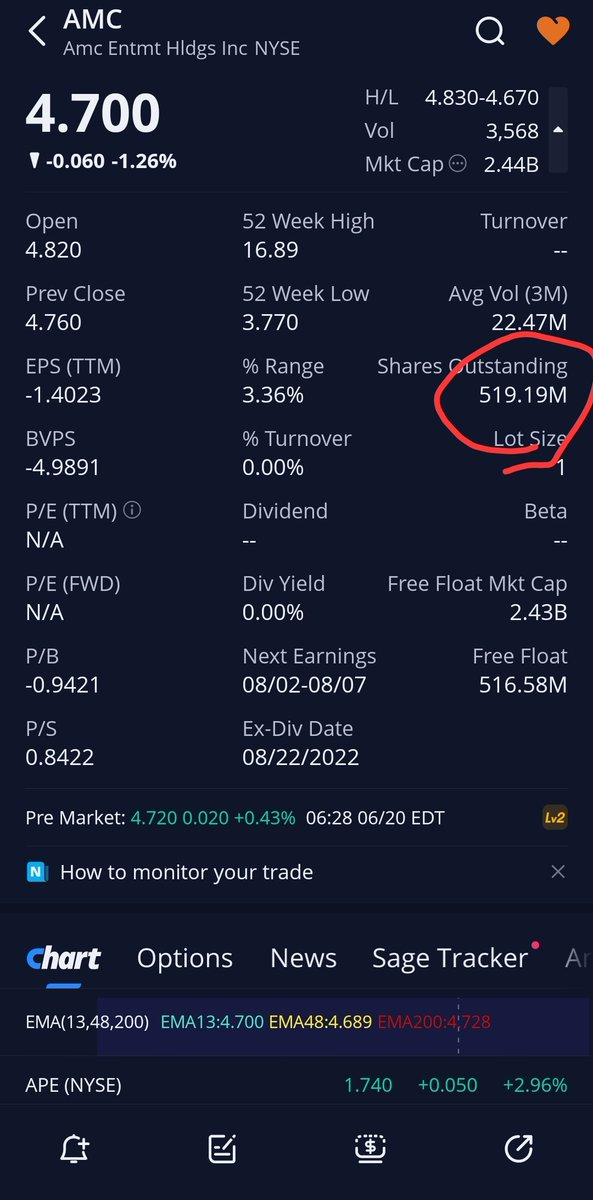


![McSqueezyTheCow's tweet photo. Today's 🧵 is brought to you by halts, in light of events that occurred yesterday, and that are still occurring today [with stocks like AMC and GME].](https://pbs.twimg.com/media/GNjrOJEWUAAgwsZ.jpg)
![DarioCpx's tweet photo. #JustDarioDaily
🚨 WHICH BANKS ARE AT RISK OF GOING BUST IN A LIQUIDITY CRISIS BECAUSE ALREADY (RIDICULOUSLY) INSOLVENT? 🚨
Thank you for waiting, but I assure you what follows isn't going to disappoint you! 😁
Two months ago in "This time is NOT different - Part 2," I flagged how my analysis at that time flashed (big) red warnings on several US banks (https://t.co/UricUgGwOb).
My analysis today will expand on the methodology presented (https://t.co/pLcqYGNvl0) to include the following points:
1 - I will now include the largest European banks. Consequently, I reclassified their figures to harmonize all the datasets on US reporting. In particular, with regards to Available For Sale (AFS) and Hold To Maturity (HTM) securities.
2 - All values presented are in $USD. Non-USD figures have been converted using the 30th September FX rate for consistency.
3 - Shareholders' Equity is considered in its entirety.
Now that the stage is set, the show can begin! 🎬
⚠️ LOAN / DEPOSIT RATIO
A L/D ratio above 90% is already a warning sign, but there are 2 banks that managed to lend more than the deposits they collected! (Table 1)
⚠️ [LOAN + HTM] / DEPOSIT RATIO
HTM books are now officially "Hide to maturity" and stuffed with assets trading at a significant loss because of high interest rates (and soon high credit losses too). Not only banks cannot afford to sell those securities, but trading at such a discount to the par value, they even stop being collateral-worthy. Effectively, the risk of those books is now equivalent to the loan ones. Furthermore, bear in mind there is no #BTFP in Europe, while in the US, that only applies to US Treasuries or government-guaranteed securities.
Now, check how many banks hold more highly illiquid assets than the deposits they collected...(table 2) I feel now the warning bells in your head are already pretty loud 😂
⚠️ [LOAN + HTM + AFS] / DEPOSIT RATIO
AFS securities aren't Marked to Market but booked according to their "fair value." Translated, their real value in the market is lower due to a lack of liquidity.
Now, check how many banks cannot cover their deposits if we include the AFS assets in the analysis... (table 3) I bet now those bells in your head turned into a Marilyn Manson concert! 🤣
At this point, I hope you agree with me that all those capital ratios and risk metrics the regulators use to assess banks' health are completely useless. As a matter of fact, banks that went bust always had "strong capital" according to the regulatory metrics, from #CreditSuisse (recently) to #Lehman in 2008. Fyi, both banks imploded with an "A" rating! 🙈
🚨 Alright, now is time for fireworks! 🚨
In the last table, I present two scenarios on the current state of banks’ books:
1 - "La La Land" that only assumes 5% losses on loans, 10% on HTM, and 2.5% on AFS books and compares those with the bank's total equity.
2 - “Soft Landing" that assumes 7.5% losses on loans, 20% on HTM, and 5% on AFS books.
I wanted to include a "Realistic" one, but my heart ❤️ couldn't bear it, sorry. 🥲🙏🏻 Feel free to play with the data and see what happens if you assumes realistic losses..
Considering how twisted the reality we are living in is, I used green crayons to mark all those banks that have high chance of being already insolvent in the “ridiculous” scenarios presented. 🤭
⚠️Important to bear in mind is this analysis only considers on-balance sheet items to limit its complexity. However, if we bring in off-balance sheet items I strongly doubt banks like $BAC , $UBS and $HSBC will come up so strong as per previous detailed analysis I posted…
Beware, during a financial crisis, all the assets, including "cash and equivalents," suffer a haircut while liabilities only get a haircut 💇 after a company files for Chapter 11. This means that the chances for the assets I left out to be able to increase in value during a crash to compensate for the calculated losses are close to zero.
THE END 🎇🎆](https://pbs.twimg.com/media/F_3h5rEbgAEwkbj.jpg)
![McSqueezyTheCow's tweet photo. GSE's reported reverse repo (RRP) trade amounts of $7.36 trillion in Q3 of 2021, or $7,363,672,000,000, to be more precise.
Now that I have your attention again, let's go through some housekeeping, then make this all make sense.
-----
I. Reverse Repurchase Agreements: Also known as reverse repos, or "RRP", reverse repurchase agreements are operated by the New York Fed's Open Market Trading Desk (a/k/a "The Desk") and authorized by the Federal Open Market Committee (FOMC) in efforts to facilitate the Fed's mandate of maintaining financial stability and liquidity.
In a reverse repo, the desk sells a [treasury] security to a party--banks, government-sponsored enterprises (GSE's), and money market funds--under an agreement to repurchase at a later date and/or time, with interest. Each party utilizing the Fed's reverse repo facility has a $160 billion per day limit.
(Reuters) --
[Reverse repo] "allows eligible banks and investment firms to park cash at the Fed and earn interest - is the largest source of easily extinguished liquidity".
Eligible parties--or 'counterparties when entered into a contract with another party--that participate in the Fed's RRP facility are banks, investment manager/money market funds (MMF), and GSE's.
-----
II. Government-Sponsored Enterprise (GSE):
According to Investopedia, GSE's are privately held "quasi-governmental entity established to enhance the flow of credit to specific sectors of the U.S. economy", and were created by Congress to "help to facilitate borrowing for a variety of individuals, including students, farmers, and homeowners."
• "GSE's do not lend money to the public directly; instead, they guarantee third-party loans and purchase loans in the secondary market, ensuring liquidity"
• "GSE's also issue short and long-term bonds (agency bonds) that carry the implicit backing of the U.S. government"
-----
Some quick interpretation...
During and leading up to the third quarter of 2021, GSE's like Fannie Mae and Freddie Mac, needed more liquidity to issue mortgages and keep their own doors open, and turned to the reverse repo facility.
-----
So, what was going on in 2021?? A recap, courtesy of Financial Times.
• January: Stocks like #AMC and #GME shocked the financial world, as investors bought and hold, and caused gamma squeezes, which would ultimately lead to Melvin Capital's demise. If is likely this event would set off a chain of events that are still being felt and dealt with to this day
"Brokers, hedge funds and regulators received a crash course in the power of retail investors on a mission"
-
• February: Five-, seven- and 10-year [treasury] notes all fell sharply in price within an hour. In the "flash event" that shortly followed, treasuries saw a significant sell-off
"...it also illustrates that the world’s most important market is not as structurally robust as investors might hope"
"...the blow-up happened because liquidity — the ability of sellers easily to find buyers, and vice versa — evaporated"
-
• March: Bill Hwang’s Archegos Capital Management fails in "spectacular fashion". Hwang amassed a mountain of leverage on a small number of stocks.
"When one of his more recent bets, on ViacomCBS, turned sour, that set off a chain of events that left banks including Credit Suisse and Nomura with billions of dollars in losses."
-
• May: "China’s crackdown on the cryptocurrency and its production, or 'mining', sparked the first serious crash of 2021"
-
And all of this during a time where the world economy was vulnerable and at the mercy of a pandemic, which crippled economies and would lead to a recessionary environment.
-----
So, let's put it all together, now.
GSE's, these semi-government entities who increase stability and liquidity in areas of the U.S. economy--particularly real estate--guaranteeing loan products and making financing more widely available, where in high demand in 2021.
Events that transpired would have caused significant stress on the economy, banks, and liquidity.
In response, these GSE's turned to the Fed's reverse repo facility to access desperately needed funds.
$7.3 trillion worth of funds... in one quarter!
-----
Okay....that's all well and good, Squeezy. But why you bringing up old news?
Despite this reverse repo information being two years old, since the Fed only publishes reverse repo transaction data retroactively at the end of each quarter for 2 years prior, it gives us some context and perspective to understand GSE's role in markets, especially during times of market stress.
Looking back at the data, however, we see that Federal Home Loan Mortgage Corporation (Freddie Mac) and Federal National Mortgage Association (Fannie Mae) were responsible for over 98% of the $7.3 trillion GSE's parked at the Fed in Q3 of 2021; 54.73% and 44.48&, respectively.
-----
So, Freedie Mac and Fannie Mae are pretty important than??
Yes. but don't just take my word for it.
(Investopedia) --
"Together, these agencies make the mortgage market more liquid, stable, and affordable by providing liquidity and guarantees to thousands of banks, savings and loans, and mortgage companies in the U.S."
-----
In short, Fannie Mae and Freddie Mac are crucial to the mortgage and loan market, and in times of stress--like 2008 where they nearly collapsed--are prone to liquidity shortages and uncertainty, and turn to the Fed to help keep the [proverbial] lights on.
To put this into perspective, 2023 has been a tumultuous year, as well. 5 banks have failed, banks acquired other banks' failed assets, banks were issued [not] bailouts, lending facilities were all going brrrr, and much more.
It would be safe to hypothesize that GSE's, in particular Fannie and Freddie, are feeling the pressure again. Unfortunately, we wont know how bad things are--in terms of repo borrowing--until Q3 2025 when the Fed releases transaction data for right now.
-----
According to Fannie Mae's 10-Q,
Fannie Mae provided "$288 billion in liquidity to the mortgage market in the first nine months of 2023", through their "single-family and multifamily business segments"
According to Freddie Mac's 10-Q,
Freddie Mac provided "$98 billion in liquidity to the mortgage market in 3Q 2023".
Together, the efforts of Fannie and Freddie in Q3 alone, enabled 1,543,000 home purchases and refinances.
-----
So, now what?
With no reverse repo data available, we look to other factors to determine if we think Fannie and Freddie are a good position strong financial condition. Are they in a similar position now as they were in 2008? 2021? Etc.
• High inflationary environment.... ✓
• High interest rates.... ✓
• Reduced discretionary spending.... ✓
• Increased delinquencies on credit cards and consumer loans.... ✓
• Stressed treasury market.... ✓
• Student debt moratorium lifted.... ✓
• Failing banks.... ✓✓
-----
My two cents....
In my opinion, when the Fed releases transaction data for Q3 2023, I believe we will see GSE's parking even more at the Fed's reverse repo facility than they did in 2021.
When we consider the laundry list of economic, political, and social factors at play across markets, it is fair to assume that things are at a pivotal moment.
Headlines and statistics for mortgages of late have actually showed strength, and mortgage delinquencies are relatively non-existent. However, we know that nothing last forever.
-----
Signs of the Times
HT to @JG_Nuke and @m3_melody for having a conversation which highlighted a recent article that lets us know that change is already coming.
Commercial Observer lets us know that,
• Fannie Mae "alerted lenders on Tuesday that all agency-backed loans involving brokers are now subject to pre-review."
"'The action by Fannie Mae could have major repercussions for mortgage brokers involved with agency lending', according to Ira Zlotowitz, CEO of Gparency"
• And don't worry, Freddie is getting in on the action, too.
"Freddie Mac (FMCC) has put Meridian Capital Group under the microscope after a loan brokered on behalf of the government-sponsored entity was called into question", leading Meridian to be barred "from placing deals through lenders that are Freddie Mac seller-servicers while the investigation is underway".
-----
What's more??
• A recent Fannie Mae survey shows that,
"85% of consumers indicated that it’s a 'bad time' to buy a home, with most respondents citing high home prices and high mortgage rates as the primary reason", as consumers are expressing "greater pessimism toward the larger economy this month, in addition to their ongoing frustration with the housing market," said Fannie Mae Senior Vice President and Chief Economist Doug Duncan.
• Fannie Mae's September monthly summary let us know that delinquencies are on the rise:
1. The Conventional Single-Family Serious Delinquency Rate increased 1 basis point to 0.54% in September.
2. The Multifamily Serious Delinquency Rate increased 7 basis points to 0.54% in September.
-----
According to Fannie Mae's 10-Q,
• Fannie Mae has borrowed $125.7 billion in the first nine months of 2023
• Fannie Mae lost
↠ $1.9 billion in receive-fixed swaps
↠ $64 million on foreign exchange swaps
↠ $6 million on receive-fixed swaptions
↠ $63 million in net contractual interest expense on interest-rate swaps
• And much more...
According to Freddie Mac's 10-Q,
Freddie Mac realized $118 million in losses from the sale of available-for-sale securities and report $184.9 billion in total debt on the consolidated balance sheet.
Together, the efforts of Fannie and Freddie in Q3 alone, enabled 1,543,000 home purchases and refinances.
• Freddie Mac lost
↠ $48 million in swaps
↠ $424 million in written options
↠ $10 million CRT-related derivatives
↠ $194 million in "other" derivatives designated as hedges
• And much more...
-----
And let's not forget recent events threatening the treasury market, which is propped up on securitized mortgages:
• Hedge funds adding to treasury market volatility by shorting it over $600 billion
We discussed this previously:
• Industrial and Commercial Bank of China's (ICBC) malware attack which disrupted the U.S Treasury market by prevented the settling treasury trades on behalf of market participants, effecting the liquidity of treasury markets
-----
Before we go, a fun fact.
Fannie Mae and Freddie Mac are regulated by the Federal Housing Finance Agency, who also regulates the Federal Home Loan Bank system.
For FHLBs,
↠ As a prerequisite to membership and borrowing activity, all FHLB members are required to purchase FHLBNY's capital stock
↠ FHLB members are required to pledge collateral to fully secure credit products [loans], sometimes "up to the counterparty's total credit limit".
Said another way, some members need to pledge collateral of the exact amount they want the FHLBank to loan them, in order to borrow.
↠ Interesting forms of collateral that are eligible to secure advances from FHLBNY include:
• one-to-four family and multi-family mortgage loans that are "delinquent for no more than 90 days".
If you missed that, let me clarify. To secure or renew advances (loans) from FHLBNY, members--institutions, insurance companies, etc--can pledge delinquent mortgages as collateral, as long as they are not more than 90 days delinquent.
↠ Residential mortgage loans are the principal form of collateral for advances
-----
My interpretation...
FHFA regulates GSE's like FHLBs, Fannie Mae, and Freddie Mac. This would lead me to believe that on some level, GSE's are sharing a pool of resources, liquidity, and/or mortgages, such that, GSE's are [essentially] counterparties to one another.
Fannie and Freddie's 'bread and butter' is the single and multi-family mortgage. Single and multi-family mortgages are also the life blood of FHLB's, as they serve as the principal form of advances--to banks like #JPMorgan, #BankofAmerica, and #WellsFargo--and are used for collateral that is pledged by FHLB member banks so they can be eligible to borrow from the FHLB system.
I can keep going, but long story short, mortgages are the backbone to GSE's, be it as an MBS swap for liquidity, or securitized as bonds in the repo market.
As the economic landscape continues to suffer stress event after stress event, the average consumer suffers; with less to spend, paying more to borrow, and the cost of living--both figuratively and literally--going up with each passing day.
What do you think happens when mortgages start defaulting in large numbers akin to and greater than 2008?!!? And how do you think that will affect the treasury markets??!?!
(death spiral loading...)
....but I will digress.
-----
TLDR:
For GSE's, who we know to be heavy users of lending facilities like the Fed's reverse repo and FHLB system, it is likely that these quasi-governmental entities are feeling the pressure, which recent news and survey's confirm.
With regulatory and central bank tightening policies, increased financial responsibilities and obligations, all in the face of declining treasury liquidity, high inflation, and ever-increasing rates, it may only be a matter of time before the house [of cards] falls.
If Fannie Mae and Freddie Mac are unable to maintain their level of providing liquidity--which in turn means less mortgages being written--many markets and lending facilities' ability to function may be significantly reduced, as securitized mortgages are a lifeblood of Wall Street, its customers, and those who aid and abet corporate greed.
-----
"Just don't f*cking dance!"
-----
"Each time history repeats itself, the price goes up."
- Ronald Wright
-----
#SystemicRisk #HousingCrisis #StockMarket #MortgageBackedSecurities #Swaps #Derivatives #Mortgage #Delinquency #MemeBanks
November 7, 2023 Commercial Observer article I:
https://t.co/d5pigV2F6B
November 7, 2023 Commercial Observer article II:
https://t.co/r5cxeMaP9E
November 7, 2023 National Housing Survey:
https://t.co/3X6E51xIcn
October 31, 2023 Reuters article:
https://t.co/2bzoECdtqy
Fannie Mae Form 10-Q for the Quarterly Period Ended September 30, 2023:
https://t.co/xNe4ktxXFG
Freddie Mac Form 10-Q for the Quarterly Period Ended September 30, 2023:
https://t.co/PVjZkq0N5G
Fannie Mae September 2023 Monthly Summary:
https://t.co/jqxp2Be2n8
NY Fed Repurchase & Reverse Repurchase Transactions for the Third Quarter of 2021:
https://t.co/LhikDcqoZD
December 17, 2021 Financial Times article:
https://t.co/nGorLmToqq
NY Fed Reverse Repo Counterparties:
https://t.co/f2iVvKBliL
St. Louis Fed [FRED] - Delinquency Rate on Single-Family Residential Mortgages, Booked in Domestic Offices, All Commercial Banks:
https://t.co/jYLlvRG7Ku
Investopedia - Government-Sponsored Enterprise:
https://t.co/ULQx7P6yma](https://pbs.twimg.com/media/F-rYcBeakAAzjOt.png)