The Sainsbury Wellcome Centre aims to discover the fundamental principles of how the brain drives behaviour. Based at @ucl, funded by Gatsby and @wellcometrust
Why do we sleep?
We asked leading neuroscientists for their thoughts on what happens in the brain as we snooze.
⤵️
https://t.co/qQgWoykNe9
#WorldSleepDay#Neuroscience#WorldSleepDay2026
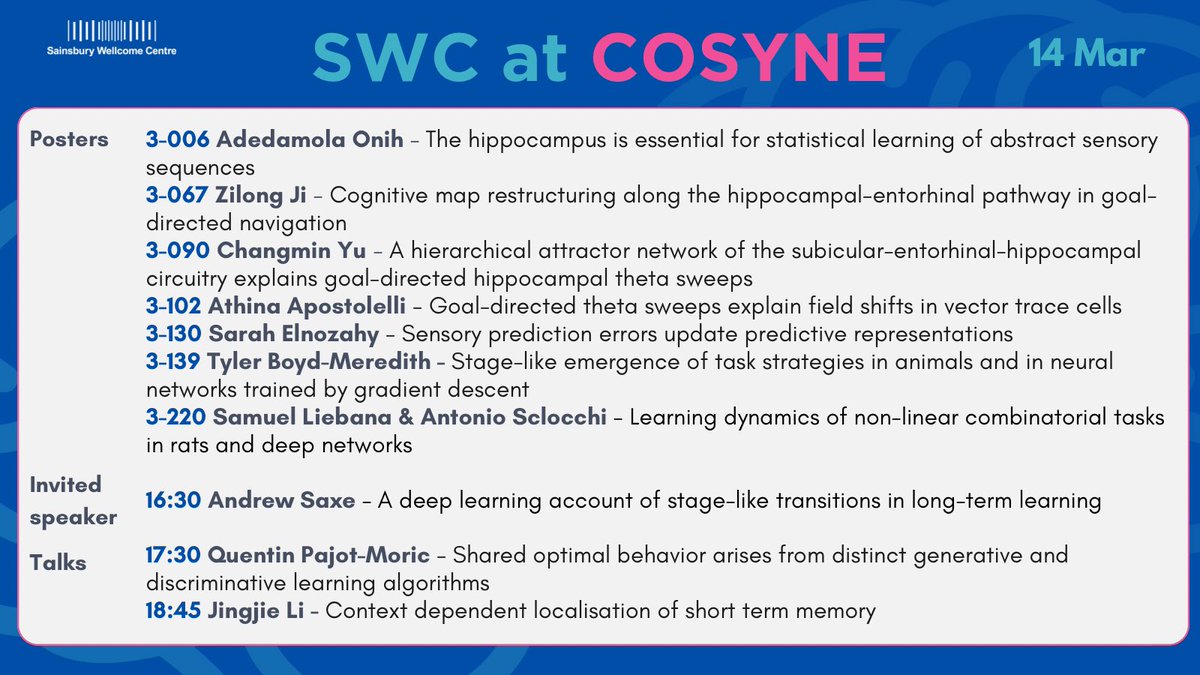
Whether the hippocampus is involved in unrewarded learning has been a controversial question. A new preprint finds that it may be critical for passively learning information.
By @natmesanash
https://t.co/rEU6TFu5A3
A new review maps the convergence and divergence of statistical and reinforcement learning, from origins to neural implementation.
From Athena Akrami, Ambra Ferrari and Floris P. de Lange.
Blog: https://t.co/SiD7R4wpsn
Paper: https://t.co/GKdQdHUNJp
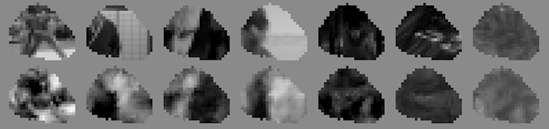
New research has reconstructed movies from the activity of neurons in the mouse visual cortex.
Out now in @eLife from Joel Bauer, Troy Margrie and Claudia Clopath.
Paper: https://t.co/YXepjGXkkT
Blog: https://t.co/ntv90CAvpu
We are recruiting a research software engineer to build pipelines for processing of weeks of continuous neural and behavioural recordings from freely moving animals collected with the Aeon platform (https://t.co/qIhtHa3isC).
https://t.co/b1nYY0SP22
This British Science Week, check out our free neuroscience teaching resources, including lesson plans, videos, career profiles and activities!
https://t.co/dHdVpyCjG1
#BritishScienceWeek#STEM#Education#Teaching
Dr Saurabh Vyas, Carnegie Mellon University, is advancing methods to interpret neural dynamics underlying unique, first-ever cognitive events.
As a 2025 Emerging Neuroscientists Seminar Series winner, he recently spoke at SWC.
Q&A: https://t.co/t1BtcroaNH
New @eLife publication from SWC Senior Research Fellow @MSableMeyer
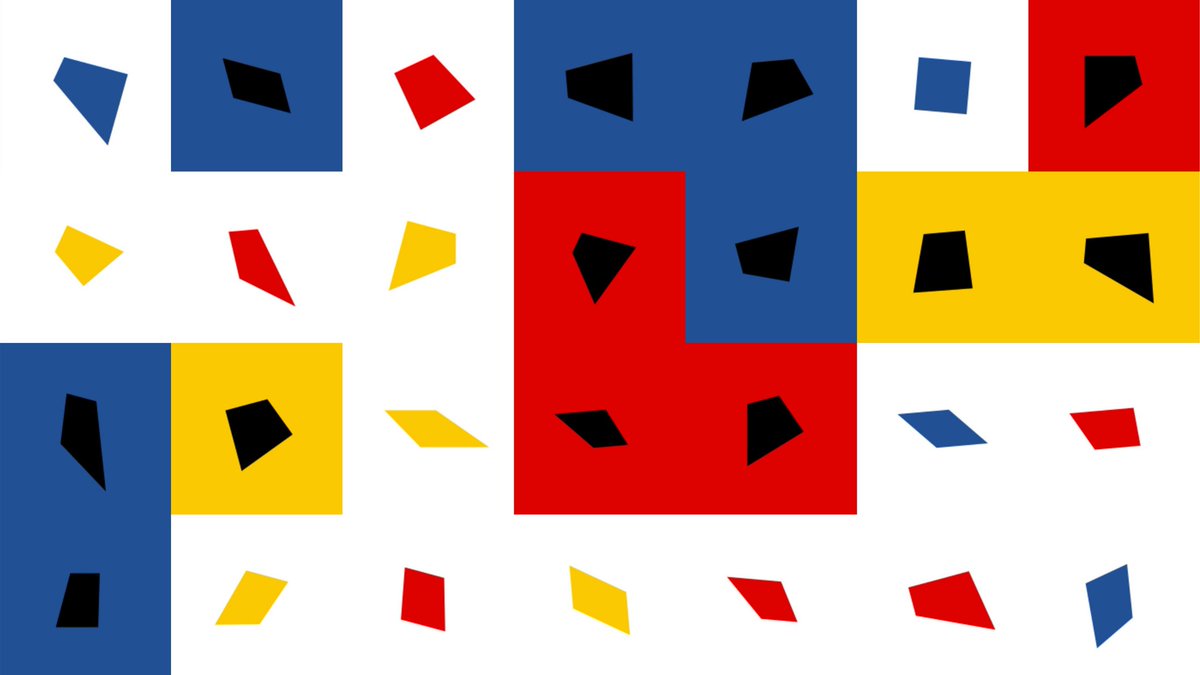
Completed at Collège de France & @NeuroSpin_91 with @StanDehaene, the study explores the language of geometry and how we perceive shapes.
Blog: https://t.co/nCdH2d7OOG
Paper: https://t.co/oABBTj9xci
New preprint from the Akrami Lab shows that mice can quickly learn patterns in sounds, including abstract rules, simply from experience.
The hippocampus is essential for this capacity.
Preprint: https://t.co/JMA89WApXB
Blog: https://t.co/4YFRBd3FCi
We’re hiring a Group Leader!
Join us to lead a transformative initiative in human systems neuroscience.
Find out more and apply ⤵️
https://t.co/yQRtJdMfEd
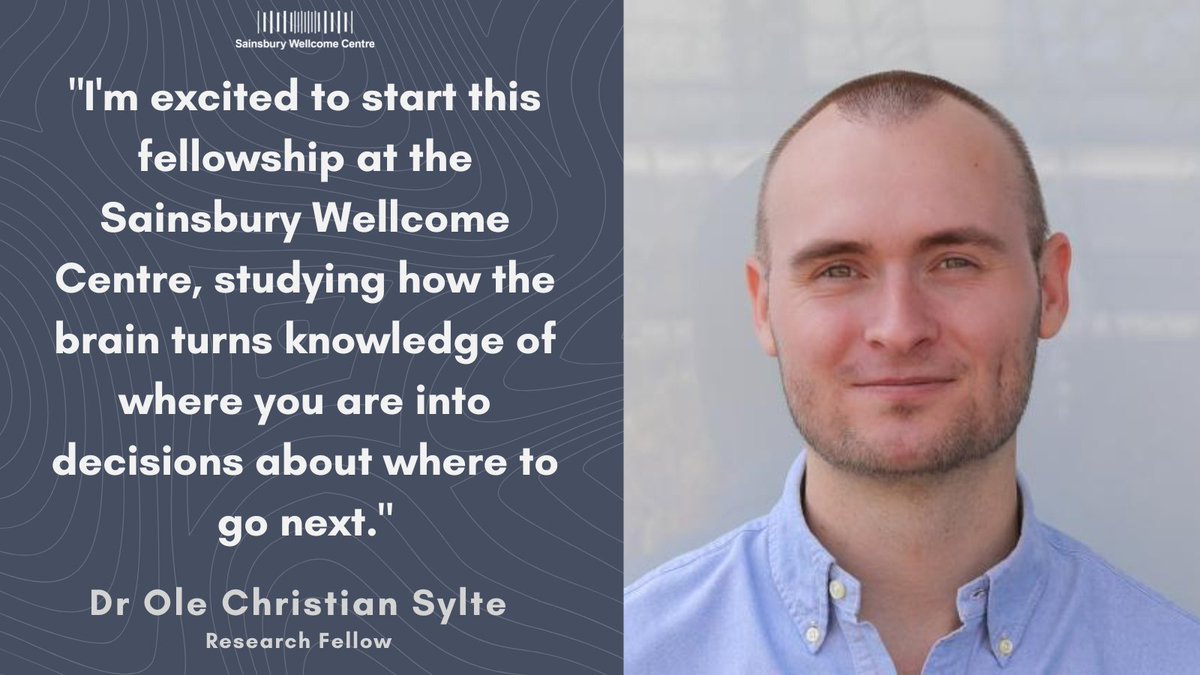
Congratulations to @OleChSylte on receiving a Marie Skłodowska-Curie Actions (MSCA) Postdoctoral Fellowship! 🎉
Ole will investigate how the brain transforms spatial knowledge into goal-directed actions.
Studies using fruit flies by University of Oxford researchers @RafSarnataro & Dr Peter Hasenhuetl are providing new insights into how sleep is controlled.
As two winners of the Emerging Neuroscientist Seminar Series 2025, they recently spoke at SWC ⤵️
https://t.co/4oebbT2gmy
📢 We’re hiring!
We’re looking for a Scientific Instrument Maker to join our expert team carrying out highly skilled precision work in the design, development, construction, and validation of scientific instruments.
⏰ Apply by 22 Feb: https://t.co/2MNGk53LYU
Learning to read is a key stage in education that deeply changes the brain.
@StanDehaene, Chair of Experimental Cognitive Psychology at the Collège de France, discusses the neuroscience of reading at our Annual Lecture.
⤵️
https://t.co/VvIYG7DEuC
Are you working with in vivo optogenetics? Ever wondered what the impact of shining laser light within the brain in the absence of exogenous opsins has on neuronal activity? PLEASE SEE https://t.co/XS4TV867KE & READ 🧵👇
work done @SWC_Neuro, thx Mateo Velez-Fort & Troy Margrie
New protocol from SWC reduces off-target effects in optogenetics 🚥
Light can unintentionally activate retinal cells, complicating results. The protocol minimises light leakage and verifies off-target activity is reduced.
➡️ Paper in @STARProtocols https://t.co/dZGQVablEq
New work from Jeffrey Erlich (SWC) & Evgeniya Lukinova (@UniofNottingham) links cortisol measures to reduced willingness to wait for larger rewards, but only when participants actually experienced the delay.
Paper ⬇️
https://t.co/bVETTKCYwQ
Blog ⬇️
https://t.co/qEAl2MNDpF