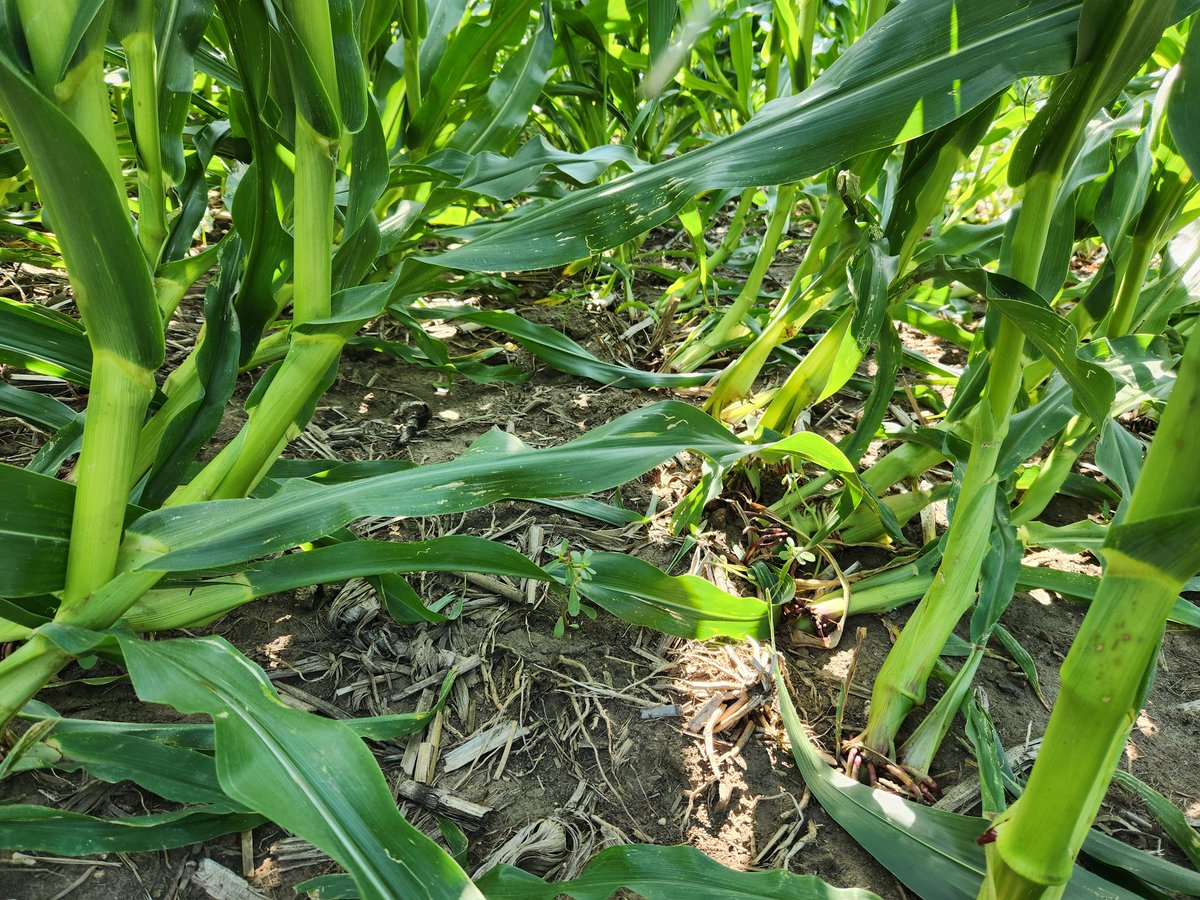
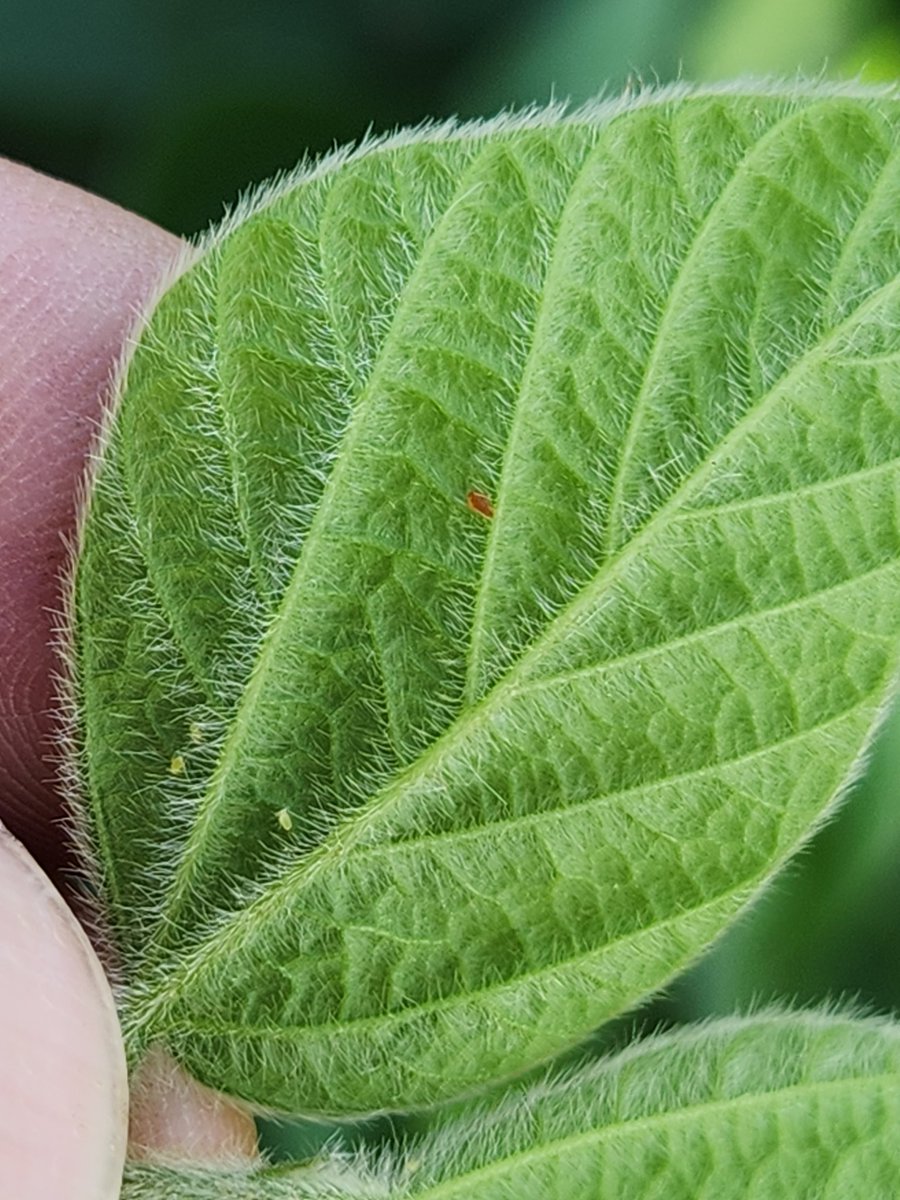
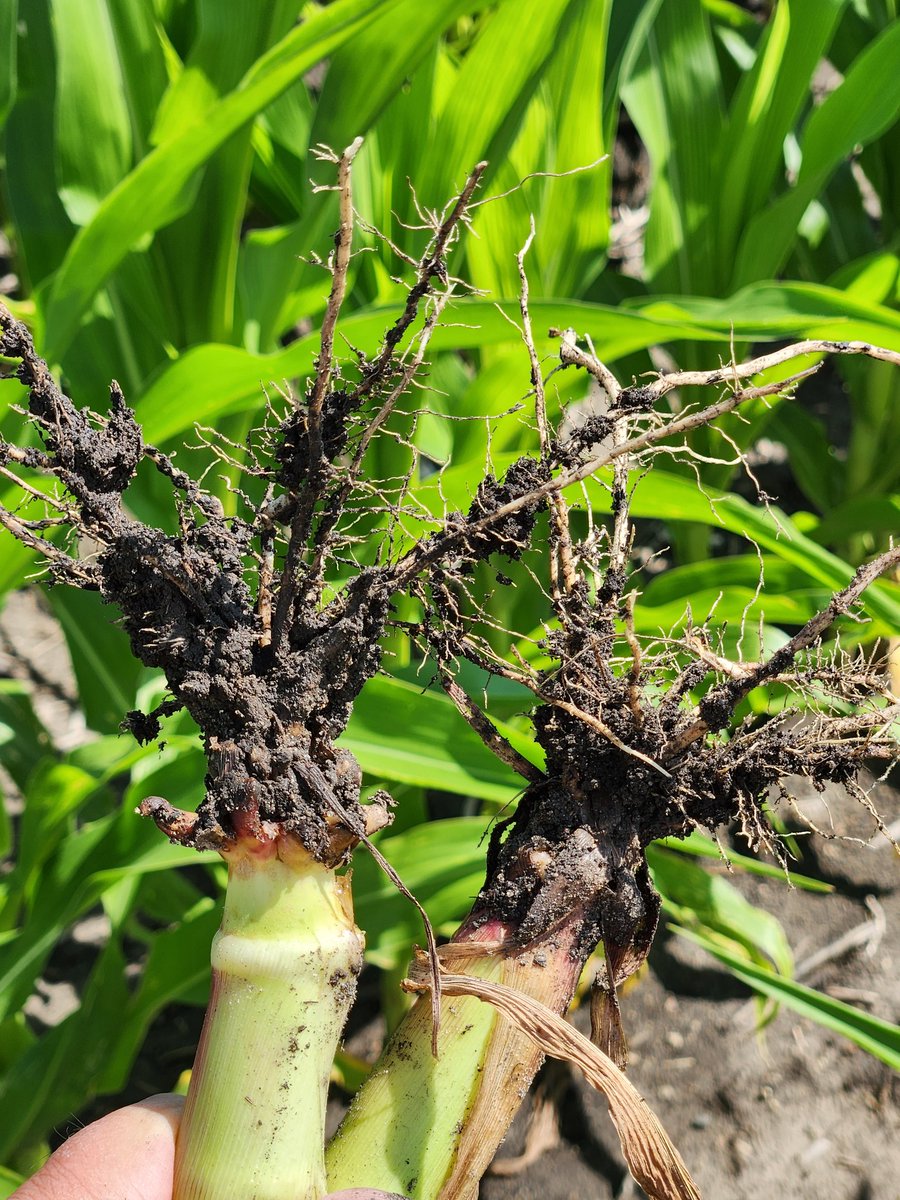
No point in letting IL have all the fun. I've never been accused of being optimistic but, I doubt this a problem on only one MN farm.
https://t.co/Ng5RImka2o
Temperatures here are down to -20F so far this morning. In areas with no snow cover, this might lower soil temps enough to increase western corn rootworm egg mortality.
Also on the bright side-the pollen count is currently very low.
Numerous calls on corn earworms in late planted corn. Insecticides have limited effectiveness inside ear husker. Moths are abundant in my garden now (did not confirm sp.). Need to do better on monitoring late migrants.
A consultant in SC MN sent photos of severe fall armywom infestation in an oat cover crop. The larvae were nearly full grown. It might be worth checking any emerged fall cereals, lush grass hay ground an possibly very late-planted sweet corn.
The Oreus (aka minute pirate bugs) must be running out of mite and aphid prey. Sunny weather in SW MN has brought them out to do some test feeding on humans. Good bugs gone bad-happens every fall.
The zinnia patch is seeing 8 or more monarchs at a time and several painted ladies. Hummingbirds are busy at the feeders too.
It takes a lot of fuel on the trip south.
Soybean harvest starting and a lot of silage cut.
Variable MN infestations based on planting date, rainfall, field size, and buckthorn.
SWROC soybean aphid populations have developed to 100% plants infested with low # of aphids/plant. Any optimism in thos pic?.
Visited the SWROC western corn rootworm site this AM. Western corn rootworm pressure in continuous corn much higher here than 2024.
It's early, male beetles are just beginning to emerge and no females..
Soybean aphids are easy to find on V4 soybeans at UM UM SWROC near Lamberton MN. Too early to panic but may want to scout indicator fields earlier this year.
@TRaz13@DarylRitchison Western corn rootworm egg mortality begins below 20F and 100% mortality occurs around 0F. Longer duration increases mortality and soil moisture can have an effect. Northerns are much more cold tolerant.
Most eggs are 4-6 inches deep and will be deeper if dry.
@BryanBiegs Most eggs are 4-6 inches deep but will tend shallower if wet and deeper if dry soil. Nor
Western corn rootworm egg mortality begins below 20 F. Increases with longer exposure or colder temps. 100 % mortality near 0 F.
Northern corn rootworm eggs are more cold tolerant.