Stoimy dziś nad grobami naszych bliskich. Zgodnie z naszą tradycją przeżywamy te dni w spokoju i zadumie.
Jakże słabo trzeba rozumieć nasz Naród, jego kulturę i tradycję, by rozpoczynać gigantyczną polityczną awanturę u progu tak ważnych dla nas dni.
Złoczyńca, który przychodzi nocą, znienacka lub w święta, zwykle chce pozostać niezauważony. Ten przeciwnie. Pokazał, jaki jest naprawdę. Tak bardzo obcy. Coraz bardziej obcy…
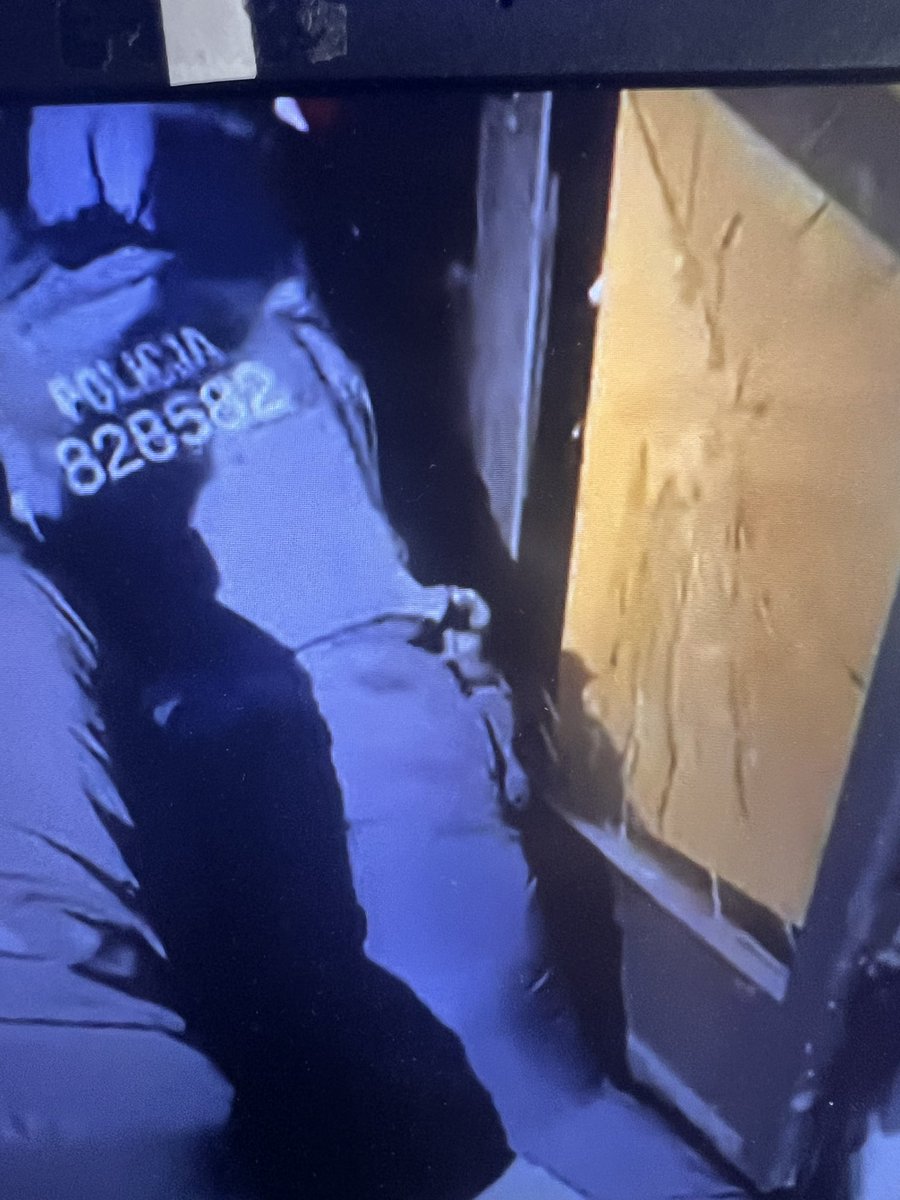
Poland - the moment a government agent was caught by patriots. He was attempting to stage a provocation among the protesters.
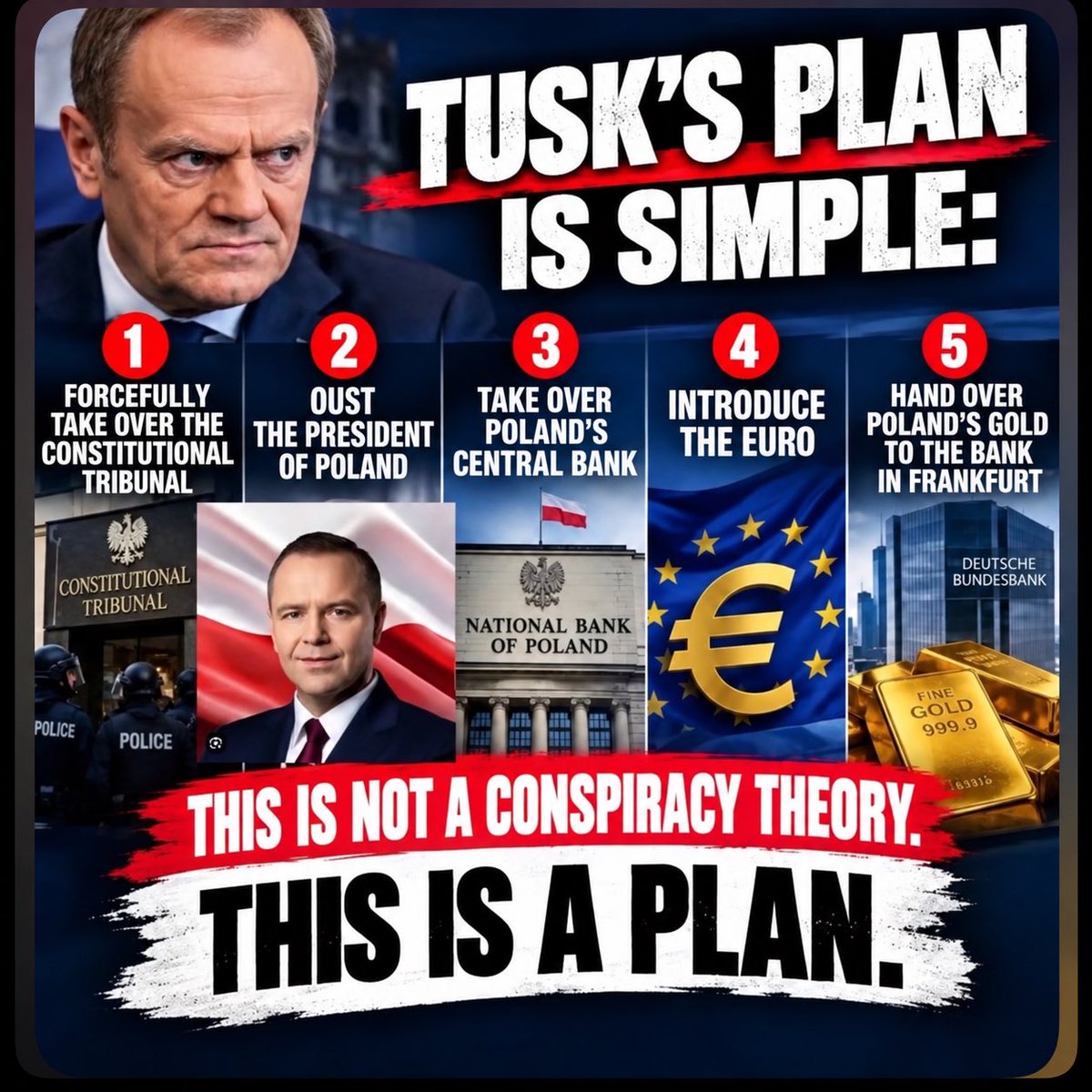
Tusk’s government will stop at nothing.
Questa è Anna Korwin-Piotrowska, giudice eletto da Tusk alla corte costituzionale polacca. Prima ancora di giurare e di prendere possesso della carica di giudice si è autoproclamata presidente, dichiarando destituiti il presidente e il vicepresidente della corte stessa.
lIl premier Tusk ha poi fatto circondare il palazzo dalla polizia per impedire al vero presidente e al vero vicepresidente di entrare e cacciare questa signora.
È dovuto rientrare di corsa il presidente della repubblica Nawrocky che, aprendosi un varco a gomitate, è entrato nel palazzo della corte e ha tolto di mezzo fisicamente la non-giudicessa, che si era messa sulla porta, ordinando poi il ripristinando la legalità.
Che volete farci: non-avvocatesse, non-giudici, non-presidenti... loro son fatti così: la democrazia vale solo quando vincono loro.
Se no, tutto è lecito: frodi elettorali, colpi di stato, uso politico della magistratura, attentati, piazze violente, etc etc. Partendo da Bruxelles fino all'Ungheria, dal Brasile alla Romania, dalla Polonia alla repubblica Ceca, dalla Francia fino agli stessi USA passando per Gaza, loro sono i buoni e tutto diventa lecito se a commetterlo sono loro.
E se qualcosa va male o li prendono in castagna, prima frignano, e poi dicono che è colpa di Putin.
Stavolta a quanto pare hanno trovato duro, con un presidente della repubblica polacca giovane e deciso.
Ma ci riproveranno, non temete.
Para quienes no hayan comprendido la gravedad de los hechos acaecidos desde ayer en Polonia o ni siquiera se han enterado porque los medios los han encubierto y solo han podido seguirse por las redes, el gobierno de Tusk ordenó ayer denegar permiso de aterrizaje al avión del jefe del estado, del presidente Karol Nawrocki. Los pilotos militares del avión presidencial desobedecieron a la torre de control y aterrizaron sin permiso.
En Bruselas todos callan hasta que salgan defendiendo a Tusk que al fin y al cabo es un títere de von der Leyen que jamás habría perpetrado este intento de golpe de Estado sin el permiso de su jefa.
Der Ablauf des PUTSCHVERSUCHS von Donald Tusk, unterstützt von der EU‼️
1. Der linke Ministerpräsident Donald Tusk versuchte, acht Richter des Verfassungsgerichts zu ernennen, obwohl er nur drei ernennen durfte.
2. Der rechtskonservative Präsident Karol Nawrocki nahm nur drei Richtern den Amtseid ab, wie es das Gesetz vorschreibt.
3. Tusk organisierte eine parallele Vereidigung für die anderen fünf, indem er ihnen selbst den Eid abnahm, obwohl die Verfassung festlegt, dass nur der Präsident dies tun darf.
4. Nawrocki verließ das Land für eine geplante Reise nach Senegal.
5. Einer der von Tusk illegal vereidigten Richter ordnete die Absetzung des Präsidenten des Gerichts an, des Rechtskonservativen Bogdan Święczkowski.
6. Tusk befahl der Polizei, den Zugang zum Gericht zu blockieren und so dem Präsidenten des Obersten Gerichts den Eintritt zu verwehren.
7. Nawrocki unterbrach seine Reise und kehrte eilig nach Polen zurück.
8. In der Nacht zum Freitag stellte er sich persönlich vor das Gerichtsgebäude und rang mit den Polizisten, um den Zugang freizubekommen.
9. Sobald er im Gerichtsgebäude war, entfernte er die fünf von Tusk illegal vereidigten Richter und gewährte dem Präsidenten des Obersten Gerichts Zugang zu seinem Büro.
#Poland
#ConstitutionalTribunal
#KarolNawrocki #DonaldTusk
Acaba de acontecer o inacreditável na Polônia!
Enquanto a ESQUERDA tentava dar um golpe de estado, o presidente de direita Karol Nawrocki entrou pessoalmente no prédio do Tribunal Constitucional para impedir a tomada de poder!
Nossa direita e nós nesmos ainda temos muito o que aprender.
Sigam: @RedeTrusTV
@donaldtusk Niewiarygodne to jest to ,że Polak pozwolił szwabowi rozpierdalać Polskę…niewiarygodne ilu Polaków szwabskiego pochodzenia obsiadło ten kraj.
THE GENOCIDE OF POLES IN VOLHYNIA AND EASTERN GALICIA
This is the first installment of a deep dive into one of the darkest chapters of the Second World War: the genocide of Poles in Volhynia and Eastern Galicia between 1943 and 1945.
Roughly 100,000 people, the overwhelming majority of them unarmed women, children, and the elderly, were murdered in a deliberate campaign to eradicate the Polish presence from the region. Over the coming installments, I will examine it piece by piece: the land and its people, the long roots of the conflict, the ideology that drove the killings, and the course of the massacres themselves. This is where it begins.
Part 1
Between 1943 and 1945, the Polish population of Volhynia and Eastern Galicia was subjected to a sustained campaign of mass murder and ethnic cleansing. The killings were planned and carried out chiefly by the Ukrainian Insurgent Army (UPA), the military arm of the Bandera faction of the Organization of Ukrainian Nationalists (OUN-B), often with the participation of local Ukrainian villagers. Their goal was the permanent elimination of Poles from territories the nationalist movement intended to incorporate into a future, ethnically homogeneous Ukrainian state.
The campaign was distinguished not only by its scale but also by its extraordinary cruelty. Entire communities were destroyed in coordinated dawn attacks. Victims were killed with axes, scythes, pitchforks, knives, saws, and firearms. Churches and farm buildings crowded with people were set ablaze, and bodies were often mutilated to terrorize survivors and discourage any thought of return. The overwhelming majority of those killed were unarmed civilians: women, children, the elderly, and farming families.
Historians' estimates of the Polish death toll vary, but the most widely cited figures place the total at roughly 100,000 across all affected regions, with approximately 50,000 to 60,000 killed in Volhynia and a further 30,000 to 40,000 in Eastern Galicia and the neighboring southeastern voivodeships.
Geographic and Demographic Setting:
Volhynia and Eastern Galicia lay within the Kresy Wschodnie (Eastern Borderlands), the multiethnic eastern provinces of interwar Poland.
Volhynia corresponded to the Wołyń Voivodeship in the northwestern part of present-day Ukraine. Eastern Galicia comprised the Lwów, Tarnopol, and Stanisławów voivodeships farther south.
For centuries, these lands had been home to an intermingled population of Ukrainians (Ruthenians), Poles, Jews, and smaller communities of Czechs, Germans, Armenians, and Russians.
The demographic structure was decisive in shaping what followed. In Volhynia, Ukrainians formed a large rural majority, accounting for around two-thirds of the population, while Poles, at roughly one-sixth, were concentrated in towns, administrative and professional positions, and among landowners and recent agricultural settlers.
In Eastern Galicia, the Polish proportion was larger, and Poles predominated in the cities, above all in Lwów, while Ukrainians dominated the surrounding countryside. The Ukrainian population of Volhynia was largely Orthodox, while that of Galicia was predominantly Greek Catholic (Uniate).