@JioCare Hi, I have registered a complaint regarding jio fiber connection for fixed voice number +91-5223545187, to which I am getting no resolution. If it continues like this, I will have to escalate it to Public Consumer forum
Indian telecom Reliance is sabotaging access to Telegram for millions of users OUTSIDE India (including the UAE) via a rogue method called BGP hijacking.
The sabotage seems intentional, as Reliance has ignored multiple reports.
This may be part of a competitive war, as Reliance is partially owned by Meta — the company behind WhatsApp.
Network operators are advised to reject unauthorized BGP announcements from Reliance (AS18101) to prevent route hijacks and ensure stable Internet access for their users.
Such abuse of global Internet routing is alarming. I wouldn’t be surprised if Reliance/WhatsApp were also behind the recent lobbying effort to ban Telegram in India.
The government sold ethanol blending as a way to reduce petrol prices for common people. But when crude oil prices crashed globally, where was the relief at the fuel pump in India?
If 20% ethanol blending was supposed to make petrol cheaper, why didn’t consumers see the benefit? Crude became cheaper, ethanol was mixed in larger quantities, yet petrol prices stayed high while taxes kept rising.
The truth is simple: citizens were promised savings, but what they got was a marketing slogan. The burden on the middle class never reduced. Governments celebrated blending targets, oil companies protected margins, and ordinary people kept paying inflated prices.
You cannot keep claiming “energy independence” and “cost reduction” while refusing to pass global crude price cuts to the public. People are not blind. If the system benefits only the government and oil companies, then stop pretending it is being done for consumers.
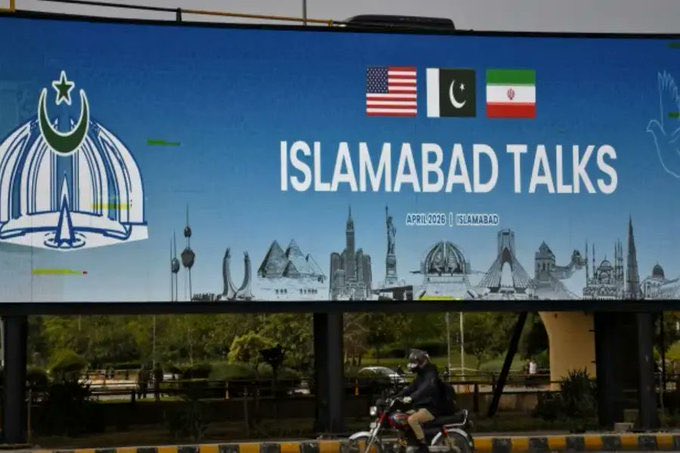
Our neighbouring country’s “poor” Prime Minister is so broke that he couldn’t even put up a single photo of himself on any hoarding or banner across Islamabad.
Even their “poor” General Asim Munir couldn’t manage it!
If you want to learn how it’s done, take lessons from our boss — his pictures are everywhere: toilets, urinals, petrol pumps, you name it!
The pre-Covid peak of 2019 was 1.09 crore foreign tourists. We are not even able to reach that level again till now. This is despite the rupee sitting at historic lows against the dollar, which should make India a bargain for foreign visitors. But alas, foreign tourists are going elsewhere - despite more airports being built, more flight routes opening, better connectivity than ever. Despite all the "Incredible India" campaigns.
So what's going wrong? Basically everything that actually matters to a tourist.
Start with the e-visa portal. Just google search reviews of the Indian government's online visa process and you will find hundreds of travellers sharing their own nightmares: forms crashing mid-application, payments failing repeatedly, data not being saved, the site randomly displaying a list of India's tallest mountains in the middle of a visa form. You will see that some tourists just gave up and booked somewhere else.
Then when the foreign tourists actually arrive. Good luck getting a local SIM card without jumping through hoops. UPI, which Indians love to flex about, is practically unusable for foreign visitors. Hotels across India are required by law to report the arrival of foreign guests to the police, adding another layer of babu-raj hassle. Scams are rampant at every tourist spot from Agra to Rishikesh, harassment is common, and the less said about public hygiene in most cities the better.
And the hotels in Indian tourist destinations like Goa are completely overpriced compared to equivalent properties in Bangkok, Hanoi, or Colombo.
The irony is, Indians themselves have figured this out. Outbound travel hit a record 3.3 crore trips in 2025, up 21.5% from pre-Covid. The Indian middle class now finds it cheaper to holiday in Thailand, Vietnam, Sri Lanka, or the UAE than in Goa or Kerala.
We keep building airports and announcing new routes, but nobody wants to visit a country where the first interaction with the state is a government website that looks like it was coded in 2003 and the last interaction is an overpriced hotel room with subpar service.
In 1986, Voice of America – the US government-funded broadcaster – sought to install a transmission facility in Sri Lanka.
India resisted.
Just 20 miles from the Island nation, India made it clear that any such installation would be unacceptable, warning that it could serve as a covert listening post in South Asia.
The pressure worked. And the plan was eventually dropped.
Today, a US torpedo called ‘Quiet Death’ exploded in our strategic front yard, struck an Iranian naval vessel – and the Government of India was either clueless or complicit.
From drawing red lines others respected to watching as mute spectators – how did we come this far?
India’s guest – IRIS Dena, an Iranian naval vessel – was torpedoed by the US in India’s strategic front yard while returning home from an International Fleet Review hosted by India.
Sri Lanka, which is leading the rescue operations, claims that at least 80 sailors were killed, with around a hundred others critically injured or still missing.
The question now is:
Will @narendramodi show the moral courage to criticise this, express condolences to Iran – and offer support to Sri Lanka in rescue and relief efforts?
Or does even that require clearance from Washington and Tel Aviv?