Ik heb Marokkaanse buren en ik zeg het ronduit: dit zijn de beste buren die je je maar kunt wensen.
Altijd warm en gastvrij, muntthee, dadels en “eet nog, eet nog!” als je langskomt. Ze helpen waar ze kunnen, zonder gedoe of overlast. Gewoon fijne mensen om naast te wonen.
Door de jaren heen louter positieve ervaringen met Marokkaanse Nederlanders. Ze hebben een ijzersterk arbeidsethos en ondernemerschap: veel starten hun eigen zaak en werken hard. Sterke familiebanden en saamhorigheid, respect voor elkaar en trots op hun roots. En een sterke eigen mening, soms Nederlandser dan veel Nederlanders zelf. Je ziet ze succesvol meedraaien in de sport, de zorg, het onderwijs en als ondernemers die banen creëren.
Iedereen heeft het vooral over problemen. Vooral PVV’ers schreeuwen al jaren dat de integratie volledig mislukt is en focussen alleen op de negatieve kanten. Maar de dagelijkse realiteit die ik om me heen zie, is veel genuanceerder en positiever. Marokkaanse Nederlanders werken hard, bouwen families, starten bedrijven en dragen zichtbaar bij aan Nederland.
Het lijkt erop dat sommige partijen meer baat hebben bij angst en verdeeldheid dan bij het erkennen van deze dagelijkse positieve verhalen. Past dit soort herkenbare realiteit gewoon niet in hun narratief?
🚩 I keep coming back to this 2002 article: Teen Michael J. Fox caught a virus on set of a sitcom in the late 1970s. Years later, he and 3 coworkers from the same show all developed Parkinson’s.
Japanese researchers found a virulent flu strain can invade the same brain region Parkinson’s destroys…
Pathogens = neurodegeneration
Hussam Abu Safieh is one of the Palestinian doctors (among 95 other doctors) that will be killed by the “Israeli death penalty for hostages.”
Do not let them murder him. Repost this.
@isciverse Yes! I opine similarly here. All canonical mutations drive glutamine or glucose metabolism - directly or indirectly.
Why? Because rapid proliferation require glucose and glutamine.
https://t.co/ePXSCkkdSw
Tumor Metabolism: The Central Integrating Node of the 2026 Cancer Hallmarks
Open Access
https://t.co/EWJxcs8fLk
In January 2026, Douglas Hanahan updated the "Cancer Hallmarks" framework. Our recent commentary in The Innovation Nutrition argues that tumor metabolism is no longer just a classic hallmark, but the "universal language" linking all dimensions of cancer biology.
By positioning metabolic reprogramming at the center, we bridge FOUR critical dimensions:
1. Core Hallmarks: Metabolism fuels proliferation and facilitates immune evasion via lactate-mediated acidification.
2. Enabling Characteristics: It acts as a master conductor of epigenetic changes and is the "behind-the-scenes driver" of phenotypic plasticity.
3. Microenvironmental Cells: The TME functions as a metabolic ecosystem where cancer cells and stromal cells (like CAFs) engage in "metabolic collaboration".
4. Systemic Interactions: We highlight the emerging roles of neural regulation, the gut microbiome, and systemic conditions like cachexia in tumor progression.
This multidimensional perspective provides a theoretical foundation for "Hallmark-guided personalized therapy".
By co-targeting metabolic nodes alongside other hallmarks, we can overcome therapy resistance and move toward true precision oncology.
#Cancer #CancerResearch #metabolism #Hallmark #Science #TumorEnvironment #metastasis #news #TME #oncology #CAFs
People born during the 1918 Spanish Flu had a 2-3x increased risk of developing Parkinson’s compared to those born before 1888 or after 1924.
COVID has infected billions. We will likely see a massive surge in neurodegenerative disease.
The turning point for rare diseases, which affect >300 million people around the world.
A call to get rid of its many structural obstacles, to consider it as molecular surgery unlike drug treatments
gift link:
https://t.co/DQ0OZ9tXXc
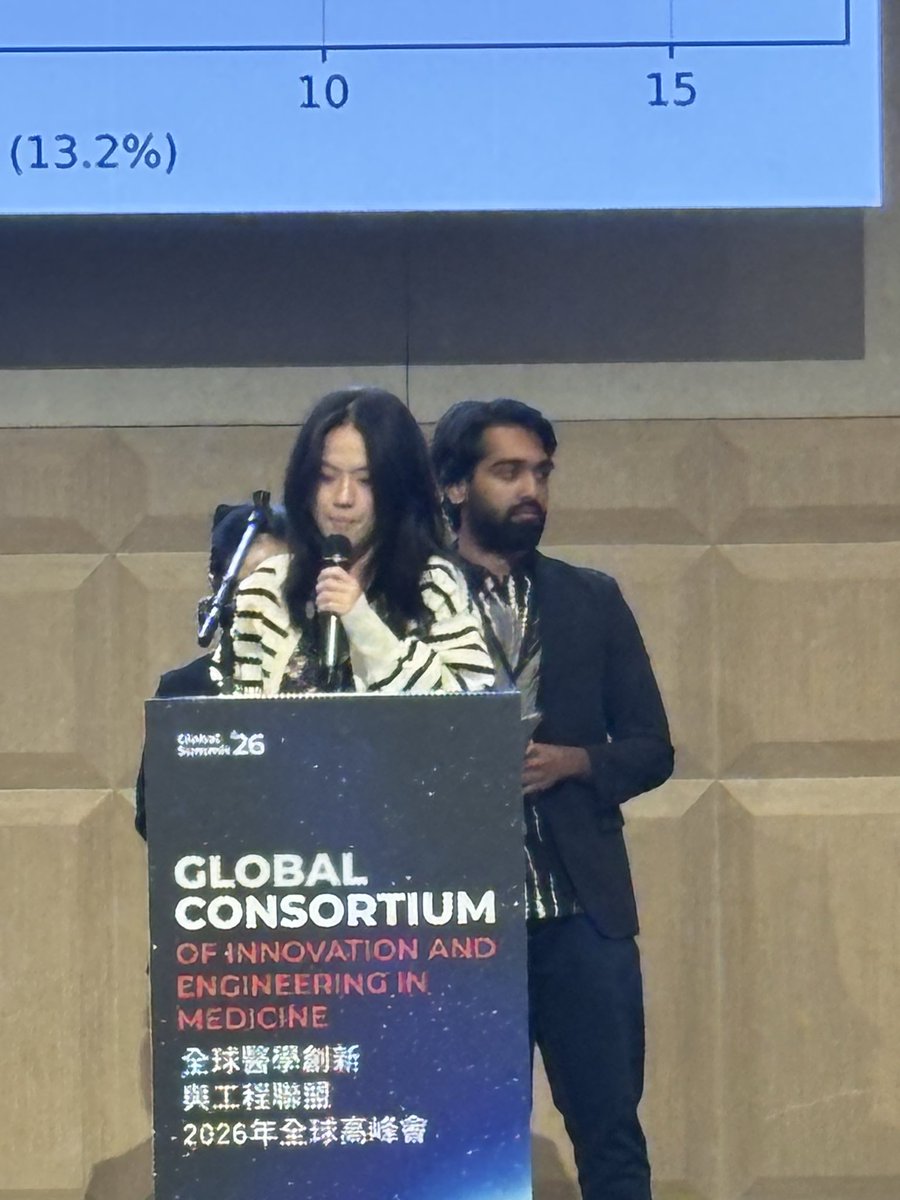
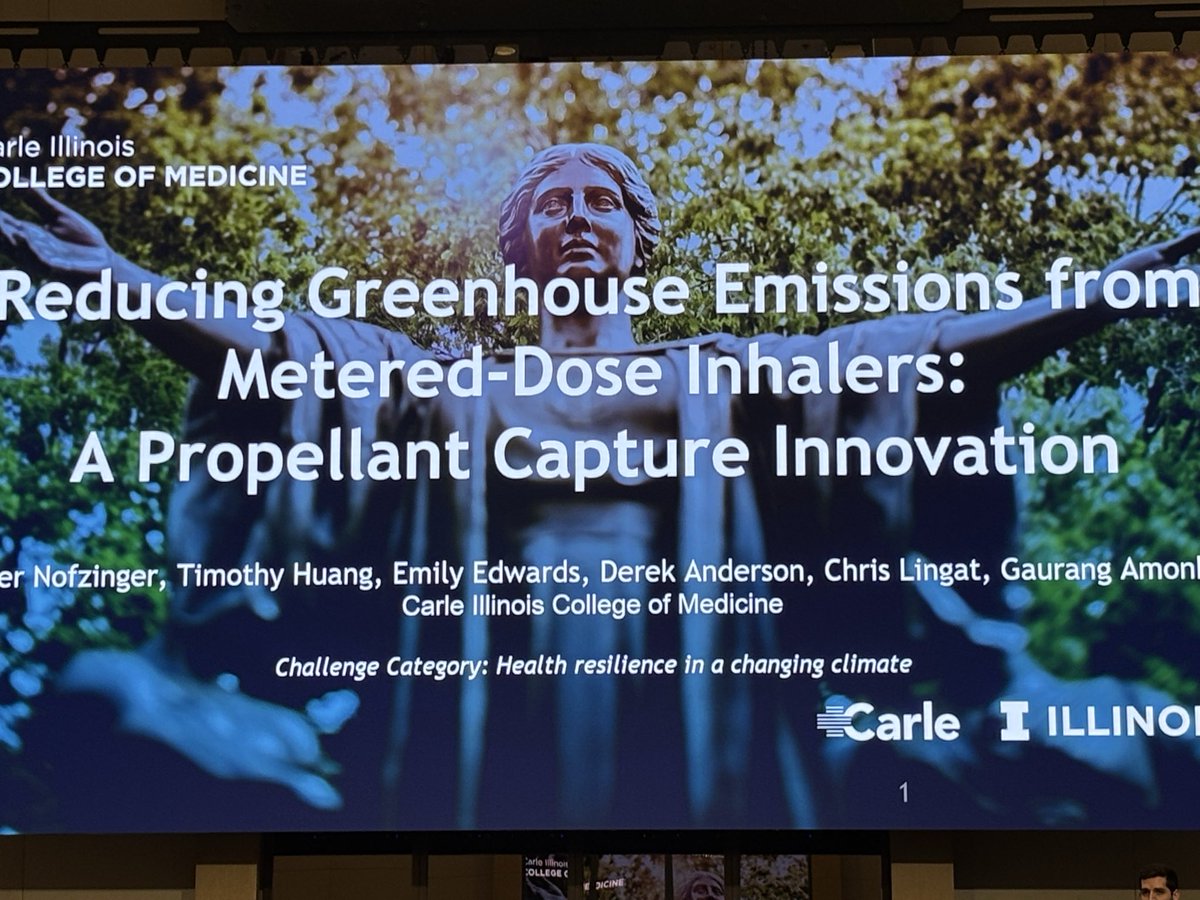
Fascinating to see med student finalists presenting creative solutions to real-world healthcare challenges.
The blend of medical, engineering, research and business expertise is a blueprint for innovation across the world!
We must learn from the next gen at the #GCIEM!
BREAKING🚨 INTERPOL have arrested Yoel Alter, an 35 year old Israeli who is a member of Lev Tahor, the world’s largest child sex trafficking ring.
Over 160 children have been rescued from this Jewish pedophile gang.
You might want to ask yourself why the media, politicians and social influencers have buried this story
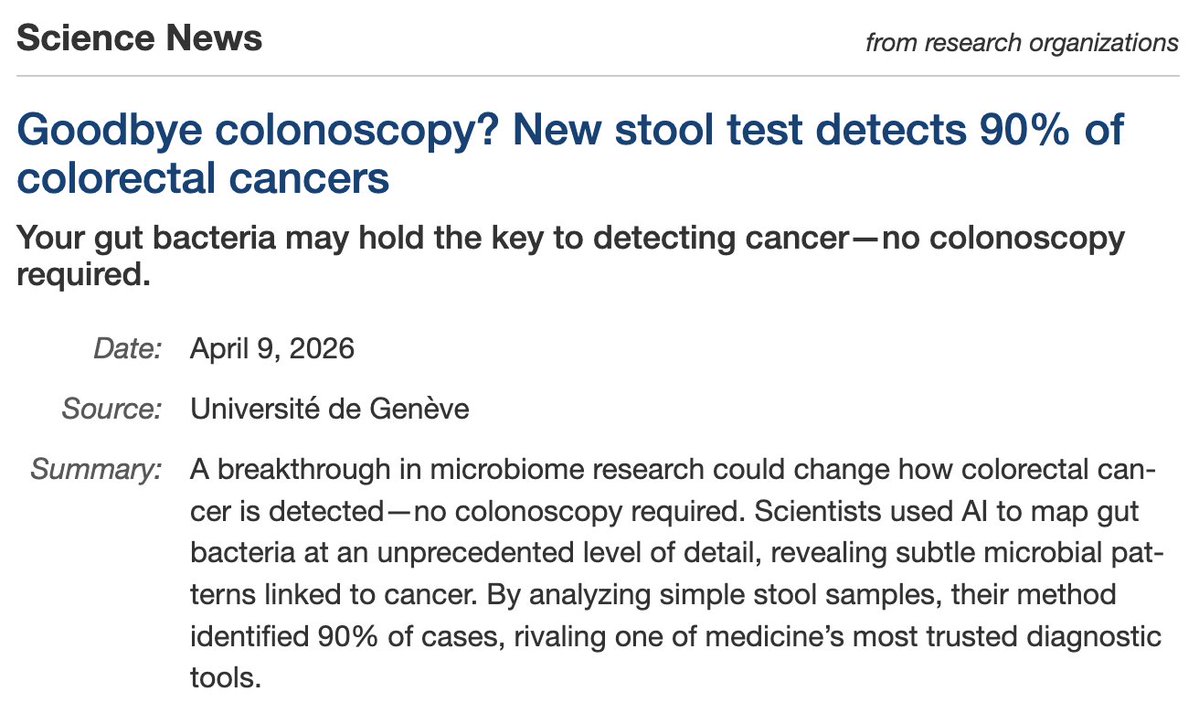
Researchers at the University of Geneva used machine learning to analyze massive amounts of gut microbiome data, creating a stool test that detects colorectal cancer with 90% accuracy. This AI-driven approach offers a non-invasive, low-cost alternative that closely rivals the effectiveness of a traditional colonoscopy.
The breakthrough lies in the AI’s ability to identify "hidden signals" at the bacterial subspecies level. By focusing on these specific microbial patterns, the model can accurately distinguish between healthy gut environments and those linked to cancer, regardless of the patient's population or country.
"The same method could soon be used to develop non-invasive diagnostic tools for a wide range of diseases, all based on a single microbiota analysis," concludes Mirko Trajkovski, the study's lead researcher.
The scariest finding in this paper: the subjects couldn't tell it was happening.
UPenn ran this study on 48 healthy adults. One group slept 8 hours. Another slept 6. Another slept 4. For 14 straight days. They tested cognitive performance every 2 hours from 7:30am to 11:30pm.
The 6-hour group's reaction times, working memory, and sustained attention deteriorated on a near-linear curve. By day 14 they were performing at the same level as someone who hadn't slept at all in 48 hours. The 4-hour group hit that threshold by day 6.
Here's the part that should unsettle everyone who thinks they "do fine" on 6 hours: the subjects' self-reported sleepiness flatlined after the first few days. Their brains kept getting worse. Their perception of how impaired they were stopped updating. The cognitive decline was invisible to the person experiencing it.
The researchers found a hard threshold. Any wakefulness beyond 15.84 hours in a day produces cumulative neurobiological cost. That cost compounds every single day you exceed it and does not reset with a weekend of sleeping in.
About 35% of American adults sleep less than 7 hours a night. 40% of those get 6 hours or less. In 1942 that number was 11%. We built an entire professional culture around a sleep schedule that this paper says is functionally equivalent to pulling consecutive all-nighters.
"I'm fine on 6 hours" is the most common response to sleep research. The first thing chronic sleep debt destroys is your ability to notice chronic sleep debt.
Liars.
They were civilians, children, old women, young women, people attending a funeral, people having lunch.
It was a killing rampage by bloodthirsty lunatics.
Liars.
Ceux qui travaillent dans des métiers manuels disent encore qu'ils ne seront jamais remplacés... voyez plutôt ce qui suit.
La Chine est en train de construire des usines à données pour robots. À une échelle que personne n'avait anticipée.
Ce que vous voyez sur cette vidéo : des rangées d'opérateurs humains équipés de casques VR et de contrôleurs, qui téléopèrent des robots humanoïdes en temps réel. Chaque geste est capturé, enregistré, puis envoyé dans le cloud pour entraîner l'IA.
C'est comme ça que les robots apprennent. Pas en lisant du code. En copiant des humains (tant que les modèles monde ne seront pas opérationnels).
Le plus grand centre de ce type vient d'ouvrir dans le Sichuan, à Zigong. 6 000 m². Objectif : 15 000 données d'entraînement par jour. 3 millions d'entrées de haute qualité par an.
Un nouveau métier est né : "entraîneur de robots IA". Les opérateurs portent des casques VR, leurs mouvements sont répliqués en temps réel par les robots Walker S2. Tri de colis, préparation de café, ménage. Tâche après tâche, le robot accumule des milliers de trajectoires de données par session.
Pourquoi c'est crucial : la Chine compte plus de 140 fabricants de robots humanoïdes et plus de 330 modèles différents. Le goulot d'étranglement n'est plus le hardware. C'est la donnée.
Et la Chine résout ce problème par la force brute : des centaines de travailleurs dans des centres géants qui font des tâches banales pendant des heures. Les ouvriers se surnomment eux-mêmes "cyber-travailleurs".
Parallèlement, le 29 mars, la première ligne de production automatisée de robots humanoïdes en Chine a démarré dans le Guangdong. Capacité : 10 000 unités par an. Un robot sort de la chaîne toutes les 30 minutes.
Goldman Sachs estime le marché mondial des robots humanoïdes à 38 milliards de dollars d'ici 2035.
Pendant que l'Occident débat de l'IA ... la Chine entraîne des armées de robots. Littéralement.
La prochaine révolution ne s'écrit pas en lignes de code. Elle s'apprend par imitation. Et elle a déjà commencé.
I’ve been building this chemistry-heavy analytical app for a close friend, using the OpenAI Codex app. It has dozens of highly sophisticated features, including statistical and graphical interfaces, some of which I cannot even understand! It’s surreal what you can vibe code now!
🇲🇦 Né dans une famille d'épiciers, Abdellah tombe plutôt amoureux des livres… Il devient bouquiniste. Avec un associé, il ouvre à #Rabat sa boutique "Bouquiniste Chella", un sanctuaire pour les passionnés de livres. Voici son histoire.
#Maroc