Life is not a linear climb toward resolution; it is more like getting lost, encountering obstacles, and circling back more than once before one finds a way through. Be kind to yourself.
@KemtrupTweets Acquiring clinical knowledge can create a false sense of certainty about a client’s psychological presentation, leading to mistakes. Our role is to help clients find their answers concerning life events and relationships while processing emotional pain.
Who decides the goal is to stay motivated? Why is this the healthier answer? Legitimately or not, if someone feels like the world is against them, first we must understand what led them to feel this way. What are they gaining from this position, usually, unconsciously and what message is this perception trying to convey? Is there any other way to understand this? Perhaps, it’s a way to say “I wish someone cared” or “I feel angry about...”. It is so uniquely different for each one of us. The further we stem from assuming we know anything about the client’s psychological presentation, the closer we get to contribute healing their symptoms.
“Under transference the patient produces before us with plastic clarity an important part of his life story, of which he would otherwise have probably give us only an insufficient account. He acts it before us, as it were, instead of reporting it to us.”
Sigmund Freud
Your worth isn’t tied to festive cheer. Be kind to yourself—love doesn’t need a season to be deserved. Find healthy outlets or memories to hold on to. Painting by Marc Chagall, The Promenade, 1917-18.
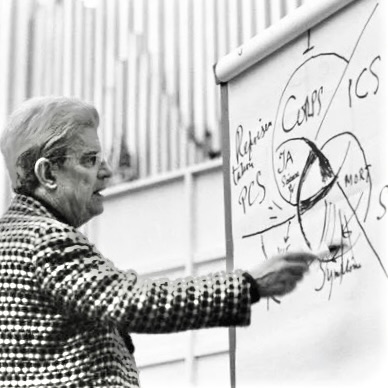
It is not the specific theories applied, but how the analyst employs psychoanalytic techniques. It is the way transference and the client’s unique signifiers are used as tools to disentangle and reconfigure the client’s traumatic experiences in healthier, more constructive ways what will ultimately help in the long term. In my experience, no theory has provided more insight when it comes to healing than the unpopular (at least in North America), lacanian theory.
🧵11 and last/ Nos permite confrontar nuestra realidad con sinceridad. Desde esta perspectiva, podemos recuperar algo de autenticidad y, cuando estemos listos, construir nuestra propia versión de un paraíso imperfectos, más saludable y más humano.
It allows us to confront our reality with sincerity. From this perspective, we can reclaim some authenticity and, when ready, build our own version of an imperfect paradise that’s healthier and more human.
🧵1/ Los síntomas psicológicos inconscientes a menudo se manifiestan como mensajes crípticos a través de comportamientos poco saludables.
Unconscious psychological symptoms often manifest as cryptic messages through unhealthy behaviors.
🧵10/ Aceptar la inexistencia de una utopía emocional, nos libera de la carga de crear un paraíso como destino. Aceptar la pérdida, nos libera de la energía gastada en el autoengaño.
Accepting the nonexistence of an emotional utopia frees us from the burden of creating a paradise as a destination. Embracing loss liberates us from the energy spent on self-deception.