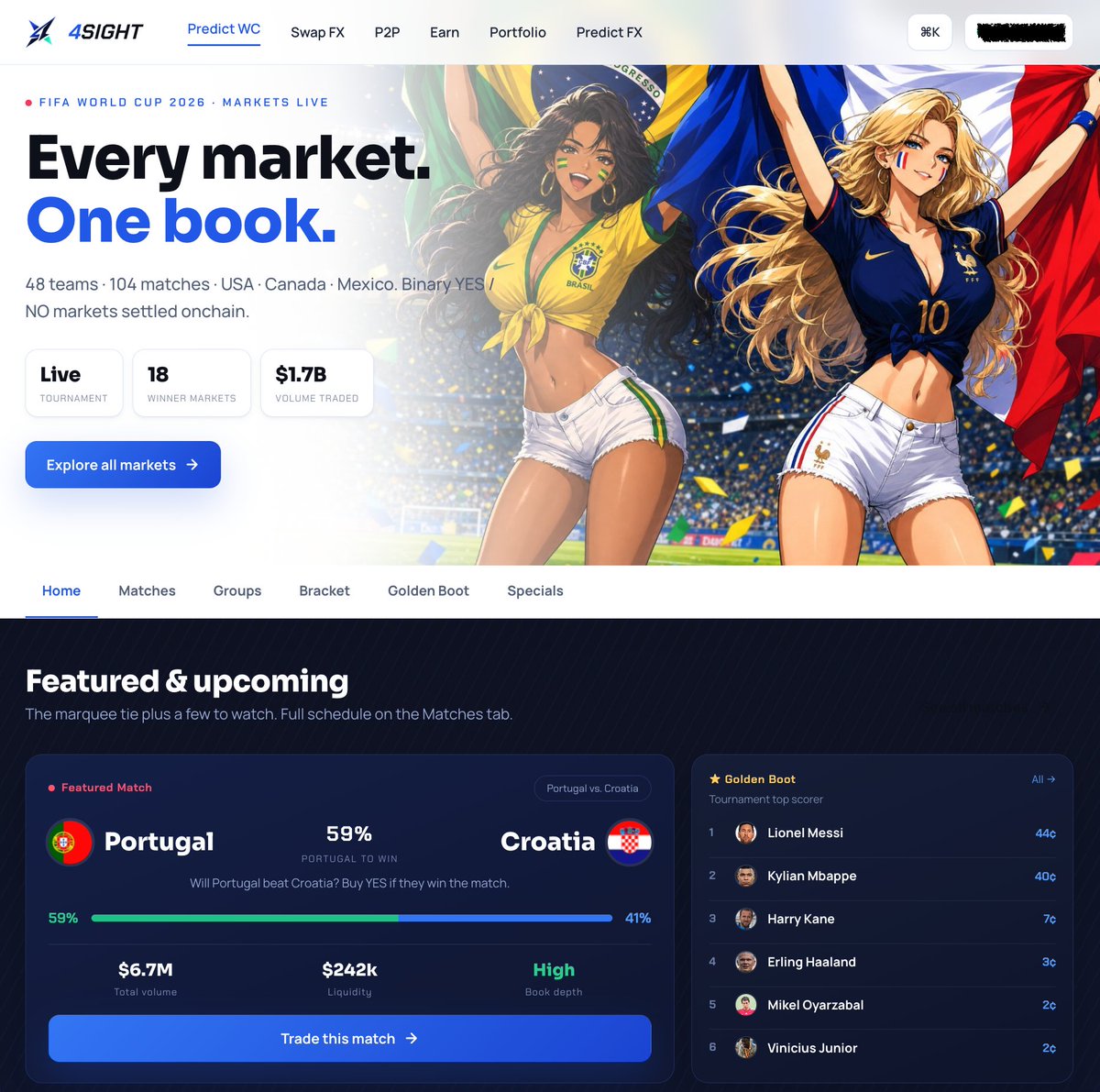
$6.7M placed on Portugal vs Croatia and 41% think tonight is the last time @Cristiano ever plays at a World Cup 🤯
Watcha think? Place your predictions https://t.co/n7gsPRvfam
Stablecoins are already doing trillions in volume.
But most non-USD corridors are still early.
📊 Last 24h onchain volume:
solana:HzwqbKZw8HxMN6bF2yFZNrht3c2iXXzpKcFu7uBEDKtr : $13.6M
base:0x0a4c9cb2778ab3302996a34befcf9a8bc288c33b: ~$731k
BRL stables: ~$348k
EURC shows what happens when a non-USD stablecoin corridor gets real liquidity.
XSGD and BRL show where the next markets are forming, but still need more depth before they can scale.
💰That is the maker opportunity.
🟩On Sera, makers can provide liquidity across real currency corridors, earn spread on fills, and collect gSera as volume grows.
Build your FX portfolio where the next stablecoin markets are still early - Settle on Sera
Communities Are the Heart of Gaming
Gaming has never been just about the games. From the arcades of the 80s to the massive online tournaments of today, gaming has always been about connection. It’s the communities—players, creators, and fans—that turn games into cultural phenomena and drive the industry forward.
Why Communities Matter
Communities aren’t just an afterthought; they’re the engine of the gaming world. Consider this:
• Engagement Drives Success: Games with strong communities last longer and generate more revenue. Look at titles like World of Warcraft or Fortnite. Their success isn’t just about gameplay; it’s about the ecosystems of players who rally around them.
• Feedback Powers Innovation: Communities are the
best beta testers a developer could ask for. They’re
not afraid to voice what works, what doesn’t, and
what could be better.
• Cultural Impact: From memes to esports, gaming communities shape culture in ways no developer could predict.
The Challenges
Despite their importance, communities are often taken for granted. Toxicity, unfair monetization, and lack of player agency can erode trust and alienate even the most loyal fans. In Web3, the stakes are even higher. Communities don’t just engage with games—they have a stake in them. Mismanaging this trust can mean the difference between thriving and failing.
The Future of Gaming Communities
Web3 and blockchain are redefining what gaming communities can be:
• Ownership and Participation: Players can own assets, influence development, and even co-govern ecosystems. This shifts power back to the community.
• Transparency and Trust: Blockchain ensures fairness in rewards, matchmaking, and economies. Trust isn’t just built—it’s verified.
• Collaboration Over Competition: Communities aren’t just consumers anymore; they’re collaborators who help shape the future of their favorite games.
What Developers Need to Do
1. Listen Actively: Developers must treat community feedback as a resource, not a liability. Listening and acting on input builds loyalty.
2. Design for Inclusion: Communities thrive when everyone feels welcome. Toxicity should be met with zero tolerance, and inclusivity should be the default.
3. Create Meaningful Systems: Features like Coliseum’s Guardian Network and community voting systems give players agency and build trust. These aren’t just tools—they’re bridges between developers and players.
Why This Matters
The gaming industry is more than just a $200 billion market; it’s a cultural cornerstone. Communities are what make gaming personal, social, and enduring. Without them, games are just products. With them, they become movements.
As gaming evolves, the winners won’t be the ones with the flashiest tech or the biggest budgets. They’ll be the ones who understand that people—not profits—are at the heart of every great game.
The next era of gaming belongs to the communities. Are we ready to give them the tools and trust they deserve?
The 2025 bull run will dwarf 2021’s rally
We have the perfect storm of global crypto adoption, institutional players finally entering the space, and real utility being build on chain
A lot of people are not ready for what’s coming
The 2025 bull market is about to get crazy
Expect to see:
• Institutional-grade infrastructure
• Real-world asset tokenization
• Seamless Web3 integration
This year marks the foundation of a new financial system
Gaming is a $200B industry shaping culture, connecting people, and redefining work
Crypto gaming builds on this foundation
It introduces new player ownership mechanisms, decentralized economies, and opportunities for creators
But none of this works without trust, fairness, and fun
The future of gaming will be shaped by those who get these fundamentals right
Crypto gaming is poised to be a $65 billion market by 2030, but the real inflection point could come in 2025
As the next bull run accelerates adoption, expect to see gaming ecosystems where players and developers thrive together
It’s about to get crazy
Imagine if gaming economies mirrored real ones
Player-owned, transparent, and sustainable
That’s what crypto gaming can achieve
That’s what we’re building towards
Startups aren’t about sprinting to the finish
They’re about building the endurance to stay in the race when others give up
Resilience beats speed every time