New essay on @alexolegimas's blog:
Will AI Soon Deliver Double-Digit Growth?
Probably not. Here is why.
https://t.co/PWlIyLgkxe
1. We outline the economics behind oft-discussed predictions that AI will soon deliver double-digit GDP growth in advanced economies. We list the assumptions that need to all hold in order for double-digit growth to happen and explain why we think they won’t.
2. To be clear: we are extremely bullish on AI and think the capabilities explosion predicted by technologists is already happening (e.g. yesterday's Navier-Stokes news!). But predictions of GDP growth in the 2030s of 15%, 30% or even 100% per year are off the mark. What we take issue with is the timeline. To paraphrase Milton Friedman's dictum on monetary policy, AI will affect GDP growth with "long and variable lags."
3. Start with some growth rate arithmetic. It is often much more useful to first think in levels rather than growth rates. Ask yourself: how much richer will we be in, say, 15 years? If you think twice as rich, that implies 4.7% annual growth, which would already be massive. Ten times as rich requires 16.6% per year; it would also imply that we are 100 times as rich 30 years from now! Asked in levels, we bet that most people would come up with much lower growth rates.
4. It's important to be clear: there is absolutely nothing in standard growth theory that constrains growth rates to be in the single digits. In fact, it's pretty easy to write down theoretical models that deliver explosive double-digit growth. We show this by writing down a standard textbook growth model of the type we routinely teach our undergrads (a souped-up Solow model), plug in some seemingly innocuous parameter values, and get AI-driven double-digit growth by the mid-2030s https://t.co/NgGmXqbHH4. The basic logic is that, by replacing labor with capital, automation alleviates / eliminates diminishing returns and removes labor as a bottleneck on growth. Fancier models, in which AI also automates R&D, deliver even wilder numbers.
5. But just because something is possible in theory doesn't mean it will happen in practice. The explosion rests on five assumptions, and each is unlikely to hold within the next 10-15 years. These assumptions are:
Assumption 1: Fast, economy-wide automation, with machines doing two thirds of all tasks by 2035. Historically, automation has proceeded at about 2% of tasks per year. Most work is physical, not cognitive. And politics will slow things down.
Assumption 2: People keep spending on whatever gets automated. They don't. As things get cheap, their share of spending falls, as it did for agriculture and manufacturing. Messy jobs, relational goods and scarce physical inputs like energy, chips and land become the new bottlenecks.
Assumption 3: Someone buys the new output and firms invest to produce it. Automation shifts income from workers to capital owners, who spend a smaller share so demand may not keep up with supply.
Assumption 4: No AI-driven cyber incidents destroying economic value. AI can also destroy output, and every incident slows deployment and investment.
Assumption 5: Explosive technology growth because AI automates R&D. The wildest scenarios in which the economy doubles each year all rest on this feedback loop. There is no evidence for it so far.
Why do many people who are closest to the technology (and who have been consistently right about the capabilities explosion) consistently predict double-digit growth? Our best guess: they extrapolate from their own sector to the rest of the economy. This reminds me of the 2022 German gas debate: industry insiders were right about their own firms and very wrong about the economy as a whole.
Our bottom line: a much more likely outcome is a large increase in the level of GDP spread over a decade or two, which is what 4-5% growth is.
If you remain unconvinced and still believe in double-digit growth, we are still looking for counterparties for our bet https://t.co/0HSCFGG315 😃
On @LSEImpactBlog: Tim Besley, @sachajdray & Christopher Dann find that growth delivers more than rising incomes, it builds trust in government. This trust is essential for effective policymaking, including tax collection, climate action and reform.
https://t.co/AzLci4AJOn
Public trust often seems like an elusive asset for governments. In a new study, we show that trust in government is closely tied to the ability to deliver economic growth.
https://t.co/qFODpoWeUj
As the US marks its 250th birthday 🇺🇸, a fitting moment to share a bit of little-known and fascinating econ history: America was actually home to one of the first wealth taxes! 🧵 [1/19]
Let me add this paper by Besley et al, which is forthcoming in the @QJEHarvard, which, I think, provides a nice micro-foundation for between-cohort variation in zero-sum attitudes. They define “growth experience” as the average GDP growth an individual has lived through since
New paper:
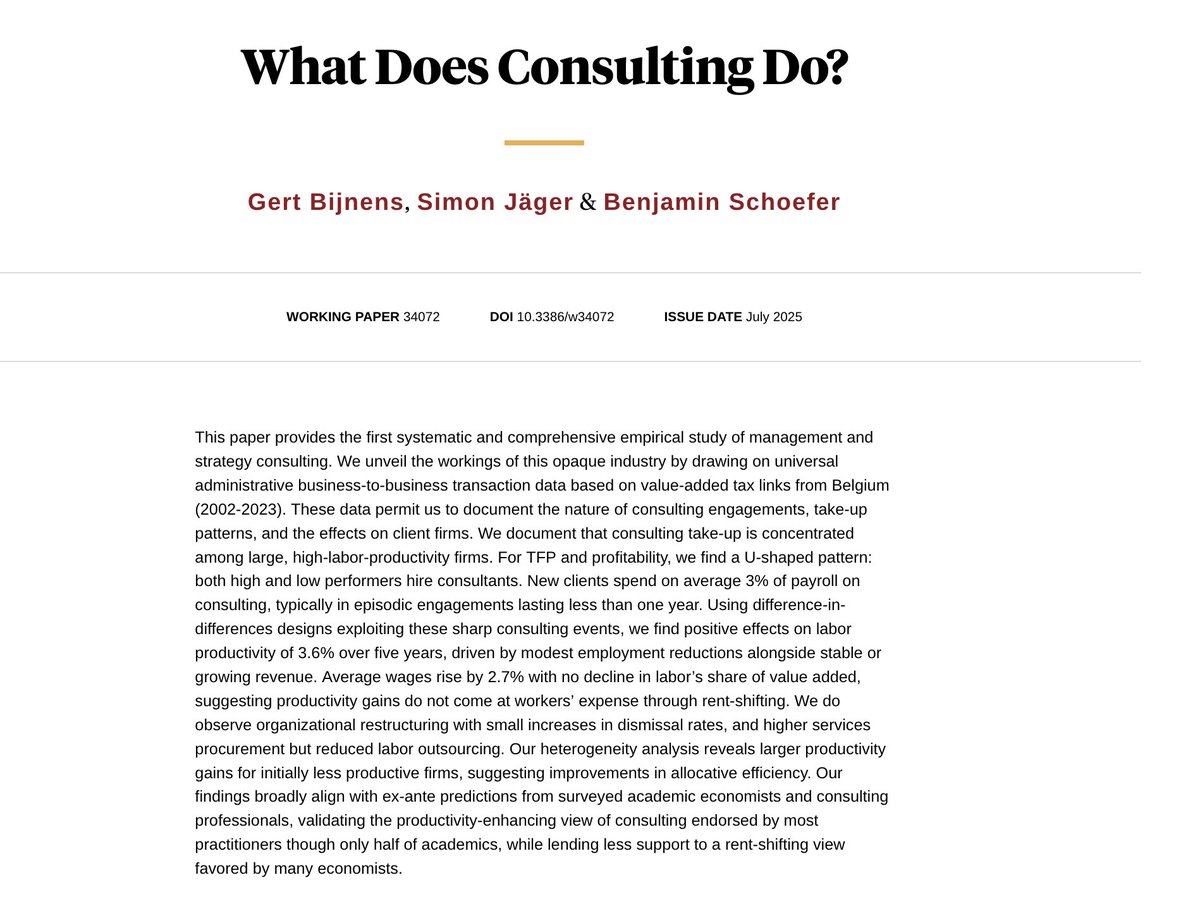
"What Does Consulting Do?"
w/ Gert Bijnens, @simon_jaeger
Consulting is a storied but opaque industry.
Our VAT-based B2B data permit the 1st comprehensive study:
Which firms buy consulting?
What happens when they do?
https://t.co/o0znxOUz7O
https://t.co/wVFNyRv8cp
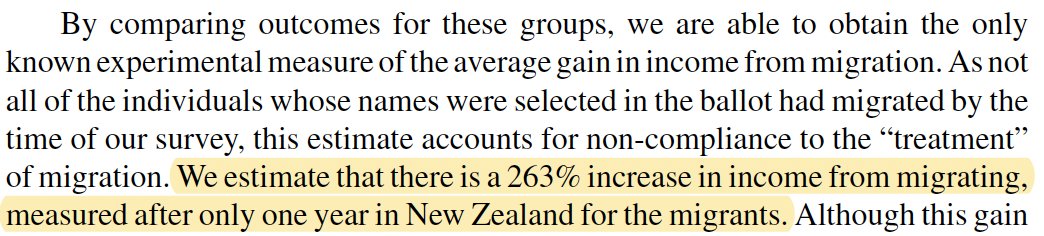
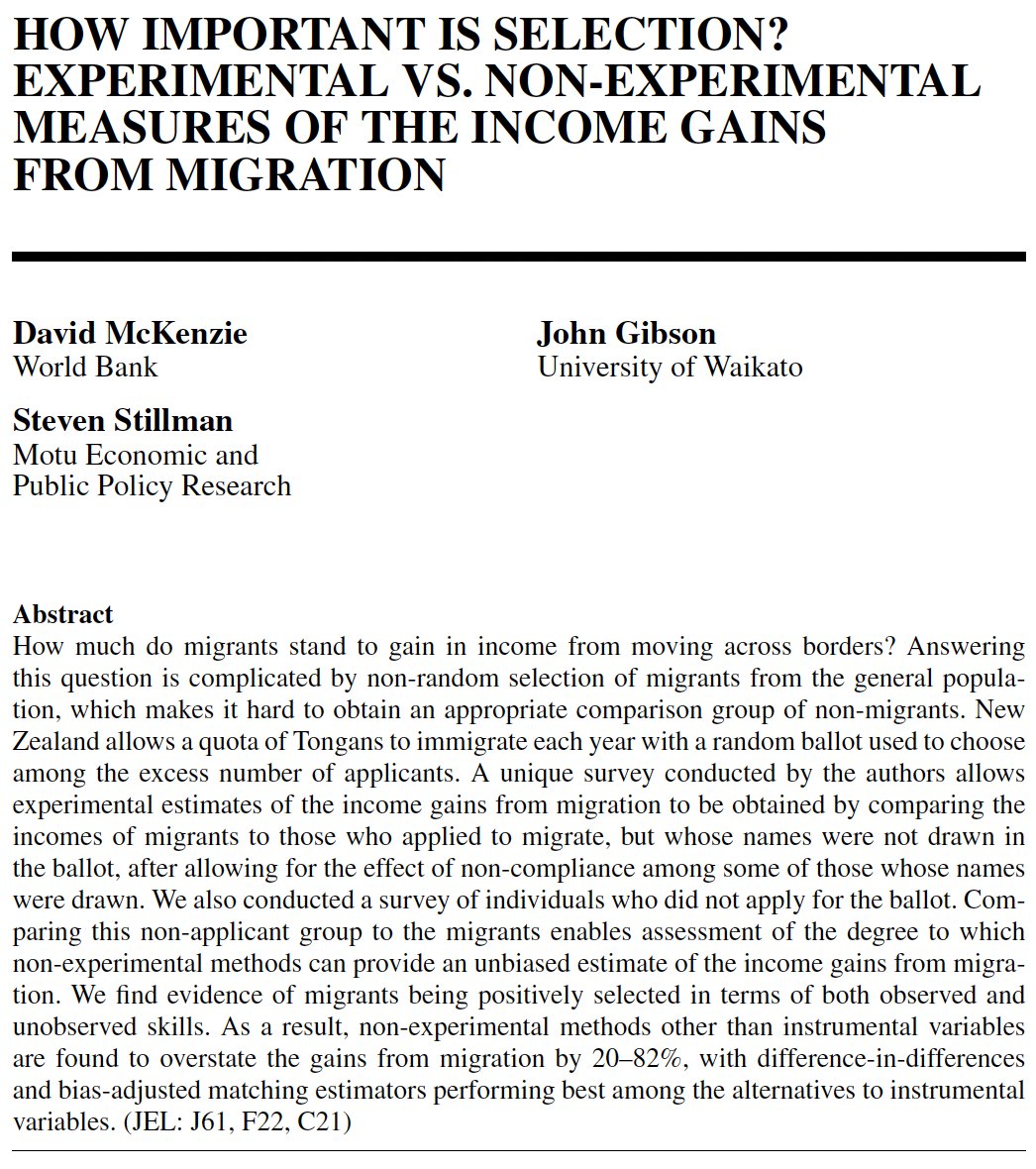
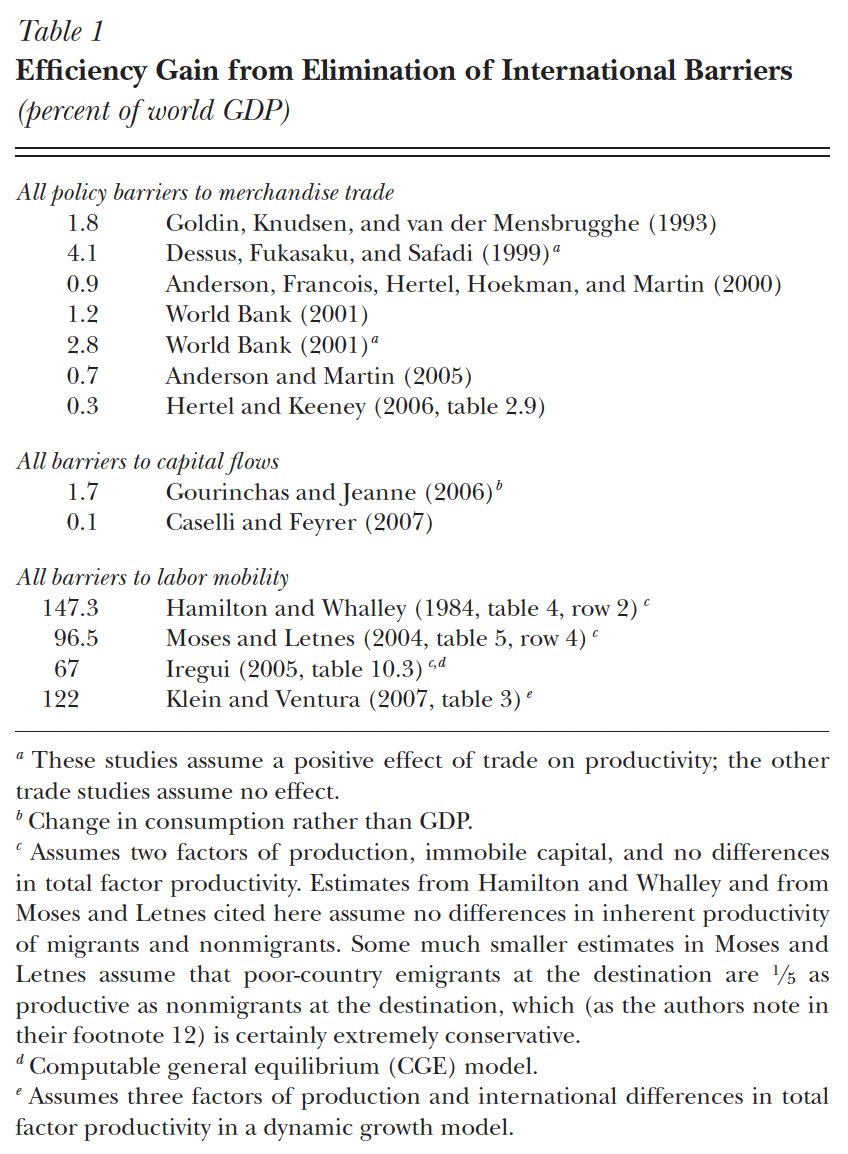
So what *are* the interventions that have transformative & lasting effects? My move to @SU_Economics was a good opportunity to think about this.
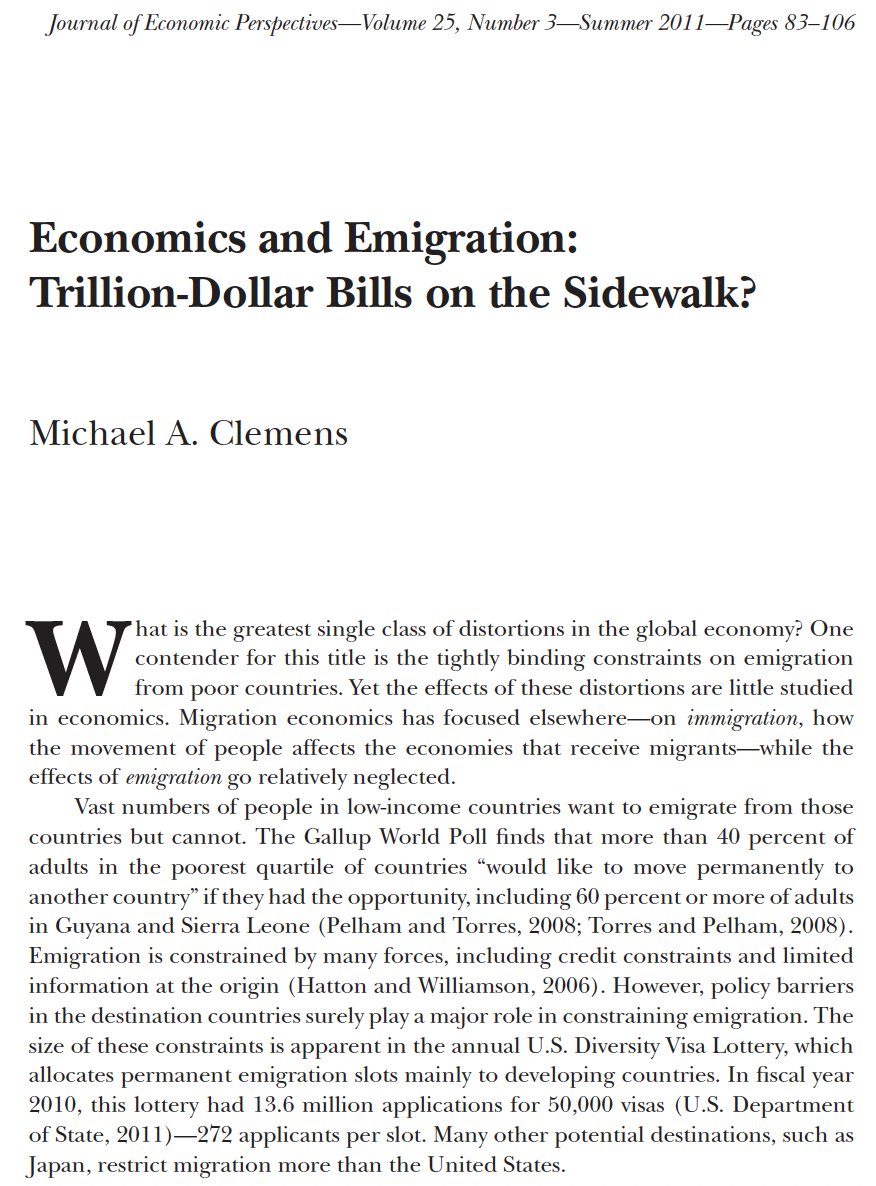
My answer is that it's hard to beat the returns to int'l migration. I mean, look at these numbers from @m_clem, @dmckenzie001 et al.!
Sciences Po a la grande douleur de faire part du décès de Philippe Martin.
Économiste brillant et reconnu, doyen de l'@EAPScPo depuis février 2022, il fut une figure éminente de notre institution, dont il était diplômé et à laquelle il consacra une partie de sa carrière.
What contributed to the relative wealth of different regions after the Civil War? And why did some areas accumulate wealth faster than others?
A new dataset from @sachajdray, @landais_camille, and @S_Stantcheva offers some intriguing answers. More:
https://t.co/353HC5onnQ
1/12
Excited to share my new research with Tim Besley!
How much does the media influence policy decisions and effectiveness?
We study the role of free-media reporting on government lockdown decision and individual compliance.
Paper here: https://t.co/xwTdyr0S7C
#EconTwitter









![S_Stantcheva's tweet photo. As the US marks its 250th birthday 🇺🇸, a fitting moment to share a bit of little-known and fascinating econ history: America was actually home to one of the first wealth taxes! 🧵 [1/19] https://t.co/Pv1oY4Xr8A](https://pbs.twimg.com/media/HMoYOIXXAAACP0G.jpg)