Word Ladder Wednesday!
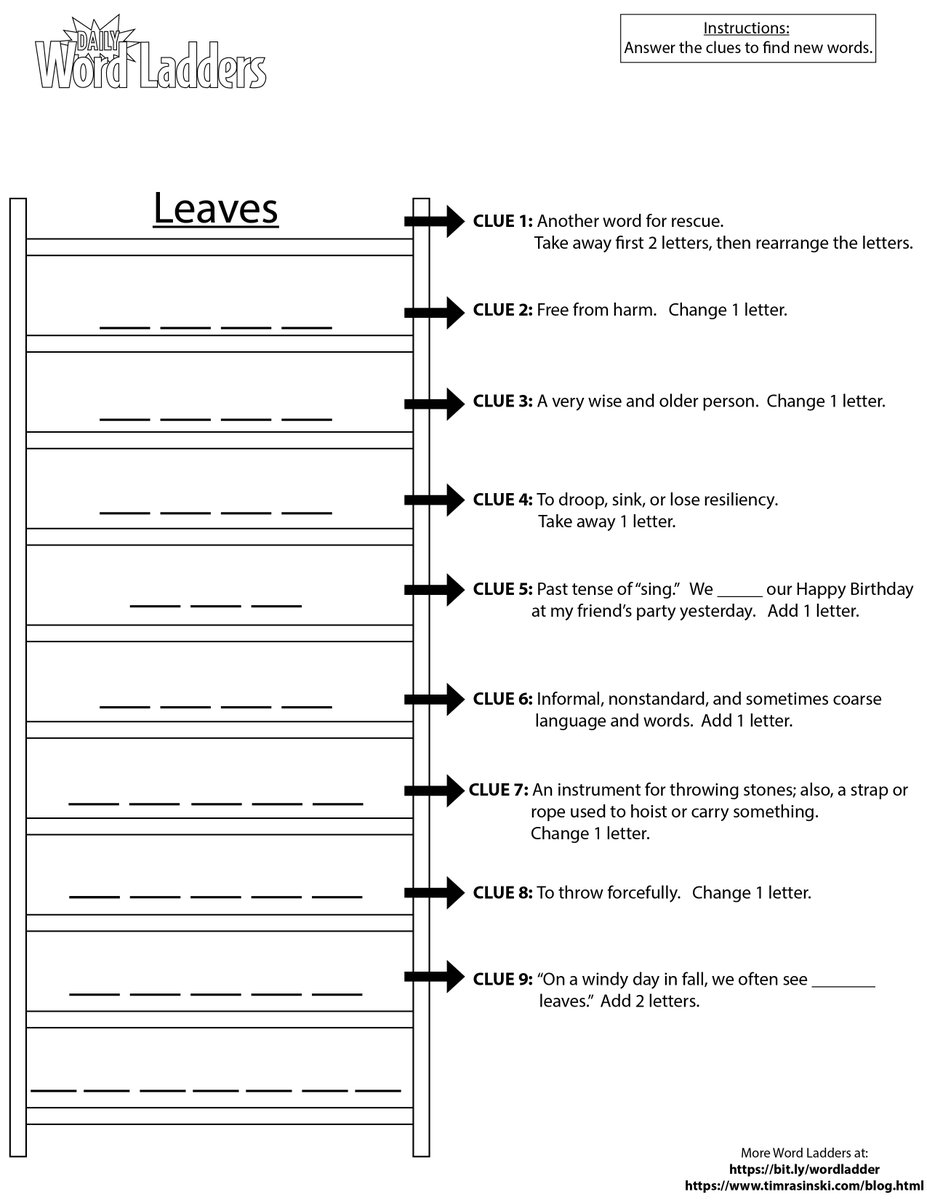
Winter is right around the corner - Here's a word ladder to say goodbye to autumn & hello to winter. Hope you and your students enjoy this word study activity.
@ILAToday@reading_league@CECMembership
For anyone interested in why I signed the "Opinion: A call for rejecting the newest reading wars," a response to the "Sold a Story" podcast, here is a link to my response.
https://t.co/T4Mikn2UDv
“The library should be responsive to the community”
The community banning books is less than 8% of Americans
Less than 1% of parents opt-out of reading material when given the opportunity.
Libraries NOT banning books is EXACTLY the library being responsive to the community
Things the SOR community need to talk about more: the structure of a literacy block, the intermediate grades, the role of small group instruction and centers/independent work.
BL isn’t just three-cueing - it provided a whole framework for how to organize literacy instruction.
#RLR593 Great question! I may tell my students to use semantics/pictures/syntax to double-check whether the word makes sense, but it is a tricky place for a reader to begin from when they could start with letters and sounds to word-solve!
"...poor readers are more likely to turn to semantics, pictures, and syntax to guess words, while better readers rely on the letters and sounds. Why teach kids to read like poor readers?" https://t.co/9hDppvz6S5
It's Word Ladder Wednesday!
Time for "Falling Leaves" -- Enjoy the fall and enjoy this word play with students. Find more on Amazon and https://t.co/eqX9aBa5qH
@ILAToday@ascd@DyslexiaIDA@reading_league
Wow, "science"? Maybe I'm reading too much into the quotation marks, but this feels like the @nytimes does not think literacy research is legitimate science. #RLR593 https://t.co/A4ExHm9uOR
Kent State professors of literacy education Timothy Rasinski, Ph.D., and Belinda Zimmerman, Ph.D., recently penned an article in the Akron Beacon Journal titled, "Elementary students won't improve reading if key area is neglected, Kent State experts say."
https://t.co/tpXe8Oztpw
@MrsKoza In Montessori, they teach the letter sound, but not the letter name, which I found confuses the kids when they come to letters that make multiple sounds like c and g, or digraphs! I think this verbiage helps take out the ambiguity.
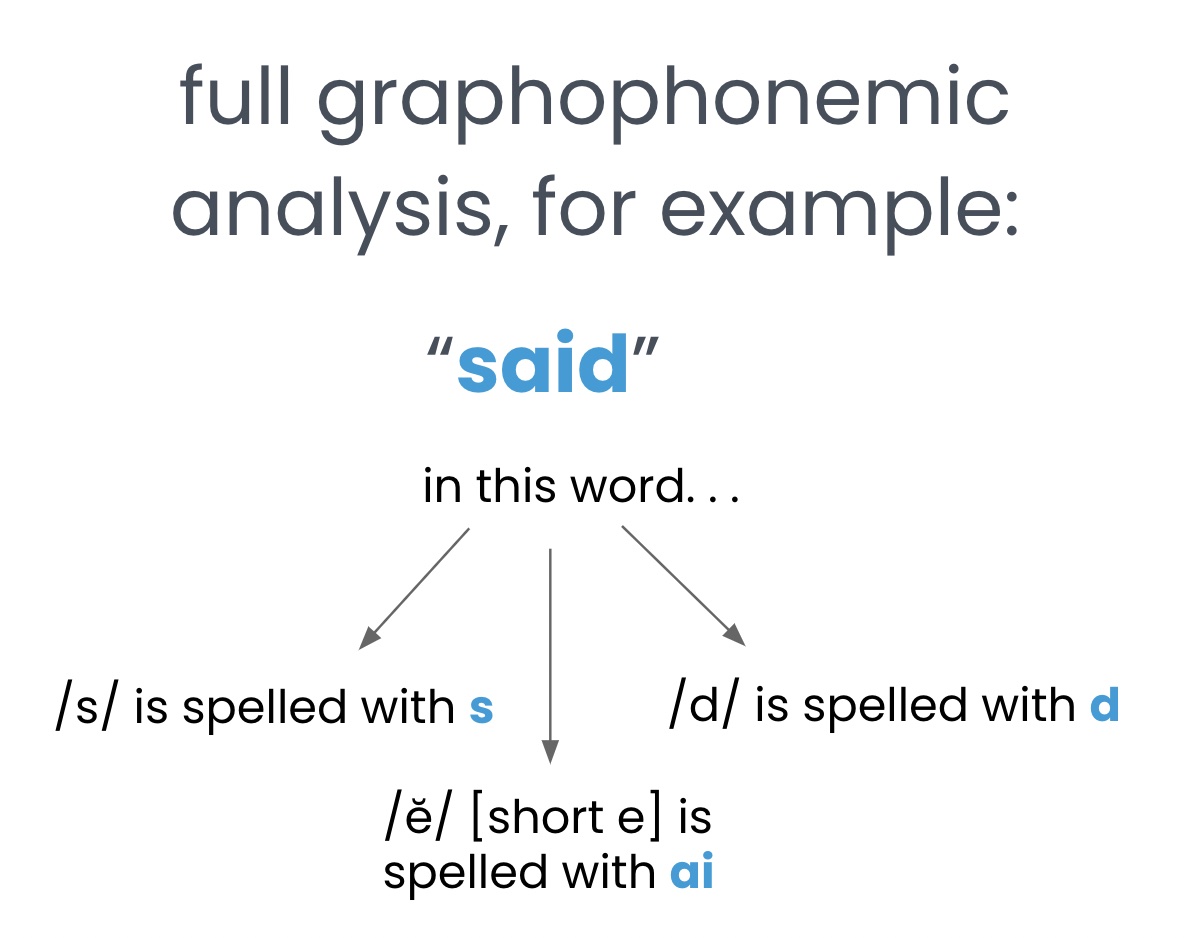
#rlr593 My preschooler and I are just on the brink of having these conversations. I need to remember some of this verbiage - "/s/ is spelled with s" is such a more concrete way to explain the graphophonemic connection.
🎗️There should be no high-frequency word (aka "sight word," although that's a misnomer) instruction in preschool. Much better to spend that time on phonemic awareness & alphabet instruction.
🎗️When high-frequency word instruction does occur, it's imp. to engage children in . . .
Can sentence-level work help aid students’ retention of knowledge – as well as their reading comprehension?
@natwexler thinks so, and explores @ReadingShanahan’s latest writing on the topic.
#KnowledgeMatters
https://t.co/96ui001OWr
@julie_orloff @sophiedegener I love this, Julie. Students need to see themselves as capable learners. There are many pathways to learning and often students need to discover which pathway works best for them. Love the lightbulb moment when it happens!