Ok, Loeb give-away number 3: all 5 volumes of the lovely Greek Anthology, Propertius on the thrills & spills of love, Lucan on civil chaos, Cicero on the meaning of life, & Gellius on trivia worth knowing. Draw will be on Wed 3 July. Just retweet & follow us to be in the running!
Gosh: it's delightful that Greek philosophy books can garner so much interest and excitement. Anyway, it's now 48 hours until the *June* draw will be made, and any retweeter anywhere in the world will be in the mix.
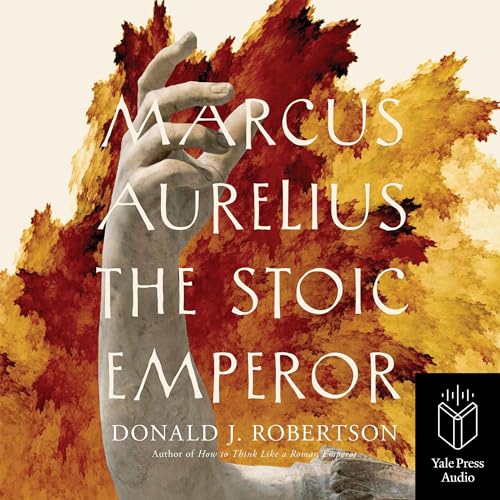
🔁🔁🔁 Retweet for a chance to win a free download of my new audiobook, "Marcus Aurelius: The Stoic Emperor", published by @yalepress on @audible_com. (US/Canada only, T&C below.) #Stoicism#Giveaway
"The Socratic problem, simply put, is the conundrum of how to discern between the historical Socrates and his representation in fiction." To find out how much we can know, come explore this account of how scholars have tackled the problem, in eight phases:
https://t.co/fbk6FSL0in
OK then: our latest Classics books give-away! Just RT this message, and on Sunday 6 August we will draw *three* names from our followers: the first picks 25 books; the second 15; the third the rest (unless they don't want some, which will be raffled off at random!)
Book details:
"Athenians saw the history of their city, and history in general: not as marked by inevitable progress towards a future without divisions, but as a perpetual drama in which each generation faces its own forms of conflict." Forgetting past traumas was key:
https://t.co/qQPLRBODNK
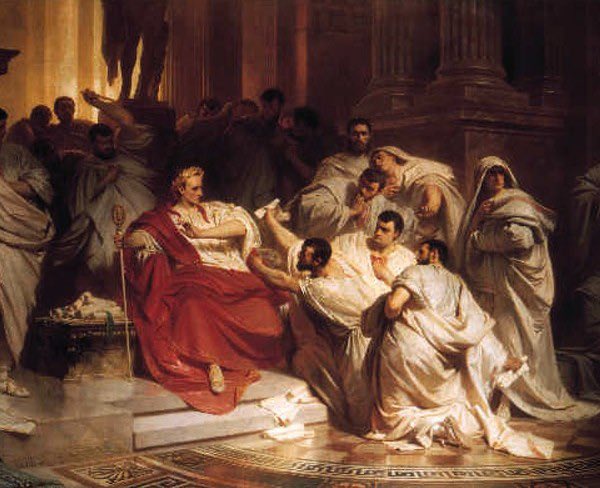
When Julius Caesar was kidnapped by pirates, he laughed in their faces, raised the randsom, and sent his men to collect enough silver to pay it.
While he waited, he won them over (despite treating them as minions) and gained so much trust that they didn't believe it when he said he'd come back to kill them all.
He later captured them, got his silver back, cut their throats, and had them crucified.
Epictetus repeatedly tells his Stoic students to emulate Socrates, presumably based mainly (but not only) on Plato's dialogues, but Plato himself did not emulate Socrates (much) and neither did his students at the Academy.
You need to train yourself to pay less attention to the words that people say and greater attention to their tone of voice, the look in their eye, their body language—all signals that might reveal a nervousness or excitement that is not expressed verbally.
In 1954, Pulitzer Prize-winning author John Hersey investigated the question everyone was asking, "Why can't children read?"
Hersey found the answer and then wrote about it in a piece published in Life Magazine.
Which led to one of the bestselling children's books of all time.
For 2 years, John Hersey read children's books, met with experts, and attended schools to observe how reading was taught.
"It became obvious," Hersey writes, what the problem was:
Children's books were terribly boring.
"Some children read very well indeed," Hersey writes. But…
"Reading troubles come from a failure to help children to *want* to read."
Remember, Hersey says, "reading has to compete for the interest of children with television, radio, movies, comic books, magazines, and sports."
So to be able to compete and to help children to *want* to read, Hersey says, children's books need to be more interesting and entertaining.
The article was read by an editor at Houghton Mifflin.
The editor called the illustrator Dr. Seuss and challenged him to "write me a story that first graders can't put down."
"There was a catch," Dr. Seuss' biographer writes.
In this book for first graders, Dr. Seuss had to use a vocabulary list of 300 "accepted" words.
Dr. Seuss played around with the list of 300 words, he'd recall, "and said, 'If I find two words that rhyme and make sense to me, that's the title.'"
As Dr. Seuss scanned the list, two words caught his attention:
Cat and Hat.
A little over a year later, on April 19, 1957, Dr. Seuss released...
"The Cat in the Hat."
Using just 236 unique words, Dr. Seuss wrote a blockbuster. The book was called "the biggest event in children's reading for centuries."
John Hersey said the book was a "masterpiece" ... a "gift to the art of reading."
"It's the book I'm proudest of," Dr. Seuss said, "because [it] proved to a number of million kids that reading is not a disagreeable task."
Takeaway 1:
Dr. Angela Duckworth talks about how intelligence follows interest.
"This is why,” Duckworth said, “I can be very dumb about things I don’t care about and I can be extremely smart about the things I do care about.”
And this is why the simple solution to the nation's reading problem was to make children's books more interesting.
Takeaway 2:
Constraints boost creativity.
Dr. Seuss used just 236 unique words to write "The Cat in the Hat." Following the book's success, Dr. Seuss' publisher bet him $50 that he couldn't write a book using only 50 unique words.
Dr. Seuss won the bet delivering "Green Eggs and Ham" to his publisher in 1960, which would go on to sell more than 8 million copies—his bestselling book of all time.
- - -
As Jack White, the lead singer and guitarist of The White Stripes, said,
"[Constraints] make you creative...Telling yourself you have all the time in the world, all the money in the world, all the colors in the palette, anything you want—that just kills creativity."
Follow @bpoppenheimer for more content like this!




![bpoppenheimer's tweet photo. In 1954, Pulitzer Prize-winning author John Hersey investigated the question everyone was asking, "Why can't children read?"
Hersey found the answer and then wrote about it in a piece published in Life Magazine.
Which led to one of the bestselling children's books of all time.
For 2 years, John Hersey read children's books, met with experts, and attended schools to observe how reading was taught.
"It became obvious," Hersey writes, what the problem was:
Children's books were terribly boring.
"Some children read very well indeed," Hersey writes. But…
"Reading troubles come from a failure to help children to *want* to read."
Remember, Hersey says, "reading has to compete for the interest of children with television, radio, movies, comic books, magazines, and sports."
So to be able to compete and to help children to *want* to read, Hersey says, children's books need to be more interesting and entertaining.
The article was read by an editor at Houghton Mifflin.
The editor called the illustrator Dr. Seuss and challenged him to "write me a story that first graders can't put down."
"There was a catch," Dr. Seuss' biographer writes.
In this book for first graders, Dr. Seuss had to use a vocabulary list of 300 "accepted" words.
Dr. Seuss played around with the list of 300 words, he'd recall, "and said, 'If I find two words that rhyme and make sense to me, that's the title.'"
As Dr. Seuss scanned the list, two words caught his attention:
Cat and Hat.
A little over a year later, on April 19, 1957, Dr. Seuss released...
"The Cat in the Hat."
Using just 236 unique words, Dr. Seuss wrote a blockbuster. The book was called "the biggest event in children's reading for centuries."
John Hersey said the book was a "masterpiece" ... a "gift to the art of reading."
"It's the book I'm proudest of," Dr. Seuss said, "because [it] proved to a number of million kids that reading is not a disagreeable task."
Takeaway 1:
Dr. Angela Duckworth talks about how intelligence follows interest.
"This is why,” Duckworth said, “I can be very dumb about things I don’t care about and I can be extremely smart about the things I do care about.”
And this is why the simple solution to the nation's reading problem was to make children's books more interesting.
Takeaway 2:
Constraints boost creativity.
Dr. Seuss used just 236 unique words to write "The Cat in the Hat." Following the book's success, Dr. Seuss' publisher bet him $50 that he couldn't write a book using only 50 unique words.
Dr. Seuss won the bet delivering "Green Eggs and Ham" to his publisher in 1960, which would go on to sell more than 8 million copies—his bestselling book of all time.
- - -
As Jack White, the lead singer and guitarist of The White Stripes, said,
"[Constraints] make you creative...Telling yourself you have all the time in the world, all the money in the world, all the colors in the palette, anything you want—that just kills creativity."
Follow @bpoppenheimer for more content like this!](https://pbs.twimg.com/media/Ft3XEEVWcAUo55q.jpg)


