Can biological tissues "learn"?
bioRxiv w/ @ShilaBanerji: Epithelial tissues exhibit emergent behaviors akin to unsupervised learning. Local tension remodeling allows cell networks to store long-range memory and program global elasticity properties.
https://t.co/eoJ7RtlZ3L
Tight junction protein ZO-1 is our #CellLineOfTheWeek!
Our human iPS cell lines & plasmids – fluorescently-tagged to illuminate structures – are openly available to accelerate discovery: https://t.co/E2LFqh0yKq
📦 Distributed by @Coriell_Science & @Addgene#OpenScience
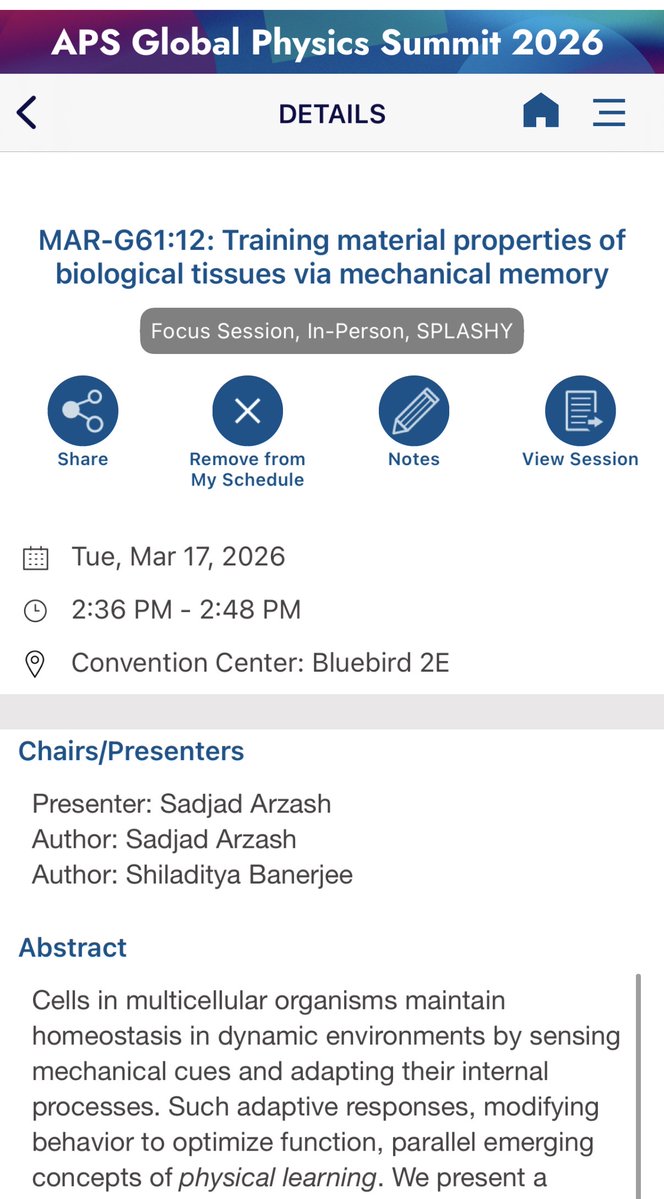
Excited to present this work w/ @ShilaBanerji next week at APS Global Physics Summit 2026 @APSphysics@ApsDbio on mechanical memory and learning in biological tissues.
bioRxiv: https://t.co/eoJ7Rtlred
Using a new method to characterize the mechanical properties and driving forces of microtubules in living cells, this study finds that polyglutamylation increases microtubule stiffness, while tube-like mitochondria have a much lower bending stiffness.
🔗 https://t.co/mywyg9DJvB
Starfish embryos can form living chiral crystals. Now it is shown that these crystals can spontaneously, as well as inducibly, transition between two stable states: fluctuating and oscillatory.
https://t.co/uuFgANIkiJ
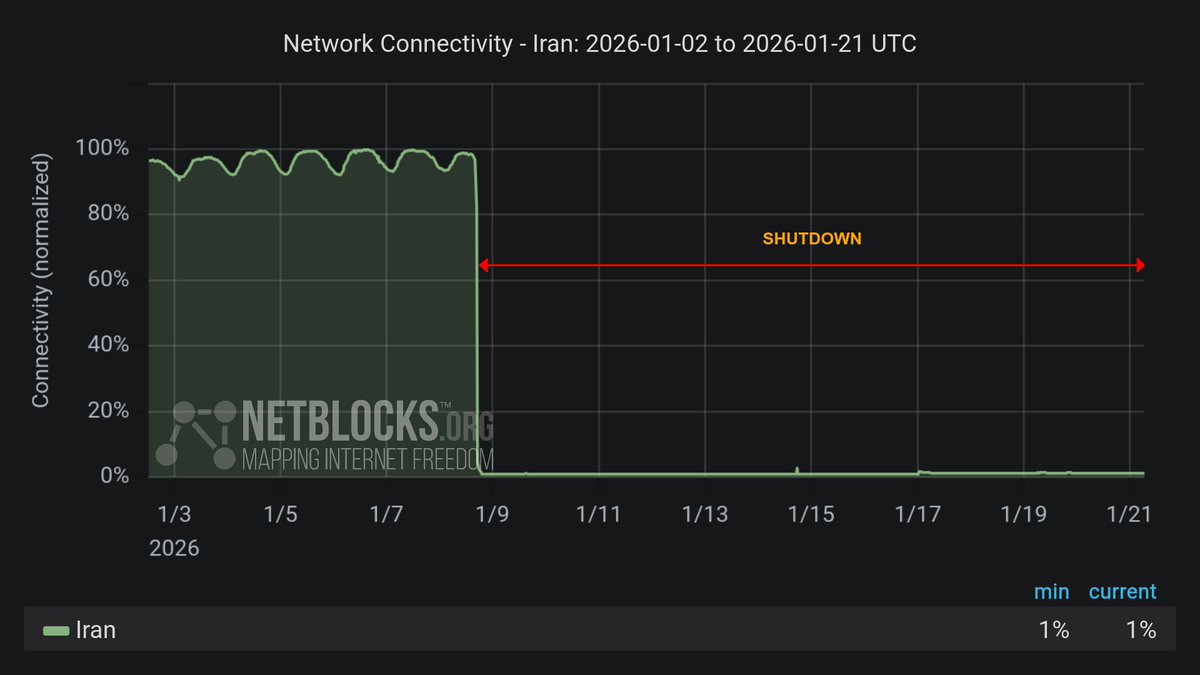
⏱️ Over 300 hours have passed since #Iran imposed a national internet blackout to hide atrocities. Meanwhile, the regime uses whitelisted networks and places op-eds to shape opinion abroad.
Attempts to obscure the truth will be documented in real time: The world is watching.
BREAKING: Cross-regional coalition of 30 NGOs is demanding urgent UN emergency action to stop the mass killing of Iranian protesters.
Over 12,000 reportedly killed since Dec. 28. Silence now would mean complicity. The UN must act—now.
https://t.co/H1BYDyT7w4 #UrgentUNSessionIran
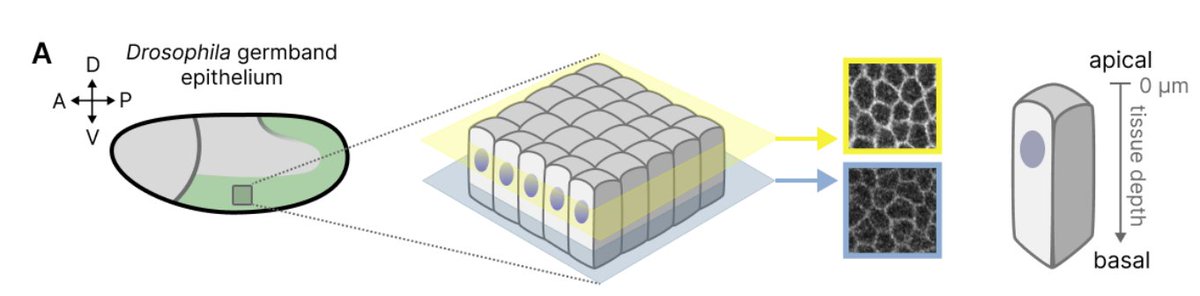
A study of 3D cell shapes and tissue structure in fruit fly embryos shows how epithelial cells exchange neighbors over their full apical-basal span during convergent extension — revealing new insights on the structure and dynamics of remodeling epithelia.
https://t.co/uG7fx09XEH
Next week at LMU Munich: the 32nd Arnold Sommerfeld Lecture Series with Mehran Kardar (MIT)—from KPZ and nonequilibrium physics to active matter, disorder, and soft matter.
Programme: https://t.co/Zby35mwgmF
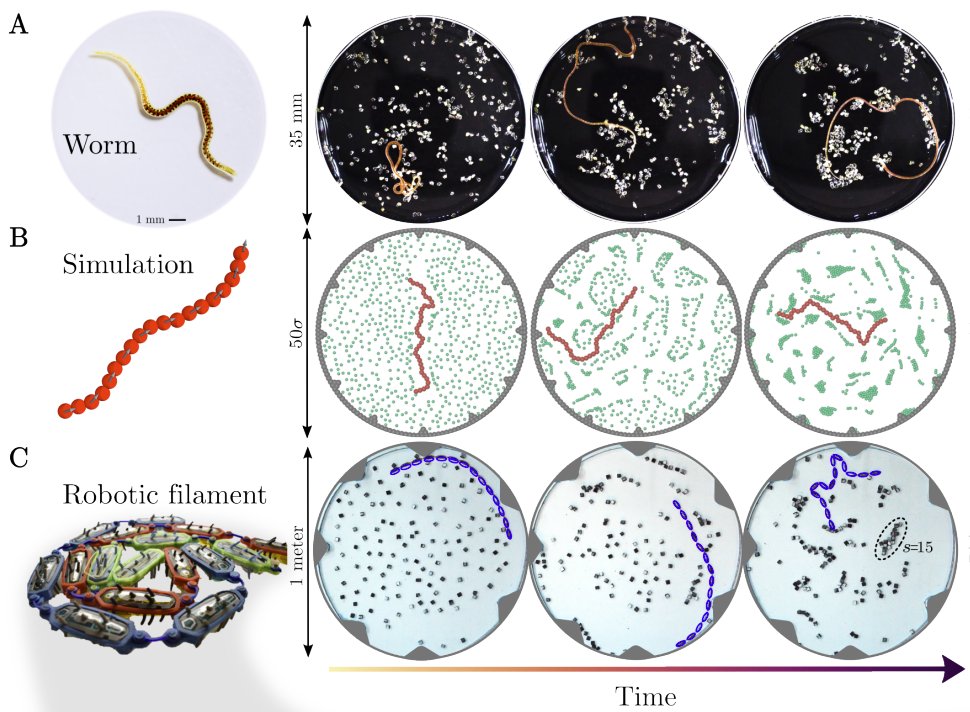
Individual active filaments, from living worms to a robotic filament chain, aggregate dispersed non-Brownian passive particles from repeated contact and body deformation, with clustering dynamics governed by filament length and bending stiffness.
🔗 https://t.co/vTXqgXmOs3
Here is the link to download the PDF of my course#5 on Biological computation @cdf1530. I present & discuss Self-tuning, Adaptation and Learning in biological (non-neuronal) systems, in particular during embryonic development.
Enjoy!
https://t.co/zzdhLMy6Za
Can biological tissues "learn"?
bioRxiv w/ @ShilaBanerji: Epithelial tissues exhibit emergent behaviors akin to unsupervised learning. Local tension remodeling allows cell networks to store long-range memory and program global elasticity properties.
https://t.co/eoJ7RtlZ3L
@Archaeon_Alex Thanks, Alex. And yes, the idea that biological materials can evolve their properties via internal remodeling feels like a huge space. If you end up reading it, I’d be curious what systems you think are the best testbeds for such mechanical memory.
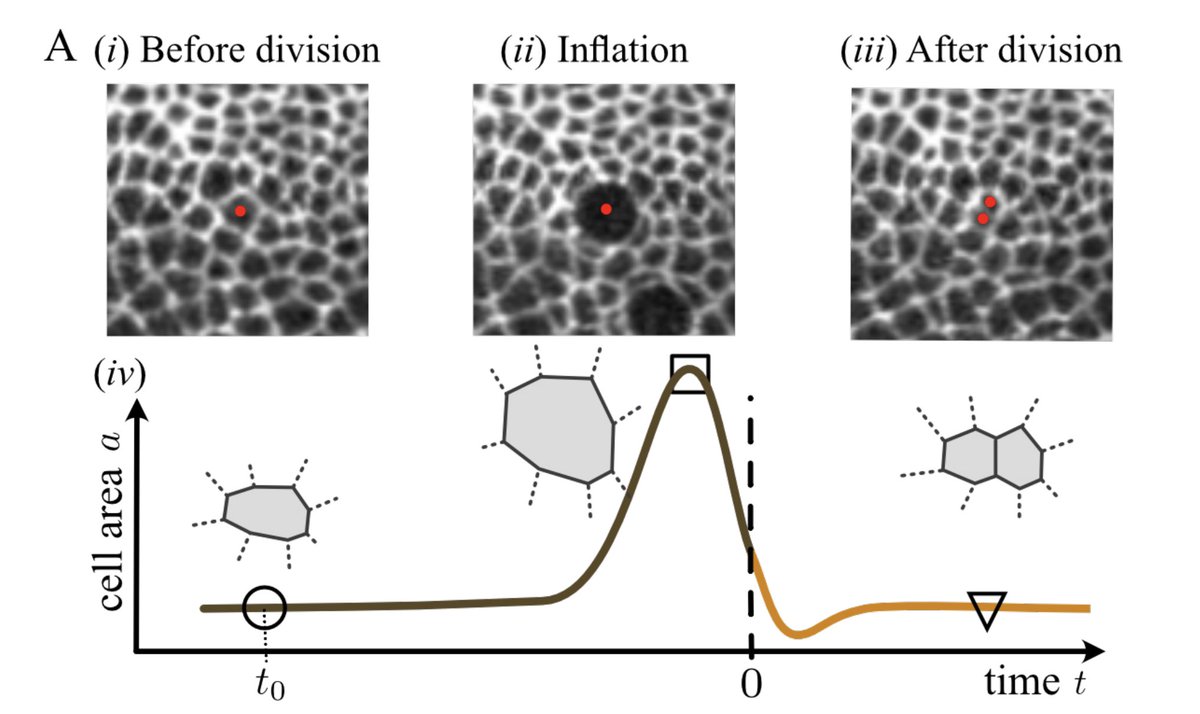
Inferring division-induced force dipoles from tissue strain fields quantifies the mechanical forces of cell division and their impact on tissue mechanics.
Read more: https://t.co/kawZJ3Is3f
The 2025 Society of Rheology's Annual Meeting will be held in enchanted Santa Fe, NM on October 19-23. Look for our call for abstracts later this spring and save the dates to discuss everything that flows. We hope to see you there! #SoR2025