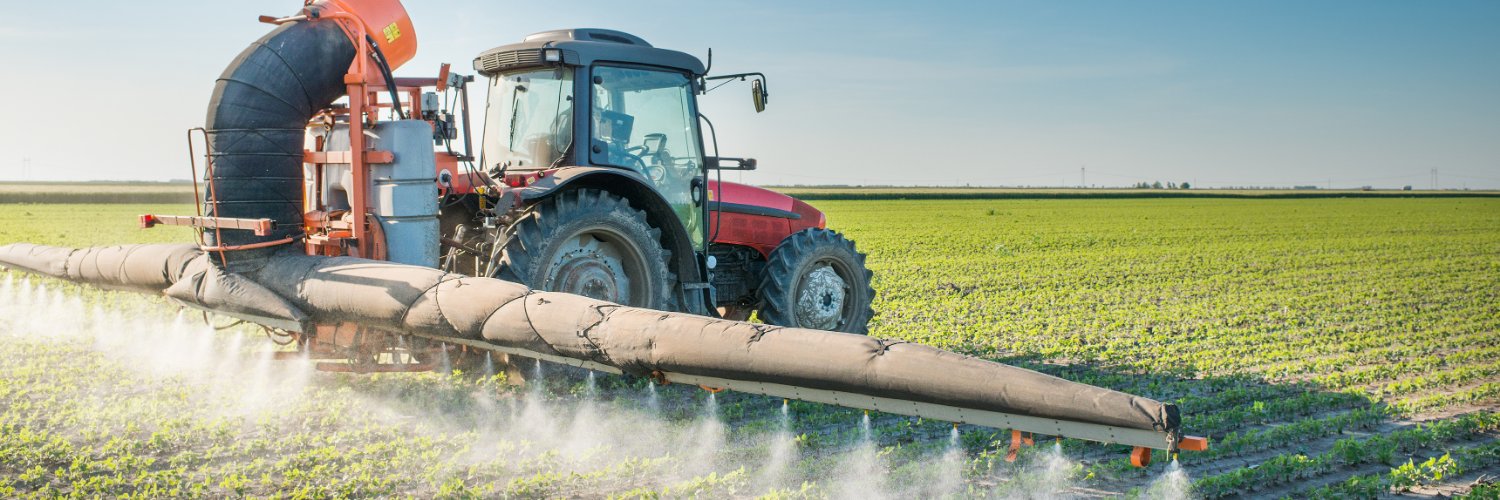
🚨Who should decide whether a #pesticide stays on the market — scientists or politicians?
New amendments buried in #BillC30 & #BillC31 would give politicians power over pesticide law in 🇨🇦
Join us in calling for these changes to be removed.
🔗 https://t.co/GkkEXl3tFD
🇨🇦 Proposed Changes to #Canada’s Pesticide Laws #BillC30#BillC31
C30 would allow politicians to override science-based pesticide decisions.
C31 would remove safety reviews & public input.
Both put #pesticides over people.
🚨Contact Your MP & ask them to Oppose these bills
🚨Who should decide whether a #pesticide stays on the market — scientists or politicians?
New amendments buried in #BillC30 & #BillC31 would give politicians power over pesticide law in 🇨🇦
Join us in calling for these changes to be removed.
🔗 https://t.co/GkkEXl3tFD
🇨🇦 Proposed Changes to #Canada’s Pesticide Laws #BillC30#BillC31
C30 would allow politicians to override science-based pesticide decisions.
C31 would remove safety reviews & public input.
Both put #pesticides over people.
🚨Contact Your MP & ask them to Oppose these bills
The world recently emerged from a profound global trial where untested biological platforms were deployed under a manufactured consensus. That identical battle for data transparency and bodily autonomy has now migrated from our pharmacies to our grocery stores. 🧵
Final countdown 🚨
There is only a few days left to join the conversation and help us shape the first Canadian Men and Boys' Health Strategy.
https://t.co/H5zJ1uEeoK
#Healthymen
Your Chocolate Bar Is Now a Corporate Science Experiment...
Mondelēz, the company that owns Cadbury, Oreo, and Toblerone, has already produced nearly a dozen milk chocolate bars using cell-cultured cocoa butter grown in a bioreactor.
Barry Callebaut, which supplies roughly half the chocolate on Earth, is deep in cell-culture partnerships.
Cargill is partnered with an Israeli cell-based cocoa startup. California Cultured plans to launch what it is calling the world's first commercially available cell-based chocolate product by the end of 2026.
The entire industrial chocolate supply chain is moving simultaneously toward a model in which cocoa trees become optional and do not need your permission to do so.
Under current FDA rules, companies can declare their own novel food products safe through a process called self-affirmed GRAS, meaning they convene their own panel of experts, sign off on safety themselves, and proceed to market with no FDA review, no independent long-term human studies, and no mandatory public notification required.
California Cultured is already pursuing self-GRAS designation for its cell-cultured product. There are no long-term human consumption studies on any of this.
Nobody knows what decades of eating lab-grown chocolate does to the human body, because the question has not been studied and the regulatory pathway does not require it to be.
@Chellewards and @tracybeanz editorial linked below 👇
https://t.co/9YDhvDMAN7
As farmers look to move away from synthetic inputs and repeated tillage, compost and soil microbes are emerging as complementary tools within organic systems.
https://t.co/N7pXbSbS3M
May Report page 15
Rod Cumberland—the Canadian biologist fired after opposing #glyphosate use in forestry because of its catastrophic effect on wildlife—has a book out: “Part memoir, part exposé.. about how power and politics and corrupted science endanger our natural world” https://t.co/NiFZtC7CaJ
Au Brésil, les procureurs attaquent en #justice l'agence de santé et le gouvernement fédéral pour interdire l'utilisation du #glyphosate.
Les procureurs invoquent des risques pour la vie humaine, la santé et l'environnement du lieu de travail.
#pesticides
https://t.co/gPuLFQFMAV